Results by title
1787 books match the query 'Literary Collections' and 57 start with f
From Sleep Unbound
Andrée Chedid
Ohio University Press, 1983
From a Limestone Ledge
Some Essays and Other Ruminations about Country Life in TexasBy John Graves<br>Foreword by Bill Wittliff<br>Illustrations by Glenn Wolff
University of Texas Press, 2016
“Another fine, reflective, anecdotal look at rural Texas.” —New Yorker
“Graves writes eloquently about a countryman’s concerns. There's not a false note in the book.” —Boston Globe
“Like the unmortared stone fences of Graves’s native hill country, From a Limestone Ledge is constructed of bits and pieces never designed to fit together, yet made to achieve a unity that is more enduring than the sum of its individual parts by the hands of a master craftsman.” —Southwestern Historical Quarterly
“The beauty of his work endures, and there is a greater pride in Texans’ hearts for their home, I think, than there would be if he hadn’t written the books he did.” —Rick Bass, Garden & Gun
“In describing the particulars of his surroundings, Graves often was describing the world in microcosm and the place and plight of humankind in it.” —Bryan Woolley, Dallas Morning News
From the Top
Brief Transmissions from Tent Show RadioMichael Perry
Wisconsin Historical Society Press, 2013
“Bottom line is, I’m the kind of guy who’s happy to go to the opera, but I should like to be allowed to wear steel-toed boots with my evening suit. I like to read Harper’s with a chaser of Varmint Hunter Magazine. Maybe that’s why I enjoy a good show under canvas. Here we sit, brain-deep in arts and culture, but we’re also just people hanging out in a tent, some of us wearing boots, a few of us wearing Birkenstocks, but best of all we’re breathing free fresh air filled with music.”
From Scandihoovian Spanglish to snickering chickens, New York Times bestselling author and humorist Michael Perry navigates a wide range of topics in this collection of brief essays drawn from his weekly appearances on the nationally syndicated Tent Show Radio program. Fatherhood, dumpster therapy, dangerous wedding rings, Christmas trees, used cars, why you should have bacon in your stock portfolio, loggers in clogs—whatever the subject, Perry has a rare ability to touch both the funny bone and the heart.
From the Valley of Bronze Camels
A Primer, Some Lectures, & A Boondoggle on PoetryJane Miller
University of Michigan Press, 2022
Jane Miller loves poetry. In these provocative and deeply insightful essays, she unpacks the work of giants like Adrienne Rich, Paul Celan, Marina Tsvetaeva, Osip Mandelstam, and Federico García Lorca alongside painters such as Caravaggio and Paul Klee, as well as ancient Chinese music and techniques of the contemporary poem. Miller explores the use of the question mark in the history of poetry and its function as a revelation of poetic voice. She considers the positive and negative aspects of surrealism on the contemporary poem, its anti-feminist origins in France, its contemporary usage, and the benefits of super-real images. Miller examines how identity politics might affect the imagination. She describes ancient Chinese musical instruments to show how their sounds resonate off/in American poems and on the aural integrity of the lyric poem. She interrogates the political implications of language and the degeneration and regeneration of words. Finally, in an essay about what she dares not say about poetry, she comes out against forms of surrealism, narrative, jargon, rhetoric, irony, and appropriation. This masterful work can be read as advice to a young writer, but it also invites us into the mind of a writer who has developed her craft through the course of a lifetime of writing, reading, and exploring the world, showing not only the ideas that influenced her—feminist, lesbian, and international works—but also how Miller has, in turn, influenced ideas.
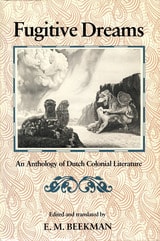
Fugitive Dreams
An Anthology of Dutch Colonial LiteratureE. M. Beekman
University of Massachusetts Press, 1988
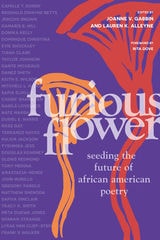
Furious Flower
Seeding the Future of African American PoetryEdited by Joanne V. Gabbin and Lauren K. Alleyne; Foreword by Rita Dove
Northwestern University Press, 2020
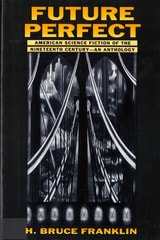
Future Perfect
American Science Fiction of the Nineteenth Century: An AnthologyFranklin, H. Bruce
Rutgers University Press, 1995
This selection of unusual storeis by important American writers-Hawthorne, Melville, Poe, Bellamy and Twain-and by less well-known tellers such as Ambrose Bierce, S. Weir Mitchell and Fitz-James O'Brien, challenges the commonly held belief that science fiction is a twenthiethcentury phenomenon, or that it began with Jule Verne and H,. G. Wells. Here are tales of marvelous inventions, automanta, biolgocial and psychological experiments, utopias, extra-sensory perception and time and space travel. Many of them have been out of print since before World War I, but they remain high in intrinsic interest of the general reader and for the specialist.
The accompanying critical essays explore the relationships between science fiction and other financial modes, and illuminate the nataure of the bonds betwen science and society and fantasies and social aspirations. Professor Franklin also offers an original, theoretical definition of science ficiton. This book comes as a revelatin. One of the best-edited anthologies I have ever encountered...Mr. Franklin's critical introductions, containing much valuable information about many works not included in this book, are as interesting as the stories he prints.