Results by title
1107 books match the query 'Memoirs' and 56 start with f
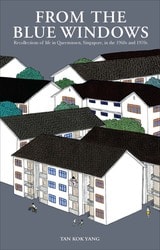
From the Blue Windows
Recollections of Life in Queenstown, Singapore, in the 1960s and 1970sTan Kok Yang
National University of Singapore Press, 2013
From the Blue Windows is a collection of Tan Kok Yang's memories of growing up in Queenstown back when the tallest residential building there was fourteen storeys, the Alexandra Canal flooded regularly, and wayang shows were a regular feature on Mei Ling Street. He stayed in Princess Estate, an area that was colloquially known as "the Blue Windows" because of its unique blue glass louvred windows.
With nostalgia and a sense of loss, this memoir is a personal tribute to and celebration of Queenstown and a simple but fulfilling way of life that has all but vanished from modern Singapore.
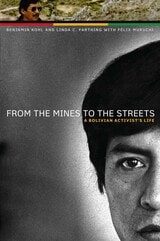
From the Mines to the Streets
A Bolivian Activist’s LifeBy Benjamin Kohl and Linda C. Farthing, with Félix Muruchi
University of Texas Press, 2011
From the Mines to the Streets draws on the life of Félix Muruchi to depict the greater forces at play in Bolivia and elsewhere in South America during the last half of the twentieth century. It traces Félix from his birth in an indigenous family in 1946, just after the abolition of bonded labor, through the next sixty years of Bolivia's turbulent history. As a teenager, Félix followed his father into the tin mines before serving a compulsory year in the military, during which he witnessed the 1964 coup d'état that plunged the country into eighteen years of military rule. He returned to work in the mines, where he quickly rose to become a union leader. The reward for his activism was imprisonment, torture, and exile. After he came home, he participated actively in the struggles against neoliberal governments, which led in 2006—the year of his sixtieth birthday—to the inauguration of Evo Morales as Bolivia's first indigenous president.
The authors weave Muruchi's compelling recollections with contextual commentary that elucidates Bolivian history. The combination of an unforgettable life story and in-depth text boxes makes this a gripping, effective account, destined to become a classic sourcebook.
From the Top
Brief Transmissions from Tent Show RadioMichael Perry
Wisconsin Historical Society Press, 2013
“Bottom line is, I’m the kind of guy who’s happy to go to the opera, but I should like to be allowed to wear steel-toed boots with my evening suit. I like to read Harper’s with a chaser of Varmint Hunter Magazine. Maybe that’s why I enjoy a good show under canvas. Here we sit, brain-deep in arts and culture, but we’re also just people hanging out in a tent, some of us wearing boots, a few of us wearing Birkenstocks, but best of all we’re breathing free fresh air filled with music.”
From Scandihoovian Spanglish to snickering chickens, New York Times bestselling author and humorist Michael Perry navigates a wide range of topics in this collection of brief essays drawn from his weekly appearances on the nationally syndicated Tent Show Radio program. Fatherhood, dumpster therapy, dangerous wedding rings, Christmas trees, used cars, why you should have bacon in your stock portfolio, loggers in clogs—whatever the subject, Perry has a rare ability to touch both the funny bone and the heart.
Frost Will Come
Essays from the BardoMary Cappello
University of Wisconsin Press, 2026
When her octogenarian poet mother was diagnosed with terminal ovarian cancer, Mary Cappello and her wife moved into the living room of Rosemary’s one-bedroom apartment in Philadelphia to help fulfill her wish to live out her life at home. A memoir in the form of lyric essays—with her mother’s own writing interspersed—Frost Will Come is a daughter’s tribute to her mother’s months-long transition from a deeply lived life to a difficult, beautiful, and uneasy death.
Cappello renders an immersive and emotionally honest portrait of modern caregiving in a prose style that is the very definition of candor. While paying homage to expert caregivers and medical professionals, Cappello also brings her signature razor-sharp analysis to all the things that fall outside the realm of (medical) knowledge—from platitudes around the time death takes to the defiance of a “peaceful death” as a sign of a moral failing. More than a memoir of grief, Frost Will Come is a rare reckoning with the very fundamentals of existence: how we come into being, how we care, and how we die.
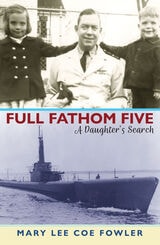
Full Fathom Five
A Daughter's SearchMary Lee Coe Fowler
University of Alabama Press, 2008
One woman’s quest for knowledge of her father lost at sea
Mary Lee Coe Fowler was a posthumous child, born after her father, a submarine skipper in the Pacific, was lost at sea in 1943. Her mother quickly remarried into a difficult and troubled relationship, and Mary Lee’s biological father was never mentioned. It was not until her mother died and Mary Lee was a middle-aged adult that she set out to learn not only who her father was, but what happened to him and his crew, and why—and also to confront why she had shied away from asking these questions until it was nearly too late.
Fowler searched through old ships’ logs, letters, and naval communiqués; visited submarine museums, the Naval Academy, and other pertinent sites; interviewed old friends and crew members who knew her dad and mom or served concurrently; and slowly reconstructed the world in which they lived. Beautifully written, Fowler’s memoir reveals what she eventually learned: of the perils and harships of submarine service in wartime, of the tragic irony of how her father’s sub was probably lost, and of the long-term damage experienced by the families of those who do not come home from war.
Full Moon at Noontide
A Daughter's Last GoodbyeAnn Putnam
University of Iowa Press, 2015