Results by title
4127 books match the query 'Science' and 235 start with f

Five Suns
A Fire History of MexicoStephen J. Pyne
University of Arizona Press, 2024
Narrating Mexico’s evolution of fire through five eras, historian Stephen J. Pyne describes the pre-human, pre-Hispanic, colonial, industrializing (1880–1980), and contemporary (1980–2015) fire biography of this diverse and dynamic country. Creatively deploying the Aztec New Fire Ceremony and the “five suns” that it birthed, Pyne addresses the question, “Why does fire appear in Mexico the way it does?” Five Suns tells the saga through a pyric prism.
Mexico has become one of the top ten “firepowers” in the world today through its fire suppression capabilities, fire research, and industrial combustion, but also by those continuing customary practices that have become increasingly significant to a world that suffers too much combustion and too little fire.
Five Suns completes a North American fire-history trilogy written by Pyne over the past 40 years, complementing his histories of Canada and the United States.

Flash Effect
Science and the Rhetorical Origins of Cold War AmericaDavid J. Tietge
Ohio University Press, 2002
The ways science and technology are portrayed in advertising, in the news, in our politics, and in the culture at large inform the way we respond to these particular facts of life. The better we are at recognizing the rhetorical intentions of the purveyors of information and promoters of mass culture, the more adept we become at responding intelligently to them.
Flash Effect, a startling book by David J. Tietge, documents the manner in which those at the highest levels of our political and cultural institutions conflated the rhetoric of science and technology with the rhetorics of religion and patriotism to express their policies for governance at the onset of the Cold War and to explain them to the American public.
Professor Tietge details our cultural attitudes about science in the early years of the Cold War, when on the heels of a great technological victory Americans were faced with the possibility of destruction by the very weapons that had saved them.
In Flash Effect we learn how, by symbolizing the scientist as both a father figure and a savior—and by celebrating the technological objects of his labor—the campaign to promote science took hold in the American consciousness. The products of that attitude are with us today more than ever.

Flattening the Earth
Two Thousand Years of Map ProjectionsJohn P. Snyder
University of Chicago Press, 1997
Flattening the Earth is the first detailed history of map projections since 1863. John P. Snyder discusses and illustrates the hundreds of known projections created from 500 B.C. to the present, emphasizing developments since the Renaissance and closing with a look at the variety of projections made possible by computers.
The book contains 170 illustrations, including outline maps from original sources and modern computerized reconstructions. Though the text is not mathematically based, a few equations are included to permit the more technical reader to plot some projections. Tables summarize the features of nearly two hundred different projections and list those used in nineteenth-and twentieth-century atlases.
"This book is unique and significant: a thorough, well-organized, and insightful history of map projections. Snyder is the world's foremost authority on the subject and a significant innovator in his own right."—Mark Monmonier, author of How to Lie with Maps and Mapping It Out: Expository Cartography for the Humanities and Social Sciences.

Flesh and Bones
The Art of AnatomyMonique Kornell
J. Paul Getty Trust, The, 2022
This illustrated volume examines the different methods artists and anatomists used to reveal the inner workings of the human body and evoke wonder in its form.
For centuries, anatomy was a fundamental component of artistic training, as artists such as Leonardo da Vinci and Michelangelo sought to skillfully portray the human form. In Europe, illustrations that captured the complex structure of the body—spectacularly realized by anatomists, artists, and printmakers in early atlases such as Andreas Vesalius’s De humani corporis fabrica libri septem of 1543—found an audience with both medical practitioners and artists.
Flesh and Bones examines the inventive ways anatomy has been presented from the sixteenth through the twenty-first century, including an animated corpse displaying its own body for study, anatomized antique sculpture, spectacular life-size prints, delicate paper flaps, and 3-D stereoscopic photographs. Drawn primarily from the vast holdings of the Getty Research Institute, the over 150 striking images, which range in media from woodcut to neon, reveal the uncanny beauty of the human body under the skin.
This volume is published to accompany an exhibition on view at the Getty Research Institute at the Getty Center from February 22 to July 10, 2022.
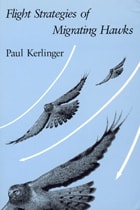
Flight Strategies of Migrating Hawks
Paul Kerlinger
University of Chicago Press, 1989
Kerlinger begins with an overview, discussing ecology and geography, research methods, natural history, and evolution, and atmospheric structure. He then addresses specific aspects of flight behavior: aerodynamics, morphology, mechanics, direction, altitude, flocking, water crossing, speed selection, daily distance traveled, and flight strategies. Kerlinger describes each aspect of behavior quantitatively, testing mechanistic hypotheses. In conclusion, he examines how migrants integrate these behavioral components. Throughout the text he draws comparisons between the migratory flight behavior of hawks and that of other taxa. By means of such comparisons, researchers can gain insight into the selective pressures that shape the behavior of migrant species.

Floating Gold
A Natural (and Unnatural) History of AmbergrisChristopher Kemp
University of Chicago Press, 2012
A fascinating natural history of an incredibly curious substance.
“Preternaturally hardened whale dung” is not the first image that comes to mind when we think of perfume, otherwise a symbol of glamour and allure. But the key ingredient that makes the sophisticated scent linger on the skin is precisely this bizarre digestive by-product—ambergris. Despite being one of the world’s most expensive substances (its value is nearly that of gold and has at times in history been triple it), ambergris is also one of the world’s least known. But with this unusual and highly alluring book, Christopher Kemp promises to change that by uncovering the unique history of ambergris.
A rare secretion produced only by sperm whales, which have a fondness for squid but an inability to digest their beaks, ambergris is expelled at sea and floats on ocean currents for years, slowly transforming, before it sometimes washes ashore looking like a nondescript waxy pebble. It can appear almost anywhere but is found so rarely, it might as well appear nowhere. Kemp’s journey begins with an encounter on a New Zealand beach with a giant lump of faux ambergris—determined after much excitement to nothing more exotic than lard—that inspires a comprehensive quest to seek out ambergris and its story. He takes us from the wild, rocky New Zealand coastline to Stewart Island, a remote, windswept island in the southern seas, to Boston and Cape Cod, and back again. Along the way, he tracks down the secretive collectors and traders who populate the clandestine modern-day ambergris trade.
Floating Gold is an entertaining and lively history that covers not only these precious gray lumps and those who covet them, but presents a highly informative account of the natural history of whales, squid, ocean ecology, and even a history of the perfume industry. Kemp’s obsessive curiosity is infectious, and eager readers will feel as though they have stumbled upon a precious bounty of this intriguing substance.

Floods, Droughts, and Climate Change
Michael Collier and Robert H. Webb
University of Arizona Press, 2002
This book shows that floods and droughts don't happen by accident but are the products of patterns of wind, temperature, and precipitation that produce meteorologic extremes. It introduces the mechanics of global weather, puts these processes into the longer-term framework of climate, and then explores the evolution of climatic patterns through time to show that floods and droughts, once considered isolated "acts of God," are often related events driven by the same forces that shape the entire atmosphere.
Michael Collier and Robert Webb offer a fresh, insightful look at what we know about floods, droughts, and climate variability—and their impact on people—in an easy-to-read text, with dramatic photos, that assumes no previous understanding of climate processes. They emphasize natural, long-term mechanisms of climate change, explaining how floods and droughts relate to climate variability over years and decades. They also show the human side of some of the most destructive weather disasters in history.
As Collier and Webb ably demonstrate, "climate" may not be the smooth continuum of meteorologic possibilities we supposed but rather the sum of multiple processes operating both regionally and globally on different time scales. Amid the highly politicized discussion of our changing environment, Floods, Droughts, and Climate Change offers a straightforward scientific account of weather crises that can help students and general readers better understand the causes of climate variability and the consequences for their lives.

Flora Zambesiaca Compositae 6 (4)
Edited by Benoit Loeuille
Royal Botanic Gardens, Kew, 2025
The Flora Zambesiaca series provides comprehensive descriptive accounts of the flowering plants and ferns native and naturalized in Zambia, Malawi, Mozambique, Zimbabwe, Botswana, and the Caprivi Strip.

Flora Zambesiaca Compositae 6(5)
D. J. Nicholas Hind
Royal Botanic Gardens, Kew, 2024
The Flora Zambesiaca series provides comprehensive descriptive accounts of the flowering plants and ferns native and naturalized in Zambia, Malawi, Mozambique, Zimbabwe, Botswana, and the Caprivi Strip. Volume 6 (5) covers part of Compositae, including detailed plant descriptions and botanical illustrations to aid identification.

Flora Zambesiaca Volume 10 Part 4
J. Timberlake
Royal Botanic Gardens, Kew, 2002

Flora Zambesiaca Volume 12 Part 1
Araceae (Including Lemnaceae)Edited by J. R. Timberlake and E. S. Martins
Royal Botanic Gardens, Kew, 2012

Flora Zambesiaca Volume 12 Part 2
Dioscoreaceae, Taccaceae, Burmanniaceae, Pandanaceae, Velloziaceae, Colchicaceae, Liliaceae, SmilacaceaeEdited by Jonathan Timberlake
Royal Botanic Gardens, Kew, 2009
Alismataceae, Limnocharitaceae, Hydrocharitaceae, Najadaceae, Aponogetonaceae, Juncaginaceae, Potamogetonaceae, Zosteraceae, Zannichelliaceae, Cymodoceaceae, Dioscoreaceae, Burmanniaceae, Pandanaceae, Velloziaceae, Colchicaceae, Liliaceae, Smilacaceae.

Flora Zambesiaca Volume 13 (3) Hyancinthaceae
Edited by Benoit Loeuille
Royal Botanic Gardens, Kew, 2023
The Flora Zambesiaca series provides comprehensive descriptive accounts of the flowering plants and ferns native and naturalized in Zambia, Malawi, Mozambique, Zimbabwe, Botswana, and the Caprivi Strip. Volume 14 covers the Hyancinthaceae in its entirety, including detailed plant descriptions and botanical illustrations to aid identification.
Flora Zambesiaca Volume 13 Part 1
Edited by J. R. Timberlake
Royal Botanic Gardens, Kew, 2008

Flora Zambesiaca Volume 13 Part 2
: Eriospermaceae, Dracaenaceae, Arecaceae (Palmae), Pontederiaceae, Bromeliaceae, MayacaceaeEdited by Jonathan Timberlake
Royal Botanic Gardens, Kew, 2011
This part covers the families:-
Eriospermaceae, Dracaenaceae, Arecaceae (Palmae), Pontederiaceae, Bromeliaceae, Mayacaceae.

Flora Zambesiaca Volume 13 Part 4
Xyridaceae, Eriocaulaceae, Typhaceae, Restionaceae, Flagellariaceae, Juncaceae, Musaceae, Strelitziaceae, Costaceae, Zingiberaceae, Cannaceae, MarantaceaeEdited by Jonathan Timberlake
Royal Botanic Gardens, Kew, 2010
This volume covers Xyridaceae, Eriocaulaceae, Typhaceae, Restionaceae, Flagellariaceae, Juncaceae, Musaceae, Strelitziaceae, Costaceae, Zingiberaceae, Cannaceae, Marantaceae.

Flora Zambesiaca Volume 14 Part 1
CyperaceaeEdited by Miguel A. Garcia and Jonathan R. Timberlake
Royal Botanic Gardens, Kew, 2020

Flora Zambesiaca Volume 3 Part 2
Edited by J. R. Timberlake, G.V. Pope, R.M. Polehill, and E.S. Martin
Royal Botanic Gardens, Kew, 2007
Flora Zambesiaca Volume 3 Part 3
PapilionoideaeEdited by J. R. Timberlake, R. M. Polhill, G. V. Pope, and E. S. Martins
Royal Botanic Gardens, Kew, 2007

Flora Zambesiaca Volume 7 Part 2
ApocynaceaeEdited by Miguel A. Garcia
Royal Botanic Gardens, Kew, 2020

Flora Zambesiaca
Volume 8, Part 6: Acanthaceae: Barleria to HypoestesEdited by J. R. Timberlake
Royal Botanic Gardens, Kew, 2014
Volume 8 part 6 covers the Acanthaceae family, from Barleria to Hypoestes.
Flora of Iraq Volume 6
CompositaeEdited by Shahina A. Ghazanfar, John R. Edmondson, D. J. Nicholas Hind
Royal Botanic Gardens, Kew, 2019
Flora of Iraq Volume 7
Solanaceae to BiebersteiniaceaeEdited by Shahina Ghazanfar, John Edmondson, and Ali Haboob
Royal Botanic Gardens, Kew, 2025
The Flora of Iraq is the only flora for this region in the Middle East. It enables anyone documenting, studying, or managing Iraq’s vast and rich flora to identify the vascular cryptograms and flowering plants. In addition to the detailed taxonomic information, a large amount of supplementary data of general biological interest and economic interest is provided, as well as notes on vernacular names. Nearing completion, the series fills a major gap in the floral knowledge of Iraq.
Flora of Iraq Volume Five Part One
Elatinaceae to SphenocleaceaeEdited by Shahina A. Ghazanfar
Royal Botanic Gardens, Kew, 2015

Flora of Iraq, Volume Five, Part Two
Lythraceae to CampanulaceaeEdited by Shahina A. Ghazanfar and John R. Edmondson
Royal Botanic Gardens, Kew, 2014

Flora of Tropical East Africa
Acanthaceae IIEdited by H. J. Beentje and S. A. Ghazanfar
Royal Botanic Gardens, Kew, 2010

Flora of Tropical East Africa
Acanthaceae Part 1H. J. Beentje
Royal Botanic Gardens, Kew, 2000

Flora of Tropical East Africa
Apocynaceae IIEdited by Henk J. Beentje
Royal Botanic Gardens, Kew, 2012
Flora of Tropical East Africa
AsparagaceaeSebsebe Demissew
Royal Botanic Gardens, Kew, 2006
Prepared at the Royal Botanic Gardens, Kew in co-operation with the East African Herbarium, the National Herbarium of Tanzania, and the Herbaria of Makerere University and Dar es Salaam University.
Flora of Tropical East Africa
AspleniaceaeKew Publishing
Royal Botanic Gardens, Kew, 2008
Prepared at the Royal Botanic Gardens, Kew in co-operation with the East African Herbarium, the National Herbarium of Tanzania, and the Herbaria of Makerere University and Dar es Salaam University.

Flora of Tropical East Africa
BlechnaceaeH. J. Beentje
Royal Botanic Gardens, Kew, 2006
Prepared at the Royal Botanic Gardens, Kew in co-operation with the East African Herbarium, the National Herbarium of Tanzania, and the Herbaria of Makerere University and Dar es Salaam University.
Flora of Tropical East Africa
ColchicaceaeH. J. Beentje
Royal Botanic Gardens, Kew, 2005
Prepared at the Royal Botanic Gardens, Kew in co-operation with the East African Herbarium, the National Herbarium of Tanzania, and the Herbaria of Makerere University and Dar es Salaam University.

Flora of Tropical East Africa
CommelinaceaeEdited by Henk Beentje
Royal Botanic Gardens, Kew, 2012
The Flora of Tropical East Africa is a descriptive, extensively illustrated account of the flowering plants and ferns native and naturalized in Kenya, Tanzania and Uganda, together with information on exotic ornamental and crop plants. At least one species of each genus is illustrated, and the bibliography and synonymy are sufficiently detailed to explain the nomenclature and taxonomic circumscriptions within a broad regional context. This part covers the Commelinaceae family.

Flora of Tropical East Africa
Compositae (Part 3)H. J. Beentje
Royal Botanic Gardens, Kew, 2005
Prepared at the Royal Botanic Gardens, Kew in co-operation with the East African Herbarium, the National Herbarium of Tanzania, and the Herbaria of Makerere University and Dar es Salaam University.
Flora of Tropical East Africa
CyatheaceaeH. J. Beentje
Royal Botanic Gardens, Kew, 2005
Prepared at the Royal Botanic Gardens, Kew in co-operation with the East African Herbarium, the National Herbarium of Tanzania, and the Herbaria of Makerere University and Dar es Salaam University.

Flora of Tropical East Africa
CyperaceaeEdited by H. J. Beentje and S. A. Ghazanfar
Royal Botanic Gardens, Kew, 2010
This part is devoted to the substantial family of Cyperaceae - or sedges.
Flora of Tropical East Africa
DracaenaceaeEdited by H.J. Beentje and S.A. Ghazanfar
Royal Botanic Gardens, Kew, 2007
Prepared at the Royal Botanic Gardens, Kew in co-operation with the East African Herbarium, the National Herbarium of Tanzania, and the Herbaria of Makerere University and Dar es Salaam University.
Flora of Tropical East Africa
HymenophyllaceaeH. J. Beentje and S. A. Ghazanfar
Royal Botanic Gardens, Kew, 2000
Flora of Tropical East Africa
Lamiaceae (Labiatae)Edited by H.J. Beentje and S.A. Ghazanfar
Royal Botanic Gardens, Kew, 2010
Prepared at the Royal Botanic Gardens, Kew in co-operation with the East African Herbarium, the National Herbarium of Tanzania, and the Herbaria of Makerere University and Dar es Salaam University.
Flora of Tropical East Africa
MalvaceaeEdited by H.J. Beentje and S.A. Ghazanfar
Royal Botanic Gardens, Kew, 2010
The 'Malvaceae' includes the genera Pavonia, Hibiscus and Abutilon.

Flora of Tropical East Africa
OchnaceaeH. J. Beentje
Royal Botanic Gardens, Kew, 2000
Flora of Tropical East Africa
ScrophulariaceaeH. J. Beentje
Royal Botanic Gardens, Kew, 2008
Prepared at the Royal Botanic Gardens, Kew in co-operation with the East African Herbarium, the National Herbarium of Tanzania, and the Herbaria of Makerere University and Dar es Salaam University.

Flora of Tropical East Africa
SolanaceaeEdited by Henk J. Beentje
Royal Botanic Gardens, Kew, 2012
The Flora of Tropical East Africa is a descriptive, extensively illustrated account of the flowering plants and ferns native and naturalized in Kenya, Tanzania, and Uganda, together with information on exotic ornamental and crop plants. At least one species of each genus is illustrated, and the bibliography and synonymy are sufficiently detailed to explain the nomenclature and taxonomic circumscriptions within a broad regional context. This part of the series is devoted to the Solanaceae or nightshade family, which includes both important agricultural crops as well as a number of toxic plants.

Flora of the Gran Desierto and Río Colorado Delta
Richard Stephen Felger
University of Arizona Press, 2001
Common names of plants are given in English, Spanish, and O'odham. While emphasizing scientific accuracy, the book is written in an accessible style. Felger's observations and knowledge of plant ecology, geographic distribution, evolution, ethnobotany, plant variation and special adaptations, and the history of the region provides botanists, naturalists, ecologists, conservationists, and anyone else celebrating the desert with readable, interesting, and important information. With two of Mexico's newest biosphere reserves—the Pinacate and the Upper Gulf of California—this region is a keystone for desert conservation efforts. Its location linking vast preserves to the north makes this book especially useful for anyone interested in borderland studies and the Sonoran Desert. Flora of the Gran Desierto represents a most creative, definitive, and enthusiastic treatment of Sonoran Desert plant life and is highly relevant to ecological restoration in deserts and wetlands in arid places worldwide.
Flora of the Guianas Series A
MeliaceaeEdited by Sylvia Mota de Oliveira
Royal Botanic Gardens, Kew, 2016
Flora of the Guianas Series A
Phanerogams Fascicle 27: 71. Cyrillaceae, 79. Theophrastaceae, 86. Habdodendraceae, 90. Proteaceae, 100. Combretaceae, 113. Dichapetalaceae, 167. Limnocharitaceae, 168. AlismataceaeEdited by M.J. Jansen-Jacobs
Royal Botanic Gardens, Kew, 2009
71. Cyrillaceae, 79. Theophrastaceae, 86. Habdodendraceae, 90. Proteaceae, 100. Combretaceae, 113. Dichapetalaceae 167. Limnochoaritaceae, 168. Alismataceae
Flora of the Guianas Series A
Phanerogams Fascicle 28: Leguminosae Subfamily 87. Mimosoideae.Edited by M. J. Jansen-Jacobs
Royal Botanic Gardens, Kew, 2011

Flora of the Guianas Series C
Bryophytes Fascicle 2Edited by M. J. Jansen-Jacobs
Royal Botanic Gardens, Kew, 2011
Flora of the Guianas Series E (Fungi and Lichens)
CladoniaceaeEdited by Sylvia Mota de Oliveira
Royal Botanic Gardens, Kew, 2014
Flora of the Guianas. Series A
Phanerogams Fascicle 23M. J. Jansen-Jacobs
Royal Botanic Gardens, Kew, 2006