Results by title
22279 books match the query 'Social Science' and 955 start with f
Fake
Anthropological KeywordsEdited by Jacob Copeman and Giovanni da Col
HAU, 2019
This timely book is the product of the first Annual Debate of Anthropological Keywords, a collaborative project between HAU, the American Ethnological Society, and L’Homme, held each year at the American Anthropological Association meetings. The aim of the debate is to reflect critically on keywords and terms that play a pivotal and timely role in discussions of different cultures and societies, and of the relations between them. This volume brings together leading thinkers to interrogate the concept of fake cross-culturally, including insightful contributions by Giovanni da Col, Gabriella Coleman, Veena Das, John Jackson Jr., Graham Jones, Carlo Severi, Alexei Yurchak, and Jacob Copeman.
All HAU Books are OPEN ACCESS, through Knowledge Unlatched, and are available on the HAU Books website: Haubooks.org.
Fall Guys
False Confessions and the Politics of MurderJim Fisher
Southern Illinois University Press, 1996
Jim Fisher, criminal justice professor and former FBI agent, reveals how he uncovered the framing of two boys in a pair of unrelated murders committed in 1956 and 1958.
In the first of the cases, eleven-year-old Charlie Zubryd confessed that at the age of eight, he had murdered his widowed mother by driving a hatchet into her skull. The crime was committed in the basement of the modest Zubryd home in a rural section of Sewickley Township in western Pennsylvania, an area not far from Pittsburgh. Following intense police questioning, young Zubryd confessed to the crime in March 1959, a full twenty-eight months after the bloody murder of his mother.
Too young to prosecute, Charlie Zubryd was adopted after his confession and a brief stay in a mental ward. A childless couple gave Zubryd a new name and identity. It would be twenty years before Charlie Zubryd—now going by the name Chuck Duffy—would have any contact with his biological family.
When Zubryd/Duffy made an effort to get his real family back, he was rejected because his relatives still believed he had murdered his mother. In fact, until Fisher began to investigate the case in 1989, Chuck Duffy himself was not sure he had not killed his mother during some kind of mental blackout.
The second murder occurred in 1958, two years after the Zubryd case. Thirteen-year-old Jerry Pacek endured forty-one hours of police grilling before he confessed to raping and killing fifty-year-old Lillian Steveck as she walked home one evening from a bus stop in Breckenridge, Pennsylvania. Pacek told the same Allegheny County homicide detective who had framed Charlie Zubryd that he had killed the woman with a variety of blunt objects, none of which were ever found. The thirteen-year-old boy was tried and convicted of the murder the following spring. He was sent to Camp Hill Prison, where he remained incarcerated for ten years.
Fisher’s investigation cleared the names of both the wrongfully accused boys. Because of his investigation, the Zubryd case was reopened, which led to the identification of a vicious killer. In 1991, Fisher’s investigative efforts convinced the governor of Pennsylvania to grant a full pardon to Jerry Pacek, who as a teenager had served ten years in an adult prison for a murder he had not committed.
Jim Fisher and the Zubryd and Pacek stories have been featured on a number of nationally broadcast television programs.
Fall or Fly
The Strangely Hopeful Story of Foster Care and Adoption in AppalachiaWendy Welch
Ohio University Press, 2017
Chaos. Frustration. Compassion. Desperation. Hope. These are the five words that author Wendy Welch says best summarize the state of foster care in the coalfields of Appalachia. Her assessment is based on interviews with more than sixty social workers, parents, and children who have gone through “the system.” The riveting stories in Fall or Fly tell what foster care is like, from the inside out.
In depictions of foster care and adoption, stories tend to cluster at the dark or light ends of the spectrum, rather than telling the day-to-day successes and failures of families working to create themselves. Who raises other people’s children? Why? What’s money got to do with it when the love on offer feels so real? And how does the particular setting of Appalachia—itself so frequently oversimplified or stereotyped—influence the way these questions play out?
In Fall or Fly, Welch invites people bound by a code of silence to open up and to share their experiences. Less inspiration than a call to caring awareness, this pioneering work of storytelling journalism explores how love, compassion, money, and fear intermingle in what can only be described as a marketplace for our nation’s greatest asset.
Falling Back
Incarceration and Transitions to Adulthood among Urban YouthFader, Jamie J
Rutgers University Press, 2013
Winner of the 2016 Outstanding Book for the Academy of Criminal Justice Science (ACJS)
2014 Scholarly Contribution Award from the Children and Youth Section of the American Sociological Association
Received an Honorable Mention for the American Sociological Association Race, Gender and Class Section's 2014 Distinguished Book Award
Named a 2013 Choice Outstanding Academic Title
Jamie J. Fader documents the transition to adulthood for a particularly vulnerable population: young inner-city men of color who have, by the age of eighteen, already been imprisoned. How, she asks, do such precariously situated youth become adult men? What are the sources of change in their lives?
Falling Back is based on over three years of ethnographic research with black and Latino males on the cusp of adulthood and incarcerated at a rural reform school designed to address “criminal thinking errors” among juvenile drug offenders. Fader observed these young men as they transitioned back to their urban Philadelphia neighborhoods, resuming their daily lives and struggling to adopt adult masculine roles. This in-depth ethnographic approach allowed her to portray the complexities of human decision-making as these men strove to “fall back,” or avoid reoffending, and become productive adults. Her work makes a unique contribution to sociological understandings of the transitions to adulthood, urban social inequality, prisoner reentry, and desistance from offending.
Fallout
Nuclear Diplomacy in an Age of Global FractureGrégoire Mallard
University of Chicago Press, 2014
In Fallout, Grégoire Mallard seeks to understand why some nations agreed to these limitations of their sovereign will—and why others decidedly did not. He builds his investigation around the 1968 signing of the Nuclear Nonproliferation Treaty (NPT), which, though binding in nature, wasn’t adhered to consistently by all signatory nations. Mallard looks at Europe’s observance of treaty rules in contrast to the three holdouts in the global nonproliferation regime: Israel, India, and Pakistan. He seeks to find reasons for these discrepancies, and makes the compelling case that who wrote the treaty and how the rules were written—whether transparently, ambiguously, or opaquely—had major significance in how the rules were interpreted and whether they were then followed or dismissed as regimes changed. In honing in on this important piece of the story, Mallard not only provides a new perspective on our diplomatic history, but, more significantly, draws important conclusions about potential conditions that could facilitate the inclusion of the remaining NPT holdouts. Fallout is an important and timely book sure to be of interest to policy makers, activists, and concerned citizens alike.
False Black Power?
Jason L. Riley
Templeton Press, 2017
Black civil rights leaders have long supported ethnic identity politics and prioritized the integration of political institutions, and seldom has that strategy been questioned. In False Black Power?, Jason L. Riley takes an honest, factual look at why increased black political power has not paid off in the ways that civil rights leadership has promised.
Recent decades have witnessed a proliferation of black elected officials, culminating in the historic presidency of Barack Obama. However, racial gaps in employment, income, homeownership, academic achievement, and other measures not only continue but in some cases have even widened. While other racial and ethnic groups in America have made economic advancement a priority, the focus on political capital for blacks has been a disadvantage, blocking them from the fiscal capital that helped power upward mobility among other groups.
Riley explains why the political strategy of civil rights leaders has left so many blacks behind. The key to black economic advancement today is overcoming cultural handicaps, not attaining more political power. The book closes with thoughtful responses from key thought leaders Glenn Loury and John McWhorter.
False Promises
The Shaping of American Working Class ConsciousnessStanley Aronowitz
Duke University Press, 1992

False Promises
The Struggle for Black Voting Rights in 1800s OhioRic S. Sheffield
Ohio University Press, 0
Brings to life the struggle for Black suffrage in nineteenth-century Ohio
In False Promises, the fight for Black voting rights in Ohio comes alive through narratives of men of color who defied the state’s nineteenth-century restrictions on suffrage. Though ratification of the Fifteenth Amendment ostensibly extended the franchise, state election laws still forced men of color into a perilous struggle for full citizenship. Ric S. Sheffield depicts their courage and determination, revealing their humanity through stories of sacrifice, resistance, and hope.
Drawing on Saidiya Hartman’s concept of critical fabulation, Sheffield weaves together historical records with imaginative reconstructions of dialogue, setting, and descriptive elements beyond the dusty courthouse pages. Grounded in archival evidence yet reimagined to fill in the silences, these stories recount the lived experiences of those who risked everything to exercise their right to vote.
False Promises also connects these historical battles to the present, illustrating how voter-suppression tactics in today’s Ohio have roots in the racial exclusions of the nineteenth century. By exposing the enduring legacy of white supremacist policies, the book challenges the widespread misconception that racial disenfranchisement was solely a southern problem. Ohio’s complex racial history—noted for its role in the Underground Railroad but also for its repressive Black Laws—also includes a fierce and ongoing struggle over the right to vote. Through compelling storytelling, historical analysis, and a reclamation of voices lost to history, False Promises urges readers to reconsider their understanding of democracy and the right to vote.
Fame and Fandom
Functioning On and OfflineCelia Lam
University of Iowa Press, 2022
In case studies including Supernatural, Harry Styles, YouTube influencers, film location sites, Keanu Reeves, and celebrities as fans, readers find new approaches to fan/celebrity encounters and parasocial relationships. This is the go-to volume on the symbiotic relationship between fame and fandom.
Familial Fitness
Disability, Adoption, and Family in Modern AmericaSandra M. Sufian
University of Chicago Press, 2022
Disability and child welfare, together and apart, are major concerns in American society. Today, about 125,000 children in foster care are eligible and waiting for adoption, and while many children wait more than two years to be adopted, children with disabilities wait even longer. In Familial Fitness, Sandra M. Sufian uncovers how disability operates as a fundamental category in the making of the American family, tracing major shifts in policy, practice, and attitudes about the adoptability of disabled children over the course of the twentieth century.
Chronicling the long, complex history of disability, Familial Fitness explores how notions and practices of adoption have—and haven’t—accommodated disability, and how the language of risk enters into that complicated relationship. We see how the field of adoption moved from widely excluding children with disabilities in the early twentieth century to partially including them at its close. As Sufian traces this historical process, she examines the forces that shaped, and continue to shape, access to the social institution of family and invites readers to rethink the meaning of family itself.
Familial Undercurrents
Untold Stories of Love and Marriage in Modern IranAfsaneh Najmabadi
Duke University Press, 2022
Familiar Perversions
The Racial, Sexual, and Economic Politics of LGBT FamiliesMontegary, Liz
Rutgers University Press, 2018
Over the past two decades, same-sex couples raising children have become more visible within US political and popular culture. Thanks to widely circulated images of well-mannered, well-dressed, and well-off two-parent families, a select number of LGBT-identified parents have gained recognition as model American citizens. In Familiar Perversions, Liz Montegary shows how this seemingly progressive view of same-sex parenting has taken shape during a period of growing racial inequality and economic insecurity in the United States. This book evaluates the recent successes of the “family equality” movement, while asking important questions about its relationship to neoliberalism, the policing of sexual cultures, and the broader context of social justice organizing at the turn of the twenty-first century.
Montegary’s investigation of the politics of LGBT family life takes us on a journey that includes not only activist events and the courtrooms where landmark decisions about same-sex families were made, but also parenting workshops, cruise ships, and gay resort towns. Through its sustained historical analysis, Familiar Perversions lays critical groundwork for imagining a queer family movement that can support and strengthen the diverse networks of care, kinship, and intimacy on which our collective survival depends.
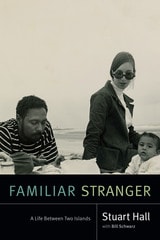
Familiar Stranger
A Life Between Two IslandsStuart Hall
Duke University Press, 2017
Growing up in a middle-class family in 1930s Kingston, Jamaica, still then a British colony, the young Stuart Hall found himself uncomfortable in his own home. He lived among Kingston's stiflingly respectable brown middle class, who, in their habits and ambitions, measured themselves against the white elite. As colonial rule was challenged, things began to change in Kingston and across the world. In 1951 a Rhodes scholarship took Hall across the Atlantic to Oxford University, where he met young Jamaicans from all walks of life, as well as writers and thinkers from across the Caribbean, including V. S. Naipaul and George Lamming. While at Oxford he met Raymond Williams, Charles Taylor, and other leading intellectuals, with whom he helped found the intellectual and political movement known as the New Left. With the emotional aftershock of colonialism still pulsing through him, Hall faced a new struggle: that of building a home, a life, and an identity in a postwar England so rife with racism that it could barely recognize his humanity.
With great insight, compassion, and wit, Hall tells the story of his early life, taking readers on a journey through the sights, smells, and streets of 1930s Kingston while reflecting on the thorny politics of 1950s and 1960s Britain. Full of passion and wisdom, Familiar Stranger is the intellectual memoir of one of our greatest minds.
Families Apart
Migrant Mothers and the Conflicts of Labor and LoveGeraldine Pratt
University of Minnesota Press, 2012
In a developing nation like the Philippines, many mothers provide for their families by traveling to a foreign country to care for someone else’s. Families Apart focuses on Filipino overseas workers in Canada to reveal what such arrangements mean for families on both sides of the global divide.
The outcome of Geraldine Pratt’s collaboration with the Philippine Women Centre of British Columbia, this study documents the difficulties of family separation and the problems that children have when they reunite with their mothers in Vancouver. Aimed at those who have lived this experience, those who directly benefit from it, and those who simply stand by and watch, Families Apart shows how Filipino migrant domestic workers—often mothers themselves—are caught between competing neoliberal policies of sending and receiving countries and how, rather than paying rich returns, their ambitions as migrants often result in social and economic exclusion for themselves and for their children. This argument takes shape as an open-ended series of encounters, moving between a singular academic voice and the “we” of various research collaborations, between Vancouver and the Philippines, and between genres of “evidence-based” social scientific research, personal testimony, theatrical performance, and nonfictional narrative writing.
Through these experiments with different modes of storytelling, Pratt seeks to transform frameworks of perception, to create and collect sympathetic witnesses—in short, to promote a wide-ranging public discussion and debate about a massive worldwide shift in family (and nonfamily) relations of intimacy and care.
Families That Work
Policies for Reconciling Parenthood and EmploymentJanet C. Gornick
Russell Sage Foundation, 2003
Families We Need
Disability, Abandonment, and Foster Care’s Resistance in Contemporary ChinaErin Raffety
Rutgers University Press, 2023
Families and Food in Hard Times
European Comparative ResearchRebecca O'Connell and Julia Brannen
University College London, 2021
Food is fundamental, yet food poverty has increased in the Global North. Adopting a comparative case approach, Food and Families in Hard Times addresses the global problem of economic retrenchment and the burden it places on the most vulnerable. This timely book examines food poverty in the United Kingdom, Portugal, and Norway following the 2008 financial crisis, examining the resources available to families in relation to the intersection of public policies, local institutions, and kinship networks. The book explores the ways that low income impacts household food provisioning, formal and informal support for struggling families, the provision and role of school meals, and constraints upon families’ social participation. Drawing upon extensive and intensive knowledge on the conditions and experiences of low-income families, the book also draws upon current research in European social science literature to shed light on the causes and consequences of food poverty in austerity-era Europe.
Families and Religion
Dynamics of Transmission Across GenerationsEdited by Christel Gärtner, Linda Hennig, and Olaf Müller
Campus Verlag, 2025
How does religion—or the lack of it—pass from one generation to the next? Families and Religion studies the intergenerational shifts in faith and secularism in Germany, Italy, Hungary, Finland, and Canada, depicting when, how, and why religious beliefs change.
Using a mixed-methods approach, the book looks into the role of family and historical context in shaping religious affiliation and identity, specifically focusing on adolescence as a key period of transformation. Comparing diverse social settings, the authors uncover the subtle yet powerful forces influencing whether religious traditions persist or fade across generations. A vital contribution to the study of religious change, this volume offers new insights for scholars of sociology and religious studies, and for those interested in understanding how faith may be passed down within families.
Families as Sources of Strength, Healing, and Hope
Groves Monographs on Marriage and Family (Volume 9)Edited by Raeann Hamon and Chloe D. Merrill
Michigan Publishing Services, 2026
Groves Monographs on Marriage and Familyis an edited book series based on the annual meetings of the Groves Conference on Marriage and Family, an interdisciplinary, interprofessional organization of limited invited membership founded in 1934. The Groves Monographs publishes work on the leading edges of theory development and empirical research in the field of family studies. Individual volumes are edited by the chairs of the annual Groves Conferences and include peer-reviewed chapters by the conference presenters and invited authors. Topics are timely and provocative with diverse themes.
Volume 9: Families as Sources of Strength Healing and Hope This monograph elaborates on the theme of the 2022 Groves Conference on Marriage and Family held in Paradise Island, Bahamas--- Families as Sources of Strength, Hope and Healing. The authors offer insights into and the value of employing a strengths-based mindset, whether engaging in clinical work or teaching. They also identify numerous factors which empower children, couples, and families, including things like expressing love, commitment, and relational fidelity. This volume is intended to help researchers, practitioners, and the lay public to adopt a more strengths-based and hopeful approach to relationships.
Families at Work
Expanding the BoundsNaomi Gerstel
Vanderbilt University Press, 2002
To discuss work and family is also to discuss gender. Ranging from California's Silicon Valley to a remote fishing village in the northeast, part one shows how new work arrangements have created new expectations for what it means to be a woman or a man, and how slow and uneven the pace of change can be. Nowhere are the tensions of work and family more potent than around childcare. Part two takes up these tensions, showing how various "solutions" to caring for children of all ages (whether infants or teenagers) create new problems. Parts three and four turn outward to show how the new relationships between families and work are changing the relationships between families and the communities in which they live and generating new social policy dilemmas.
Families at the Intersection of Mental Health and Disabilities
Groves Monographs on Marriage and Family (Volume 6)Brian Paul Masciadrelli
Michigan Publishing Services, 2022
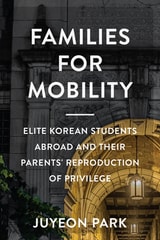
Families for Mobility
Elite Korean Students Abroad and Their Parents' Reproduction of PrivilegeJuyeon Park
Rutgers University Press, 2025
Families, Lovers, and their Letters
Italian Postwar Migration to CanadaSonia Cancian
University of Manitoba Press, 2010
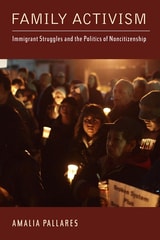
Family Activism
Immigrant Struggles and the Politics of NoncitizenshipPallares, Amalia
Rutgers University Press, 2014
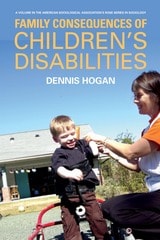
Family Consequences of Children’s Disabilities
Denis P. Hogan
Russell Sage Foundation, 2012
Family Life and School Achievement
Why Poor Black Children Succeed or FailReginald M. Clark
University of Chicago Press, 1984
To support his contentions, Clark offers ten intimate portraits of Black families in Chicago. Visiting the homes of poor one- and two-parent families of high and low achievers, Clark made detailed observations on the quality of home life, noting how family habits and interactions affect school success and what characteristics of family life provide children with "school survival skills," a complex of behaviors, attitudes, and knowledge that are the essential elements in academic success.
Clark's conclusions lead to exciting implications for educational policy. If school achievement is not dependent on family structure or income, parents can learn to inculcate school survival skills in their children. Clark offers specific suggestions and strategies for use by teachers, parents, school administrators, and social service policy makers, but his work will also find an audience in urban anthropology, family studies, and Black studies.

Family Matters in the British and American Novel
Andrea O’Reilly Herrera
University of Wisconsin Press, 1997
Family Secrets
Risking Reproduction in Central MozambiqueRachel R. Chapman
Vanderbilt University Press, 2010
Pregnant herself during her research, Chapman interviewed 83 women during pregnancy and postpartum. She discovered that the social relations surrounding traditional Shona practices, Christian faith healing, and Western biomedical treatments are as important to women's choices as the efficacy of the therapies.
Family Ties
John R. Logan and Glenna D. Spitze
Temple University Press, 1997
The authors reveal that parents are not dependent on help from their grown children, as was previously assumed; in fact they contribute more assistance than they receive until the age of seventy-five. Also, while daughters are still the dominant caregivers, other forms of support like visiting and providing transportation are given almost equally by sons and daughters.
Logan and Spitze also report that even though the day-to-day demands on adult children have increased with the changing economy, very few seem to be torn between these responsibilities and those those of caring for their parents. This book offers reassuring news about the strength of the American family in the midst of social change. Family Ties will be a valuable resource for anyone interested in intergenerational relationships in adulthood.
Family Trouble
Middle-Class Parents, Children's Problems, and the Disruption of Everyday LifeFrancis, Ara
Rutgers University Press, 2015
Francis interviewed the mothers and fathers of children with such problems as depression, bi-polar disorder, autism, learning disabilities, drug addiction, alcoholism, fetal alcohol syndrome, and cerebral palsy. Children’s problems, she finds, profoundly upset the foundations of parents’ everyday lives, overturning taken-for-granted expectations, daily routines, and personal relationships. Indeed, these problems initiated a chain of disruption that moved through parents’ lives in domino-like fashion, culminating in a crisis characterized by uncertainty, loneliness, guilt, grief, and anxiety. Francis looks at how mothers and fathers often differ in their interpretation of a child’s condition, discusses the gendered nature of child rearing, and describes how parents struggle to find effective treatments and to successfully navigate medical and educational bureaucracies. But above all, Family Trouble examines how children’s problems disrupt middle-class dreams of the “normal” family. It captures how children’s problems “radiate” and spill over into other areas of parents’ lives, wreaking havoc even on their identities, leading them to reevaluate deeply held assumptions about their own sense of self and what it means to achieve the good life.
Engagingly written, Family Trouble offers insight to professionals and solace to parents. The book offers a clear message to anyone in the throes of family trouble: you are in good company, and you are not as different as you might feel...
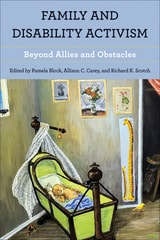
Family and Disability Activism
Beyond Allies and ObstaclesEdited by Pamela Block, Allison C. Carey, and Richard K. Scotch
Temple University Press, 2025
Family and Disability Activism reveals how families and disabled people who identify as BIPOC and/or LGBTQIA2S+ understand issues of rights versus justice. Contributions by Deaf and disabled activists emphasize the frequent need for either care or independence. Other chapters show how members of the disabled community and their families must navigate systemic issues of segregation, institutionalization, and access to special education services differently depending on their ethnic and racial identities.
Expanding the conversation about disability, kinship, biological and chosen families, and activism, this volume amplifies important voices in the fight for disability rights.
Contributors: Erin Compton, Diane Compton, Jaclyn Ellis, Laura LeBrun Hatcher, Elena Hung, Bridget Liang, Jenelle Rouse, Cheryl Najarian Souza, Jeneva Stone, Roger A. Stone, Lisette E. Torres, Grace Tsao, and the editors
Family and Work in Everyday Ethnography
Tamara M. Brown
Temple University Press, 2013

Family in the Time of COVID
International PerspectivesEdited by Katherine Twamley, Humera Iqbal, and Charlotte Faircloth
University College London, 2023
COVID-19 turned the world as we knew it upside down, impacting families around the world in profound ways. Seeking to understand this global experience, Family in the Time of COVID brings together case studies from ten countries across the world that explore how local responses to the pandemic shaped and were shaped by understandings and practices of family life.
Carried out by an international team during the first year of the pandemic, these in-depth, longitudinal, qualitative investigations examined the impact of the pandemic on families and relationships across diverse contexts and cultures. They looked at how families made sense of complex lockdown laws, how they coped with collective worry about the unknown, managed their finances, fed themselves, and got to grips with online work and schooling to understand better how life had transformed (or not). In short, the research revealed their everyday joys and struggles in times of great uncertainty.
Each case study follows the same methodology revealing experiences in Argentina, Chile, Pakistan, Russia, Singapore, South Africa, Sweden, Taiwan, the United Kingdom, and the United States. They show how local government responses were understood and responded to by families and how different cultures and life circumstances impacted everyday life during the pandemic. Ultimately the analysis demonstrates how experiences of global social upheaval are shaped by international and local policies, as well as the sociocultural ideas and practices of diverse families.
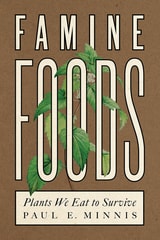
Famine Foods
Plants We Eat to SurvivePaul E. Minnis
University of Arizona Press, 2021
How people eat today is a record of food use through the ages—and not just the decadent, delicious foods but the less glamorous and often life-saving foods from periods of famine as well. In Famine Foods, Paul E. Minnis focuses on the myriad plants that have sustained human populations throughout the course of history, unveiling the those that people have consumed, and often still consume, to avoid starvation. For the first time, this book offers a fascinating overview of famine foods—how they are used, who uses them, and, perhaps most importantly, why they may be critical to sustain human life in the future.
In addition to a broader discussion of famine foods, Minnis includes fourteen short case studies that examine the use of alternative foods in human societies throughout the world, from hunter-gatherers to major nations. When environmental catastrophes, war, corrupt governments, annual hunger seasons, and radical agricultural policies have threatened to starve populations, cultural knowledge and memories of food shortages have been crucial to the survival of millions of people.Famine Foods dives deeply into the cultural contexts of famine food use, showing the curious, strange, and often unpleasant foods people have turned to in order to get by. There is not a single society or area of the world that is immune to severe food shortages, and gaining a deeper knowledge of famine foods will be relevant for the foreseeable future of humanity.
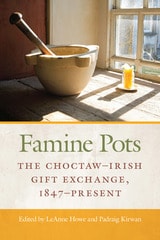
Famine Pots
The Choctaw–Irish Gift Exchange, 1847–PresentLeAnne Howe
Michigan State University Press, 2020
Famine in the Remaking
Food System Change and Mass Starvation in Hawaii, Madagascar, and CambodiaStian Rice
West Virginia University Press, 2020
Famine in the Remaking examines the relationship between the reorganization of food systems and large-scale food crises through a comparative historical analysis of three famines: Hawaii in the 1820s, Madagascar in the 1920s, and Cambodia in the 1970s. This examination identifies the structural transformations—that is, changes to the relationships between producers and consumers—that make food systems more vulnerable to failure. Moving beyond the economic and political explanations for food crisis that have dominated the literature, Stian Rice emphasizes important socioecological interactions, developing a framework for crisis evolution that identifies two distinct temporal phases and five different types of causal mechanisms involved in food system failure. His framework contributes to current work in famine prevention and, animated by a commitment to social justice, offers the potential for early intervention in emerging food crises.
Famous Last Words
An AnthologyEdited by Claire Cock-Starkey
Bodleian Library Publishing, 2016
Over the years, family and loved ones have recorded an extraordinary number of famous last words, from kings and queens to politicians, philosophers, scientists, writers, and actors. These exit lines can impart keen insights from an extraordinary life, reveal a sense of humor indomitable in even the darkest hours, or tell us something about a celebrated person’s last moments of life. Perhaps unavoidably given their provenance, many last words have proven irresistible to embellishment or remain in question. King Charles II, for example, was said to have instructed his brothers to “let not Poor Nelly starve,” asking that his favorite mistress be provided a pension of 1,500 pounds a year. Although she did indeed receive said pension, some contend that Charles’s actual last words, following a long period of illness, were, “You must pardon me, gentlemen, for being a most unconscionable time a-dying.”
For Famous Last Words, Claire Cock-Starkey has collected the most interesting, insightful, and controversial last words, from deathbed desperation to the fondest of farewells.
Famous Long Ago
My Life and Hard Times with Liberation News ServiceRaymond Mungo
University of Massachusetts Press, 2012
Originally published in 1970, Raymond Mungo's picaresque account of his adventures with Liberation News Service in the wild years of 1967 and 1968 has been variously described as youthful, passionate, lyrical, demented, and an iconic symbol of the sixties counterculture. A review in The Nation described it as “hip Huck Finn.”
A college editor at the height of the Vietnam War, Mungo found himself smack in the middle of a mad swirl of activism and dissent, vigorously protesting everything from the draft to abortion laws to the university itself. Then he connected with Marshall Bloom to cofound LNS in Washington, D.C., as a news service catering to the burgeoning underground press. One thing led to another, until LNS, like so many other radical organizations, eventually disintegrated into violently warring factions. Mungo's memoir tracks its development and destruction with wicked humor and literary panache.
In an introduction to this new edition, John McMillian discusses the enduring appeal of Famous Long Ago and situates it within its broader historical context, while the author provides his own retrospective take in a new afterword.

Fan Phenomena
BatmanEdited by Liam Burke
Intellect Books, 2013
Fan Phenomena
Buffy the Vampire SlayerEdited by Jennifer K. Stuller
Intellect Books, 2013
Fan Phenomena
Doctor WhoEdited by Paul Booth
Intellect Books, 2013
Fan Phenomena
Game of ThronesEdited by Kavita Mudan Finn
Intellect Books, 2017
With the seventh season of the HBO series in production, Game of Thrones has been nominated for multiple awards, its cast has been catapulted to celebrity, and references to it proliferate throughout popular culture. Often positioned as the grittier antithesis to J. R. R. Tolkien’s Lord of the Rings, Martin’s narrative focuses on the darker side of chivalry and heroism, stripping away these higher ideals to reveal the greed, amorality, and lust for power underpinning them.
Fan Phenomena: Game of Thrones is an exciting new addition to the Intellect series, bringing together academics and fans of Martin’s universe to consider not just the content of the books and HBO series, but fan responses to both. From trivia nights dedicated to minutiae to forums speculating on plot twists to academics trying to make sense of the bizarre climate of Westeros, everyone is talking about Game of Thrones. Edited by Kavita Mudan Finn, the book focuses on the communities created by the books and television series and how these communities envision themselves as consumers, critics, and even creators of fanworks in a wide variety of media, including fiction, art, fancasting, and cosplay.
Fan Phenomena
Harry PotterEdited by Valerie Estelle Frankel
Intellect Books, 2019
Even as a new generation embraces the Harry Potter novels for the first time, J.K. Rowling’s wizarding world continues to expand. Rowling herself has created a five-film spinoff, a two-part stage play, and an immersive online universe. The fictional sport of Quidditch now has a real-world counterpart, complete with an international governing body and a major league. Fans have adapted the series into role-playing games, crossover parodies, musicals, films, dances, art, and real, published fiction. There are new mobile games, toys, theme parks—even a complete line of Harry Potter–inspired home décor from Pottery Barn.
More than ten years have passed since the end of the series, and Potterheads still can’t get enough. In this addition to Intellect’s Fan Phenomena series, enthusiasts and scholars explore the culture of the fandom, its evolution, and how it managed to turn a boy wizard into the international icon we see splashed across lunchboxes, printed on t-shirts, and enshrined in tattoos. Harry Potter: Fan Phenomena is a journey—yes, a magical one—through one of the largest fanbases of all time and their efforts to ensure that The Boy Who Lived would live forever.
Fan Phenomena
James BondEdited by Claire Hines
Intellect Books, 2015
Fan Phenomena: James Bond explores the devoted fanbase that has helped make Bond what he is, offering a serious but wholly accessible take on the many different ways that fans have approached, appreciated, and appropriated Bond over the sixty years of his existence from the pages of Ian Fleming’s novels to the screen. Including analyses of Bond as a lifestyle icon, the Bond brand, Bond-inspired fan works, and the many versions of 007, the book reveals a fan culture that is vibrant, powerfully engaged, and richly aware of the history and complexity of the character of Bond and what he represents.
Whether your favorite Bond is Daniel Craig or Sean Connery (or even George Lazenby!), Fan Phenomena: James Bond is sure to go down as smooth as a shaken—not stirred—martini.
Fan Phenomena
Jane AustenEdited by Gabrielle Malcolm
Intellect Books, 2015
It was not until her nephew published a memoir of his “dear Aunt Jane” more than five decades after her death that she became widely known. From then on, her fame only grew, and fans and devotees, so-called Janeites, soon obsessed over and idolized her. Austen soon found an appreciative audience not only of readers but also of academics, whose scholarship legitimated and secured her place in the canon of Western literature. Today, Austen’s work is still assigned in courses, obsessed over by readers young and old, parodied and parroted, and adapted for films.
Were she alive today, Austen might not recognize some of the work her novels have inspired, such as a retelling of Sense and Sensibility featuring sea monsters, Internet fan fiction, or a twelve-foot statue of a wet-shirted Colin Firth as Mr. Darcy depicting a scene that doesn’t even appear in her novel. But like any great art that endures and excites long after it is made, Austen’s novels are inextricable from the culture they have created. Essential reading for Austen’s legions of admirers, Fan Phenomena: Jane Austen collects essays from writers and critics that consider the culture surrounding Austen’s novels.
Fan Phenomena
Marilyn MonroeEdited by Marcelline Block
Intellect Books, 2015
The essays here explore representations of Monroe in visual culture by looking at the ways she is reimagined in visual art while also considering how her posthumous appearance and image are appropriated in current advertisements. With an inside look at the universe of Marilyn Monroe impersonators and look-alike contests for both males and females, the book also explores numerous homages to Monroe in music, from the 1979 opera Marilyn by Lorenzo Ferrero to Nicki Minaj’s song “Marilyn Monroe.” The definitive guide to one of the most famous women who ever lived, the book will be essential reading for any scholar of twentieth-century American popular culture.
Fan Phenomena
Star TrekEdited by Bruce E. Drushel
Intellect Books, 2013
Fan Phenomena
Star WarsEdited by Mika Elovaara
Intellect Books, 2013
Fan Phenomena
Twin PeaksEdited by Marisa C. Hayes and Franck Boulègue
Intellect Books, 2013
Fan Phenomena: Twin Peaks is the first book of its kind to revisit Lynch and Frost's groundbreaking series and explore how the show's cult status continues to thrive in the digital era. In ten essays, the contributors take a deeper look at Twin Peaks' rich cast of characters, iconic locations, and its profound impact on television programming, as well as the impact of new media and fan culture on the show’s continued relevance. Written by fans for fans, Fan Phenomena: Twin Peaks is an intelligent yet accessible guide to the various aspects of the show and its subsequent film. Featuring commentary from both first generation and more recent followers, these essays capture the endlessly fascinating universe of Twin Peaks, from Audrey Horne's keen sense of style to Agent Cooper's dream psychology.
The first non-academic collection that speaks to the show's fan base rather than a scholarly audience, this book is more approachable than previous Twin Peaks critical studies volumes and features color images of the series, film, and fan media. It will be welcomed by anyone seduced by the strangeness and camp of Lynch’s seminal series.

Fan Sites
Film Tourism and Contemporary FandomAbby S. Waysdorf
University of Iowa Press, 2021
Fan Sites explores the different relationships that fans build with these places of fandom, from the exploratory knowledge-building of Game of Thrones fans on vacation, the appreciative evaluations of Harry Potter fans at the Wizarding World of Harry Potter, to the frequent “homecoming” visits of Prisoner fans, who see Portmeirion as a “safe vault” and the home of their fandom. Including engaging accounts of real fans at each location, Fan Sites addresses what the rise of fan tourism and places of fandom might mean for the future of fandom and its relationship with the media industry.