Results by title
3703 books match the query '19th Century' and 164 start with f
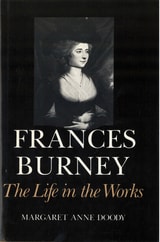
Frances Burney
The Life in the WorksDoody, Margaret A
Rutgers University Press, 1988
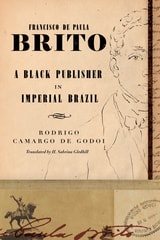
Francisco de Paula Brito
A Black Publisher in Imperial BrazilRodrigo Camargo de Godoi
Vanderbilt University Press, 2020
During that period, Francisco de Paula Brito became one of the central figures in the cultural and political scene in the Imperial capital, particularly through his work as a publisher. Paula Brito’s success was due in part to his ability to forge solid alliances with the Empire’s ruling elite—among them leading politicians responsible for the unification of the vast Brazilian territory and for the maintenance of slavery and the illegal trafficking of Africans. Consequently, through the books and newspapers he published, Francisco de Paula Brito became part of a much larger project.
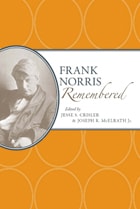
Frank Norris Remembered
Edited by Jesse S. Crisler and Joseph R. McElrath Jr.
University of Alabama Press, 2013
Frank Norris Remembered is a collection of reminiscences by Norris’s contemporaries, friends, and family that illuminate the life of a popular American novelist.
Considering his undergraduate education spent studying art at Académie Julian in Paris and creative writing at Harvard and his journalism career reporting from the far reaches of South Africa and Cuba, it is difficult to fathom how Frank Norris also found time to compose seven novels during the course of his brief life. But despite his adventures abroad, Norris turned out novels at a dizzying pace. He published Moran of the Lady Letty in 1898, McTeague early in 1899, Blix later that year, A Man’s Woman in February 1900, and The Octopus, the first in his ultimately unfinished “Epic of the Wheat” trilogy, in 1901. By informing his novels with his own experiences abroad, Norris composed works that were politically charged and culturally relevant and that made considerable contributions to the character of American literature in the twentieth century.
Frank Norris died at the age of thirty-two in 1902 from peritonitis resulting from a burst appendix, leaving behind a wife, a daughter, and an unfinished series of novels (two of which, The Pit and Vandover and the Brute, were published posthumously). The aim of Frank Norris Remembered, edited by Jesse S. Crisler and Joseph R. McElrath Jr., is to re-create the short, spectacular life of this American author through the eyes of those who knew him best. The fifty reminiscences included in this book feature the voices of Frank N. Doubleday; William Dean Howells; Hamlin Garland; Norris’s wife, Jeannette; and many others who were lucky enough to form a relationship with this vital twentieth-century American author, artist, and adventurer.
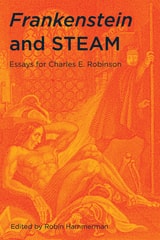
Frankenstein and STEAM
Essays for Charles E. RobinsonRobin Hammerman
University of Delaware Press, 2022
Charles E. Robinson, Professor Emeritus of English at The University of Delaware, definitively transformed study of the novel Frankenstein with his foundational volume The Frankenstein Notebooks and, in nineteenth century studies more broadly, brought heightened attention to the nuances of writing and editing. Frankenstein and STEAM consolidates the generative legacy of his later work on the novel's broad relation to topics in science, technology, engineering, arts, and mathematics (STEAM). Seven chapters written by leading and emerging scholars pay homage to Robinson's later perspectives of the novel and a concluding postscript contains remembrances by his colleagues and students. This volume not only makes explicit the question of what it means to be human, a question Robinson invited students and colleagues to examine throughout his career, but it also illustrates the depth of the field and diversity of those who have been inspired by Robinson's work. Frankenstein and STEAM offers direction for continuing scholarship on the intersections of literature, science, and technology.
Published by the University of Delaware Press. Distributed worldwide by Rutgers University Press.
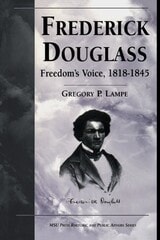
Frederick Douglass
Freedom's Voice, 1818-1845Gregory P. Lampe
Michigan State University Press, 1998
This work in the MSU Press Rhetoric and Public Affairs Series chronicles Frederick Douglass's preparation for a career in oratory, his emergence as an abolitionist lecturer in 1841, and his development and activities as a public speaker and reformer from 1841 to 1845. Lampe's meticulous scholarship overturns much of the conventional wisdom about this phase of Douglass's life and career uncovering new information about his experiences as a slave and as a fugitive; it provokes a deeper and richer understanding of this renowned orator's emergence as an important voice in the crusade to end slavery.
Contrary to conventional wisdom, Douglass was well prepared to become a full-time lecturer for the Massachusetts Anti-Slavery Society in 1841. His emergence as an eloquent voice from slavery was not as miraculous as scholars have led us to believe. Lampe begins by tracing Douglass's life as slave in Maryland and as fugitive in New Bedford, showing that experiences gained at this time in his life contributed powerfully to his understanding of rhetoric and to his development as an orator. An examination of his daily oratorical activities from the time of his emergence in Nantucket in 1841 until his departure for England in 1845 dispels many conventional beliefs surrounding this period, especially the belief that Douglass was under the wing of William Lloyd Garrison. Lampe's research shows that Douglass was much more outspoken and independent than previously thought and that at times he was in conflict with white abolitionists.
Included in this work is a complete itinerary of Douglass's oratorical activities, correcting errors and omissions in previously published works, as well as two newly discovered complete speech texts, never before published.
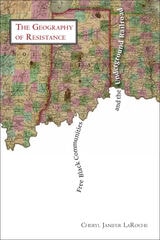
Free Black Communities and the Underground Railroad
The Geography of ResistanceCheryl Janifer LaRoche
University of Illinois Press, 2013
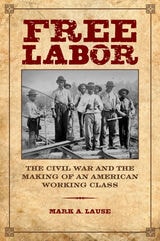
Free Labor
The Civil War and the Making of an American Working ClassMark A. Lause
University of Illinois Press, 2015
Mark A. Lause describes how the working class radicalized during the war as a response to economic crisis, the political opportunity created by the election of Abraham Lincoln, and the ideology of free labor and abolition. His account moves from battlefield and picket line to the negotiating table, as he discusses how leaders and the rank-and-file alike adapted tactics and modes of operation to specific circumstances. His close attention to women and African Americans, meanwhile, dismantles notions of the working class as synonymous with whiteness and maleness.
In addition, Lause offers a nuanced consideration of race's role in the politics of national labor organizations, in segregated industries in the border North and South, and in black resistance in the secessionist South, creatively reading self-emancipation as the largest general strike in U.S. history.
Free Spirits
Spiritualism, Republicanism, and Radicalism in the Civil War EraMark A. Lause
University of Illinois Press, 2016
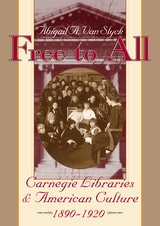
Free to All
Carnegie Libraries & American Culture, 1890-1920Abigail A. Van Slyck
University of Chicago Press, 1996
"The whole story is told here in this book. Carnegie's wishes, the conflicts among local groups, the architecture, development of female librarians. It's a rich and marvelous story, lovingly told."—Alicia Browne, Journal of American Culture
"This well-written and extensively researched work is a welcome addition to the history of architecture, librarianship, and philanthropy."—Joanne Passet, Journal of American History
"Van Slyck's book is a tremendous contribution for its keenness of scholarship and good writing and also for its perceptive look at a familiar but misunderstood icon of the American townscape."—Howard Wight Marshall, Journal of the Society of Architectural Historians
"[Van Slyck's] reading of the cultural coding implicit in the architectural design of the library makes a significant contribution to our understanding of the limitations of the doctrine 'free to all.'"—Virginia Quarterly Review
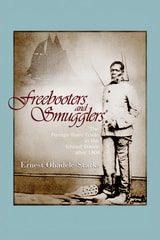
Freebooters and Smugglers
The Foreign Slave Trade in the United States after 1808Ernest Obadele-Starks
University of Arkansas Press, 2007
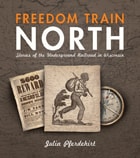
Freedom Train North
Stories of the Underground Railroad in WisconsinJulia Pferdehirt
Wisconsin Historical Society Press, 2011
People running from slavery made many hard journeys to find freedom—on steamboats and in carriages, across rivers and in hay-covered wagons. Some were shot at. Many were chased by slave catchers. Others hid in tunnels and secret rooms. But these troubles were worth it for the men, women, and children who eventually reached freedom. Freedom Train North tells the stories of fugitive slaves who found help in Wisconsin. Young readers (ages 7 to 12) will meet people like Joshua Glover, who was broken out of jail by a mob of freedom workers in Milwaukee, and Jacob Green, who escaped five times before he finally made it to freedom.
This compelling book also introduces stories of the strangers who hid fugitive slaves and helped them on their way, brave men and women who broke the law to do what was right. As both a historian and a storyteller, author Julia Pferdehirt shares these exciting and important stories of a dangerous time in Wisconsin’s past. Using manuscripts, letters, and artifacts from the period, as well as stories passed down from one generation to another, Pferdehirt takes us deep into our state’s past, challenging and inspiring us with accounts of courage and survival.

Freedom's Ballot
African American Political Struggles in Chicago from Abolition to the Great MigrationMargaret Garb
University of Chicago Press, 2014
Freedom’s Ballot is the history of three generations of African American activists—the ministers, professionals, labor leaders, clubwomen, and entrepreneurs—who transformed twentieth-century urban politics. This is a complex and important story of how black political power was institutionalized in Chicago in the half-century following the Civil War. Margaret Garb explores the social and political fabric of Chicago, revealing how the physical makeup of the city was shaped by both political corruption and racial empowerment—in ways that can still be seen and felt today.
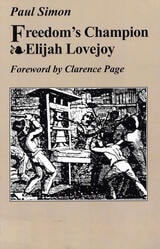
Freedom's Champion
Elijah LovejoyElijah Lovejoy. Revised by Paul Simon. Foreword by Clarence Page
Southern Illinois University Press, 1994
In this revised edition of his earlier biography, Paul Simon provides an inspiring account of the life and work of Elijah Lovejoy, an avid abolitionist in the 1830s and the first martyr to freedom of the press in the United States.
Lovejoy was a native New Englander, the son of a Congregational minister. He came to the Midwest in 1827 in pursuit of a teaching career and succeeded in running his own school for two years in St. Louis. Teaching failed to challenge Lovejoy, however, so he bought a half interest in the St. Louis Times and became its editor. In 1832, after experiencing a religious conversion, he returned east to study for the ministry at Princeton Theological Seminary. After his graduation, Lovejoy was called back to St. Louis by a group of Christian businessmen to serve as the editor of a new religious newspaper, the Observer, promoting religion, morality, and education. It was through this forum that Lovejoy took an ever stronger stance against slavery.
In the slave state of Missouri, such a view was not onlyunpopular, but in the eyes of many, criminal. As a result, Lovejoy and his family suffered repeated persecution and acts of violence from angry mobs. In July 1836, in hopes of finding a more tolerant community in a "free" state, he moved both his printing press and his family across the Mississippi River to Alton, Illinois.
The move to Alton was a fateful one. Lovejoy’s press was dismantled and thrown into the river by a mob on the night of its arrival. Lovejoy ordered a new printing press, and it, too, was destroyed eleven months later. A determined and dedicated man, Lovejoy ordered a third press, and city officials took special precautions to ensure its safety after delivery. Nevertheless, an organized and angry mob rolled this third press, still in its crate, into the river exactly one month after Lovejoy’s second press had been destroyed. A fourth press, housed in a large stone warehouse and guarded by Lovejoy and his supporters, met the same fate but only after a drunken mob had killed Lovejoy himself. He was buried two days later, 9 November 1837, on his thirty-fifth birthday. No one was ever convicted of his murder.
Rather than suppressing the abolitionist movement, Lovejoy’s death caused an eruption of antislavery activity throughout the nation. At a protest meeting in Ohio, John Brown dedicated his life to fighting slavery, and Wendell Phillips emerged from a Lovejoy protest meeting in Boston to become a leader in the antislavery fight.
Simon defines Lovejoy’s fight as a struggle for human dignity and the oppressed. He distinguishes Lovejoy as a courageous and admirable individual and his story as an important and enduring one for both the cause of freedom for the slaves and the cause of freedom of the press.

Freedom's Port
The African American Community of Baltimore, 1790-1860Christopher Phillips
University of Illinois Press, 1997
He shows how it grew from a transient aggregate of individuals, many fresh from slavery, to a strong, overwhelmingly free community less wracked by class and intraracial divisions than were other cities. Almost from the start, Phillips states, Baltimore's African Americans forged their own freedom and actively defended it--in a state that maintained slavery and whose white leadership came to resent the liberties the city's black people had achieved.
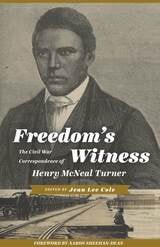
Freedom's Witness
The Civil War Correspondence of Henry McNeal TurnerJean Lee Cole
West Virginia University Press, 2013
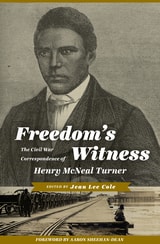
Freedom's Witness
The Civil War Correspondence of Henry McNeal TurnerJean Lee Cole
University of Delaware Press, 0
In a series of columns published in the African American newspaper the Christian Recorder, the young, charismatic preacher Henry McNeal Turner described his experience of the Civil War, first from the perspective of a civilian observer in Washington, DC, and later, as one of the Union army’s first Black chaplains.
In the halls of Congress, Turner witnessed the debates surrounding emancipation and Black enlistment. As army chaplain, Turner dodged “grape” and cannon, comforted the sick and wounded, and settled disputes between white southerners and their former slaves. He was dismayed by the destruction left by Sherman’s army in the Carolinas, but buoyed by the bravery displayed by Bck soldiers in battle. After the war ended, he helped establish churches and schools for the freedmen, who previously had been prohibited from attending either.
Throughout his columns, Turner evinces his firm belief in the absolute equality of Blacks with whites and insists on civil rights for all Black citizens. In vivid, detailed prose, laced with a combination of trenchant commentary and self-deprecating humor, Turner established himself as more than an observer: he became a distinctive and authoritative voice for the Black community and a leader in the African Methodist Episcopal church. After Reconstruction failed, Turner became disillusioned with the American dream and became a vocal advocate of black emigration to Africa, prefiguring black nationalists such as Marcus Garvey and Malcolm X. Here, however, we see Turner’s youthful exuberance and optimism and his open-eyed wonder at the momentous changes taking place in American society.
Well-known in his day, Turner has been relegated to the fringes of African American history, in large part because neither his views nor the forms in which he expressed them were recognized by either the black or white elite. With an introduction by Jean Lee Cole and a foreword by Aaron Sheehan-Dean, Freedom’s Witness: The Civil War Correspondence of Henry McNeal Turner restores this important figure to the historical and literary record.
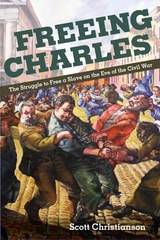
Freeing Charles
The Struggle to Free a Slave on the Eve of the Civil WarScott Christianson
University of Illinois Press, 2010

French Modern
Norms and Forms of the Social EnvironmentPaul Rabinow
University of Chicago Press, 1995
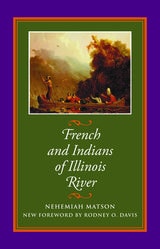
French and Indians of Illinois River
Nehemiah Matson. Foreword by Rodney O. Davis
Southern Illinois University Press, 2001
Complex and paradoxical, Nehemiah Matson (1816–1873) celebrated the occupation of the Middle West by European pioneers even as he labored to preserve the memory of the natives these pioneers replaced. He perpetuated the memory of the Indians who were driven out of the territory, but he nevertheless accumulated wealth selling their land to the pioneers. Rodney O. Davis notes in his new foreword to this book that Matson combined the attributes of a scholar with those of a salesman and promoter.
Matson settled in Princeton, Illinois, in 1836. He left behind a library partially endowed by him, named for him, and finally completed in 1913. According to Davis, however, Matson’s other legacy, “of equal significance in his own eyes, consisted of the five books he authored on northern Illinois and Illinois River history and cartography, volumes based not only on conscientious scholarship but also on both Indian and white reminiscence and on local folklore.”
Matson’s historical writings are valuable even when he deals with well-known events because his personal perspective makes his observations unique. Without the stories and reminiscences he collected, much valuable information would have been lost, especially since many of his informants, both Indian and European, were illiterate. Because his informants often told conflicting stories, Matson admitted that “harmonizing all conflicting accounts . . . has not been a success.”
Although Matson’s sources may not always have agreed, and sometimes his heart may have overruled his head and colored his accounts, he was a conscientious and committed author. “Obviously,” Davis explains, “this book must be evaluated as what it is, a piece of colorful local history, romantically anchored in legend yet rooted also in invaluable research and produced by a dedicated amateur whose standards were high. . . . French and Indians of Illinois River is a model of its type, indeed a minor classic.”
Friedrich Nietzsche and the Politics of Transfiguration (expanded ed.)
Tracy B. Strong
University of Illinois Press, 2000
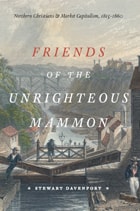
Friends of the Unrighteous Mammon
Northern Christians and Market Capitalism, 1815-1860Stewart Davenport
University of Chicago Press, 2008
Drawing on diverse primary sources, Davenport identifies three distinct Christian responses to market capitalism: assurance from clerical economists who believed in the righteousness of economic development; opposition from contrarians who resisted the changes around them; and adaptation by the pastoral moralists who modified their faith to meet the ethical challenges of the changing economy. Delving into the minds of antebellum Christians as they considered themselves, their God, and their developing American economy, Friends of the Unrighteous Mammon is an ambitious intellectual history of an important development in American religious and economic life.

From Androboros to the First Amendment
A History of America's First PlayPeter A. Davis
University of Iowa Press, 2015
Androboros was not just the first of its kind, it was also ahead of its time in many ways, preceding the harsh political satires and farces of the later eighteenth century by some fifty years. Such plays served a small but essential role in promoting political thought among the colonists. Written by anonymous authors and passed from hand to hand, these short, crude, and often bawdy plays and dialogues were rarely acted due to their inflammatory lampoonery. Nevertheless, they provided an opportunity for disgruntled colonists to vent their grievances and promote their ideas to fellow citizens. The farces of the late eighteenth century drove home the meaning and message of the American Revolution.
Equally significant is that Androboros may have influenced a few of the key political discourses published in the 1730s, and these works in turn may well have shaped the future of the American political landscape for the next several decades and even into the modern era. But as a closet drama intended only to be read by close friends and political supporters, this play has languished as a minor footnote in American intellectual history. Scholarly research published to date has been, for the most part, inadequate and occasionally inaccurate. This study remedies that oversight, providing a full analysis as well as an annotated typescript and facsimiles of the original printing.
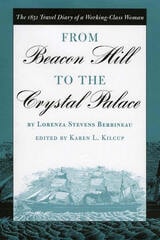
From Beacon Hill to the Crystal Palace
The 1851 Travel Diary of a Working-Class WomanLorenza Stevens Berbineau
University of Iowa Press, 2002
Because prior studies of American women’s travel writing have focused exclusively on middle-class and wealthy travelers, it has been difficult to assess the genre and its participants in a holistic fashion. One of the very few surviving working-class travel diaries, Lorenza Stevens Berbineau’s account provides readers with a unique perspective of a domestic servant in the wealthy Lowell family in Boston. Staying in luxurious hotels and caring for her young charge Eddie during her six-month grand tour, Berbineau wrote detailed and insightful entries about the people and places she saw.
Contributing to the traditions of women’s, diary, and travel literature from the perspective of a domestic servant, Berbineau's narrative reveals an arresting and intimate outlook on both her own life and the activities, places, and people she encounters. For example, she carefully records Europeans’ religious practices, working people and their behavior, and each region’s aesthetic qualities. Clearly writing in haste and with a pleasing freedom from the constraints of orthographic and stylistic convention, Berbineau offers a distinctive voice and a discerning perspective. Alert to nuances of social class, her narrative is as appealing and informative to today's readers as it no doubt was to her fellow domestics in the Lowell household.
Unobtrusively edited to retain as much as possible the individuality and texture of the author’s original manuscript, From Beacon Hill to the Crystal Palace offers readers brief framing summaries, informative endnotes, and a valuable introduction that analyzes Berbineau’s narrative in relation to gender and class issues and compares it to the published travel writing of her famous contemporary, Harriet Beecher Stowe.
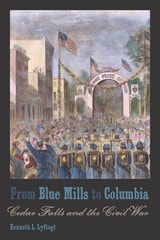
From Blue Mills to Columbia
Cedar Falls and the Civil WarKenneth L. Lyftogt
University of Iowa Press, 1993
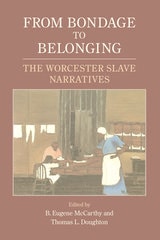
From Bondage to Belonging
The Worcester Slave NarrativesB. Eugene McCarthy
University of Massachusetts Press, 2007
First published between 1842 and 1895, the autobiographical narratives gathered in this volume document the experiences of eight former slaves who eventually took up residence in Worcester, Massachusetts. Each narrative tells a gripping individual story, its author clearly visible in the dress of his or her own words. Together they illuminate not only the inhumanity of slavery but also the dreams and dilemmas of emancipation, tracing the personal journeys of seven men and one woman from bondage to freedom.
In their well-researched introduction, B. Eugene McCarthy and Thomas L. Doughton situate the Worcester slave narratives within a broader historical framework and analyze their meaning and significance. Drawing on a wide range of sources, they reconstruct the black community of Worcester and compare it with other New England black communities of the time, describing how the town evolved from a society with slaves in the colonial era to a hub for free blacks by the eve of the Civil War. They explain why these writings must be understood as part of a long-established tradition of African American self-representation, and show how the four narratives published before 1865 focus on the experience of slavery, while the four written after the war offer the fresh perspective of living in freedom. Headnotes describe the distinctive literary features of each narrative and provide additional information about the lives of the authors. The editors discuss why these ex-slaves came to Worcester, the circumstances in which each wrote his or her narrative, and the audiences they had in mind. No other collection of slave narratives offers such a diverse range of testimony within a specific historical and literary context, or a more compelling account of the transition from bondage to belonging.
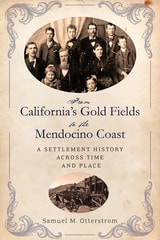
From California's Gold Fields to the Mendocino Coast
A Settlement History Across Time and PlaceSamuel M. Otterstrom
University of Nevada Press, 2017
The development of San Francisco’s outlying region from a wilderness into a prosperous village and farming mecca shows how quickly in-migration coupled with economic diversification can establish a stable settlement structure upon the landscape. Otterstrom describes an intricately woven tapestry of interrelated people who were contributing creators of a wide variety of prosperous northern California environs. He uncovers the processes that converted this sleepy post-Mexican outpost into a focal point of nearly hyperactive youthful growth. The narrative follows this crucial story of settlement development until the dawn of the twentieth century, through the interconnected framework of individual and family ingenuity, migration trajectories, and diverse geographical scales.
Multiplying individualistic experiences from across far-flung appendages of the Northern California system into larger and larger scales, Otterstrom has achieved a matchless historical and sociological study that will form the basis for any future studies of the area.
From Conciliation to Conquest
The Sack of Athens and the Court-Martial of Colonel John B. TurchinGeorge C. Bradley and Richard L. Dahlen
University of Alabama Press, 2006
In the summer of 1862, the U.S. Army court martialed Colonel John B. Turchin, a Russian-born Union officer, for "outrages" committed by his troops in Athens, Alabama
In the summer of 1862, the U.S. Army court martialed Colonel John B. Turchin, a Russian-born Union officer, for offenses committed by his troops in Athens, Alabama, including looting, safe cracking, the vandalization of homes, and the rape of young black women. The pillage of Athens violated a government policy of conciliation; it was hoped that if Southern civilians were treated gently as citizens of the United States, they would soon return their allegiance to the federal government.
By examining the volunteers who made up Turchin’s force, the colonel's trial, his subsequent promotion, the policy debate surrounding the incident and the public reaction to the outcome, the authors further illuminate one of the most provocative questions in Civil War studies: how did the policy set forth by President Lincoln evolve from one of conciliation to one far more modern in nature, placing the burden of war on the civilian population of the South?
From Eve to Evolution
Darwin, Science, and Women's Rights in Gilded Age AmericaKimberly A. Hamlin
University of Chicago Press, 2014
Hamlin chronicles the lives and writings of the women who combined their enthusiasm for evolutionary science with their commitment to women’s rights, including Antoinette Brown Blackwell, Eliza Burt Gamble, Helen Hamilton Gardener, Charlotte Perkins Gilman, and Elizabeth Cady Stanton. These Darwinian feminists believed evolutionary science proved that women were not inferior to men, that it was natural for mothers to work outside the home, and that women should control reproduction. The practical applications of this evolutionary feminism came to fruition, Hamlin shows, in the early thinking and writing of the American birth control pioneer Margaret Sanger.
Much scholarship has been dedicated to analyzing what Darwin and other male evolutionists had to say about women, but very little has been written regarding what women themselves had to say about evolution. From Eve to Evolution adds much-needed female voices to the vast literature on Darwin in America.
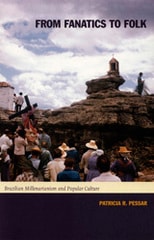
From Fanatics to Folk
Brazilian Millenarianism and Popular CulturePatricia R. Pessar
Duke University Press, 2004
Pessar combines cultural history spanning the colonial period to the present; comparative case studies of the Canudos, Contestado, Juazeiro, and Santa Brígida movements; and three decades of ethnographic research in the Brazilian Northeast. Highlighting the involvement of a broad range of individuals and institutions, the cross-fertilization between movements, contestation and accommodation vis-à-vis the church and state, and matters of spirituality and faith, From Fanatics to Folk reveals Brazilian millenarianism as long-enduring and constantly in flux.

From Football to Soccer
The Early History of the Beautiful Game in the United StatesBrian D. Bunk
University of Illinois Press, 2021
Across North America, native peoples and colonists alike played a variety of kicking games long before soccer's emergence in the late 1800s. Brian D. Bunk examines the development and social impact of these sports through the rise of professional soccer after World War I. As he shows, the various games called football gave women an outlet as athletes and encouraged men to form social bonds based on educational experience, occupation, ethnic identity, or military service. Football also followed young people to college as higher education expanded in the nineteenth century. University play, along with the arrival of immigrants from the British Isles, helped spark the creation of organized soccer in the United States—and the beautiful game's transformation into a truly international sport.
A multilayered look at one game’s place in American life, From Football to Soccer refutes the notion of the U.S. as a land outside of football history.
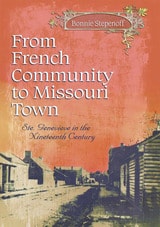
From French Community to Missouri Town
Ste. Genevieve in the Nineteenth CenturyBonnie Stepenoff
University of Missouri Press, 2024

From Frontier to Plantation In Tennessee
A Study in Frontier DemocracyThomas Perkins Abernethy
University of Alabama Press, 1967
A reprint of Abernethy's excellent historical study of the state of Tennesse from its founding through the antebellum years. In documenting the development of an agrarian society on the frontier, Abernethy develops important and controversial theses on the relation between frontier life and the development of American democracy, calling into question the mythology and motives previously associated with leaders such as William Blount, Andrew Jackson, James K. Polk, and Andrew Johnson.
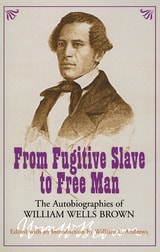
From Fugitive Slave to Free Man
The Autobiographies of William Wells BrownEdited with an Introduction by William L. Andrews
University of Missouri Press, 2003

From Gift to Commodity
Capitalism and Sacrifice in Nineteenth-Century American FictionHildegard Hoeller
University of New Hampshire Press, 2012
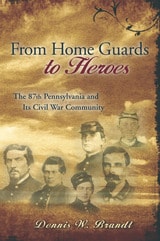
From Home Guards to Heroes
The 87th Pennsylvania and Its Civil War CommunityDennis W. Brandt
University of Missouri Press, 2007
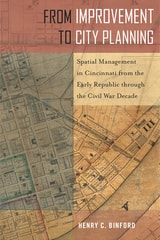
From Improvement to City Planning
Spatial Management in Cincinnati from the Early Republic through the Civil War DecadeHenry C. Binford
Temple University Press, 2021
From Improvement to City Planning emphasizes the ways people in nineteenth-century America managed urban growth. Historian Henry Binford shows how efforts to improve space were entwined with the evolution of urban governance (i.e., regulation)—and also influenced by a small group of advantaged families.
Binford looks specifically at Cincinnati, Ohio, then the largest and most important interior city west of the Appalachian Mountains. He shows that it was not just industrialization, but also beliefs about morality, race, health, poverty, and “slum” environments, that demanded an improvement of urban space. As such, movements for public parks and large-scale sanitary engineering in the 1840s and ’50s initiated the beginning of modern city planning. However, there were limitations and consequences to these efforts..
Many Americans believed that remaking city environments could also remake citizens. From Improvement to City Planning examines how the experiences of city living in the early republic prompted city dwellers to think about and shape urban space.
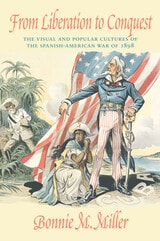
From Liberation to Conquest
The Visual and Popular Cultures of the Spanish-American War of 1898Bonnie M. Miller
University of Massachusetts Press, 2011
Although media campaigns initially advocated for the United States to step in to rescue Cuba from the horrors of colonial oppression, the war ended just months later with the U.S. acquisition of Spain's remaining empire, including Cuba, Puerto Rico, Guam, and the Philippines. President William McKinley heeded the call for war, with the American people behind him, and then proceeded to use the conflict to further his foreign policy agenda of expanding U.S. interests in the Caribbean and Far East.
Miller examines the shifting media portrayals of U.S. actions for the duration of the conflict, from liberation to conquest. She shows how the media capitalized on the public's thirst for drama, action, and spectacle and adapted to emerging imperial possibilities. Growing resistance to American imperialism by the war's end unraveled the consensus in support of U.S policy abroad and produced a rich debate that found expression in American visual and popular culture.
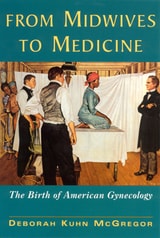
From Midwives to Medicine
The Birth of American GynecologyMcGregor, Deborah K
Rutgers University Press, 1998
Using patient records and archival material from the female governors and administrators at the hospital, From Midwives to Medicine shows how a new medical practice developed out of the changing patterns and historical experiences of childbirth, as well as out of the context of the social relations f the sexes. Sim's patients were slave women in the antebellum South, poor Irish immigrants in the industrial North, and upper-class white. Protestant, Manhattan socialites who sought help for their "hysterical" symptoms. During his career, which began in the South and flourished at the Women's Hospital in New York. Sims performed and perfected his technique to "cure" vesico-vaginal fistulas, the tears of childbirth, from which so many women suffered. But Sims achieved these successes on the operating table only after years of practicing his "silver suture" technique on unanesthetized slave women, who he believed "by the nature of their race... had a specific physiological tolerance for pain unknown to whites."

From Natural Philosophy to the Sciences
Writing the History of Nineteenth-Century ScienceEdited by David Cahan
University of Chicago Press, 2003
In this book, eleven leading historians of science assess what their field has taught us about this exciting time and identify issues that remain unexamined or require reconsideration. They treat both scientific disciplines—biology, physics, chemistry, the earth sciences, mathematics, and the social sciences—in their specific intellectual and sociocultural contexts as well as the broader topics of science and medicine; science and religion; scientific institutions and communities; and science, technology, and industry.
Providing a much-needed overview and analysis of a rapidly expanding field, From Natural Philosophy to the Sciences will be essential for historians of science, but also of great interest to scholars of all aspects of nineteenth-century life and culture.
Contributors:
Bernadette Bensaude-Vincent, Jed Z. Buchwald, David Cahan, Joseph Dauben, Frederick Gregory, Michael Hagner, Sungook Hong, David R. Oldroyd, Theodore M. Porter, Robert J. Richards, Ulrich Wengenroth
From Old Regime to Industrial State
A History of German Industrialization from the Eighteenth Century to World War IRichard H. Tilly and Michael Kopsidis
University of Chicago Press, 2020
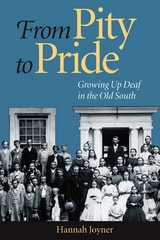
From Pity to Pride
Growing Up Deaf in the Old SouthHannah Joyner
Gallaudet University Press, 2004
The antebellum South’s economic dependence on slavery engendered a rigid social order in which a small number of privileged white men dominated African Americans, poor whites, women, and many people with disabilities. From Pity to Pride examines the experiences of a group of wealthy young men raised in the old South who also would have ruled over this closely regimented world had they not been deaf. Instead, the promise of status was gone, replaced by pity, as described by one deaf scion, “I sometimes fancy some people to treat me as they would a child to whom they were kind.”
In this unique and fascinating history, Hannah Joyner depicts in striking detail the circumstances of these so-called victims of a terrible “misfortune.” Joyner makes clear that Deaf people in the North also endured prejudice. She also explains how the cultural rhetoric of paternalism and dependency in the South codified a stringent system of oppression and hierarchy that left little room for self-determination for Deaf southerners. From Pity to Pride reveals how some of these elite Deaf people rejected their family’s and society’s belief that being deaf was a permanent liability. Rather, they viewed themselves as competent and complete. As they came to adulthood, they joined together with other Deaf Americans, both southern and northern, to form communities of understanding, self-worth, and independence.
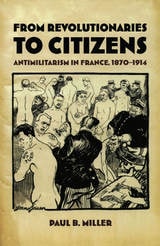
From Revolutionaries to Citizens
Antimilitarism in France, 1870–1914Paul B. Miller
Duke University Press, 2002
Although more general accounts of the Left’s “failure” to halt international war in August 1914 focus on its lack of unity or the decline of trade unionism, Miller contends that these explanations barely scratch the surface when it comes to interpreting the Left’s overwhelming acceptance of the war. By embedding his cultural analysis of antimilitarist propaganda into the larger political and diplomatic history of prewar Europe, he reveals the Left’s seemingly sudden transformation “from revolutionaries to citizens” as less a failure of resolve than a confession of commonality with the broader ideals of republican France. Examining sources ranging from police files and court records to German and British foreign office memos, Miller emphasizes the success of antimilitarism as a rallying cry against social and political inequities on behalf of ordinary citizens. Despite their keen awareness of the bloodletting that awaited Europe, he claims, antimilitarists ultimately accepted the war with Germany for the same reason they had pursued their own struggle within France: to address injustices and defend the rights of citizens in a democratic society.
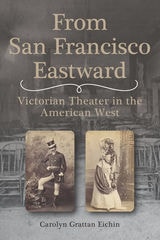
From San Francisco Eastward
Victorian Theater in the American WestCarolyn Grattan Eichin
University of Nevada Press, 2020
Finalist for the 2021 Will Rogers Medallion Award in Western Non-Fiction
Carolyn Grattan Eichin’s From San Francisco Eastward explores the dynamics and influence of theater in the West during the Victorian era. San Francisco, Eichin argues, served as the nucleus of the western theatrical world, having attained prominence behind only New York and Boston as the nation’s most important theatrical center by 1870. By focusing on the West’s hinterland communities, theater as a capitalist venture driven by the sale of cultural forms is illuminated against the backdrop of urbanization.
Using the vagaries of the West’s notorious boom-bust economic cycles, Eichin traces the fiscal, demographic, and geographic influences that shaped western theater. With an emphasis on the 1860s and 70s, this thoroughly researched work uses distinct notions of ethnicity, class, and gender to examine a cultural institution driven by a market economy. From San Francisco Eastward is a thorough analysis of the ever-changing theatrical personalities and strategies that shaped Victorian theater in the West, and the ways in which theater as a business transformed the values of a region.

From Santa Anna to Selena
Notable Mexicanos and Tejanos in Texas History since 1821Harriett Denise Joseph
University of North Texas Press, 2018
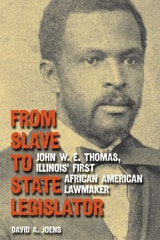
From Slave to State Legislator
John W. E. Thomas, Illinois' First African American LawmakerDavid A. Joens
Southern Illinois University Press, 2012
As the first African American elected to the Illinois General Assembly, John W. E. Thomas was the recognized leader of the state’s African American community for nearly twenty years and laid the groundwork for the success of future Black leaders in Chicago politics. Despite his key role in the passage of Illinois’ first civil rights act and his commitment to improving his community against steep personal and political barriers, Thomas’s life and career have been long forgotten by historians and the public alike. This fascinating full-length biography—the first to address the full influence of Thomas or any Black politician from Illinois during the Reconstruction Era—is also a pioneering effort to explain the dynamics of African American politics and divisions within the Black community in post–Civil War Chicago.
In From Slave to State Legislator, David A. Joens traces Thomas’s trajectory from a slave owned by a doctor’s family in Alabama to a prominent attorney believed to be the wealthiest African American man in Chicago at the time of his death in 1899. Providing one of the few comprehensive looks at African Americans in Chicago during this period, Joens reveals how Thomas’s career represents both the opportunities available to African Americans in the postwar period and the limits still placed on them. When Thomas moved to Chicago in 1869, he started a grocery store, invested in real estate, and founded the first private school for African Americans before becoming involved in politics.
From Slave to State Legislator provides detailed coverage of Thomas’s three terms in the legislature during the 1870s and 1880s, his multiple failures to be nominated for reelection, and his loyalty to the Republican Party at great political cost, calling attention to the political differences within a Black community often considered small and homogenous. Even after achieving his legislative legacy—the passage of the first state civil rights law—Thomas was plagued by patronage issues and an increasingly bitter split with the African American community frustrated with slow progress toward true equality. Drawing on newspapers and an array of government documents, Joens provides the most thorough review to date of the first civil rights legislation and the two controversial “colored conventions” chaired by Thomas.
Joens cements Thomas’s legacy as a committed and conscientious lawmaker amid political and personal struggles. In revealing the complicated rivalries and competing ambitions that shaped Black northern politics during the Reconstruction Era, Joens shows the long-term impact of Thomas’s friendship with other burgeoning African American political stars and his work to get more black representatives elected. The volume is enhanced by short biographies of other key Chicago African American politicians of the era.
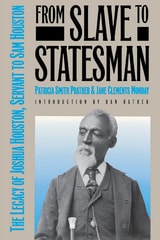
From Slave to Statesman
The Legacy of Joshua Houston, Servant to Sam HoustonPatricia Smith Prather
University of North Texas Press, 1993
From Text to Context
The Turn to History in Modern JudaismIsmar Schorsch
Brandeis University Press, 1994
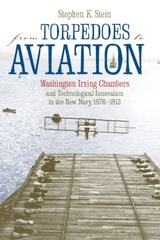
From Torpedoes to Aviation
Washington Irving Chambers & Technological Innovation in the New Navy 1876 to 1913Stephen K. Stein
University of Alabama Press, 2007
The central figure in the modernization of the U.S. Navy.
The career of Washington Irving Chambers spans a formative period in the development of the United States Navy: He entered the Naval Academy in the doldrum years of obsolete, often rotting ships, and left after he had helped like-minded officers convince Congress and the public of the need to adopt a new naval strategy built around a fleet of technologically advanced battleships. He also laid the groundwork for naval aviation and the important role it would play in the modern navy.
This work covers Chambers’s early naval career, his work at the new Office of Naval Intelligence, his participation in the Greeley Relief Expedition, and a survey for the projected isthmian canal through Nicaragua, before becoming the key advocate for naval modernization. As such, Chambers worked as a pioneering torpedo designer, supervised construction of the Maine, modernized the New York Navy Yard, and became a member of the first permanent faculty at the Naval War College.
During his long career, Chambers not only designed torpedoes, but also several warships, including a prototype Dreadnought-style battleship and a host of small devices that ranged from torpedo guidance systems to the first catapult for launching airplanes from ships. At the close of his career, Chambers purchased the navy’s first aircraft and founded its air arm. Working with Glenn Curtiss, Chambers guided a coalition of aviation enthusiasts and pioneers who popularized naval aviation and demonstrated its capabilities. Chambers arranged the first take-off and landing of an airplane from a ship and other demonstrations of naval aviation. Combined with his tireless advocacy for modernization, these contributions secured a place in naval and aviation history for the innovator.
From the Ballroom to Hell
Grace and Folly in Nineteenth-Century DanceElizabeth Aldrich
Northwestern University Press, 1991
From the Ballroom to Hell collects over 100 little-known excerpts from dance, etiquette, beauty, and fashion manuals from the nineteenth century. Included are instructions for performing various dances, as well as musical scores, costume patterns, and the proper way to hold one's posture, fork, gloves, and fan. While of particular interest to dancers, dance historians, and choreographers, anyone fascinated by the ways and mores of the period will find From the Ballroom to Hell an endearing and informative glimpse of America's past.
From the Fiery Furnace to the Promise Land
Stories of a Tennessee Reconstruction CommunitySerina K. Gilbert and Learotha Williams Jr.
Vanderbilt University Press, 2025
In time the community encompassed approximately 1,000 acres with more than 50 homes, several stores, three churches, and an elementary school. But by the mid‑twentieth century, the community had dwindled to just a handful of families. Now all that remains physically is a church and the old school building. But in the hearts of the descendants of those families, Promise Land remains a vital and thriving community of friends, family, and, albeit virtual, neighbors who continue to support each other.
This is the story of this town told through the memories of the people who lived there. Serina Gilbert grew up in the community and is now one of the revered storytellers and story‑keepers of Promise Land. Along with historian Learotha Williams, she is sharing the history of a community that thrived and continues to thrive in the face of almost insurmountable obstacles.