Results by title
8642 books match the query '20th century' and 354 start with f

Fighting for Health
Medicine in Cold War Southeast AsiaEdited by C. Michele Thompson, Kathryn Sweet, and Michitake Aso
National University of Singapore Press, 2024
For far too long, Southeast Asia has been treated as a static backdrop for the exploits and discoveries of Western biomedical doctors. Yet, Southeast Asians have been vital to the significant developments in the prevention and treatment of diseases that have taken place in the region and beyond. Many of the institutions and people that shaped subsequent responses to outbreaks, epidemics, and pandemics first began their work in Southeast Asia during the Cold War. The diversity of approaches to health and medicine during that era also reminds us of the possibilities, and limits, of human intervention in the face of political, social, economic, and microbial realities. The people and places of Southeast Asia have provided clinical trials for different health regimes. Fighting for Health highlights new perspectives and methods that have evolved from research presented at regional conferences, including the History of Medicine in Southeast Asia (HOMSEA) series. These insights serve to challenge dominant models of the medical humanities.
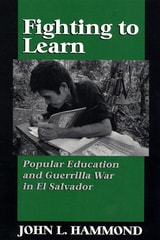
Fighting to Learn
Popular Education and Guerilla War in El SalvadorHammond, John L
Rutgers University Press, 1998
Popular education played a vital role in the twelve-year guerrilla war against the Salvadoran government. Fighting to Learn is a study of its pedagogy and politics. Inspired by Paulo Freire's literacy work in Brazil in the 1950s, popular education brought literacy to poor rural communities abandoned by the official education system and to peasant combatants in the guerrilla army. Those who had little education taught those who had none. Popular education taught people skills, raised the morale that sustained them in unequal combat, and stimulated the creation of an organizational network to hold them together.
Hammond interviewed more than 100 Salvadoran students and teachers for this book. He recounts their experiences in their own words, vividly conveying how they coped with the hardships of war and organized civilian communities politically to support a guerrilla insurgency. Fighting to Learn tells how poorly educated peasants overcame their sense of inferiority to discover that they could teach each other and work together in a common struggle.
First examining the Christian base communities through which popular education came to El Salvador, Hammond then discusses how guerrilla combatants, political prisoners, and refugees learned. He shows that education was both a pedagogical and a political practice: he discusses the training of completely inexperienced teachers, the linking of basic literacy skills with politics, and the organizing of communities. Fighting to Learn offers both a detailed account of an historical moment and a broad theoretical discussion of the relationship between education, community organizing, and the political process.
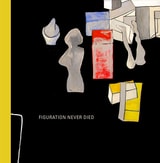
Figuration Never Died
New York Painterly Painting, 1950–1970Karen Wilkin
The Artist Book Foundation, 2020
By 1950, forward-looking New York painting was seen as synonymous with abstraction, especially charged, gestural Abstract Expressionism. But there was also a strong group of dissenters; artists, all born in the 1920s and many of them students of Hans Hofmann, who never lost their enthusiasm for recognizable imagery, without rejecting Abstract Expressionism's love of malleable oil paint. Although most of them began as abstract artists, they all evolved into painters working from observation, using a fluid, urgent touch to translate their perceptions into eloquent, highly individualized visual languages, almost always informed by the hand; that is, unlike the Color Field and Minimalist artists, these artists remained, for the most part, "painterly" painters. In light of their important contributions to twentieth-century American art, The Artist Book Foundation presents the cataloge for the Brattleboro Museum & Art Center's eponymous 2020 exhibition, Figuration Never Died: New York Painterly Painting, 1950–1970.
These rebellious artists include Lois Dodd, Jane Freilicher, Paul Georges, Grace Hartigan, Wolf Kahn, Alex Katz, Albert Kresch, Robert de Niro Sr., Paul Resika, and Anne Tabachnick. The compelling figurative work they made between about 1950 and 1970, in contrast to the prevailing Abstract Expressionism of the time, constitutes a significat chapter in the history of recent American Modernism. Their work not only greatly expands our conception of the story of New York painting, but it also presages and contextualizes today's multiplicity of artistic concepts and processes. Given both the aesthetic diversity of today's New York art world and the dependence of many younger artists on digital media or the appearance of digital media, it seems an appropriate moment to reconsider the work of these daring pioneers, as both precursor and opposition to current norms.
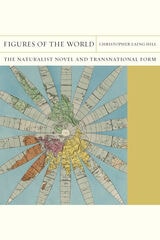
Figures of the World
The Naturalist Novel and Transnational FormChristopher Laing Hill
Northwestern University Press, 2020
The book begins by tracing the history of naturalist fiction from the 1860s into the twentieth century and the reasons it spread around the world. Hill explores the development of three naturalist figures—the degenerate body, the self-liberated woman, and the social milieu—through close readings of fiction from France, Japan, and the United States. Rather than genealogies of European influence or the domination of cultural “peripheries” by the center, novels by Émile Zola, Tayama Katai, Frank Norris, and other writers reveal conspicuous departures from metropolitan models as writers revised naturalist methods to address new social conditions. Hill offers a new approach to studying culture on a large scale for readers interested in literature, the arts, and the history of ideas.

Fill 'er Up
The Glory Days of Wisconsin Gas StationsJim Draeger
Wisconsin Historical Society Press, 2008
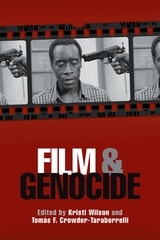
Film and Genocide
Kristi M. Wilson
University of Wisconsin Press, 2011
Film and Genocide brings together scholars of film and of genocide to discuss film representations, both fictional and documentary, of the Holocaust, the Armenian genocide, and genocides in Chile, Australia, Rwanda, and the United States. Since 1955, when Alain Resnais created his experimental documentary Night and Fog about the Nazis’ mass killings of Jews and other ostracized groups, filmmakers have struggled with using this medium to tell such difficult stories, to re-create the sociopolitical contexts of genocide, and to urge awareness and action among viewers. This volume looks at such issues as realism versus fiction, the challenge of depicting atrocities in a manner palatable to spectators and film distributors, the Holocaust film as a model for films about other genocides, and the role of new technologies in disseminating films about genocide.
Film and Genocide also includes interviews with three film directors, who discuss their experiences in working with deeply disturbing images and bringing hidden stories to life: Irek Dobrowolski, director of The Portraitist (2005) a documentary about Wilhelm Brasse, an Auschwitz-Birkenau prisoner ordered to take more than 40,000 photos at the camp; Nick Hughes, director of 100 Days (2005) a dramatic film about the Rwandan mass killings; and Greg Barker, director of Ghosts of Rwanda (2004), a television documentary for Frontline.
Film and the American Moral Vision of Nature
Theodore Roosevelt to Walt DisneyRonald B. Tobias
Michigan State University Press, 2011

Film's Ghosts
Tatsumi Hijikata's Butoh and the Transmutation of 1960s JapanStephen Barber
Diaphanes, 2019
Films That Explode Like Grenades
Robert Kramer and the Search for a Radical CinemaWhitney Strub
University of Chicago Press, 2026
Robert Kramer (1939–99) was the emblematic filmmaker of the late-1960s New Left in the United States. Yet because most of his three dozen films have been out of circulation for decades, he has long been neglected by film historians and the Left. Kramer was the cofounder of the leftist documentary collective Newsreel and the director of underground films such as Ice (1970), Milestones (1975), and Route One/USA (1989). His films provide distinctive insights into how America’s political terrain has changed over time, capturing each era’s revolutionary ethos and its contradictions. Whitney Strub’s Films That Explode Like Grenades tracks the histories of leftist film and global revolutionary movements via Kramer’s life and travels. Moving among New York City, Chicago, North Vietnam, Paris, Portugal, Angola, and other crucial flashpoints, Kramer left a major and influential body of work in his wake that has fundamentally shaped the work of radical filmmakers across the globe.
For Strub, Kramer’s career is a key thread in an intimate history of the 1960s New Left, one that emphasizes the complexities of the movement’s internal tensions and its legacies. Drawing on visual analysis, extensive archival research across the United States and France, and myriad interviews with Kramer contemporaries, including Bernardine Dohrn, Tom Hayden, Jonas Mekas, and Kramer’s relatives, Strub transforms Kramer’s life story into a dynamic and engaging social history of 1960s radicalism and its generational legacies.
With detailed mapping of Robert Kramer’s many social and artistic contexts, Films That Explode Like Grenades restores him to a place of global importance in leftist cinema.
Filtering Histories
The Photographic Bureaucracy in Mozambique, 1960 to Recent TimesDrew A. Thompson
University of Michigan Press, 2021
Photographers and their images were critical to the making of Mozambique, first as a colony of Portugal and then as independent nation at war with apartheid in South Africa. When the Mozambique Liberation Front came to power, it invested substantial human and financial resources in institutional structures involving photography, and used them to insert the nation into global debates over photography's use. The materiality of the photographs created had effects that neither the colonial nor postcolonial state could have imagined.
Filtering Histories: The Photographic Bureaucracy in Mozambique, 1960 to Recent Times tells a history of photography alongside state formation to understand the process of decolonization and state development after colonial rule. At the center of analysis are an array of photographic and illustrated materials from Mozambique, South Africa, Portugal, and Italy. Thompson recreates through oral histories and archival research the procedures and regulations that engulfed the practice and circulation of photography. If photographers and media bureaucracy were proactive in placing images of Mozambique in international news, Mozambicans were agents of self-representation, especially when it came to appearing or disappearing before the camera lens. Drawing attention to the multiple images that one published photograph may conceal, Filtering Histories introduces the popular and material formations of portraiture and photojournalism that informed photography's production, circulation, and archiving in a place like Mozambique. The book reveals how the use of photography by the colonial state and the liberation movement overlapped, and the role that photography played in the transition of power from colonialism to independence.

Final Solutions
Human Nature, Capitalism and GenocideSabby Sagall
Pluto Press, 2013
Final Solutions offers a ground-breaking and genuinely unique analysis of modern genocide. Sabby Sagall draws on the insights of the Frankfurt school and Wilhelm Reich to create an innovative combination of Marxism and psychoanalysis. He argues that genocide is a product of an ‘irrational’ destructiveness by social classes or communities that have suffered major historical defeats or similar forms of extreme stress.
Sagall shows how the denial of human needs and the ensuing feelings of isolation and powerlessness propel groups to project their impotent rage, hatred and destructiveness engendered by these defeats on to the 'outsider' and the 'other'.
The book applies this theoretical framework to four modern genocides – that of the Native Americans, the Armenians, the Jews and the Rwandan Tutsis. This is a truly pioneering contribution which adds to our understanding of some of the darkest hours of humanity – and how we can stop them from happening again.
Finance in America
An Unfinished StoryKevin R. Brine and Mary Poovey
University of Chicago Press, 2017
To understand finance, however, we have to learn its history, and this book fills that need. Kevin R. Brine, an industry veteran, and Mary Poovey, an acclaimed historian, show that finance as we know it today emerged gradually in the late nineteenth century and only coalesced after World War II, becoming ever more complicated—and ever more central to the American economy. The authors explain the models, regulations, and institutions at the heart of modern finance and uncover the complex and sometimes surprising origins of its critical features, such as corporate accounting standards, the Federal Reserve System, risk management practices, and American Keynesian and New Classic monetary economics. This book sees finance through its highs and lows, from pre-Depression to post-Recession, exploring the myriad ways in which the practices of finance and the realities of the economy influenced one another through the years.
A masterwork of collaboration, Finance in America lays bare the theories and practices that constitute finance, opening up the discussion of its role and risks to a broad range of scholars and citizens.
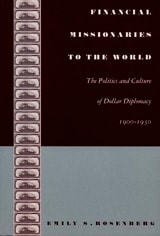
Financial Missionaries to the World
The Politics and Culture of Dollar Diplomacy, 1900-1930Emily S. Rosenberg
Duke University Press, 2003
Financial Missionaries to the World establishes the broad scope and significance of "dollar diplomacy"—the use of international lending and advising—to early-twentieth-century U.S. foreign policy. Combining diplomatic, economic, and cultural history, the distinguished historian Emily S. Rosenberg shows how private bank loans were extended to leverage the acceptance of American financial advisers by foreign governments. In an analysis striking in its relevance to contemporary debates over international loans, she reveals how a practice initially justified as a progressive means to extend “civilization” by promoting economic stability and progress became embroiled in controversy. Vocal critics at home and abroad charged that American loans and financial oversight constituted a new imperialism that fostered exploitation of less powerful nations. By the mid-1920s, Rosenberg explains, even early supporters of dollar diplomacy worried that by facilitating excessive borrowing, the practice might induce the very instability and default that it supposedly worked against.
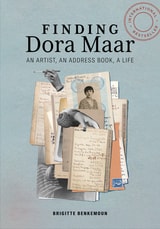
Finding Dora Maar
An Artist, an Address Book, a LifeBrigitte Benkemoun
J. Paul Getty Trust, The, 2020
“[A] spirited and deeply researched project…. [Benkemoun’s] affection for her subject is infectious. This book gives a satisfying treatment to a woman who has been confined for decades to a Cubist’s limited interpretation.” — Joumana Khatib, The New York Times
Merging biography, memoir, and cultural history, this compelling book, a bestseller in France, traces the life of Dora Maar through a serendipitous encounter with the artist’s address book.
In search of a replacement for his lost Hermès agenda, Brigitte Benkemoun’s husband buys a vintage diary on eBay. When it arrives, she opens it and finds inside private notes dating back to 1951—twenty pages of phone numbers and addresses for Balthus, Brassaï, André Breton, Jean Cocteau, Paul Éluard, Leonor Fini, Jacqueline Lamba, and other artistic luminaries of the European avant-garde.
After realizing that the address book belonged to Dora Maar—Picasso’s famous “Weeping Woman” and a brilliant artist in her own right—Benkemoun embarks on a two-year voyage of discovery to learn more about this provocative, passionate, and enigmatic woman, and the role that each of these figures played in her life.
Longlisted for the prestigious literary award Prix Renaudot, Finding Dora Maar is a fascinating and breathtaking portrait of the artist.
This work received support from the French Ministry of Foreign Affairs and the Cultural Services of the French Embassy in the United States through their publishing assistance program.
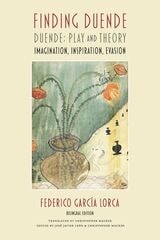
Finding Duende
Duende: Play and Theory | Imagination, Inspiration, EvasionFederico García Lorca
Swan Isle Press, 2023
For years, Federico García Lorca’s lecture on duende has been a source of insight for writers and performers, including Ted Hughes, Nick Cave, Patti Smith, and Amanda Gorman.
Duende: Play and Theory not only provides a path into Lorca’s poetics and the arts of Spain; it is one of the strangest, most compelling accounts of inspiration ever offered by a poet. Contrasting the demon called duende with the Angel and the Muse, Lorca describes a mysterious telluric, diabolical current, an irreducible “it,” that can draw the best from both performer and audience.
This new translation by Christopher Maurer, based on a thoroughly revised edition of the Spanish original of 1933, also included in this volume, offers a more accurate and fully annotated version of the lecture, with an introduction by eminent philologist José Javier León. Drawing on a deep knowledge of flamenco, and correcting decades of discussion about duende and its supposed origins in Spanish folklore and popular speech, León shows to what extent the concept of duende—understood as the imp of artistic inspiration—was the playful, yet deadly serious, invention of Lorca himself.
Lorca’s bravura performance of duende is foreshadowed here with a bilingual version—the most complete ever—of his other major text on inspiration, “Imagination, Inspiration, Evasion,” in which he calls for greater freedom in poetry as if searching for duende and its “constant baptism of newly created things.”
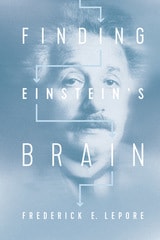
Finding Einstein's Brain
Lepore, Frederick E
Rutgers University Press, 2018
Following his death in 1955, Einstein’s brain was removed and preserved, but has never been fully or systematically studied. In fact, the sections are not even all in one place, and some are mysteriously unaccounted for! In this compelling tale, Frederick E. Lepore delves into the strange, elusive afterlife of Einstein’s brain, the controversy surrounding its use, and what its study represents for brain and/or intelligence studies.
Carefully reacting to the skepticism of 21st century neuroscience, Lepore more broadly examines the philosophical, medical, and scientific implications of brain-examination. Is the brain simply a computer? If so, how close are we to artificially creating a human brain? Could scientists create a second Einstein? This “biography of a brain” attempts to answer these questions, exploring what made Einstein’s brain anatomy exceptional, and how “found” photographs--discovered more than a half a century after his death--may begin to uncover the nature of genius.

Finding Mars
Ned Rozell
University of Alaska Press, 2011
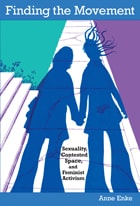
Finding the Movement
Sexuality, Contested Space, and Feminist ActivismFinn Enke
Duke University Press, 2007
By considering the development of feminism through an analysis of public space, Enke expands and revises the historiography of second-wave feminism. She suggests that the movement was so widespread because it was built by people who did not identify themselves as feminists as well as by those who did. Her focus on claims to public space helps to explain why sexuality, lesbianism, and gender expression were so central to feminist activism. Her spatial analysis also sheds light on hierarchies within the movement. As women turned commercial, civic, and institutional spaces into sites of activism, they produced, as well as resisted, exclusionary dynamics.
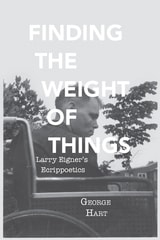
Finding the Weight of Things
Larry Eigner's EcrippoeticsGeorge Hart
University of Alabama Press, 2022
Where language, body, and form converge in the poetry of Larry Eigner.
Larry Eigner (1927–1996) wrote thousands of poems in his lifetime, despite profound physical limitations caused by cerebral palsy. Using only the thumb and index finger of his right hand, Eigner generated a torrent of urgent and rich language, participating in vital correspondences as well as publishing widely in literary magazines and poetry journals.
While Eigner wrote before the emergence of ecopoetics, his poetry reflected a serious engagement with scientific writing and media, including Rachel Carson’s seminal Silent Spring. Eigner was writing about environmental disasters and climate change long before such concerns took on a moral incumbency. Similarly, Eigner was ahead of his time in his exploration of disability. The field of disability studies has expanded rapidly in the new millennium. Eigner was not an overtly biographical poet, at least as far as his physical limitations were concerned, but his poetry spoke volumes on the idea of embodiment in all its forms.
Finding the Weight of Things: Larry Eigner’s Ecrippoetics is the first full-length study of Eigner’s poetry, covering his entire career from the beginning of his mature work in the 1950s to his last poems of the 1990s. George Hart charts where Eigner’s two central interests intersect, and how their interaction fueled his work as a poet-critic—one whose work has much to tell us about the ecology and embodiment of our futures. Hart sees Eigner’s overlapping concerns for disability, ecology, and poetic form as inextricable, and coins the phrase ecrippoetics here to describe Eigner’s prescient vision.
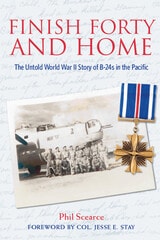
Finish Forty and Home
The Untold World War II Story of B-24s in the PacificPhil Scearce
University of North Texas Press, 2011
Fire Road
Donald Anderson
University of Iowa Press, 2001
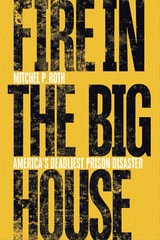
Fire in the Big House
America’s Deadliest Prison DisasterMitchel P. Roth
Ohio University Press, 2019
On April 21, 1930—Easter Monday—some rags caught fire under the Ohio Penitentiary’s dry and aging wooden roof, shortly after inmates had returned to their locked cells after supper. In less than an hour, 320 men who came from all corners of Prohibition-era America and from as far away as Russia had succumbed to fire and smoke in what remains the deadliest prison disaster in United States history.
Within 24 hours, moviegoers were watching Pathé’s newsreel of the fire, and in less than a week, the first iteration of the weepy ballad “Ohio Prison Fire” was released. The deaths brought urgent national and international focus to the horrifying conditions of America’s prisons (at the time of the fire, the Ohio Penitentiary was at almost three times its capacity). Yet, amid darkening world politics and the first years of the Great Depression, the fire receded from public concern.
In Fire in the Big House, Mitchel P. Roth does justice to the lives of convicts and guards and puts the conflagration in the context of the rise of the Big House prison model, local and state political machinations, and American penal history and reform efforts. The result is the first comprehensive account of a tragedy whose circumstances—violent unrest, overcrowding, poorly trained and underpaid guards, unsanitary conditions, inadequate food—will be familiar to prison watchdogs today.
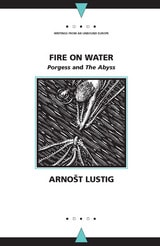
Fire on Water
Porgess and The AbyssArnost Lustig
Northwestern University Press, 2005
It occurred to me why I was able to forgive the Italians, but never the Germans. Was it because the Italians never slept on mattresses stuffed with the hair of Luster Leibling or Weltfeind Flusser?
In this pair of short novels, Arnošt Lustig continues his lifelong project of creating a universe-at once concrete and dreamlike-to examine the horrors of the Holocaust and the impossible burden of living as a survivor.
The Abyss is the fragmented memories of David Wiesenthal, aged twenty, tortured by what he has witnessed and by the knowledge that luck-not skill, not courage, certainly not goodness-separated the survivors from the doomed. He seeks solace remembering the women he's loved or desired, even the one who represents his death.
In Porgess, the narrator recounts the life of the title character, "the most handsome boy in Jewish Prague" who was paralyzed on the last day of World War II. The two discuss their mutual fascinations-women, jazz, the significance of numbers-in sometimes bitter, sometimes sardonic voices, but always with the specters of the dead and the guilt of survival close at hand.
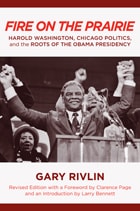
Fire on the Prairie
Harold Washington, Chicago Politics, and the Roots of the Obama PresidencyGary Rivlin
Temple University Press, 2012
Harold Washington’s historic and improbable victory over the vaunted Chicago political machine shook up American politics. The election of the enigmatic yet engaging Washington led to his serving five tumultuous years as the city’s first black mayor. He fashioned an uneasy but potent multiracial coalition that today still stands as a model for political change.
In this revised edition of Fire on the Prairie, acclaimed reporter Gary Rivlin chronicles Washington’s legacy—a tale rich in character and intrigue. He reveals the cronyism of Daley’s government and Washington’s rivalry with Jesse Jackson. Rivlin also shows how Washington’s success inspired a young community organizer named Barack Obama to turn to the electoral arena as a vehicle for change. While the story of a single city, , this political biography is anything but parochial.
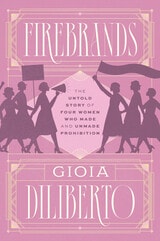
Firebrands
The Untold Story of Four Women Who Made and Unmade ProhibitionGioia Diliberto
University of Chicago Press, 2024
In the popular imagination, the story of Prohibition in America is a story of men and male violence, one full of federal agents fighting gangsters over the sale of moonshine. In contrast, Firebrands is the story of four Jazz Age dynamos—all women –who were forces behind the passage, the enforcement, the defiance, and, ultimately, the repeal of the Eighteenth Amendment. They battled each other directly, and they learned to marshal clout with cowed and hypocritical legislators, almost all of them men. Their clash over Prohibition stands as the first significant exercise of women’s political power since women gained the right to vote, and their influence on the American political scene wouldn’t be equaled for decades.
In Gioia Diliberto’s fresh and timely take on this period of history, we meet Ella Boole, the stern and ambitious leader of the Woman’s Christian Temperance Union, who campaigned fiercely to introduce Prohibition and fought desperately to keep it alive. We also meet Mabel Walker Willebrandt, the most powerful woman in America at the time, who served as the top federal prosecutor charged with enforcing Prohibition. Diliberto tells the story, too, of silent film star Texas Guinan, who ran New York speakeasies backed by the mob and showed that Prohibition was not only absurd but unenforceable. And, she follows Pauline Morton Sabin, a glamorous Manhattan aristocrat who belatedly recognized the cascading evil in Prohibition and mobilized the movement to kill it.
These women led their opposing forces of “Wets” and “Drys” across a teeming landscape of bootleggers, gangsters, federal agents, temperance fanatics, and cowardly politicians, many of them secret drunks. Building on the momentum of suffrage, they forged a path for the activists who followed during the great civil rights battles of the mid-twentieth century. Yet, they have been largely lost to history. In Firebrands, Diliberto finally gives these dynamic figures their due, creating a varied and dramatic portrait of women wielding power, in politics, society, and popular culture.
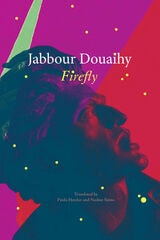
Firefly
Jabbour Douaihy
Seagull Books, 2022
Firefly paints a searing portrait of the city of Beirut at the outbreak of the Lebanese Civil War in the early 1970s, as seen through the eyes of its simple, yet perplexing, protagonist, Nizam al-Alami. On Nizam’s national ID card, no religion is listed. Muslim by birth, he is Christian by baptism. As a young boy, he found his way into an orchard while playing, and its owners, Touma and Rakheema, instantly fell for him and agreed to raise him as their own, as a Christian, without much resistance from his Muslim parents.
When he is grown, Nizam makes his way to Beirut to study law. Unable to bear the confines of the classroom, he abandons college to explore the city as he pleases. His apartment soon becomes a meeting place for his communist comrades, and he falls in love with Janan, the tormented artist whose dark paintings prophesy the city’s bloody future. When Beirut explodes, and the city is divided into a Christian East and a Muslim West, Nizam’s apartment turns into a hideout for armed militiamen, and Burj Square is emptied of everything except the Martyrs’ Statue that bears witness to the city’s most difficult moments. Nizam, too, bears witness, as he sees the corpses of the civil war’s victims pile up.
Jabbour Douaihy takes us through Nizam’s adventures and struggles as he faces stigmatization, homelessness, and violence in a society that considers him an outsider. Like the light-producing, charismatic fireflies that captured his imagination and eluded him as a child, Nizam is the glimmer of hope epitomized by those who reject binary identities in favor of the in-between. But how long, Douaihy asks, can this glimmer of hope truly last?
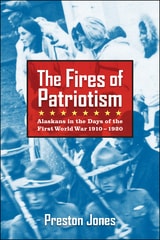
Fires of Patriotism
Alaskans in the Days of the First World War 1910-1920Preston Jones
University of Alaska Press, 2013
The Fires of Patriotism explores Alaska’s wartime experience, bringing to light new stories and new characters from a decade that shook the world. This multifaceted book explores the era through engaging stories and rare photos, offering a fresh perspective on World War I from a marginal land that forged its place in the greater unity of the country.
Fireweed
A Political AutobiographyGerda Lerner
Temple University Press, 2003
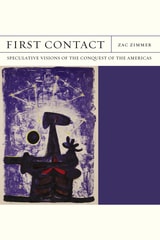
First Contact
Speculative Visions of the Conquest of the AmericasZac Zimmer
Northwestern University Press, 2025
Examining the power of speculative fiction to reimagine historical accounts of the conquest of the Americas
The historical conquest of the Americas resides at the core of all first-contact narratives, which stage colonization and resistance in the generic guise of speculative fiction. Starting from this axiom, First Contact: Speculative Visions of the Conquest of the Americas moves through a corpus of Mexican novels, Andean visual arts practices, and other cultural artifacts that have dramatized counterfactual narratives. Reimagining the early colonial period’s historiography from a south-to-north directionality while inventing parallel realities, these texts, which are concerned with limit cases, alterities, and alternative temporalities, refuse any reliance on the imperial ontologies of European expansion. Zac Zimmer examines these works to explore the slippage that exists between science fiction as the exemplary genre of the modern, colonial reality and literary speculation as an aesthetic tool that can be used to imagine other possible worlds. First Contact thus poses a foundational question: Can we understand the conquest as an originary world-historical event without eclipsing the other cosmologies that existed, and continue to exist, within the contact zone? Can we decolonize the speculative imagination itself?

First Love
The Affections of Modern FictionMaria DiBattista
University of Chicago Press, 1991
DiBattista argues that modernity reinvented First Love as a myth of creative initiative, as its characteristic response to a pervasive sense of historical belatedness. Anxious that its own creations can never be more than diminished forms of mightier originals, modernity idolizes First Love as the beginning that can never be repeated. First Love hence epitomizes the dream of a new self-incarnation. From Turgenev's First Love to the formative works of Virginia Woolf, Gertrude Stein, E. M. Forster, and Vladimir Nabokov, First Love confirms the birth of an artistic vocation. For modern men and women intent on becoming the original authors of their own lives, First Love becomes paradigmatic of those life-altering moments that transform the undifferentiated sequence of days into a fateful narrative.
DiBattista focuses on the enunciation of First Love in the fiction of Thomas Hardy, D. H. Lawrence, James Joyce, and Samuel Beckett. In reading their works, DiBattista dramatically revises the accepted view of irony as the dominant tone of modernism. First Love constitutes, she shows, a new apprehension of the world characterized not by the frigid distances of irony but by a belief in the creative individual who may begin the world anew, as if for the first time.
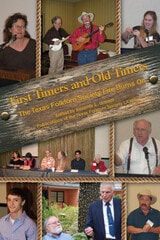
First Timers and Old Timers
Kenneth L. Untiedt
University of North Texas Press, 2012

Fishing a Borderless Sea
Environmental Territorialism in the North Atlantic, 1818-1910Brian J. Payne
Michigan State University Press, 2010
Over the centuries, processing and distribution of products from land and sea has stimulated the growth of a global economy. In the broad sweep of world history, it may be hard to imagine a place for the meager little herring baitfish. Yet, as Brian Payne adeptly recounts, the baitfish trade was hotly contested in the Anglo-American world throughout the nineteenth century. Politicians called for wars, navies were dispatched with guns at the ready, vessels were seized at sea, and violence erupted at sea.
Yet, the battle over baitfish was not simply a diplomatic or political affair. Fishermen from hundreds of villages along the coastline of Atlantic Canada and New England played essential roles in the construction of legal authority that granted or denied access to these profitable bait fisheries.
Fishing a Borderless Sea illustrates how everyday laborers created a complex system of environmental stewardship that enabled them to control the local resources while also allowing them access into the larger global economy.
Fishing by Obstinate Isles
Modern and Postmodern British Poetry and American ReadersKeith Tuma
Northwestern University Press, 1998
Fit to Be Tied
Sterilization and Reproductive Rights in America, 1950-1980Kluchin, Rebecca M
Rutgers University Press, 2011
During the first half of the twentieth century, sterilization (tubal ligation and vasectomy) was a tool of eugenics. Individuals who endorsed crude notions of biological determinism sought to control the reproductive decisions of women they considered "unfit" by nature of race or class, and used surgery to do so. Incorporating first-person narratives, court cases, and official records, Rebecca M. Kluchin examines the evolution of forced sterilization of poor women, especially women of color, in the second half of the century and contrasts it with demands for contraceptive sterilization made by white women and men. She chronicles public acceptance during an era of reproductive and sexual freedom, and the subsequent replacement of the eugenics movement with "neo-eugenic" standards that continued to influence American medical practice, family planning, public policy, and popular sentiment.
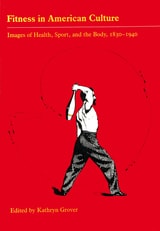
Fitness in American Culture
Images of Health, Sport, and the Body, 1830-1940Kathryn Grover
University of Massachusetts Press, 1989
Fitter, Happier
The Eugenic Strain in Twentieth-Century Cancer RhetoricLois Peters Agnew
University of Alabama Press, 0
A critical investigation into how eugenic logics quietly animated twentieth‑century cancer rhetoric, reshaping cultural narratives of health, risk, and human worth.
Fitter, Happier: The Eugenic Strain in Twentieth-Century Cancer Rhetoric is a thought-provoking exploration of the relationship between cancer rhetoric, American ideals, and eugenic influences in the twentieth century. This groundbreaking work delves into the paradoxical interplay between acknowledging the genuine threat of cancer and the ingrained American ethos of confidence and control.
Agnew’s meticulous research traces the topic’s historical context, unveiling how cancer discourses evolved from a hushed personal concern to a public issue thanks to the rise of cancer research centers and advocacy organizations. However, she unearths a troubling dimension to these discussions—subtle yet persistent eugenic ideologies that taint cancer arguments and advocacy groups. By dissecting prevailing cancer narratives, Agnew brings into focus how ideals rooted in eliminating imperfections and embracing progress converge with concerns for safeguarding societal fitness.
Fitter, Happier scrutinizes the military origins and metaphors that permeate government policies and medical research, the transformation of cancer’s association with melancholy into a rallying cry for a positive outlook, and the nuanced implications of prevention-focused dialogues. Reflecting on the varied experiences of actual cancer patients, Agnew resists the neat assimilation of these stories into a eugenic framework. Agnew’s insights prompt readers to contemplate the societal meanings of disease and disability as well as how language constructs our shared reality.
Fitzgerald's Mentors
Edmund Wilson, H. L. Mencken, and Gerald MurphyRonald Berman
University of Alabama Press, 2012
Fitzgerald, Hemingway, and the Twenties
Ronald Berman
University of Alabama Press, 2002
A noted scholar offers fresh ways of looking at two legendary American authors.
Both F. Scott Fitzgerald and Ernest Hemingway came into their own in the 1920s and did some of their best writing during that decade. In a series of interrelated essays, Ronald Berman considers an array of novels and short stories by both authors within the context of the decade's popular culture, philosophy, and intellectual history. As Berman shows, the thought of Fitzgerald and Hemingway went considerably past the limits of such labels as the Jazz Age or the Lost Generation.
Both Fitzgerald and Hemingway were avid readers, alive to the intellectual currents of their day, especially the contradictions and clashes of ideas and ideologies. Both writers, for example, were very much concerned with the problem of untenable belief—and also with the need to believe. In this light, Berman offers fresh readings of such works as Fitzgerald's The Great Gatsby, "Bernice Bobs Her Hair," and "The Diamond as Big as the Ritz" and Hemingway's "The Killers," A Farewell to Arms, and The Sun Also Rises. Berman invokes the thinking of a wide range of writers in his considerations of these texts, including William James, Alfred North Whitehead, Walter Lippman, and Edmund Wilson.
Berman's essays are driven and connected by a focused line of inquiry into Fitzgerald's and Hemingway's concerns with dogma both religious and secular, with new and old ideas of selfhood,and, particularly in the case of Hemingway, with the way we understand, explain, and transmit experience.
Fitzgerald-Wilson-Hemingway
Language and ExperienceRonald Berman
University of Alabama Press, 2003
In this study, Ronald Berman examines the work of the critic/novelist Edmund Wilson and the art of F. Scott Fitzgerald and Ernest Hemingway as they wrestled with the problems of language, experience, perception and reality in the "age of jazz." By focusing specifically on aesthetics—the ways these writers translated everyday reality into language—Berman challenges and redefines many routinely accepted ideas concerning the legacy of these authors.
Fitzgerald is generally thought of as a romantic, but Berman shows that we need to expand the idea of Romanticism to include its philosophy. Hemingway, widely viewed as a stylist who captured experience by simplifying language, is revealed as consciously demonstrating reality's resistance to language. Between these two renowned writers stands Wilson, who is critically influenced by Alfred North Whitehead, as well as Dewey, James, Santayana, and Freud.
By patiently mapping the correctness of these philosophers, historians, literary critics and writers, Berman aims to open a gateway into the era. This work should be of interest to scholars of American literature, philosophy and aesthetics; to academic libraries; to students of intellectual history; and to general readers interested in Fitzgerald, Hemingway and Wilson.
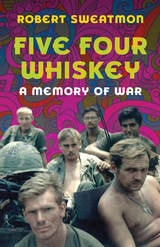
Five Four Whiskey
A Memory of WarRobert Sweatmon
Westholme Publishing, 2014
In late 1969, twenty-year-old Robert Sweatmon received a letter informing him that he had ten days to report to the United States Army. Like thousands of others, he had been drafted. Assigned as a rifleman with a mechanized unit, the author began a year-long odyssey in the Southeast Asian wilderness that would change his and his fellow soldiers’ lives forever.
Taking its title from the nighttime radio code call and response between base camp and those on ambush patrol, Five Four Whiskey: A Memory of War is a moving account of life as a combat soldier in the Vietnam War. Set mostly in the sprawling woods and rubber plantations northwest of Saigon, the author explains what his unit was asked to do and what obstacles they faced, including an elusive but deadly enemy, multiple kinds of booby traps, and antitank mines. The author, a notable television personality following the war, does not sensationalize his account; rather, his book allows a new generation to understand the emotional and physical pressures of the times. Coming of age in the maelstrom of civil rights and the free love culture, the author and his fellow soldiers saw their idealism quickly vaporize in the face of the grim realities of war. Here they learned to compartmentalize their lives as a way to survive, but it was their strong bonds that ultimately kept them from succumbing to the madness that surrounded them. Kept in the field for almost the entire time of his tour, the author was in a unit selected to conduct a clandestine reconnaissance in Cambodia and then lead the 1970 invasion, where he was wounded. Following his convalescence, he was sent to Nui Ba Den, the fabled ghost mountain haunted by the spirit of a Vietnamese princess, until he received his papers that he had completed his combat service. At that moment, his year-long mental wall between soldier and civilian fell away as he counted the last terrifying hours before he was safely out of Vietnam. A tour-de-force of military memoir, written in an objective and often literary prose, Five Four Whiskey perfectly captures how ordinary civilian-soldiers survived an ordeal set in one of the most turbulent times in American history.
Five Portraits
Modernity and the Imagination in Twentieth-Century German WritingMichael Bernstein
Northwestern University Press, 2000
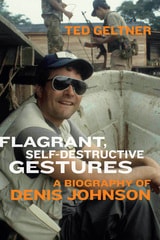
Flagrant, Self-Destructive Gestures
A Biography of Denis JohnsonTed Geltner
University of Iowa Press, 2025
The year was 1988, and Denis Johnson was at a low point. He caught malaria on a reporting trip into the jungles of the Philippines and was nearly pronounced dead. The disease left him unable to write. His second wife left him. He didn’t have enough money to pay his taxes. His publisher was waiting for a book that he hadn’t started. But in the life of Denis Johnson, when things were at their bleakest, something good was usually waiting around the next corner. This time, what emerged from the chaos was his masterpiece Jesus’ Son, a book that would tap into the zeitgeist of the 1990s and become a bible for Generation X and an American classic.
Flagrant, Self-Destructive Gestures tells the complete story of Johnson’s fascinating life, his thrill-seeking trips into war zones as a magazine correspondent, his battles with addiction, his live-it-before-you-write-it style of fiction. It follows the arc of his tremendous body of work as a novelist, journalist, poet, and playwright, and in the process recovers the true stories from the hazy myths that one of our most beloved, yet enigmatic, writers left behind.
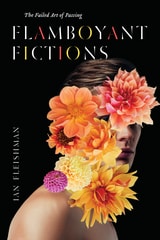
Flamboyant Fictions
The Failed Art of PassingIan Fleishman
Northwestern University Press, 2025
Exposes a stylistic tradition of flamboyantly failed passing in queer literature and film
This book posits formal experimentation as an index for evolving expressions of male homosexuality from literary modernism to the German New Wave and the present day. Ian Fleishman exposes a tradition of flamingly failed passing that is itself a surreptitious mode of passing: the flaunting of queer style as an intentionally unconvincing cover for queer content. Exploring a corpus of films and novels by André Gide, Jean Genet, Rainer Werner Fassbinder, Werner Schroeter, François Ozon, and Xavier Dolan, among others, Flamboyant Fictions: The Failed Art of Passing intervenes in trenchant debates about queer agency, visibility, negativity, and disidentification. Mapping queer strategies of storytelling onto queer practices of self-invention, Flamboyant Fictions wagers that it is precisely in instances of conflict between these auteurs and their inventions that narrative becomes a laboratory for testing the sovereignty and self-determination of queer identity.
Flamenco Nation
The Construction of Spanish National IdentitySandie Holguín
University of Wisconsin Press, 2019
Holguín brings forth an important interplay between regional nationalists and image makers actively involved in building a tourist industry. Soon they realized flamenco performances could be turned into a folkloric attraction that could stimulate the economy. Tourists and Spaniards alike began to cultivate flamenco as a representation of the country's national identity. This study reveals not only how Spain designed and promoted its own symbol but also how this cultural form took on a life of its own.
Flames after Midnight
Murder, Vengeance, and the Desolation of a Texas Community, Revised EditionBy Monte Akers
University of Texas Press, 2011
What happened in Kirven, Texas, in May 1922, has been forgotten by the outside world. It was a coworker's whispered words, "Kirven is where they burned the [Negroes]," that set Monte Akers to work at discovering the true story behind a young white woman's brutal murder and the burning alive of three black men who were almost certainly innocent of it. This was followed by a month-long reign of terror as white men killed blacks while local authorities concealed the real identity of the white probable murderers and allowed them to go free.
Writing nonfiction with the skill of a novelist, Akers paints a vivid portrait of a community desolated by race hatred and its own refusal to face hard truths. He sets this tragedy within the story of a region prospering from an oil boom but plagued by lawlessness, and traces the lynching's repercussions down the decades to the present day. In the new epilogue, Akers adds details that have come to light as a result of the book's publication, including an eyewitness account of the burnings from an elderly man who claimed to have castrated two of the men before they were lynched.

Flames from the Earth
A Novel from the Lódz GhettoIsaiah Spiegel, translated from the Yiddish by Julian Levinson
Northwestern University Press, 2023
Flames from the Earth: A Novel from the Łódź Ghetto is an autobiographical novel written by Isaiah Spiegel, one of the most revered Yiddish authors to survive the Holocaust. Originally published in Israel in 1966, the novel brings together material that Spiegel wrote while imprisoned in the Łódź Ghetto, which he recovered from a cellar when he returned from Auschwitz after the war. The only works by Spiegel previously available to English readers have been short stories.
In this, his first novel, Spiegel explores a complex web of characters in and around the Łódź Ghetto: Vigdor and Gitele, lovers who are involved in the ghetto resistance movement; Nicodem, a Polish priest, who hides a member of the Jewish underground; Stefan Kaczmarek, a Polish tavern keeper who betrays Nicodem to preserve his own smuggling business; Franz Jessike, a Nazi guard who blackmails local Poles for personal gain; and Chaim Vidaver, the heroic leader of the ghetto resistance. Based largely on historical events, the novel’s lyrical style echoes its emotional intensity.
Gripping and atmospheric, Flames from the Earth honors daring acts of heroism and human connections forged amid unthinkable conditions. Spiegel’s novel represents an important contribution to the archive of literary depictions of historical trauma.
Flannery O'Connor, Walker Percy, and the Aesthetic of Revelation
John D. Sykes, Jr.
University of Missouri Press, 2007
With his mastery of modernist technique and his depictions of characters obsessed with the past, Nobel laureate William Faulkner raised the bar for southern fiction writers. But the work of two later authors shows that the aesthetic of memory is not enough: Confederate thunder fades as they turn to an explicitly religious source of meaning.
According to John Sykes, the fiction of Flannery O’Connor and Walker Percy provides occasions for divine revelation. He traces their work from its common roots in midcentury southern and Catholic intellectual life to show how the two adopted different theological emphases and rhetorical strategies—O’Connor building to climactic images, Percy striving for dialogue with the reader—as a means of uncovering the sacramental foundation of the created order.
Sykes sets O’Connor and Percy against the background of the Southern Renaissance from which they emerged, showing not only how they shared a distinctly Christian notion of art that led them to see fiction as revelatory but also how their methods of revelation took them in different directions. Yet, despite their differences in strategy and emphasis, he argues that the two are united in their conception of the artist as “God’s sharp-eyed witness,” and he connects them with the philosophers and critics, both Christian and non-Christian, who had a meaningful influence on their work.
Through sustained readings of key texts—particularly such O’Connor stories as “The Artificial Nigger” and “The Geranium” and Percy’s novels Love in the Ruins and The Second Coming—Sykes focuses on the intertwined themes of revelation, sacrament, and community. He views their work in relation to the theological difficulties that they were not able to overcome concerning community. For both writers, the question of community is further complicated by the changing nature of the South as the Lost Cause and segregation lose their holds and a new form of prosperity arises.
By disclosing how O’Connor and Percy made aesthetic choices based on their Catholicism and their belief that fiction by its very nature is revelatory, Sykes demonstrates that their work cannot be seen as merely a continuation of the historical aesthetic that dominated southern literature for so long. Flannery O’Connor, Walker Percy, and the Aesthetic of Revelation is theoretically sophisticated without being esoteric and is accessible to any reader with a serious interest in these writers, brimming with fresh insights about both that clarify their approaches to art and enrich our understanding of their work.
Flash Effect
Science and the Rhetorical Origins of Cold War AmericaDavid J. Tietge
Ohio University Press, 2002
The ways science and technology are portrayed in advertising, in the news, in our politics, and in the culture at large inform the way we respond to these particular facts of life. The better we are at recognizing the rhetorical intentions of the purveyors of information and promoters of mass culture, the more adept we become at responding intelligently to them.
Flash Effect, a startling book by David J. Tietge, documents the manner in which those at the highest levels of our political and cultural institutions conflated the rhetoric of science and technology with the rhetorics of religion and patriotism to express their policies for governance at the onset of the Cold War and to explain them to the American public.
Professor Tietge details our cultural attitudes about science in the early years of the Cold War, when on the heels of a great technological victory Americans were faced with the possibility of destruction by the very weapons that had saved them.
In Flash Effect we learn how, by symbolizing the scientist as both a father figure and a savior—and by celebrating the technological objects of his labor—the campaign to promote science took hold in the American consciousness. The products of that attitude are with us today more than ever.
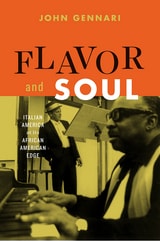
Flavor and Soul
Italian America at Its African American EdgeJohn Gennari
University of Chicago Press, 2017
In Flavor and Soul, John Gennari spotlights this affinity, calling it “the edge”—now smooth, sometimes serrated—between Italian American and African American culture. He argues that the edge is a space of mutual emulation and suspicion, a joyous cultural meeting sometimes darkened by violent collision. Through studies of music and sound, film and media, sports and foodways, Gennari shows how an Afro-Italian sensibility has nourished and vitalized American culture writ large, even as Italian Americans and African Americans have fought each other for urban space, recognition of overlapping histories of suffering and exclusion, and political and personal rispetto.
Thus, Flavor and Soul is a cultural contact zone—a piazza where people express deep feelings of joy and pleasure, wariness and distrust, amity and enmity. And it is only at such cultural edges, Gennari argues, that America can come to truly understand its racial and ethnic dynamics.
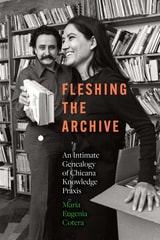
Fleshing the Archive
An Intimate Genealogy of Chicana Knowledge PraxisMaría Eugenia Cotera
University of Texas Press, 2025
The history of the Chicana por mi Raza Digital Memory Collective, an archive dedicated to preserving Chicana feminist knowledge of the 1970s and memory work.
The late 1960s and early 1970s witnessed an explosion of publishing by Chicana activists as they took part in the Movimiento against oppression of ethnic Mexicans in the United States. Today, thousands of these documents, including written works and oral histories, have been assembled by the Chicana por mi Raza Digital Memory Collective. Drawing on these unique resources, Fleshing the Archive traces the innovative Chicana knowledge projects of the Movimiento years.
Seeking to think with the past rather than about it, María Cotera explores transgressive sites and discourses of Chicana knowledge, from poems and essays to newspapers, bibliographies, and testimonies. Often published independently and distributed by readers themselves, these works embodied a praxis of feminist and queer consciousness-raising. Observing the startling convergences between Chicana praxis of the 1970s and digital knowledge production in the present, Cotera argues that the Chicana archive enables transformative moments of recognition across time that unsettle supposedly objective accounts of history. The materials preserved by Chicana por mi Raza offer Chicana scholars a model of teaching and learning liberated from a corporate academy that is increasingly hostile to intellectual inquiry.