Results by title
3071 books match the query 'Business & Economics' and 115 start with f

From Central Planning to the Market
Transformation of the Czech Economy 1989 – 2004Libor Zidek
Central European University Press, 2018

From Cotton Belt to Sunbelt
Federal Policy, Economic Development, and the Transformation of the South 1938–1980Bruce J. Schulman
Duke University Press, 1994

From Here to Free Trade
Essays in Post-Uruguay Round Trade StrategyErnest H. Preeg
University of Chicago Press, 1998
The first essay assesses U.S. interests in economic globalization, the second examines recent steps toward free trade at the multilateral and regional levels, and the next three offer an in-depth critique of U.S. regional free trade objectives in the Americas, across the Pacific, and possibly with Europe. The final essay presents a multilateral/regional synthesis for going from here to free trade over the coming decade.

From Liberty to Democracy
The Transformation of American GovernmentRandall G. Holcombe
University of Michigan Press, 2002
The government's activities during two world wars and the Great Depression greatly increased its involvement in people's economic affairs, and by the time of Lyndon Johnson's Great Society, the transformation was complete. By the end of the twentieth century, the fundamental principle underlying American government had been transformed to democracy, and public policy was designed to further the will of the majority. The result has been a government that is larger and broader in scope.
From Liberty to Democracy examines American political history using the framework of public choice theory to show how American government grew more democratic, and how this resulted in an increase in the size and scope of government. It should appeal to historians, political scientists, and economists who are interested in the evolution of American government but does not assume any specialized training and can be read by anyone interested in American political history.
Randall G. Holcombe is DeVoe Moore Professor of Economics, Florida State University
From Market-Places to a Market Economy
The Transformation of Rural Massachusetts, 1750-1850Winifred Barr Rothenberg
University of Chicago Press, 1992
Rothenberg forcefully disputes recent historical interpretations of the preindustrial New England village as a so-called moral economy, insulated from the exigencies of the market. She discovers the simultaneous emergence of markets for farm produce, farm labor, and rural capital. Then, linking market integration to labor productivity growth and agricultural improvement, she confirms that market-led growth in Massachusetts agriculture lay at the origins of the American industrial revolution.

From Old Regime to Industrial State
A History of German Industrialization from the Eighteenth Century to World War IRichard H. Tilly and Michael Kopsidis
University of Chicago Press, 2020

From Pleasure Machines to Moral Communities
An Evolutionary Economics without Homo economicusGeoffrey M. Hodgson
University of Chicago Press, 2012
Are humans at their core seekers of their own pleasure or cooperative members of society? Paradoxically, they are both. Pleasure-seeking can take place only within the context of what works within a defined community, and central to any community are the evolved codes and principles guiding appropriate behavior, or morality. The complex interaction of morality and self-interest is at the heart of Geoffrey M. Hodgson’s approach to evolutionary economics, which is designed to bring about a better understanding of human behavior.

From Printing to Streaming
Cultural Production under CapitalismMichael Chanan
Pluto Press, 2022
A radical and comprehensive analysis of the commodification of artistic creation and the struggle to realize its potential in the digital age.
For mainstream economics, cultural production raises no special questions: creative expression is to be harvested for wealth creation like any other form of labor. As Karl Marx saw it, however, capital is hostile to the arts because it cannot fully control the process of creativity. But while he saw the arts as marginal to capital accumulation, that was before the birth of the mass media.
Engaging with the major issues in Marxist theory around art and capitalism, From Printing to Streaming traces how the logic of cultural capitalism evolved from the print age to digital times, tracking the development of printing, photography, sound recording, newsprint, advertising, film, and broadcasting, exploring the peculiarities of each as commodities, and their recent transformation by digital technology, where everything melts into computer code. Chanan demonstrates how these developments have had profound implications for both cultural creation and consumption.

From Residency to Retirement
Physicians' Careers over a Professional LifetimeTerry Mizrahi
Rutgers University Press, 2021
Mizrahi observed and interviewed these physicians in six timeframes ending in 2016. Beginning with medical school in the mid-1970s, these physicians reveal the myriad fluctuations and uncertainties in their professional practice, working conditions, collegial relationships, and patient interactions. In their own words, they provide a “view from the front lines” both in academic and community settings. They disclose the satisfactions and strains in coping with macro policies enacted by government and insurance companies over their career trajectory.
They describe their residency in internal medicine in a large southern urban medical center as a “siege mentality” which lessened as they began their careers, in Getting Rid of Patients, the title of Mizrahi’s first book (1986). As these doctors moved on in their professional lives more of their experiences were discussed in terms of dissatisfaction with financial remuneration, emotional gratification, and intellectual fulfillment. Such moments of career frustration, however, were also interspersed with moments of satisfaction at different stages of their medical careers. Particularly revealing was whether they were optimistic about the future at each stage of their career and whether they would recommend a medical career to their children. Mizrahi's subjects also divulge their private feelings of disillusionment and fear of failure given the malpractice epidemic and lawsuits threatened or actually brought against so many doctors. Mizrahi’s work, covering almost fifty years, provides rarely viewed insights into the lives of physicians over a professional life span.

From Silver to Cocaine
Latin American Commodity Chains and the Building of the World Economy, 1500-2000Steven Topik, Carlos Marichal, and Zephyr Frank, eds.
Duke University Press, 2006
By focusing on changing patterns of production and consumption over time, the contributors reconstruct complex webs of relationships and economic processes, highlighting Latin America’s central and interactive place in the world economy. They show how changes in coffee consumption habits, clothing fashions, drug usage, or tire technologies in Europe, Asia, and the Americas reverberate through Latin American commodity chains in profound ways. The social and economic outcomes of the continent’s export experience have been mixed. By analyzing the dynamics of a wide range of commodities over a five-hundred-year period, From Silver to Cocaine highlights this diversity at the same time that it provides a basis for comparison and points to new ways of doing global history.
Contributors. Marcelo Bucheli, Horacio Crespo, Zephyr Frank, Paul Gootenberg, Robert Greenhill, Mary Ann Mahony, Carlos Marichal, David McCreery, Rory Miller, Aldo Musacchio, Laura Nater, Ian Read, Mario Samper, Steven Topik, Allen Wells

From Submarines to Suburbs
Selling a Better America, 1939–1959Cynthia Lee Henthorn
Ohio University Press, 2006
From Submarines to Suburbs surveys the development, strategy, and effect of these campaigns over a span of twenty pivotal years. Cynthia Lee Henthorn takes a close look at how pre-fabricated suburban houses, high-tech kitchens, and miracle products developed from war-related industries were promoted as the hygienic solutions for establishing this better America, one led by the captains of free enterprise.
As Henthorn demonstrates, wartime advertising and marketing strategies tying consumer prosperity to war were easily adapted in the Cold War era, when a symbiotic relationship between military standing and standards of living intensified in a culture dependent on defense spending. Were the efforts to engineer a better America successful? Using documentary evidence in the form of numerous advertisements, From Submarines to Suburbs stands as a significant contribution to understanding how today’s “better” America evolved.

From the Local to the Global, Third Edition
Key Issues in Development StudiesEdited by Gerard McCann and Stephen McCloskey
Pluto Press, 2015
This completely revised third edition takes stock of the international development environment as it embarks on new policy frameworks to confront new challenges, ensuring that From the Local to the Global will continue to serve as an indispensable introduction to key development issues such as aid, debt, trade, migration, security, gender, and climate change.

Fujimori's Peru
The Political EconomyEdited by John Crabtree and Jim Thomas
University of London Press, 1998
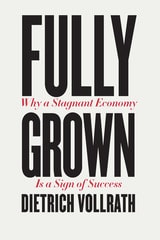
Fully Grown
Why a Stagnant Economy Is a Sign of SuccessDietrich Vollrath
University of Chicago Press, 2020
Most economists would agree that a thriving economy is synonymous with GDP growth. The more we produce and consume, the higher our living standard and the more resources available to the public. This means that our current era, in which growth has slowed substantially from its postwar highs, has raised alarm bells. But should it? Is growth actually the best way to measure economic success—and does our slowdown indicate economic problems?
The counterintuitive answer Dietrich Vollrath offers is: No. Looking at the same facts as other economists, he offers a radically different interpretation. Rather than a sign of economic failure, he argues, our current slowdown is, in fact, a sign of our widespread economic success. Our powerful economy has already supplied so much of the necessary stuff of modern life, brought us so much comfort, security, and luxury, that we have turned to new forms of production and consumption that increase our well-being but do not contribute to growth in GDP.
In Fully Grown, Vollrath offers a powerful case to support that argument. He explores a number of important trends in the US economy: including a decrease in the number of workers relative to the population, a shift from a goods-driven economy to a services-driven one, and a decline in geographic mobility. In each case, he shows how their economic effects could be read as a sign of success, even though they each act as a brake of GDP growth. He also reveals what growth measurement can and cannot tell us—which factors are rightly correlated with economic success, which tell us nothing about significant changes in the economy, and which fall into a conspicuously gray area.
Sure to be controversial, Fully Grown will reset the terms of economic debate and help us think anew about what a successful economy looks like.
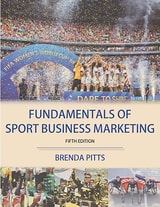
Fundamentals of Sport Business Marketing
Fifth EditionBrenda G. Pitts
FiT Publishing, 2021
The sport business industry is vast and diverse. Today’s students are tomorrow’s professionals, and it is immensely important for these students to attain the contemporary knowledge necessary to operate successfully in an ever-growing industry. Like no other textbook in the field, Fundamentals of Sport Business Marketing 5th Edition covers the practical and theoretical framework necessary for students to understand, and professionals to market any sport-related business in a global economy. Updates to this new edition begin with a title that acknowledges the trillion dollar contribution of the sport business to the global economy. As the most comprehensive sport business marketing textbook to date, this 5th edition encompasses the diversity of spectators and participants, sports and sport businesses that span the industry, well beyond the scope of professional and college sports to include sport marketing research, sporting goods retail and manufacturing, sports broadcast, internet sport business, sport tourism, and parasports (sports and sport businesses for people with disabilities)—in short, the full spectrum of companies in which students of sports programs around the world will seek careers.
An award-winning teacher and researcher, author of over 250 academic papers published in numerous journals, and the author or editor of 26 books on the subject of sport business marketing, Dr. Brenda Pitts offers in this textbook a wealth of knowledge that is rarely compiled in a single place. Dr. Pitts has taught thousands of students, worked with dozens of professionals in the industry, and brings diverse experience and wisdom to the field and this textbook.
The 5th edition updates and details the sound foundational sport business marketing knowledge that can be applied in any type of sport business setting. This textbook builds the students’ understanding of the theoretical framework of business practices for sport business marketing operations, and serves as an excellent on the job handbook, guide, and reference for professionals in the field.