Results by title
2706 books match the query 'European' and 104 start with f
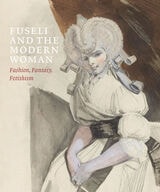
Fuseli and the Modern Woman
Fashion, Fantasy, FetishismEdited by David Solkin
Paul Holberton Publishing, 2022
A catalog accompanying the first exhibition devoted to a fascinating group of drawings by one of eighteenth-century Europe’s most idiosyncratic, original, and controversial artists.
Best known for his notoriously provocative painting The Nightmare, Anglo-Swiss painter Henry Fuseli (1741–1825) cultivated a reputation for eccentricity, with vividly stylized images of supernatural creatures, muscle-bound heroes, and damsels in distress. While these convinced some viewers of the greatness of his genius, others dismissed him as a charlatan, or as completely mad.
By bringing together more than fifty of his works, this volume offers unprecedented access to see one of the finest draftsmen of the Romantic period at his most innovative and exciting. Visitors to the show and readers of the lavishly illustrated catalog will further be invited to consider how Fuseli’s drawings of women, as products of the turbulent aftermath of the American and French Revolutions, speak to concerns about gender and sexuality that have never been more relevant than they are today.
The exhibition showcases drawings brought together from international collections, including the Kunsthaus Zürich, the Auckland Art Gallery in New Zealand, and other European and North American institutions.
[more]
Future of Modernism
Hugh Witemeyer, Editor
University of Michigan Press, 1997
The modernism of the future will not look like the modernism of the past. Over the past twenty years, W. B. Yeats, James Joyce, T. S. Eliot, Ezra Pound, and other major figures of the modernist movement have been subject to postmodernist critiques that have seen them as reactionary upholders of oppressive class, gender, racial, or other hierarchies; these critiques have permanently altered conceptions of the program and the canon of modernism. Today, revolutions in editing and publishing seem likely to transform them still further. The contributors to The Future of Modernism take these sea-changes into account, acknowledging and learning from the developments of recent years. Some interrogate the antithesis between modernism and postmodernism, showing that the former contains many features commonly claimed for the latter. Other essays dissociate modernism from the New Critical formalism with which it is often confused. Still others explore the modernist legacy of engagement with political and social events, challenging characterizations of modernism as an ahistorical, universalistic ideology. Together, these eleven essays by distinguished scholars contest facile dismissals of modernist writing and affirm an unshakable conviction of its continuing relevance and value. Although they project no unified vision or prophecy, the essays suggest a variety of lively trajectories into the next century.
[more]
Futurity
Contemporary Literature and the Quest for the PastAmir Eshel
University of Chicago Press, 2012
When looking at how trauma is represented in literature and the arts, we tend to focus on the weight of the past. In this book, Amir Eshel suggests that this retrospective gaze has trapped us in a search for reason in the madness of the twentieth century’s catastrophes at the expense of literature’s prospective vision. Considering several key literary works, Eshel argues in Futurity that by grappling with watershed events of modernity, these works display a future-centric engagement with the past that opens up the present to new political, cultural, and ethical possibilities—what he calls futurity.
[more]
fleurs
Friederike Mayröcker
Seagull Books, 2026
An uncompromising masterpiece that transforms memory and renewal into a wild world of words.
Fleurs—flowers, flower petals—a title that might suggest a gentle world of blooming fields and soft breezes. But in the hands of Friederike Mayröcker, one of the greatest German-language poets of the twentieth and twenty-first centuries, this is a book of a very different kind. It is a wild, vivid journey into a rich, elemental landscape.
If you follow Mayröcker’s path, you find not a comfortable meadow but steep, stony ground—a place where her inimitable voice rings out in all its power and purity. Unsentimental and crystal clear, Mayröcker’s writing is driven by a single purpose: to create images of remarkable vividness in a language as free, bold, and fresh as if it were newly invented.
The final installment of Mayröcker’s trilogy, following études and cahier, fleurs is a book of memory and renewal, protest and revelation—a testimony to the enduring magic of writing itself.
[more]