Results by title
2646 books match the query 'History & Criticism' and 120 start with f
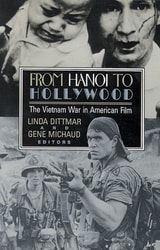
From Hanoi to Hollywood
The Vietnam War in American FilmDittmar, Linda
Rutgers University Press, 1990
The title of this anthology calls attention to the process whereby aspects of the Vietnam War have been appropriated by the American cultural industry. Probing the large body of emotion-laden, controversial films, From Hanoi to Hollywood is concerned with the retelling of history and the retrospection that such a process involves. In this anthology, an awareness of film as a cultural artifact that molds beliefs and guides action is emphasized, an awareness that the contributors bring to a variety of films. Their essays span over one hundred documentary and fiction films, and include in-depth analyses of major commercial films, ranging from Apocalypse Now to Platoon, Rambo: First Blood Part II, and Full Metal Jacket, and documentaries from In the Year of the Pig to Dear America: Letters Home from Vietnam.
The essays in this volume deal with representations of the Vietnam war in documentary film and television reporting, examining the ways the power of film is used to deliver political messages. There are surprises here, new readings, and important insights on the ways we as a society have attempted to come to terms with the experiences of the Vietnam era. The book also contains two appendixes-a detailed chronology charting the relationship between major historical events and the release of American war films from 1954 through 1988, and a filmography listing information on over four hundred American and foreign films about the Vietnam War.
From Light to Byte
Toward an Ethics of Digital CinemaMarkos Hadjioannou
University of Minnesota Press, 2012
Cinema has been undergoing a profound technological shift: celluloid film is being replaced by digital media in the production, distribution, and reception of moving images. Concerned with the debate surrounding digital cinema’s ontology and the interrelationship between cinema cultures, From Light to Byte investigates the very idea of change as it is expressed in the current technological transition. Markos Hadjioannou asks what is different in the way digital movies depict the world and engage with the individual and how we might best address the issue of technological shift within media archaeologies.
Hadjioannou turns to the technical basis of the image as his first point of departure, considering the creative and perceptual activities of moviemakers and viewers. Grounded in film history, film theory, and philosophy, he explores how the digital configures its engagement with reality and the individual while simultaneously replaying and destabilizing celluloid’s own structures. He observes that, where film’s photographic foundation encourages an existential association between individual and reality, digital representations are graphic renditions of mathematical codes whose causal relations are more difficult to trace.
Throughout this work Hadjioannou examines how the two technologies set themselves up with reference to reality, physicality, spatiality, and temporality, and he concludes that the question concerning digital cinema is ultimately one of ethical implications—a question, that is, of the individual’s ability to respond to the image of the world.
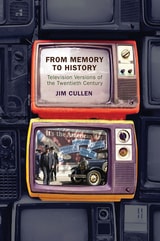
From Memory to History
Television Versions of the Twentieth CenturyJim Cullen
Rutgers University Press, 2021
From Memory to History takes readers on a journey through over fifty years of historical dramas and sitcoms that were set in earlier decades of the twentieth century. Along the way, it explores how comedies like M*A*S*H and Hogan’s Heroes offered veiled commentary on the Vietnam War, how dramas ranging like Mad Men echoed current economic concerns, and how The Americans and Halt and Catch Fire used the Cold War and the rise of the internet to reflect upon the present day. Cultural critic Jim Cullen is lively, informative, and incisive, and this book will help readers look at past times, present times, and prime time in a new light.
From Metaphor to Direct Speech
Contemporary Russophone Drama and Performance TheoryE. Susanna Weygandt
University of Wisconsin Press, 2025
As a result, the Russophone New Dramatists speak dissent and dramatize resistance. Ultimately, they shift theatrical productions from something constrained and limited, in both place and time, to an ephemeral but unbounded gateway for social activism. The sonic stage thus effectively functions as a social forum, transposing action from the actors to the audience. From Metaphor to Direct Speech therefore contributes to cultural as well as performance studies, offering a compelling look not just at developments in theatrical modes but also at dissent and cultural aesthetics in Russia today.
From Presley to Springsteen
Ten Songs That Defined Rock and RollLouis P. Masur
Rutgers University Press, 2027
The first decades of the rock and roll era changed popular music forever and introduced songs that remain beloved standards over a half-century later. But what did it feel like in the rooms where those songs were being written, recorded, and mixed? What creative alchemy and happy accidents transpired to turn these records into classics?
This book examines ten of the rock era’s most iconic songs, including Chuck Berry’s “Johnny B. Goode” and Bruce Springsteen’s “Born to Run.” Along the way, it reveals how singers like Elvis Presley and Aretha Franklin reimagined “Hound Dog” and “Respect” through their sheer force of personality. It also takes you inside the studio to see how producers George Martin, Phil Spector, and Brian Wilson created a symphony of sounds. Other chapters explore how the lyrics of “Satisfaction,” “Like a Rolling Stone,” and “What’s Going On” gave voice to the feelings of a new generation. Writing with a historian’s careful attention to detail and a fan’s love for music, Louis Masur invites us to hear these enduring songs anew.
From Red-Baiting to Blacklisting
The Labor Plays of Manny FriedBarry B. Witham
Southern Illinois University Press, 2020
Author Barry B. Witham reclaims the work of Manny Fried, an essential American playwright so thoroughly blacklisted after he defied the House Committee on Un-American Activities in 1954, and again in 1964, that his work all but completely disappeared from the canon. Witham details Manny Fried’s work inside and outside the theatre and examines his three major labor plays and the political climate that both nurtured and disparaged their productions. Drawing on never-before-published interview materials, Witham reveals the details of how the United States government worked to ruin Fried’s career.
From Red-Baiting to Blacklisting includes the complete text of Fried’s major labor plays, all long out of print. In Elegy for Stanley Gorski, Fried depicts one of the many red-baiting campaigns that threatened countless unions in the wake of the Taft-Hartley Act and the collusion of the Catholic Church with these activities. In Drop Hammer, Fried tackles the issues of union dues, misappropriation, and potential criminal activities. In the third play, The Dodo Bird, perhaps his most popular, Fried achieves a remarkable character study of a man outsourced from his job by technology and plant closures.
Manny Fried’s plays portray the hard edges of capitalism and government power and illuminate present-day struggles with hostility to labor unions and the passage in several states of right-to-work laws. Fried had no illusions about the government’s determination to destroy communism and unionism—causes to which he was deeply committed.
From Reverence to Rape
The Treatment of Women in the Movies, Third EditionMolly Haskell
University of Chicago Press, 2016
From SWEETBACK to SUPER FLY
Race and Film Audiences in Chicago's LoopGerald R. Butters, Jr.
University of Missouri Press, 2014
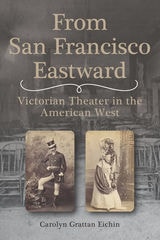
From San Francisco Eastward
Victorian Theater in the American WestCarolyn Grattan Eichin
University of Nevada Press, 2020
Finalist for the 2021 Will Rogers Medallion Award in Western Non-Fiction
Carolyn Grattan Eichin’s From San Francisco Eastward explores the dynamics and influence of theater in the West during the Victorian era. San Francisco, Eichin argues, served as the nucleus of the western theatrical world, having attained prominence behind only New York and Boston as the nation’s most important theatrical center by 1870. By focusing on the West’s hinterland communities, theater as a capitalist venture driven by the sale of cultural forms is illuminated against the backdrop of urbanization.
Using the vagaries of the West’s notorious boom-bust economic cycles, Eichin traces the fiscal, demographic, and geographic influences that shaped western theater. With an emphasis on the 1860s and 70s, this thoroughly researched work uses distinct notions of ethnicity, class, and gender to examine a cultural institution driven by a market economy. From San Francisco Eastward is a thorough analysis of the ever-changing theatrical personalities and strategies that shaped Victorian theater in the West, and the ways in which theater as a business transformed the values of a region.
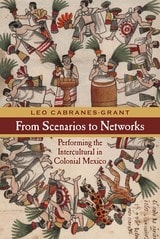
From Scenarios to Networks
Performing the Intercultural in Colonial MexicoLeo Cabranes-Grant
Northwestern University Press, 2016
In this innovative study, Leo Cabranes-Grant analyzes four intercultural events in the Viceroyalty of New Spain that took place between 1566 and 1690. Rather than relying on racial labels to describe alterations of identity, Cabranes-Grant focuses on experimentation, rehearsal, and the interaction between bodies and objects. His analysis shows how scenarios are invested with affective qualities, which in turn enable cultural and semiotic change. Central to his argument is Bruno Latour’s Actor-Network Theory, which figures society as a constantly evolving web of relationships among objects, people, and spaces. In examining these scenarios, Cabranes-Grant attempts to discern the reasons why the conditions of an intensified moment within this ceaseless flow take on a particular value and inspire their re-creation. Cabranes-Grant offers a fresh perspective on Latour’s theory and reorients debates concerning history and historiography in the field of performance studies.
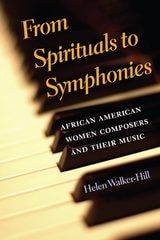
From Spirituals to Symphonies
African-American Women Composers and Their MusicHelen Walker-Hill
University of Illinois Press, 2006
Helen Walker-Hill's unique study provides a carefully researched examination of the history and scope of musical composition by African American women composers from the nineteenth and twentieth centuries. Focusing on the effect of race, gender, and class, From Spirituals to Symphonies notes the important role played by individual personalities and circumstances in shaping this underappreciated category of American art. The study also provides in-depth exploration of the backgrounds, experiences, and musical compositions of eight African American women including Margaret Bonds, Undine Smith Moore, and Julia Perry, who combined the techniques of Western art music with their own cultural traditions and individual gifts. Despite having gained national and international recognition during their lifetimes, the contributions of many of these women are today forgotten.
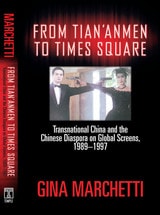
From Tian'anmen to Times Square
Transnational China and the Chinese Diaspora on Global Screens, 1989-1997Gina Marchetti
Temple University Press, 2006
In From Tian'anmen to Times Square, leading film scholar Gina Marchetti considers the complex changes in the ways that China and the Chinese have been portrayed in cinema and media arts since the Tian'anmen revolt. Drawing on her interviews with leading contemporary Chinese filmmakers, Marchetti looks at a wide range of work by Chinese and non-Chinese media artists working in China, Hong Kong, Taiwan, and Singapore and on transnational co-productions involving those places. Focusing on the intersections of race, ethnicity, gender, and sexuality on global screens, Marchetti traces the momentous political, cultural, social, and economic forces confronting contemporary media artists and filmmakers working within "Greater China."
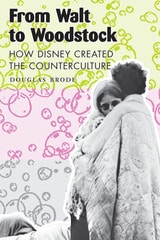
From Walt to Woodstock
How Disney Created the CountercultureBy Douglas Brode
University of Texas Press, 2004
With his thumbprint on the most ubiquitous films of childhood, Walt Disney is widely considered to be the most conventional of all major American moviemakers. The adjective "Disneyfied" has become shorthand for a creative work that has abandoned any controversial or substantial content to find commercial success.
But does Disney deserve that reputation? Douglas Brode overturns the idea of Disney as a middlebrow filmmaker by detailing how Disney movies played a key role in transforming children of the Eisenhower era into the radical youth of the Age of Aquarius. Using close readings of Disney projects, Brode shows that Disney's films were frequently ahead of their time thematically. Long before the cultural tumult of the sixties, Disney films preached pacifism, introduced a generation to the notion of feminism, offered the screen's first drug-trip imagery, encouraged young people to become runaways, insisted on the need for integration, advanced the notion of a sexual revolution, created the concept of multiculturalism, called for a return to nature, nourished the cult of the righteous outlaw, justified violent radicalism in defense of individual rights, argued in favor of communal living, and encouraged antiauthoritarian attitudes. Brode argues that Disney, more than any other influence in popular culture, should be considered the primary creator of the sixties counterculture—a reality that couldn't be further from his "conventional" reputation.
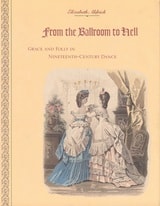
From the Ballroom to Hell
Grace and Folly in Nineteenth-Century DanceElizabeth Aldrich
Northwestern University Press, 1991
From the Ballroom to Hell collects over 100 little-known excerpts from dance, etiquette, beauty, and fashion manuals from the nineteenth century. Included are instructions for performing various dances, as well as musical scores, costume patterns, and the proper way to hold one's posture, fork, gloves, and fan. While of particular interest to dancers, dance historians, and choreographers, anyone fascinated by the ways and mores of the period will find From the Ballroom to Hell an endearing and informative glimpse of America's past.
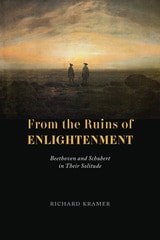
From the Ruins of Enlightenment
Beethoven and Schubert in Their SolitudeRichard Kramer
University of Chicago Press, 2023
Here is Vienna, hosting a congress in 1815 that would redraw national boundaries and reconfigure the European community for a full century. A snapshot captures two of its citizens, each seemingly oblivious to this momentous political environment: Franz Schubert, not yet twenty years old and in the midst of his most prolific year—some 140 songs, four operas, and much else; and Ludwig van Beethoven, struggling through a midlife crisis that would yield the song cycle An die ferne Geliebte, two strikingly original cello sonatas, and the two formidable sonatas for the “Hammerklavier,” opp. 101 and 106. In Richard Kramer’s compelling reading, each seemed to be composing “against”—Beethoven, against the Enlightenment; Schubert, against the looming presence of the older composer even as his own musical imagination took full flight.
From the Ruins of Enlightenment begins in 1815, with the discovery of two unique projects: Schubert’s settings of the poems of Ludwig Hölty in a fragmentary cycle and Beethoven’s engagement with a half dozen poems by Johann Gottfried Herder. From there, Kramer unearths previously undetected resonances and associations, illuminating the two composers in their “lonely and singular journeys” through the “rich solitude of their music.”
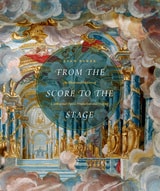
From the Score to the Stage
An Illustrated History of Continental Opera Production and StagingEvan Baker
University of Chicago Press, 2013
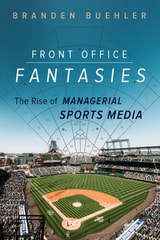
Front Office Fantasies
The Rise of Managerial Sports MediaBranden Buehler
University of Illinois Press, 2023
Front office executives have become high-profile commentators, movie and video game protagonists, and role models for a generation raised in the data-driven, financialized world of contemporary sports. Branden Buehler examines the media transformation of these once obscure management figures into esteemed experts and sporting idols.
Moving from Moneyball and Football Manager to coverage of analytics gurus like Daryl Morey, Buehler shows how a fixation on managerial moves has taken hold across the entire sports media landscape. Buehler’s chapter-by-chapter look at specific media forms illustrates different facets of the managerial craze while analyzing the related effects on what fans see, hear, and play. Throughout, Buehler explores the unsettling implications of exalting the management class and its logics, in the process arguing that sports media’s managerial lionization serves as one of the clearest reflections of major material and ideological changes taking place across culture and society.
Insightful and timely, Front Office Fantasies reveals how sports media moved the action from the field to the executive suite.
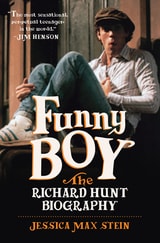
Funny Boy
The Richard Hunt BiographyJessica Max Stein
Rutgers University Press, 2024
"The most sensational, perpetual teenager in the world.” —Jim Henson
"To know him was to love him, and we do." —Mark Hamill
Funny Boy: The Richard Hunt Biography tells the life story of a gifted performer whose gleeful irreverence, sharp wit and generous spirit inspired millions. Richard Hunt was one of the original main five performers in the Muppet troupe. He brought to life an impressive range of characters on The Muppet Show, Sesame Street, Fraggle Rock and various Muppet movies, everyone from eager gofer Scooter to elderly heckler Statler, groovy girl Janice to freaked-out lab helper Beaker, even early versions of Miss Piggy and Elmo. Hunt also acted, directed and mentored the next generation of performers. His accomplishments are all the more remarkable in that he crammed them all into only 40 years.
Richard Hunt was just 18 years old when he joined Jim Henson’s company, where his edgy humor quickly helped launch the Muppets into international stardom. Hunt lived large, savoring life’s delights, amassing a vivid, disparate community of friends. Even when the AIDS epidemic wrought its devastation, claiming the love of Hunt’s life and threatening his own life, he showed an extraordinary sense of resilience, openness and joy. Hunt’s story exemplifies how to follow your passion, foster your talents, adapt to life’s surprises, genuinely connect with everyone from glitzy celebrities to gruff cab drivers – and have a hell of a lot of fun along the way.
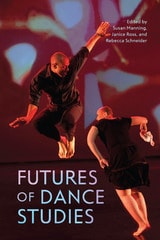
Futures of Dance Studies
Susan Manning
University of Wisconsin Press, 2020
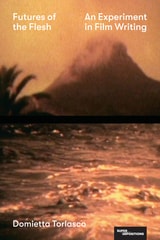
Futures of the Flesh
An Experiment in Film WritingDomietta Torlasco
Northwestern University Press, 2026
Exploring alternative possibilities of viewpoint through cinematic experimentation
In this boldly multidimensional work, Domietta Torlasco alternates between theoretical writings, film essays, and fragmented excerpts from an original screenplay to construct a temporal as well as spatial architecture for her critical intervention. Futures of the Flesh posits that cinematic experimentation holds the strongest potential to reimagine life—its forms, rhythms, and affects—beyond the division between subject and object, human and animal, animate and inanimate. Such potential cannot be clearly located in either space or time but, on the contrary, requires that we think according to momentum, diffraction, and difference.
As a novel notion and the formative medium of both subject and object, the flesh affirms the openness and indefinite generativity of being, allowing for the appearance of new perceptual relations and forms of kinship. Torlasco stages a dialogue between thinkers including Hortense Spillers and Maurice Merleau-Ponty and turns to canonical films, including Blade Runner and Solaris, classic sci-fi literature, such as Octavia Butler’s Kindred, and contemporary video art to elucidate how these media imaginatively rework the distinction between categories of being. This book endeavors to redefine the relation between theory and practice, analysis and creation, to name the primary relations that, under specific techno-aesthetic conditions, enable the emergence of porous, un-bordered forms of life.