Results by title
22279 books match the query 'Social Science' and 955 start with f

Fandom as Classroom Practice
A Teaching GuideKatherine Anderson Howell
University of Iowa Press, 2018
Providing ways to engage students through their popular culture interests, this collection brings together several essays, across disciplines, to show how fan practices such as writing fan fiction, creating vids, communicating via Tumblr, and participating in film tourism can invite students to invest more of themselves into their education.
Both scholarship and fandom encourage passionate engagement with texts—rather than passive consumption in isolation— and editor Katherine Anderson Howell and her contributors find that when students are encouraged to partake in a remix classroom that encourages their fan interests, they participate more in their education, are more critical of experts and authorities, and actively shape the discourse themselves. Creating this remix classroom requires thoughtfulness on the instructor’s part, and so the chapters in this volume come from teachers who have carefully constructed such courses, including several invaluable appendices that provide examples of methodologies, course assignments, teaching practices, and classroom setup. Each chapter also includes student responses that offer a sense of what students gained from each course.
The result is an exciting and entertaining new way to motivate students and teachers alike, and it is sure to be a popular reference guide for instructors teaching classes from high school to graduate levels.

Fandom, Now in Color
A Collection of VoicesRukmini Pande
University of Iowa Press, 2020
Fandom, Now in Color gathers together seemingly contradictory narratives that intersect at the (in)visibility of race/ism in fandom and fan studies. This collection engages the problem by undertaking the different tactics of decolonization—diversifying methodologies, destabilizing canons of “must-read” scholarship by engaging with multiple disciplines, making whiteness visible but not the default against which all other kinds of racialization must compete, and decentering white fans even in those fandoms where they are the assumed majority. These new narratives concern themselves with a broad swath of media, from cosplay and comics to tabletop roleplay and video games, and fandoms from Jane the Virgin to Japan’s K-pop scene. Fandom, Now in Color asserts that no one answer or approach can sufficiently come to grips with the shifting categories of race, racism, and racial identity.
Contributors: McKenna Boeckner, Angie Fazekas, Monica Flegel, Elizabeth Hornsby, Katherine Anderson Howell, Carina Lapointe, Miranda Ruth Larsen, Judith Leggatt, Jenni Lehtinen, joan miller, Swati Moitra, Samira Nadkarni, Indira Neill Hoch, Sam Pack, Rukmini Pande, Deepa Sivarajan, Al Valentín

Fandom, the Next Generation
Bridget Kies
University of Iowa Press, 2022
Contributors:
Maria Alberto, University of Utah
Mélanie Bourdaa, University of Bordeaux Montaigne
Meredith Dabek, Maynooth University
Simone Driessen, Erasmus University Rotterdam
Yektanurşin Duyan, Mardin Artuklu University
Dan Golding, Swinburne University of Technology
Bethan Jones, Aberdale, Wales (UK)
Siobhan Lyons, Sydney, New South Wales (Australia)
L. N. Rosales, University of Nebraska, Lincoln
Andrew Scahill, University of Colorado, Denver
Janelle Vermaak, Nelson Mandela University
Cynthia W. Walker, St. Peter’s University
Dawn Walls-Thumma, independent scholar
Neta Yodovich, University of Haifa

Fangasm
Supernatural FangirlsKatherine Larsen and Lynn S. Zubernis
University of Iowa Press, 2013

Fangirls
Scenes from Modern Music CultureBy Hannah Ewens
University of Texas Press, 2020
"To be a fan is to scream alone together." This is the discovery Hannah Ewens makes in Fangirls: how music fandom is at once a journey of self-definition and a conduit for connection and camaraderie; how it is both complicated and empowering; and how now, more than ever, fandoms composed of girls and young queer people create cultures that shape and change an entire industry.
This book is about what it means to be a fangirl.
Speaking to hundreds of fans from the UK, US, Europe, and Japan, Ewens tells the story of music fandom using its own voices, recounting previously untold or glossed-over scenes from modern pop and rock music history. In doing so, she uncovers the importance of fan devotion: how Ariana Grande represents both tragedy and resilience to her followers, or what it means to meet an artist like Lady Gaga in person. From One Directioners, to members of the Beyhive, to the author's own fandom experiences, this book reclaims the "fangirl" label for its young members, celebrating their purpose, their power, and, most of all, their passion for the music they love.

Fannie Barrier Williams
Crossing the Borders of Region and RaceWanda A. Hendricks
University of Illinois Press, 2014
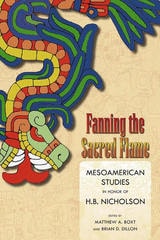
Fanning the Sacred Flame
Mesoamerican Studies in Honor of H. B. NicholsonMatthew A. Boxt
University Press of Colorado, 2020
Covering all of Mesoamerica across all time periods, contributors include Patricia R. Anawalt, Alfredo López Austin, Anthony Aveni, Robert M. Carmack, David C. Grove, Richard D. Hansen, Leonardo López Luján, Kevin Terraciano, and more. Eloise Quiñones Keber provides a thorough biographical sketch, detailing Nicholson's academic and professional journey. Publication supported, in part, by The Patterson Foundation and several private donors.

Fanning the Spark
A MemoirMary Ward Brown
University of Alabama Press, 2009
Where ordinary lives kindle extraordinary reckonings.
In 1986, after years of publishing stories in literary magazines and periodicals, Mary Ward Brown published her first book, the story collection Tongues of Flame. It soon received regional and national attention, and the following year won the PEN/Hemingway Award for fiction. Mary Ward Brown was sixty-nine years old. Though she would go on to write and publish many more stories and a well-received second collection, It Wasn’t All Dancing, Mary Ward Brown’s late acclaim hardly hints at the rich and varied life that prepared the way for her success.
Fanning the Spark is the story of her life as a writer—her upbringing in rural Alabama; the joys of college, marriage, and motherhood; the sorrows of becoming a widow; and a lifelong devotion to writing, writers, and literature, and the company of those who shared those loves, nurturing and feeding her interior life in the face of many challenges, losses, and obstacles, both emotional and material.
Here, in prose every bit as eloquent, evocative, and incisive as her stories, are her remembrances of loved ones; her letters fraught with worry to her son in Vietnam; periods of emotional isolation and unbidden silence; her invaluable friendships with renowned writers, editors, and agents; her love of community and place; and immeasurable delight with every award, speech, and public reading, the many recognitions she has garnered late in life. Above all, it is the story of the competing demands of art and of life, the constant struggle between her need to write and the practicalities of family, duty, and day to day living.

Fanny Fern
An Independent WomanWarren, Joyce W
Rutgers University Press, 1992

Fantasies of Hong Kong Disneyland
Attempted Indigenizations of Space, Labor, and ConsumptionJenny Banh
Rutgers University Press, 2025
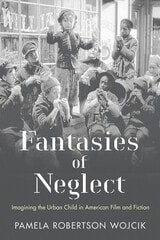
Fantasies of Neglect
Imagining the Urban Child in American Film and FictionPamela Robertson Wojcik
Rutgers University Press, 2016

Fantasies of Nina Simone
Jordan Alexander Stein
Duke University Press, 2024

Fantasizing the Feminine in Indonesia
Laurie J. Sears, ed.
Duke University Press, 1996
The contributors examine the ways in which Indonesian women and men are enmeshed in networks of power and then pursue the stories of those who, sometimes at great political risk, challenge these powers. In this juxtaposition of voices and stories, we see how indigenous patriarchal fantasies of feminine behavior merged with Dutch colonial notions of proper wives and mothers to produce the Indonesian government’s present approach to controlling the images and actions of women. Facing the theoretical challenge of building a truly cross-cultural feminist analysis, Fantasizing the Feminine takes us into an ongoing conversation that reveals the contradictions of postcolonial positionings and the fragility of postmodern identities.
This book will be welcomed by readers with interests in contemporary Indonesian politics and society as well as historians, anthropologists, and other scholars concerned with literature, gender, and cultural studies.
Contributors. Benedict R. O’G. Anderson, Sita Aripurnami, Jane Monnig Atkinson, Nancy K. Florida, Daniel S. Lev, Dédé Oetomo, Laurie J. Sears, Ann Laura Stoler, Saraswati Sunindyo, Julia I. Suryakusuma, Jean Gelman Taylor, Sylvia Tiwon, Anna Lowenhaupt Tsing, Diane L. Wolf

Fantasy Travel
Vintage People on Photo PostcardsTom Phillips
Bodleian Library Publishing, 2012

Fantasy, Fashion, and Affection
Editions of Robert Herrick's Poetry for the Common Reader, 1810–1968Jay Gertzman
University of Wisconsin Press, 1986

Fanti Kinship and the Analysis of Kinship Terminologies
David B. Kronenfeld
University of Illinois Press, 2008
This book examines Fanti kinship terminology from a variety of analytic and formal perspectives. Based on work with a broad number of informants, David B. Kronenfeld details and analyzes internal variation in usage within the Fanti community, shows the relationship between terminology and social groups and communicative usage, and relates these findings to major theoretical work on kinship and on the intersections of language, thought, and culture.
The terminological analysis in this study employs a great variety of formal approaches, assesses the strengths and weaknesses of each approach, and covers a wide range of types of usage. This work also performs a systematic, formal analysis of behavior patterns among kin, joining this approach with the analysis of a kinship terminological system. Rather than treating kinship terminology as a special, isolated piece of culture, this study also ties its analysis to more general semantic and cultural theoretical issues. Including computational and comparative studies of kinship terminologies, this volume represents the fullest analysis of any kinship terminological system in the ethnographic record.

Far Afield
French Anthropology between Science and LiteratureVincent Debaene
University of Chicago Press, 2014
The relationship between anthropology and literature in France is one of careful curiosity. Literary writers are wary about anthropologists’ scientific austerity but intrigued by the objects they collect and the issues they raise, while anthropologists claim to be scientists but at the same time are deeply concerned with writing and representational practices. Debaene elucidates the richness that this curiosity fosters and the diverse range of writings it has produced, from Proustian memoirs to proto-surrealist diaries. In the end he offers a fascinating intellectual history, one that is itself located precisely where science and literature meet.

Far Away from the Tigers
A Year in the Classroom with Internationally Adopted ChildrenJane Katch
University of Chicago Press, 2011
Over the past three decades, more than a quarter of a million children have become citizens of the United States through international adoption. Kindergarten teacher Jane Katch recently found herself with three such children in her class: Katya, born in Russia, Jasper, from Cambodia, and Caleb, from Romania. Each child had spent early years in an orphanage, and each had unique educational and emotional needs. How Katch came to recognize and respond to those needs makes up the journey of discovery in this moving and insightful book.
Interspersing vignettes from the classroom and conversations with the children’s parents, Far Away from the Tigers first explores Katch’s misunderstandings and mistakes as she struggles to help the children adjust to school. As Katch learns more about each child’s preadoption past, she gradually realizes that they were deprived of some basic learning experiences and she needs to find ways to fill those gaps. Before Caleb can learn to read or write, he must improve his verbal skills by learning nursery rhymes, stories, and songs. Katya, who came from an overcrowded orphanage, now needs to be the center of attention; before learning how to form real friendships, she first must gain control over more basic functions such as eating and sleeping. And the youngest, Jasper, needs steady encouragement to play with classmates instead of sitting alone practicing his handwriting.
Slowly, through trial and error and by drawing on the deep understanding and intense commitment of the children’s parents, Katch discovers the importance—and joy—of allowing each child time to develop in his or her own way. Beautifully told, wise, and candid, Far Away from the Tigers is a gift for parents, teachers, and anyone who cares for children growing up in a new home.
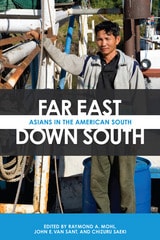
Far East, Down South
Asians in the American SouthEdited by Raymond A. Mohl, John E. Van Sant, and Chizuru Saeki
University of Alabama Press, 2016
Uncovering the overlooked histories of Asians in the American South.
In sharp contrast to the “melting pot” reputation of the United States, the American South—with its history of slavery, Jim Crow, and the civil rights movement—has been perceived in stark and simplistic demographic terms. In Far East, Down South, editors Raymond A. Mohl, John E. Van Sant, and Chizuru Saeki provide a collection of essential essays that restores and explores an overlooked part of the South’s story—that of Asian immigration to the region.
These essays form a comprehensive overview of key episodes and issues in the history of Asian immigrants to the South. During Reconstruction, southern entrepreneurs experimented with the replacement of slave labor with Chinese workers. As in the West, Chinese laborers played a role in the development of railroads. Japanese farmers also played a more widespread role than is usually believed. Filipino sailors recruited by the US Navy in the early decades of the twentieth century often settled with their families in the vicinity of naval ports such as Corpus Christi, Biloxi, and Pensacola. Internment camps brought Japanese Americans to Arkansas. Marriages between American servicemen and Japanese, Korean, Filipina, Vietnamese, and nationals in other theaters of war created many thousands of blended families in the South. In recent decades, the South is the destination of internal immigration as Asian Americans spread out from immigrant enclaves in West Coast and Northeast urban areas.
Taken together, the book’s essays document numerous fascinating themes: the historic presence of Asians in the South dating back to the mid-nineteenth century; the sources of numerous waves of contemporary Asian immigration to the South; and the steady spread of Asians out from the coastal port cities. Far East, Down South adds a vital new dimension to popular understanding of southern history.
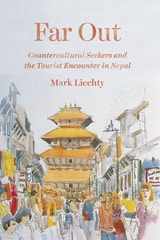
Far Out
Countercultural Seekers and the Tourist Encounter in NepalMark Liechty
University of Chicago Press, 2017
Emerging from centuries of political isolation but eager to engage the world, Nepalis struggled to make sense of the hordes of exotic, enthusiastic foreigners. They quickly embraced the phenomenon, however, and harnessed it to their own ends by building tourists’ fantasies into their national image and crafting Nepal as a premier tourist destination. Liechty describes three distinct phases: the postwar era, when the country provided a Raj-like throwback experience for rich Americans; Nepal’s emergence as an exotic outpost of hippie counterculture in the 1960s; and its rebranding into a hip adventure destination, which began in the 1970s and continues today. He shows how Western projections of Nepal as an isolated place inspired creative enterprises and, paradoxically, allowed locals to participate in the global economy. Based on twenty-five years of research, Far Out blends ethnographic analysis, a lifelong passion for Nepal, and a touch of humor to produce the first comprehensive history of what tourists looked for—and found—on the road to Kathmandu.

Far Western Basketmaker Beginnings
The Jackson Flat ProjectEdited by Heidi Roberts, Richard V. N. Ahlstrom, and Jerry D. Spangler
University of Utah Press, 2022
This volume, based on the results of excavations at Jackson Flat Reservoir south of Kanab, examines a litany of firsts: the earliest Archaic pithouses ever found in this region, evidence that maize farmers arrived here a thousand years earlier than previously reported, and the emergence of a complex Basketmaker farming and foraging culture. Specialists in Far Western Puebloan culture, architecture, settlement patterns, subsistence, chronometry, and prehistoric technologies make a compelling case that farming was introduced to the region by San Pedro immigrants, and that the blending of farmers with local foraging groups gave rise to a Basketmaker lifeway by 200 BC. This book marks a giant leap forward in archaeologists’ understanding of the earliest maize farmers north and west of the Colorado River.
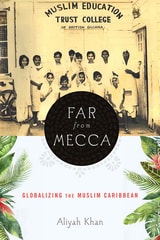
Far from Mecca
Globalizing the Muslim CaribbeanAliyah Khan
Rutgers University Press, 2020
Far from Mecca: Globalizing the Muslim Caribbean is the first academic work on Muslims in the English-speaking Caribbean. Khan focuses on the fiction, poetry, and music of Islam in Guyana, Trinidad, and Jamaica. Combining archival research, ethnography, and literary analysis, Khan argues for a historical continuity of Afro- and Indo-Muslim presence and cultural production in the Caribbean. Case studies explored range from Arabic-language autobiographical and religious texts written by enslaved Sufi West Africans in nineteenth-century Jamaica, to early twentieth-century fictions of post-indenture South Asian Muslim indigeneity and El Dorado, to the attempted government coup in 1990 by the Jamaat al-Muslimeen in Trinidad, as well as the island’s calypso music, to contemporary judicial cases concerning Caribbean Muslims and global terrorism. Khan argues that the Caribbean Muslim subject, the “fullaman,” a performative identity that relies on gendering and racializing Islam, troubles discourses of creolization that are fundamental to postcolonial nationalisms in the Caribbean.

Faraway Women and the "Atlantic Monthly"
Cathryn Halverson
University of Massachusetts Press, 2019
Winner of the 2020 Thomas J. Lyon Award from the Western Literature Association
In the first decades of the twentieth century, famed Atlantic Monthly editor Ellery Sedgwick chose to publish a group of nontraditional writers he later referred to as “Faraway Women,” working-class authors living in the western United States far from his base in Boston. Cathryn Halverson surveys these enormously popular Atlantic contributors, among them a young woman raised in Oregon lumber camps, homesteaders in Wyoming, Idaho, and Alberta, and a world traveler who called Los Angeles and Honolulu home.
Faraway Women and the “Atlantic Monthly” examines gender and power as it charts an archival journey connecting the least remembered writers and readers of the time with one of its most renowned literary figures, Gertrude Stein. It shows how distant friends, patrons, publishers, and readers inspired, fostered, and consumed the innovative life narratives of these unlikely authors, and it also tracks their own strategies for seizing creative outlets and forging new protocols of public expression. Troubling binary categories of east and west, national and regional, and cosmopolitan and local, the book recasts the coordinates of early twentieth-century American literature.
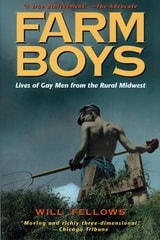
Farm Boys
Lives of Gay Men from the Rural MidwestCollected and Edited by William D. Fellows
University of Wisconsin Press, 1998
“When I was fifteen, the milkman who came to get our milk was beautiful. This is when I was really getting horny to do something with another guy. I waited every day for him to come. I couldn’t even talk to him, couldn’t think of anything to say. I just stood there, watching him, wondering if he knew why.”—Henry Bauer, Minnesota
“When I go back home, I feel a real connection with the land—a tremendous feeling, spiritual in a way. It makes me want to go out into a field and take my shoes off and put my feet right on the dirt, establish a real physical connection with that place. I get homesick a lot, but I don’t know if I could ever go back there and live. It’s not the kind of place that would welcome me if I lived openly, the way that I would like to live. I would be shunned.”—Martin Scherz, Nebraska
“If there is a checklist to see if your kid is queer, I must have hit every one of them—all sorts of big warning signs. I was always interested in a lot of the traditional queen things—clothes, cooking, academics, music, theater. A farm boy listening to show tunes? My parents must have seen it coming.”—Joe Shulka, Wisconsin
“My favorite show when I was growing up was ‘The Waltons’. The show’s values comforted me, and I identified with John-Boy, the sensitive son who wanted to be a writer. He belonged there on the mountain with his family, yet he sensed that he was different and that he was often misunderstood. Sometimes I still feel like a misfit, even with gay people.”—Connie Sanders, Illinois
“Agriculture is my life. I like working with farm people, although they don’t really understand me. When I retire I want the word to get out [that I’m gay] to the people I’ve worked with—the dairy producers, the veterinarians, the feed salesmen, the guys at the co-ops. They’re going to be shocked, but their eyes are going to be opened.”—James Heckman, Indiana
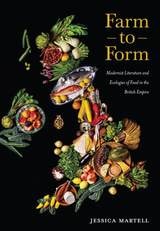
Farm to Form
Modernist Literature and Ecologies of Food in the British EmpireJessica Martell
University of Nevada Press, 2020
Deeply informed by Martell’s extensive knowledge of modern British, Irish, American, and World Literatures, this progressive work positions modernism as central to the study of narratives of resistance against social and environmental degradation. Analyzed works include those of Thomas Hardy, E. M. Forster, Virginia Woolf, Joseph Conrad, George Russell, and James Joyce.
In light of climate change, fossil fuel supremacy, nutritional dearth, and other pressing food issues, modernist texts bring to life an era of crisis and anxiety similar to our own. In doing so, Martell summons the past as a way to employ the modernist term of “defamiliarizing” the present so that entrenched perceptions can be challenged. Our current food regime is both new and constantly evolving with the first industrial food trades. Studying earlier cultural responses to them invites us to return to persistent problems with new insights and renewed passion.
Farm
A Multimodal ReaderJoyce Kinkead
Utah State University Press, 2020
The text guides the reader through the Jeffersonian idealism of the yeoman farmer (“cultivators of the earth are the chosen people of God”) to literature of the nineteenth and twentieth centuries (Thoreau’s “The Bean-Field,” Cather’s prairie trilogy, Steinbeck’s The Grapes of Wrath, and Carpenter’s Farm City). Contributors provide historical context for the literary texts, such as discussion of sharecropping vs. plantation systems, the rise of agribusiness and chemical farming, and Teddy Roosevelt’s Country Life Commission. Written, visual, and oral texts ask readers to consider the farm in art (Grant Wood), ecology (Rachel Carson’s Silent Spring), children’s and young adult literature (classic children’s books, YA novels, nonfiction, and poetry), advertising (from early boosterism to Chipotle videos), print culture (farmers’ market and victory garden posters from both world wars), folklore (food culture, vintners, and veterinarian practices), popular culture (Farm Aid concerts), and much more. Each reading is supported by activities, exercises, projects, and visual rhetorical elements that further connect students to agriculture and the essential work of farmers.
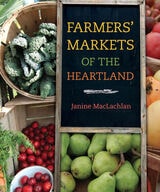
Farmers' Markets of the Heartland
Janine MacLachlan
University of Illinois Press, 2012
A visual feast of the Midwest's homegrown bounty
In this splendidly illustrated book, food writer and self-described farm groupie Janine MacLachlan embarks on a tour of seasonal markets and farmstands throughout the Midwest, sampling local flavors from Michigan, Ohio, Indiana, Illinois, Missouri, Iowa, Minnesota, and Wisconsin. She conducts delicious research as she meets farmers, tastes their food, and explores how their businesses thrive in the face of an industrial food supply. She tells the stories of a pair of farmers growing specialty crops on a few acres of northern Michigan for just a few months out of the year, an Ohio cattle farm that has raised heritage beef since 1820, and a Minnesota farmer who tirelessly champions the Jimmy Nardello sweet Italian frying pepper. Along the way, she savors vibrant red carrots, slurpy peaches, vast quantities of specialty cheeses, and some of the tastiest pie to cross anyone's lips.
Informed by debates about eating local, seasonal crops, organic farming, sanitation, and biodiversity, Farmers' Markets of the Heartland tantalizes with special recipes from farm-friendly chefs and dozens of luscious color photographs that will inspire you to harvest the homegrown flavors in your own neighborhood.
Farmers, Hunters, and Colonists
Interaction Between the Southwest and the Southern PlainsEdited by Katherine A. Spielmann
University of Arizona Press, 1991
Contributors:
Timothy G. Baugh
Judith A. Habicht-Mauche
Frances Levine
Christopher Lintz
David H. Snow
John D. Speth
Katherine A. Spielmann
David R. Wilcox
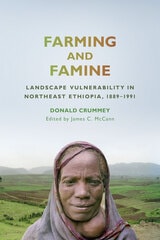
Farming and Famine
Landscape Vulnerability in Northeast Ethiopia, 1889–1991Donald E. Crummey; Edited by James C. McCann
University of Wisconsin Press, 2018
Crummey draws on photographs comparing identical landscapes in 1937 and 1997 as well as interviews with local farmers, among other sources. He reveals that forestation actually increased due to farmers' tree-planting initiatives. More broadly, he shows that, in the face of growing environmental stress, Ethiopian farmers have innovated and adapted. Yet the threat of famine remains because of constricted access to resources and erratic rainfall. To avoid future famines, Crummey suggests, Ethiopia's farmers must transform agricultural productivity, but they cannot achieve that on their own.

Farming, Hunting, and Fishing in the Olmec World
By Amber M. VanDerwarker
University of Texas Press, 2006
The Olmec who anciently inhabited Mexico's southern Gulf Coast organized their once-egalitarian society into chiefdoms during the Formative period (1400 BC to AD 300). This increase in political complexity coincided with the development of village agriculture, which has led scholars to theorize that agricultural surpluses gave aspiring Olmec leaders control over vital resources and thus a power base on which to build authority and exact tribute.
In this book, Amber VanDerwarker conducts the first multidisciplinary analysis of subsistence patterns at two Olmec settlements to offer a fuller understanding of how the development of political complexity was tied to both agricultural practices and environmental factors. She uses plant and animal remains, as well as isotopic data, to trace the intensification of maize agriculture during the Late Formative period. She also examines how volcanic eruptions in the region affected subsistence practices and settlement patterns. Through these multiple sets of data, VanDerwarker presents convincing evidence that Olmec and epi-Olmec lifeways of farming, hunting, and fishing were driven by both political and environmental pressures and that the rise of institutionalized leadership must be understood within the ecological context in which it occurred.
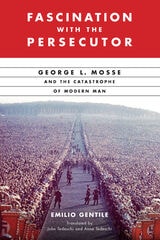
Fascination with the Persecutor
George L. Mosse and the Catastrophe of Modern ManEmilio Gentile and and Stanley G. Payne, translated by John and Anne Tedeschi
University of Wisconsin Press, 2021
This translation makes Emilio Gentile’s groundbreaking study of Mosse’s life and work available to English language readers. A leading authority on fascism, totalitarianism, and Mosse’s legacy, Gentile draws on a wealth of published and unpublished material, including letters, interviews, lecture plans, and marginalia from Mosse’s personal library. Gentile details how the senior scholar eschewed polemics and employed rigorous academic standards to better understand fascism and the “catastrophe of the modern man”—how masculinity transformed into a destructive ideology. As long as wars are waged over political beliefs in popular culture, Mosse’s theories of totalitarianism will remain as relevant as ever.

Fascism
History and TheoryDavid Renton
Pluto Press, 2020
To explain this disturbing trend, David Renton surveys the history of fascism in Europe from its pre-war origins to the present day, examining Marxist responses to fascism in the age of Hitler and Mussolini, the writings of Trotsky and Gramsci and contemporary theorists. Renton theorizes that fascism was driven by the chaotic and unstable balance between reactionary ambitions and the mass character of its support. This approach will arm a new generation of anti-fascists to resist those who seek to re-enact fascism.
Rewritten and revised for the twentieth anniversary of its first publication, Renton's classic book synthesizes the Marxist theory of fascism and updates it for our own times.

Fascist Fantasies?
Aesthetics and the Ambivalent Reception of Science Fiction and FantasyEdited by Tobias Hof and Jan Süselbeck
Lever Press, 2027
Why do right-wing extremists find science fiction and fantasy so appealing? This edited collection sets out to answer that question by examining ten influential genre texts, comics, and their filmic adaptations through an interdisciplinary lens. The wide historical scope reveals a recurring pattern: The far right has repeatedly attempted to claim interpretive authority over popular fiction as a means of establishing what Antonio Gramsci called “cultural hegemony.” By investigating how and why right-wing audiences gravitate toward these genres—and why those works may carry an inherent susceptibility to such readings—the collection offers timely insights into how core elements of fascist ideology can be transmitted both subtly through narrative and symbolism, and more deliberately through right-wing appropriation. The volume also explores how certain authors—whether intentionally or not—have lent themselves to this agenda through ambivalent storytelling choices.
Works examined include The Lord of the Rings, Star Wars, and The Matrix, and many more to enable a nuanced decoding of ambivalent texts, semiotics, and cinematic codes, while also assessing their potential real-world impact. Balancing scholarly rigor and an accessible style, the collection will be of interest to students and university instructors, as well as to engaged film enthusiasts and fantasy fans eager to think more critically about the genres they love.

Fascist Virilities
Rhetoric, Ideology, and Social Fantasy in ItalyBarbara Spackman
University of Minnesota Press, 1996

Fashion Cities Africa
Edited by Hannah Azieb Pool
Intellect Books, 2016
Tied to the Fashion Cities Africa exhibition at the Brighton Museum, the book gives much needed attention to four key African fashion scenes: Nairobi, Lagos, Casablanca, and Johannesburg—one from each region of the continent. Filled with interviews of leading African fashion designers, stylists, and commentators, alongside hundreds of exclusive street-style images, Fashion Cities Africa is a landmark book that should be celebrated in fashion houses the world over.
Fashion Media and Sustainability
Encouraging Ethical Consumption via Journalism and InfluencersAnastasia Denisova
University of Westminster Press, 2021
Fashion is among the biggest polluters, yet the media still promote throwaway fast fashion. The growing fashion public relations industry encourages and enables this media coverage. This policy brief identifies patterns in the way journalists and influencers cover fashion which contribute to unsustainable buying behaviours.
Recent research recommends practical steps to improve media coverage to make consumption sustainable, by changing consumers’ understanding and reducing the pressure on them to buy ‘fast’ satisfaction. Policy recommendations here suggested are based on original analysis of 1,000+ media artefacts in the UK – from magazines to newspapers, gossip weeklies to Instagram influencers.
Researcher Anastasia Denisova proposes regulation of vocabulary and of affiliated links in journalism and social media, greater discussion of the psychology of buying and a ‘paid advertisement label’. Also recommended is a more proactive approach to be taken by magazines and other media with the aim of promoting restyling advice and more sustainable coverage for readers of differing financial means.
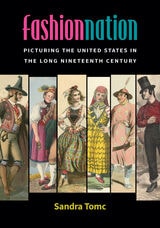
Fashion Nation
Picturing the United States in the Long Nineteenth CenturySandra Tomc
University of Michigan Press, 2021
Fashion and Its Social Agendas
Class, Gender, and Identity in ClothingDiana Crane
University of Chicago Press, 2000
Crane compares nineteenth-century societies—France and the United States—where social class was the most salient aspect of social identity signified in clothing with late twentieth-century America, where lifestyle, gender, sexual orientation, age, and ethnicity are more meaningful to individuals in constructing their wardrobes. Today, clothes worn at work signify social class, but leisure clothes convey meanings ranging from trite to political. In today's multicode societies, clothes inhibit as well as facilitate communication between highly fragmented social groups.
Crane extends her comparison by showing how nineteenth-century French designers created fashions that suited lifestyles of Paris elites but that were also widely adopted outside France. By contrast, today's designers operate in a global marketplace, shaped by television, film, and popular music. No longer confined to elites, trendsetters are drawn from many social groups, and most trends have short trajectories. To assess the impact of fashion on women, Crane uses voices of college-aged and middle-aged women who took part in focus groups. These discussions yield fascinating information about women's perceptions of female identity and sexuality in the fashion industry.
An absorbing work, Fashion and Its Social Agendas stands out as a critical study of gender, fashion, and consumer culture.
"Why do people dress the way they do? How does clothing contribute to a person's identity as a man or woman, as a white-collar professional or blue-collar worker, as a preppie, yuppie, or nerd? How is it that dress no longer denotes social class so much as lifestyle? . . . Intelligent and informative, [this] book proposes thoughtful answers to some of these questions."-Library Journal

Fashion, Culture, and Identity
Fred Davis
University of Chicago Press, 1992
Much of what we assume to be individual preference, Davis shows, really reflects deeper social and cultural forces. Ours is an ambivalent social world, characterized by tensions over gender roles, social status, and the expression of sexuality. Predicting what people will wear becomes a risky gamble when the link between private self and public persona can be so unstable.
Fashion, Desire and Anxiety
Image and Morality in the Twentieth CenturyArnold, Rebecca
Rutgers University Press, 2001
These dreams and freedoms, Rebecca Arnold proposes, are contradictory. Fashion and its surrounding imagery elicit fear and anxiety in their consumers as well as pleasure. Fashion has come to incorporate the underside of modern life, with violence and decay becoming a dominant theme in clothing design and photography.
Arnold draws on diverse written sources to explore the complex nature of modern fashion. She discusses a range of key themes: how fashion uses and abuses the power of wealth; the alienating promotion of "good" taste; the power plays of sex and display; and how identities can be blurred to disguise and confuse. In order to unravel the contradictory emotions of desire and anxiety they provoke, she never loses sight of the historical and cultural contexts in which fashion designers and photographers perform.
Generously illustrated, Fashion, Desire and Anxiety focuses on the last thirty years, from photographic works of the 1970s to the beginning of the twenty-first century.

Fashion, Desire and Anxiety
Image and Morality in the Twentieth CenturyArnold, Rebecca
Rutgers University Press, 2001
These dreams and freedoms, Rebecca Arnold proposes, are contradictory. Fashion and its surrounding imagery elicit fear and anxiety in their consumers as well as pleasure. Fashion has come to incorporate the underside of modern life, with violence and decay becoming a dominant theme in clothing design and photography.
Arnold draws on diverse written sources to explore the complex nature of modern fashion. She discusses a range of key themes: how fashion uses and abuses the power of wealth; the alienating promotion of "good" taste; the power plays of sex and display; and how identities can be blurred to disguise and confuse. In order to unravel the contradictory emotions of desire and anxiety they provoke, she never loses sight of the historical and cultural contexts in which fashion designers and photographers perform.
Generously illustrated, Fashion, Desire and Anxiety focuses on the last thirty years, from photographic works of the 1970s to the beginning of the twenty-first century.

Fashionable Masculinities
Queers, Pimp Daddies, and LumbersexualsVicki Karaminas
Rutgers University Press, 2022

Fashioning China
Precarious Creativity and Women Designers in Shanzhai CultureSara Liao
Pluto Press, 2020
Broadening the digital labor debate beyond typical masculine and techno-utopic readings, Sara Liao studies the precarious practices of women trying to create sustainable and creative lives, vividly illustrating a fashion culture that exists online as a significant part of the digital economy.
Drawing on material from interviews, participant observation, archives, policy documents, films and advertisements, Liao takes a multi-disciplinary approach to the topic, charting out the politics of intellectual property rights, globalization, technocracy, patriarchy and nationalism in a non-Western context.
Fashioning Diaspora
Beauty, Femininity, and South Asian American CultureVanita Reddy
Temple University Press, 2015
One of the first books to consider beauty and fashion as a point of entry into an examination of South Asian diasporic public cultures, Fashioning Diaspora examines a range of literature, visual art, and live performance. Through careful analyses of novels by Bharati Mukherjee and Jhumpa Lahiri, young adult literature, performance art by Shailja Patel, as well as objects of popular culture including an Indian American fashion doll, and beauty and adornment practices, Reddy challenges fashion and beauty as a set of dematerialized, overly commodified cultural practices. She argues instead that beauty and fashion structure South Asian Americans’ uneven access to social mobility, capital, and citizenship, and demonstrates their varying capacities to produce social attachments across national, class, racial, gender, and generational divides.
Fashioning Inland Communities
Trade and Popular Culture in Central East AfricaYaari Felber-Seligman
University of Wisconsin Press, 2025
Ruvuma used fashion to build varied communities, from local to pan-regional, reflecting the dynamic relationships among inland groups. Examples of Ruvuma popular fashions reveal processes of meaning making and community building that call for us to expand our attention to the ways in which East African peoples interacted alongside, as well as beyond, trade networks that sourced prestige and commercial goods. Popular culture here emerges as a heterarchical force that shaped lasting multidirectional connections across and between Ruvuma and their neighbors. As both a subject and a strategy for analysis, the history of popular fashion shifts how we view histories of small, decentralized societies as they encounter larger economies. Felber-Seligman demonstrates that this has implications for our understanding not only of trade but of material culture, community, gender, and family.
Fashioning Lives
Black Queers and the Politics of LiteracyEric Darnell Pritchard
Southern Illinois University Press, 2017
Winner, Lavender Rhetorics Award for Excellence in Queer Scholarship from CCCC, 2018
Winner, Advancement of Knowledge Award from CCCC, 2018
Winner, Outstanding Book Award from the Conference on Community Writing, 2017
Fashioning Lives: Black Queers and the Politics of Literacy analyzes the life stories of sixty Black lesbian, gay, bisexual, transgender, and queer (LGBTQ) people along with archival documents, literature, and film. Author Eric Darnell Pritchard provides a theoretical framework for studying the literacy work of Black LGBTQ people, who do not fit into the traditional categories imposed on their language practices and identities. Examining the myriad ways literacy is used to inflict harm, Pritchard discusses how these harmful events prompt Black LGBTQ people to ensure their own survival by repurposing literacy through literacy performances fueled by accountability to self and communal love towards social and political change, a process the author calls “restorative literacies.” Pritchard highlights restorative literacies in literacy institutions (e.g., libraries, schools), historical records repositories, religious and spiritual spaces, parties, community events, activist organizations, and digital spheres. This trailblazing study draws connections between race and queerness in literacy, composition, and rhetoric and provides the basis for a sustainable dialogue on their intersections in the discipline.
Fashioning Postfeminism
Spectacular Femininity and Transnational CultureSimidele Dosekun
University of Illinois Press, 2020
Simidele Dosekun's interviews and critical analysis consider the female subjectivities these women are performing and desiring. She finds that the women embody the postfeminist idea that their unapologetically immaculate beauty signals—but also constitutes—feminine power. As empowered global consumers and media citizens, the women deny any need to critique their culture or to take part in feminism's collective political struggle. Throughout, Dosekun unearths evocative details around the practical challenges to attaining their style, examines the gap between how others view these women and how they view themselves, and engages with ideas about postfeminist self-fashioning and subjectivity across cultures and class.
Intellectually provocative and rich with theory, Fashioning Postfeminism reveals why women choose to live, embody, and even suffer for a fascinating performative culture.
Fast Lives
Women Who Use Crack CocaineClaire E. Sterk
Temple University Press, 1999
Focusing on active crack users, Fast Lives compiles information from participant observation, informal conversations, individual interviews, and group discussions. Sterk details the ways in which use affects the lives of these crack users. She captures how these women arrived at their use; how they survive under current circumstances, such as the constant threat of HIV/AIDS and violence; how they combine the multiple social roles of mother and drug user; and how -- as they share their aspirations and expectations for the future -- their stories underscore the effects of poverty, sexism, and racism on their lives.
Many of these women recognize their own responsibility for ensuring positive change. Sterk's book, which includes an argument for a harm reduction approach, reminds us that their strength and courage will too often be futile without social policies that are realistic and appropriate for women.
Fast Lives will engage readers interested in social problems as well as students of cultural anthropology, sociology, criminology, public health, ethnography, substance abuse, and women's health.

Fast and Furious Franchising
How the Serialized Blockbuster Remade HollywoodDan Hassler-Forest
University of Minnesota Press, 2026
What the popularity of the Fast and Furious film franchise says about Hollywood blockbusters and media production
Fast and Furious Franchising charts the transformation of Hollywood through the story of one of its most successful cinematic universes. Released in 2001, The Fast and the Furious became an unexpected hit, developing into a seven-billion-dollar media franchise with nine direct sequels (so far), one “sidequel,” copious spin-offs, and licensing deals from board games to theme park rides.
Dan Hassler-Forest shows how Fast and Furious paved the way for a new form of serialized storytelling that balanced new distribution practices and expansion into international markets with a savvy awareness of representational politics. By following the series’s development over the past twenty-five years, Fast and Furious Franchising reveals distinct phases that reflect larger media-industrial trends: the postclassical blockbuster era of the early 2000s; the emergence of the megafranchise between 2008 and 2014; the franchise’s “imperial” era, from 2015 through 2019; and the postpandemic crisis era of media saturation and franchise fatigue.
While examining this rapidly changing media landscape, Hassler-Forest offers lively, insightful analyses of the films as they have embraced ever-more-ludicrous plots and unlikely character turns while always maintaining their signature faith in the power of family. As he illuminates the role of the Fast and Furious movies in the global entertainment industry, Hassler-Forest shows how the films’ improbable success proves Dominic Toretto’s adage that, whether “you win by an inch or a mile . . . winning’s winning.”
Retail e-book files for this title are screen-reader friendly with images accompanied by short alt text and/or extended descriptions.
Fast, Easy, and In Cash
Artisan Hardship and Hope in the Global EconomyJason Antrosio and Rudi Colloredo-Mansfeld
University of Chicago Press, 2015
Antrosio and Colloredo-Mansfeld demonstrate how artisan trades evolve in modern Latin American communities. In uncertain economies, small manufacturers have adapted to excel at home-based production, design, technological efficiency, and investments. Vivid case studies illuminate this process: peasant farmers in Túquerres, Otavalo weavers, Tigua painters, and the t-shirt industry of Atuntaqui. Fast, Easy, and In Cash exposes how these ambitious artisans, far from being holdovers from the past, are crucial for capitalist innovation in their communities and provide indispensable lessons in how we should understand and cultivate local economies in this era of globalization.