Results by title
8642 books match the query '20th century' and 354 start with f
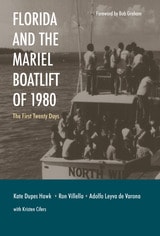
Florida and the Mariel Boatlift of 1980
The First Twenty DaysKate Dupes Hawk, Ron Villella, and Adolfo Leyva de Varona, with Kristen Cifers
University of Alabama Press, 2014
WINNER OF THE FLORIDA HISTORICAL SOCIETY'S STETSON KENNEDY AWARD
The definitive account of the first twenty days that transformed Florida, Cuba, and the American immigration debate.
The 1980 Mariel Boatlift was a profound episode in twentieth-century American history, impacting not just Florida, but the entire country. During the first twenty days of the boatlift, with little support from the federal government, the state of Florida coordinated and responded to the sudden arrival in Key West of more than thirty thousand Cuban refugees, the first wave of immigrants who became known as “Marielitos.”
Kathleen Dupes Hawk, Ron Villella, Adolfo Leyva de Varona, and Kristen Cifers combine the insights of expert observers with the experiences of actual participants. The authors organize and present a wealth of primary sources, first-hand accounts, archival research, government records, and interviews with policy-makers, volunteers, and refugees that bring into focus the many far-reaching human, political, and cultural outcomes of the Mariel Boatlift that continue to influence Florida, the United States, and Cuba today.
Emerging from these key records and accounts is a grand narrative of high human drama. Castro’s haphazard and temporary opening of Cuba spurred many thousands of Cubans to depart in calamitously rushed, unprepared, and dangerous conditions. The book tells the stories of these Cuban citizens, most legitimately seeking political asylum but also including subversive agents, convicted criminals, and the mentally ill, who began arriving in the US beginning in April 1980. It also recounts how local and state agencies and private volunteers with few directives or resources were left to improvise ways to provide the Marielitos food, shelter, and security as well as transportation away from Key West.
The book provides a definitive account of the political, legal, and administrative twists on the local, state, and federal levels in response to the crisis as well as of the often-dysfunctional attempts at collaboration between governmental and private institutions. Vivid and readable, Florida and the Mariel Boatlift of 1980 presents the significant details that illuminate and humanize this complex humanitarian, political, and logistical crisis.
Flowers in the Dustbin
Culture, Anarchy, and Postwar EnglandNeil Nehring
University of Michigan Press, 1993
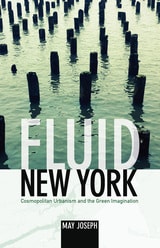
Fluid New York
Cosmopolitan Urbanism and the Green ImaginationMay Joseph
Duke University Press, 2013
Joseph considers New York's relation to the water that surrounds and defines it. Her reflections reach back to the city's heyday as a world-class port—a past embodied in a Dutch East India Company cannon recently unearthed from the rubble at the World Trade Center site—and they encompass the devastation caused by Hurricane Sandy in 2012. They suggest that New York's future lies in the reclamation of its great water resources—for artistic creativity, civic engagement, and ecological sustainability.
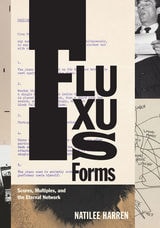
Fluxus Forms
Scores, Multiples, and the Eternal NetworkNatilee Harren
University of Chicago Press, 2020
While today the Fluxus collective is recognized for its radical neo-avant-garde works of performance, publishing, and relational art and its experimental, interdisciplinary approach, it was not taken seriously in its own time. With Fluxus Forms, Natilee Harren captures the magnetic energy of Fluxus activities and collaborations that emerged at the intersections of art, music, performance, and literature. The book offers insight into the nature of art in the 1960s as it traces the international development of the collective’s unique intermedia works—including event scores and Fluxbox multiples—that irreversibly expanded the boundaries of contemporary art.
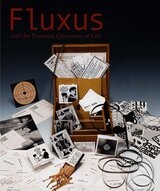
Fluxus and the Essential Questions of Life
Edited by Jacquelynn Baas
University of Chicago Press, 2011
Fluxus—from the Latin, meaning “to flow”—was a radical, international network of artists, composers, and designers in the 1960s and 1970s noted for blurring the boundaries between what we term “art” and what makes up everyday life. Following the work of American Fluxus founder George Maciunus, Fluxus and the Essential Questions of Life presents a variety of objects that express the Fluxus mission, while empowering readers to challenge the presumptions we bring to the concept and practice of art making.
Based on a large-scale traveling exhibition first organized at Dartmouth College’s Hood Museum of Art, this book chronicles the movement in the form of an art self-help book, playfully providing answers to fourteen key questions such as “Art—what is it good for?” and “What am I?” via Fluxus works. Featuring over eighty color and black-and-white illustrations, accompanied by essays from curator Jacquelynn Baas, Fluxus scholars Hannah Higgins and Jacob Proctor, and Fluxus artist Ken Friedman, this book will make an original contribution to our understanding of this provocative moment in modern art.
Flying Saucers Rock 'n' Roll
Conversations with Unjustly Obscure Rock 'n' Soul EccentricsJake Austen, ed.
Duke University Press, 2011
Contributors
Steve Albini
Ben Austen
Jake Austen
John Battles
Bosco
Ken Burke
Mike Maltese
King Merinuk
Ken Mottet
Jonathan Poletti
James Porter
"Colonel" Dan Sorenson
Jacqueline Stewart

Fokker C.X
Edwin Hoogschagen
Amsterdam University Press, 2023
The C.X is a little-known member of the Dutch Fokker stable. Just like the D.XXI this biplane served in the air forces of two little neutral countries on the eve of World War II. Both fought gallantly in a war of David versus Goliath proportions, and the complete operational history of the type spans a total of 25 years. In retrospect, the C.X was the last fighting biplane type built by Fokker and the company's last pre-war military type to survive.
Folklore in New World Black Fiction
Writing and the Oral Traditional AestheticsChiji Akoma
The Ohio State University Press, 2007
Folktales from the Helotes Settlement
John Igo
University of North Texas Press, 2014
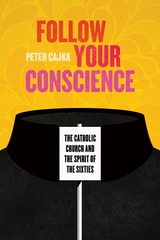
Follow Your Conscience
The Catholic Church and the Spirit of the SixtiesPeter Cajka
University of Chicago Press, 2021
Peter Cajka’s erudite book shows how even staunch Catholics were transformed by the maelstrom of the American Sixties, turning away from powerful and corrupt institutions and toward the inner moral compass provided by their own consciences.
What is your conscience? Is it, as Peter Cajka asks in this provocative book, “A small, still voice? A cricket perched on your shoulder? An angel and devil who compete for your attention?” Going back at least to the thirteenth century, Catholics viewed their personal conscience as a powerful and meaningful guide to align their conduct with worldly laws. But, as Cajka shows in Follow Your Conscience, during the national cultural tumult of the 1960s, the divide between the demands of conscience and the demands of the law, society, and even the church itself grew increasingly perilous. As growing numbers of Catholics started to consider formerly stout institutions to be morally hollow—especially in light of the Vietnam War and the church’s refusal to sanction birth control—they increasingly turned to their own consciences as guides for action and belief. This abandonment of higher authority had radical effects on American society, influencing not only the broader world of Christianity, but also such disparate arenas as government, law, health care, and the very vocabulary of American culture. As this book astutely reveals, today’s debates over political power, religious freedom, gay rights, and more are all deeply infused by the language and concepts outlined by these pioneers of personal conscience.
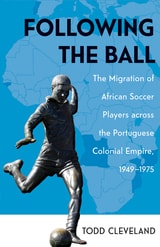
Following the Ball
The Migration of African Soccer Players across the Portuguese Colonial Empire, 1949–1975Todd Cleveland
Ohio University Press, 2017
With Following the Ball, Todd Cleveland incorporates labor, sport, diasporic, and imperial history to examine the extraordinary experiences of African football players from Portugal’s African colonies as they relocated to the metropole from 1949 until the conclusion of the colonial era in 1975. The backdrop was Portugal’s increasingly embattled Estado Novo regime, and its attendant use of the players as propaganda to communicate the supposed unity of the metropole and the colonies.
Cleveland zeroes in on the ways that players, such as the great Eusébio, creatively exploited opportunities generated by shifts in the political and occupational landscapes in the waning decades of Portugal’s empire. Drawing on interviews with the players themselves, he shows how they often assumed roles as social and cultural intermediaries and counters reductive histories that have depicted footballers as mere colonial pawns.
To reconstruct these players’ transnational histories, the narrative traces their lives from the informal soccer spaces in colonial Africa to the manicured pitches of Europe, while simultaneously focusing on their off-the-field challenges and successes. By examining this multi-continental space in a single analytical field, the book unearths structural and experiential consistencies and contrasts, and illuminates the components and processes of empire.
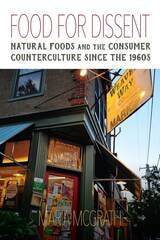
Food for Dissent
Natural Foods and the Consumer Counterculture since the 1960sMaria McGrath
University of Massachusetts Press, 2019
In the 1960s and early 1970s, countercultural rebels decided that, rather than confront the system, they would create the world they wanted. The natural foods movement grew out of this contrarian spirit. Through a politics of principled shopping, eating, and entrepreneurship, food revolutionaries dissented from corporate capitalism and mainstream America.
In Food for Dissent, Maria McGrath traces the growth of the natural foods movement from its countercultural fringe beginning to its twenty-first-century “food revolution” ascendance, focusing on popular natural foods touchstones—vegetarian cookbooks, food co-ops, and health advocates. Guided by an ideology of ethical consumption, these institutions and actors spread the movement's oppositionality and transformed America's foodscape, at least for some. Yet this strategy proved an uncertain instrument for the advancement of social justice, environmental defense, and anti-corporatism. The case studies explored in Food for Dissent indicate the limits of using conscientious eating, shopping, and selling as tools for civic activism.
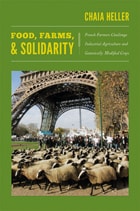
Food, Farms, and Solidarity
French Farmers Challenge Industrial Agriculture and Genetically Modified CropsChaia Heller
Duke University Press, 2012

Fool for Love
F. Scott FitzgeraldScott Donaldson
University of Minnesota Press, 2012
Fool for Love is Scott Donaldson’s masterful biography of F. Scott Fitzgerald—written from a fresh and highly intimate perspective. Fool for Love follows Fitzgerald from his birthplace in St. Paul, Minnesota, to Princeton and upward into the highest reaches of literary and public success—and ultimately to Fitzgerald’s untimely death in Hollywood at the age of forty-four, broke and nearly forgotten. This engrossing, definitive study explores two classic Fitzgerald themes throughout—love and class—and the result is a striking portrayal of one of the twentieth century’s greatest writers, whose legacy and influence only continue to grow.
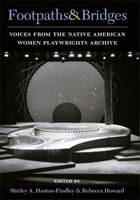
Footpaths and Bridges
Voices from the Native American Women Playwrights ArchiveEdited by Shirley A. Huston-Findley and Rebecca Howard
University of Michigan Press, 2011
Footpaths and Bridges celebrates the vitality and diversity of Native American women, collecting plays ranging from ETHNOSTRESS—a humorous take on art and identity politics—to the biographical musical Te Ata to a retelling of the Thanksgiving story from the Wampanoag perspective. The dramatic works are accompanied by critical commentary that illuminates Native American women’s theater practices and perspectives, highlighting the issues of heritage, identity, and changing lifestyles that the plays imaginatively tackle.
Featuring work from a wide array of tribes and geographic regions, the collection affords the artist, scholar, and general reader access to previously unheard voices that communicate the complexity and the diversity of the Native American experience. The far-ranging genres and content of the plays suggest the many possibilities for communicating the past and the present, the personal and the political, and the stunning kaleidoscope of Native American life and art.
“Often thoughtful provocateurs, Native American playwrights are frequently overlooked . . . eminently readable, and possibly performable, the plays [in this collection] examine colonization, generational differences, ‘ethnostress,’ and cultural identity.”
—Choice
For All We Have and Are
Regina and the Experience of the Great WarJames M. Pitsula
University of Manitoba Press, 2008
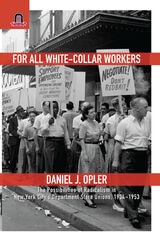
For All White-Collar Workers
The Possibilities of Radicalism in New York City's Department Store Unions, 1934–1953Daniel J. Opler
The Ohio State University Press, 2007
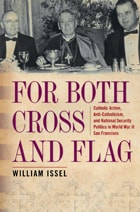
For Both Cross and Flag
Catholic Action, Anti-Catholicism, and National Security Politics in World War II San FranciscoAuthored by William Issel
Temple University Press, 2010
In this fascinating, detailed history, William Issel recounts the civil rights abuses suffered by Sylvester Andriano, an Italian American Catholic civil leader whose religious and political activism in San Francisco provoked an Anti-Catholic campaign against him. A leading figure in the Catholic Action movement, Andriano was falsely accused in state and federal Un-American Activities Committee hearings of having Fascist sympathies prior to and during World War II. As his ordeal began, Andriano was subjected to a hostile investigation by the FBI, whose confidential informants were his political rivals. Furthermore, the U.S. Army ordered him to be relocated on the grounds that he was a security risk.
For Both Cross and Flag provides a dramatic illustration of what can happen when parties to urban political rivalries, rooted in religious and ideological differences, seize the opportunity provided by a wartime national security emergency to demonize their enemy as “a potentially dangerous person.”
Issel presents a cast of characters that includes archbishops, radicals, the Kremlin, and J. Edgar Hoover, to examine the significant role faith-based political activism played in the political culture that violated Andriano’s constitutional rights. Exploring the ramifications of this story, For Both Cross and Flag presents interesting implications for contemporary events and issues relating to urban politics, ethnic groups, and religion in a time of war.
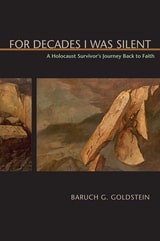
For Decades I Was Silent
A Holocaust Survivor's Journey Back to FaithBaruch G. Goldstein
University of Alabama Press, 2008
A survivor's powerful testament to faith, memory, and the triumph of the human spirit.
A fascinating memoir about a Holocaust survivor's loss of and journey back to faith. In 1939, Baruch Goldstein was a religiously observant adolescent resident of the Jewish community in Mlawa, a town that was then in East Prussia. After war broke out, the Jewish community there was relatively sheltered, as that region was incorporated into the German Reich rather than into the General Government (the German run-fragment of pre-war Poland, where conditions were harsh for everyone). However in 1942, Goldstein was sent to Auschwitz, where he stayed two-and-a-half years. His family was scattered all to their deaths, but he survived the war--barely. For Decades I Was Silent is an account of life in a small Polish-German town and provides information on the religious life of the Jewish citizens. This book creates a direct sense of the random, mystifying personal violence individuals felt at the hands of Germans--not the anonymous industrial death machine, but immediate, face-to-face violence.
After the war, Goldstein drifted as a refugee to UNRR camps in Italy. Over time, young Goldstein had to face the fact that all of his extended family was lost and he had only the possibilities of Palestine or help from distant relatives in the United States as a future. His American relatives urged him to enter the United States as a yeshiva student, and eventually he became a rabbi and started a family. As a young rabbinical student, and then as a rabbi, Goldstein was forced to confront the events of the Holocaust and the damage done to his faith.
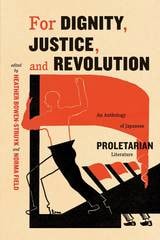
For Dignity, Justice, and Revolution
An Anthology of Japanese Proletarian LiteratureEdited by Heather Bowen-Struyk and Norma Field
University of Chicago Press, 2015
Contextualized by introductory essays, forty expertly translated stories touch on topics like perilous factories, predatory bosses, ethnic discrimination, and the myriad indignities of poverty. Together, they show how even intensely personal issues form a pattern of oppression. Fostering labor consciousness as part of an international leftist arts movement, these writers, lovers of literature, were also challenging the institution of modern literature itself. This anthology demonstrates the vitality of the “red decade” long buried in modern Japanese literary history.

For Faith and Fortune
The Education of Catholic Immigrants in Detroit, 1805-1925JoEllen McNergney Vinyard
University of Illinois Press, 1998
JoEllen McNergney Vinyard's comprehensive examination of parochial education in Detroit within the broader context of that city's urbanization patterns yields a richly detailed addition to our understanding of the European immigrant experience.
For Faith and Fortune will be of interest to historians and scholars of urban studies, particularly immigration, schooling, and the Catholic experience.
For Freedom's Sake
The Life of Fannie Lou HamerChana Kai Lee
University of Illinois Press, 1999
The youngest of twenty children of sharecroppers in rural Mississippi, Fannie Lou Hamer witnessed throughout her childhood the white cruelty, political exclusion, and relentless economic exploitation that defined African American existence in the Delta.
In this intimate biography, Chana Kai Lee documents Hamer's lifelong crusade to empower the poor through collective action, her rise to national prominence as a civil rights activist, and the personal costs of her ongoing struggle to win a political voice and economic self-sufficiency for blacks in the segregated South. Lee looks at Hamer's early work as a field secretary for the Student Nonviolent Coordinating Committee in Mississippi, her dramatic appearance at the 1964 Democratic National Convention, and her ongoing work as a militant grassroots leader in her own community.
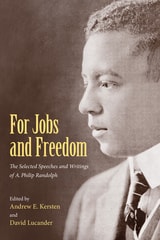
For Jobs and Freedom
Selected Speeches and Writings of A. Philip RandolphAndrew E. Kersten
University of Massachusetts Press, 2014
This volume documents Randolph's life and work through his own writings. The editors have combed through the files of libraries, manuscript collections, and newspapers, selecting more than seventy published and unpublished pieces that shed light on Randolph's most significant activities. The book is organized thematically around his major interests—dismantling workplace inequality, expanding civil rights, confronting racial segregation, and building international coalitions. The editors provide a detailed biographical essay that helps to situate the speeches and writings collected in the book. In the absence of an autobiography, this volume offers the best available presentation of Randolph's ideas and arguments in his own words.
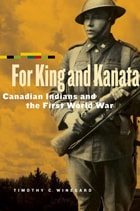
For King and Kanata
Canadian Indians and the First World WarTimothy C. Winegard
University of Manitoba Press, 2012
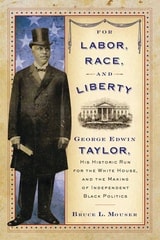
For Labor, Race, and Liberty
George Edwin Taylor, His Historic Run for the White House, and the Making of Independent Black PoliticsBruce L. Mouser
University of Wisconsin Press, 2010
More than one hundred years before Barack Obama, George Edwin Taylor made presidential history. Born in the antebellum South to a slave and a freed woman, Taylor became the first African American ticketed as a political party’s nominee for president of the United States, running against Theodore Roosevelt in 1904.
Orphaned as a child at the peak of the Civil War, Taylor spent several years homeless before boarding a Mississippi riverboat that dropped him in La Crosse, Wisconsin. Taken in by an African American farm family, Taylor attended a private school and eventually rose to prominence as the owner/editor of a labor newspaper and as a vocal leader in Wisconsin’s People’s Party. At a time when many African Americans felt allegiance to the Republican Party for its support of abolition, Taylor’s sympathy with the labor cause drew him first to the national Democratic Party and then to an African American party, the newly formed National Liberty Party, which in 1904 named him its presidential candidate. Bruce L. Mouser follows Taylor’s life and career in Arkansas, Illinois, Wisconsin, Iowa, and Florida, giving life to a figure representing a generation of African American idealists whose initial post-slavery belief in political and social equality in America gave way to the despair of the Jim Crow decades that followed.
Best Books for Special Interests, selected by the American Association for School Libraries
Best Books for Professional Use, selected by the American Association for School Libraries
Best Books for General Audiences, selected by the Public Library Association
Second Place, Biography, Society of Midland Authors
Honorable Mention, Benjamin F. Shambough Award, the State Historical Society of Iowa

For Might and Right
Cold War Defense Spending and the Remaking of American DemocracyMichael Brenes
University of Massachusetts Press, 2020
How did the global Cold War influence American politics at home? For Might and Right traces the story of how Cold War defense spending remade participatory politics, producing a powerful and dynamic political coalition that reached across party lines. This “Cold War coalition” favored massive defense spending over social welfare programs, bringing together a diverse array of actors from across the nation, including defense workers, community boosters, military contractors, current and retired members of the armed services, activists, and politicians. Faced with neoliberal austerity and uncertainty surrounding America's foreign policy after the 1960s, increased military spending became a bipartisan solution to create jobs and stimulate economic growth, even in the absence of national security threats.
Using a rich array of archival sources, Michael Brenes draws important connections between economic inequality and American militarism that enhance our understanding of the Cold War's continued impact on American democracy and the resilience of the military-industrial complex, up to the age of Donald Trump.
For Money and Elders
Ritual, Sovereignty, and the Sacred in KenyaRobert W. Blunt
University of Chicago Press, 2019
In For Money and Elders, Robert W. Blunt addresses these questions by turning to the political, economic, and religious signs in circulation in Kenya today. He examines how Kenyans attempt to make sense of political instability caused by the uncertainty of authority behind everything from currency to title deeds. When the symbolic order of a society is up for grabs, he shows, violence may seem like an expedient way to enforce the authority of signs. Drawing on fertile concepts of sovereignty, elderhood, counterfeiting, acephaly, and more, Blunt explores phenomena as diverse as the destabilization of ritual “oaths,” public anxieties about Satanism with the advent of democratic reform, and mistrust of official signs. The result is a fascinating glimpse into Kenya’s past and present and a penetrating reflection on meanings of violence in African politics.
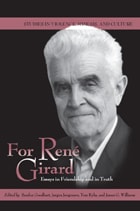
For René Girard
Essays in Friendship and in TruthSandor Goodhart
Michigan State University Press, 2009
In his explorations of the relations between the sacred and violence, René Girard has hit upon the origin of culture—the way culture began, the way it continues to organize itself. The way communities of human beings structure themselves in a manner that is different from that of other species on the planet.
Like Albert Einstein, Sigmund Freud, Émile Durkheim, Martin Buber, or others who have changed the way we think in the humanities or in the human sciences, Girard has put forth a set of ideas that have altered our perceptions of the world in which we function. We will never be able to think the same way again about mimetic desire, about the scapegoat mechanism, and about the role of Jewish and Christian scripture in explaining sacrifice, violence, and the crises from which our culture has been born.
The contributions fall into roughly four areas of interpretive work: religion and religious study; literary study; the philosophy of social science; and psychological studies.
The essays presented here are offered as "essays" in the older French sense of attempts (essayer) or trials of ideas, as indeed Girard has tried out ideas with us. With a conscious echo of Montaigne, then, this hommage volume is titled Essays in Friendship and in Truth.
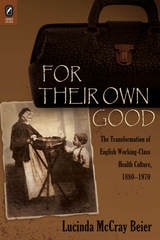
For Their Own Good
The Transformation of English Working-Class Health Culture, 1880–1970Lucinda Mccray Beier
The Ohio State University Press, 2008
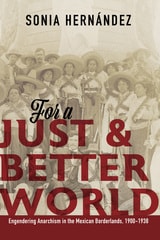
For a Just and Better World
Engendering Anarchism in the Mexican Borderlands, 1900-1938Sonia Hernandez
University of Illinois Press, 2021
A vivid look at a radical activist and her times, For a Just and Better World illuminates the lives and work of Mexican women battling for labor rights and gender equality in the early twentieth century.
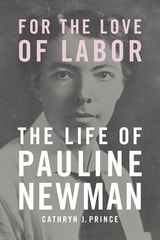
For the Love of Labor
The Life of Pauline NewmanCathryn J. Prince
University of Illinois Press, 2026
Prince follows Newman’s life from a youth split between Lithuania and New York City sweatshops to her work as an advisor to New Deal–era labor secretary Frances Perkins. Newman’s long hours at the Triangle Shirtwaist Factory informed her entrée into labor activism. In the following years, she tirelessly advocated for workers, ran for New York Secretary of State as a socialist, and became the first woman to serve as the ILGWU general organizer. Her interest in the health of workers led to service on the Joint Board of Sanitary Control and a decades-long term as education director of the ILGWU health center. Membership in Eleanor Roosevelt’s circle opened doors to government positions and advisory roles that continued into the postwar era. Prince also weaves in the details of Newman’s fifty-year relationship with a woman, her struggles with her sexual identity, and her final years.
Engaging and panoramic, For the Love of Labor is the first major biography of an important figure in labor and women’s history.
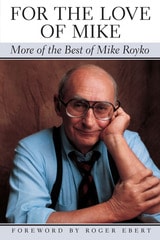
For the Love of Mike
More of the Best of Mike RoykoMike Royko
University of Chicago Press, 2001
Royko, a nationally syndicated Pulitzer Prize winner, wrote for three major Chicago newspapers in the course of his 34 years as a daily columnist. Chosen from more than 7,000 columns, For the Love of Mike brings back more than a hundred vintage Royko pieces-most of which have not appeared since their initial publication-for readers across the country to enjoy. This second collection includes Royko's riffs on the consequences of accepting a White House dinner invitation (not surprisingly, he turned it down); his explanation of the notorious Ex-Cub Factor in World Series play; and his befuddlement at a private screening of Beyond the Valley of the Dolls, to which he was invited by his pal Ebert, the screenplay's author. The new collection also illuminates Royko's favorite themes, topics he returned to again and again: his skewering of cultural trends, his love of Chicago, and his rage against injustice. By turns acerbic, hilarious, and deeply moving, Royko remains a writer of wit and passion who represents the best of urban journalism.
"To read these columns again is to have Mike back again, nudging, chuckling, wincing, deflating pomposity, sticking up for the little guy, defending good ideas against small-minded people," writes Roger Ebert in his foreword to the book. For the Love of Mike does indeed bring Mike back again, and until a Chicago newspaper takes up Ebert's suggestion that it begin reprinting each of Royko's columns, one a day, this collection will more than satisfy Royko's loyal readers.
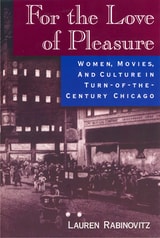
For the Love of Pleasure
Women, Movies, and Culture in Turn-of-the-Century ChicagoRabinovitz, Lauren
Rutgers University Press, 1998
--Gaylyn Studlar, atuhor of This Mad Masquerade: Stardom and Masculinity in the Jazz Age
The period from the 1880s until the 1920s saw the making of a consumer society, the inception of the technological, economic, and social landscape in which we currently live. Cinema played a key role in the changing urban landscape. For working-class women, it became a refuge from the factory. For middle-class women, it presented a new language of sexual danger and pleasure. Women found greater freedom in big cities, entering the workforce in record numbers and moving about unchaperoned in public spaces. Turn-of-the-century Chicago surpassed even New York as a proving ground for pleasure and education, attracting women workers at three times the national rate. Using Chicago as a model, Lauren Rabinovitz analyzes the rich interplay among demographic, visual, historical, and theoretical materials of the period. She skillfully links cinema theory and women's studies for a fuller understanding of cultural history. She also demonstrates how cinema dramatically affected social conventions, ultimately shaping modern codes of masculinity and feminity.
For “Children Who Vary from the Normal Type”
Robert Osgood
Gallaudet University Press, 2000
For “Children Who Vary from the Normal Type” describes the growth of Boston and its educational system during this period, then examines closely the emergence of individual programs that catered to students formally identified as having special needs: intermediate schools and ungraded classes; three separate programs for students with children; special classes for mentally retarded children; and other programs established between 1908 and 1913. Osgood describes these programs and their relations with each other, and also the rationales offered for their establishment and support. This detailed examination graphically depicts how patterns of integration and segregation in special education shifted over time in Boston, and provides a foundation for continuing the present-day discussion of the politics and realities of inclusion.
Forced Marches
Soldiers and Military Caciques in Modern MexicoEdited by Ben Fallaw and Terry Rugeley
University of Arizona Press, 2012
When Mexico first became a nation, its military and militias were two of the country’s few major institutions besides the Catholic Church. The army and local provincial militias functioned both as political pillars, providing institutional stability of a crude sort, and as springboards for the ambitions of individual officers. Military service provided upward social mobility, and it taught a variety of useful skills, such as mathematics and bookkeeping.
In the postcolonial era, however, militia units devoured state budgets, spending most of the national revenue and encouraging locales to incur debts to support them. Men with rifles provided the principal means for maintaining law and order, but they also constituted a breeding-ground for rowdiness and discontent. As these chapters make clear, understanding the history of state-making in Mexico requires coming to terms with its military past.
Forced Out
A Nikkei Woman's Search for a Home in AmericaJudy Y. Kawamoto
University Press of Colorado, 2020
Forced Out: A Nikkei Woman’s Search for a Home in America offers insight into “voluntary evacuation,” a little-known Japanese American experience during World War II, and the lasting effects of cultural trauma. Of the roughly 120,000 people forced from their homes by Executive Order 9066, around 5,000 were able to escape incarceration beforehand by fleeing inland. In a series of beautifully written essays, Judy Kawamoto recounts her family’s flight from their home in Washington to Wyoming, their later moves to Montana and Colorado, and the influence of those experiences on the rest of her life. Hers is a story shared by the many families who lost everything and had to start over in often suspicious and hostile environments.
Kawamoto vividly illustrates the details of her family’s daily life, the discrimination and financial hardship they experienced, and the isolation that came from experiencing the horrors of the 1940s very differently than many other Japanese Americans. Chapters address her personal and often unconscious reactions to her parents’ trauma, as well as her own subsequent travels around much of the world, exploring, learning, enjoying, but also unconsciously acting out a continual search for a home.
Showing how the impacts of traumatic events are collective and generational, Kawamoto draws
interconnections between her family’s displacement and later aspects of her life and juxtaposes the impact of her early experiences and questions of identity, culture, and assimilation. Forced Out will be of great interest to the general reader as well as students and scholars of ethnic studies, Asian American studies, history, education, and mental health.
2022 Asian/Pacific American Award for Literature, Honor Title, Adult Non-Fiction Literature
2022 Evans Handcart Award Winner
Foreign Front
Third World Politics in Sixties West GermanyQuinn Slobodian
Duke University Press, 2012
Foreign Policy and Congress
An International Relations PerspectiveMarie T. Henehan
University of Michigan Press, 2000
Foremother Love
Phillis Wheatley and Black Feminist CriticismDana Murphy
Duke University Press, 2025
Forest Brothers
The Account of an Anti-Soviet Lithuanian Freedom Fighter, 1944–1948Translated and with an Introduction by Laima Vincė
Central European University Press, 2009
Forging Gay Identities
Organizing Sexuality in San Francisco, 1950-1994Elizabeth A. Armstrong
University of Chicago Press, 2002
Forging Identity
The Story of Carlos Nielbock's DetroitPaul J Draus
Michigan State University Press, 2025
Forging a Mexican People
Collective Subjectivities in Postrevolutionary Print Culture, 1917–1968Pablo Zavala
University of Arizona Press, 2026
Forging a Mexican People shows how illustrated print culture helped to construct and deconstruct versions of “a people” in postrevolutionary Mexico.
Through meticulous research, Pablo Zavala uncovers the ways photographers, graphic artists, writers, and activists used print culture to challenge hegemonic conceptions of state-guided narratives and forge alternative collective subjectivities. This book offers a fresh perspective on the sociopolitical landscape of postrevolutionary Mexico, revealing how cultural artifacts simultaneously crafted and reflected the people vis-à-vis different political and social categories. By examining print culture, editorial practices, and related processes such as the creation, consumption, and distribution of said culture, Zavala’s research contributes to scholarship that has recently reexamined the construction of nationalism by moving away from the focus on state formation and addressing the horizontal and aesthetic dimensions in products by cultural producers from nonstate and grassroots political sectors.
Zavala examines the conceptual parameters of el pueblo by analyzing El Universal Ilustrado, El Machete, the Taller de Gráfica Popular, the protest graphic art used in Mexico City’s 1968 popular student movement, and graphic art used in California’s Chicano farmworkers’ struggle. Based on in-depth archival research, the work includes primary sources that have never been digitized, offering readers unique insights into the visual manifestations of Mexico’s postrevolutionary identity and their enduring significance.
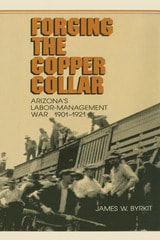
Forging the Copper Collar
Arizona's Labor-Management War of 1901–1921James W. Byrkit
University of Arizona Press, 1982
Just after dawn, two thousand armed vigilantes took to the streets of this remote Arizona mining town to round up members and sympathizers of the radical Industrial Workers of the World. Before the morning was over, nearly twelve hundred alleged Wobblies had been herded onto waiting boxcars. By day's end, they had been hauled off to New Mexico.
While the Bisbee Deportation was the most notorious of many vigilante actions of its day, it was more than the climax of a labor-management war—it was the point at which Arizona donned the copper collar. That such an event could occur, James Byrkit contends, was not attributable so much to the marshaling of public sentiment against the I.W.W. as to the outright manipulation of the state's political and social climate by Eastern business interests.
In Forging the Copper Collar, Byrkit paints a vivid picture of Arizona in the early part of this century. He demonstrates how isolated mining communities were no more than mercantilistic colonies controlled by Eastern power, and how that power wielded control over all the Arizona's affairs—holding back unionism, creating a self-serving tax structure, and summarily expelling dissidents.
Because the years have obscured this incident and its background, the writing of Copper Collar involved extensive research and verification of facts. The result is a book that captures not only the turbulence of an era, but also the political heritage of a state.
Forgotten Friendships
Yugoslavia and the Anticolonial Francophone WorldAlexandra Perišic
Amherst College Press, 2025
Forgotten Friendships: Yugoslavia and the Anticolonial Francophone World examines transnational friendships and alliances between intellectuals from Yugoslavia and the Francophone African and Caribbean world during the mid-twentieth century. The book argues that transnational political friendships helped shape major intellectual movements like Négritude, African socialism, and global socialist feminisms, which surged beyond national, regional, and even diasporic spaces. Blending archival research, literary analysis, and biography, the book fills a significant gap in our understanding of how intellectuals from the Global South and the socialist world collaborated on shared goals of decolonization, anti-racism, and socialist worldmaking.
Forgotten Friendships emphasizes the ways in which writers, intellectuals, and activists envisioned alternative futures rooted in collaboration across peripheries. Personal bonds of friendship were not mere footnotes to the anti-colonial struggle, but vital political tools for rethinking global solidarity.
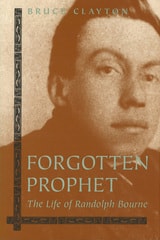
Forgotten Prophet
The Life of Randolph BourneBruce Clayton
University of Missouri Press, 1998
Rarely has an individual's life been so inseparable from his writing as was Randolph Bourne's. His work reveals not only his political viewpoints but also his humanistic personality and the tumultuous era during which he lived. Forgotten Prophet carefully examines the intellect and personality of the "born essayist" who saw clearly both his century's potential for harmony and the danger that it faced from the lingering tides of nineteenth-century European nationalism.
Disfigured and hunchbacked, Bourne reacted to his disability not with bitterness or self-pity, but rather with an exuberant love for beauty and a compassion for humanity that created in him a longing for a truly cosmopolitan society—a "trans-national America" that would draw its strength from ethnic diversity and political pluralism. Nearly alone among American intellectuals, Bourne actively denounced involvement in World War I. He foresaw that, beyond the horrible cost in young lives, the war would bring in its wake the spiritual impoverishment of the nation and the disillusionment of its youth; it would strangle reform and social tolerance, exacerbate racism and nativism, and plant the seeds for further international instability. Although derided and largely ignored at the time they were written, Bourne's fearful predictions would all too quickly be confirmed in the dissolute frenzy of the jazz age, the turmoil of the 1930s, and the social chaos that brought about the rise of fascism in Europe and, soon, an even more destructive war.
Bourne did not live to witness this terrifying unfolding of events. His career as a social critic was brief but prolific. When he died in 1918 at the age of thirty-two, a victim of the flu epidemic, he had completed three books and more than a hundred essays. His first book, Youth and Life, is considered by some to be the original manifesto of the counterculture. From his earliest years as a writer, Bourne was identified as a voice for youth, idealism, and progress in human relations. Forgotten Prophet characterizes Bourne not just as a foreseer of this century's bloodshed but, equally important, as an apostle of hope—a champion of what was best, most truthful in the arts, in politics, and in the conduct of our daily lives.
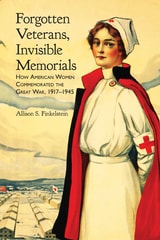
Forgotten Veterans, Invisible Memorials
How American Women Commemorated the Great War, 1917–1945Allison S. Finkelstein
University of Alabama Press, 2021
Investigates the groundbreaking role American women played in commemorating those who served and sacrificed in World War I
In Forgotten Veterans, Invisible Memorials: How American Women Commemorated the Great War, 1917–1945 Allison S. Finkelstein argues that American women activists considered their own community service and veteran advocacy to be forms of commemoration just as significant and effective as other, more traditional forms of commemoration such as memorials. Finkelstein employs the term “veteranism” to describe these women’s overarching philosophy that supporting, aiding, and caring for those who served needed to be a chief concern of American citizens, civic groups, and the government in the war’s aftermath. However, these women did not express their views solely through their support for veterans of a military service narrowly defined as a group predominantly composed of men and just a few women. Rather, they defined anyone who served or sacrificed during the war, including women like themselves, as veterans.
These women veteranists believed that memorialization projects that centered on the people who served and sacrificed was the most appropriate type of postwar commemoration. They passionately advocated for memorials that could help living veterans and the families of deceased service members at a time when postwar monument construction surged at home and abroad. Finkelstein argues that by rejecting or adapting traditional monuments or by embracing aspects of the living memorial building movement, female veteranists placed the plight of all veterans at the center of their commemoration efforts. Their projects included diverse acts of service and advocacy on behalf of people they considered veterans and their families as they pushed to infuse American memorial traditions with their philosophy. In doing so, these women pioneered a relatively new form of commemoration that impacted American practices of remembrance, encouraging Americans to rethink their approach and provided new definitions of what constitutes a memorial. In the process, they shifted the course of American practices, even though their memorialization methods did not achieve the widespread acceptance they had hoped it would.
Meticulously researched, Forgotten Veterans, Invisible Memorials utilizes little-studied sources and reinterprets more familiar ones. In addition to the words and records of the women themselves, Finkelstein analyzes cultural landscapes and ephemeral projects to reconstruct the evidence of their influence. Readers will come away with a better understanding of how American women supported the military from outside its ranks before they could fully serve from within, principally through action-based methods of commemoration that remain all the more relevant today.

Forgotten Women Pre-Raphaelites
Serena Trowbridge
University of Delaware Press, 2027
It is very difficult to consider the women of the Pre-Raphaelite Movement—muses, models, and wives, as well as poets, painters, and craftswomen—independently from the Pre-Raphaelite Brotherhood because these women are so much in the men's shadow, and worked alongside them in many cases. This edited collection addresses the absence of scholarly work on Pre-Raphaelite women by focusing on some of the most marginalized and obscure women associated with Pre-Raphaelitism. These women have been easily overlooked, or become lost in the undefined mass of “Pre-Raphaelite Sisters,” often reduced to a footnote or a brief biography. This book offers an alternative: a way of approaching these women as distinct from the “Brothers,” considering the intrinsic value of their contribution to art. Moreover, it engages in current debates about how these women might fit into the ostensibly male field of Pre-Raphaelitism, indicating ways in which these women formed their own networks and careers both in tandem with and independently of male artists.
Form and Instability
Eastern Europe, Literature, Postimperial DifferenceAnita Starosta
Northwestern University Press, 2015
Located at the intersection of comparative literature, area studies, and literary theory, this interdisciplinary study has a twofold commitment: to Eastern Europe on the one hand and to literature on the other. It aims to intervene in the way we conceive of Eastern Europe by seeking to develop a more equitable way of thinking, one that avoids subordinating it to Eurocentric narratives of progress. At the same time, it marshals literature as both object and method of this rethinking, in order to extend existing conceptions of the usefulness and of the proper organization of literary studies. The three terms in the title of this book mark a passage—via literature—from “Eastern Europe” as an inadequate and obsolescent category to “post-imperial difference” as a more accurate, if provisional, account of the region. By way of original readings of particular texts, and by attending to literature as a critical
Formations of Colonial Modernity in East Asia
Tani E. Barlow, ed.
Duke University Press, 1997
Demonstrating an impatience with social science models of knowledge, the contributors show that binary categories focused on during the Cold War are no longer central to the project of history writing. By bringing together articles previously published in the journal positions: east asia cultures critique, editor Tani Barlow has demonstrated how scholars construct identity and history, providing cultural critics with new ways to think about these concepts—in the context of Asia and beyond.
Chapters address topics such as the making of imperial subjects in Okinawa, politics and the body social in colonial Hong Kong, and the discourse of decolonization and popular memory in South Korea. This is an invaluable collection for students and scholars of Asian studies, postcolonial studies, and anthropology.
Contributors. Charles K. Armstrong, Tani E. Barlow, Fred Y. L. Chiu, Chungmoo Choi, Alan S. Christy, Craig Clunas, James A. Fujii, James L. Hevia, Charles Shiro Inouye, Lydia H. Liu, Miriam Silverberg, Tomiyama Ichiro, Wang Hui