Results by title
3258 books match the query 'Performing Arts' and 162 start with f
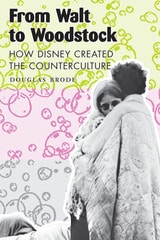
From Walt to Woodstock
How Disney Created the CountercultureBy Douglas Brode
University of Texas Press, 2004
With his thumbprint on the most ubiquitous films of childhood, Walt Disney is widely considered to be the most conventional of all major American moviemakers. The adjective "Disneyfied" has become shorthand for a creative work that has abandoned any controversial or substantial content to find commercial success.
But does Disney deserve that reputation? Douglas Brode overturns the idea of Disney as a middlebrow filmmaker by detailing how Disney movies played a key role in transforming children of the Eisenhower era into the radical youth of the Age of Aquarius. Using close readings of Disney projects, Brode shows that Disney's films were frequently ahead of their time thematically. Long before the cultural tumult of the sixties, Disney films preached pacifism, introduced a generation to the notion of feminism, offered the screen's first drug-trip imagery, encouraged young people to become runaways, insisted on the need for integration, advanced the notion of a sexual revolution, created the concept of multiculturalism, called for a return to nature, nourished the cult of the righteous outlaw, justified violent radicalism in defense of individual rights, argued in favor of communal living, and encouraged antiauthoritarian attitudes. Brode argues that Disney, more than any other influence in popular culture, should be considered the primary creator of the sixties counterculture—a reality that couldn't be further from his "conventional" reputation.
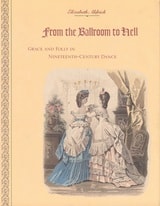
From the Ballroom to Hell
Grace and Folly in Nineteenth-Century DanceElizabeth Aldrich
Northwestern University Press, 1991
From the Ballroom to Hell collects over 100 little-known excerpts from dance, etiquette, beauty, and fashion manuals from the nineteenth century. Included are instructions for performing various dances, as well as musical scores, costume patterns, and the proper way to hold one's posture, fork, gloves, and fan. While of particular interest to dancers, dance historians, and choreographers, anyone fascinated by the ways and mores of the period will find From the Ballroom to Hell an endearing and informative glimpse of America's past.
From the Top
Brief Transmissions from Tent Show RadioMichael Perry
Wisconsin Historical Society Press, 2013
“Bottom line is, I’m the kind of guy who’s happy to go to the opera, but I should like to be allowed to wear steel-toed boots with my evening suit. I like to read Harper’s with a chaser of Varmint Hunter Magazine. Maybe that’s why I enjoy a good show under canvas. Here we sit, brain-deep in arts and culture, but we’re also just people hanging out in a tent, some of us wearing boots, a few of us wearing Birkenstocks, but best of all we’re breathing free fresh air filled with music.”
From Scandihoovian Spanglish to snickering chickens, New York Times bestselling author and humorist Michael Perry navigates a wide range of topics in this collection of brief essays drawn from his weekly appearances on the nationally syndicated Tent Show Radio program. Fatherhood, dumpster therapy, dangerous wedding rings, Christmas trees, used cars, why you should have bacon in your stock portfolio, loggers in clogs—whatever the subject, Perry has a rare ability to touch both the funny bone and the heart.
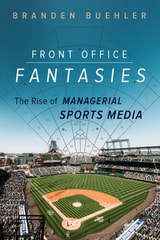
Front Office Fantasies
The Rise of Managerial Sports MediaBranden Buehler
University of Illinois Press, 2023
Front office executives have become high-profile commentators, movie and video game protagonists, and role models for a generation raised in the data-driven, financialized world of contemporary sports. Branden Buehler examines the media transformation of these once obscure management figures into esteemed experts and sporting idols.
Moving from Moneyball and Football Manager to coverage of analytics gurus like Daryl Morey, Buehler shows how a fixation on managerial moves has taken hold across the entire sports media landscape. Buehler’s chapter-by-chapter look at specific media forms illustrates different facets of the managerial craze while analyzing the related effects on what fans see, hear, and play. Throughout, Buehler explores the unsettling implications of exalting the management class and its logics, in the process arguing that sports media’s managerial lionization serves as one of the clearest reflections of major material and ideological changes taking place across culture and society.
Insightful and timely, Front Office Fantasies reveals how sports media moved the action from the field to the executive suite.

Frontiers of Screen History
Imagining European Borders in Cinema, 1945-2010Edited by Raita Merivirta, Kimmo Ahonen, Heta Mulari, and Rami Mähkä
Intellect Books, 2013
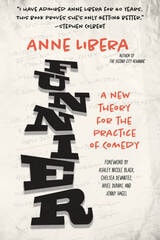
Funnier
A New Theory for the Practice of ComedyAnne Libera
Northwestern University Press, 2026
A roadmap for understanding and creating comedy from the visionary Second City comedy director
Great comedy can feel ineffable—and unlearnable. Debunking the myth that “either you are funny, or you aren’t,” Libera breaks the magic of comedy down into an innovative theory and practical toolkit. Developed over the course of thirty years as a director for The Second City and professor of comedy studies in their training center, Libera’s approach is effective across stand-up, sketch, film, and television comedy, as evidenced by her powerhouse students: Amy Poehler, Kristen Schaal, Steven Yeun, and many more of your favorites.
This book starts with a way to think about comedy and then guides you through concrete strategies for making your work smarter, richer, funnier. Libera covers everything from generating material to revising and performing to fostering social connection through comedy. In the book’s final section, Libera draws from her personal life to make a profound case for why future comedy writers should consider the ethics of their art and their responsibility to their fellow human beings in the audience. Readers won’t just be funnier because of this book—they’ll be better people.
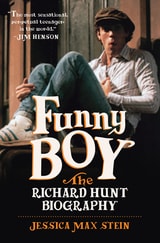
Funny Boy
The Richard Hunt BiographyJessica Max Stein
Rutgers University Press, 2024
"The most sensational, perpetual teenager in the world.” —Jim Henson
"To know him was to love him, and we do." —Mark Hamill
Funny Boy: The Richard Hunt Biography tells the life story of a gifted performer whose gleeful irreverence, sharp wit and generous spirit inspired millions. Richard Hunt was one of the original main five performers in the Muppet troupe. He brought to life an impressive range of characters on The Muppet Show, Sesame Street, Fraggle Rock and various Muppet movies, everyone from eager gofer Scooter to elderly heckler Statler, groovy girl Janice to freaked-out lab helper Beaker, even early versions of Miss Piggy and Elmo. Hunt also acted, directed and mentored the next generation of performers. His accomplishments are all the more remarkable in that he crammed them all into only 40 years.
Richard Hunt was just 18 years old when he joined Jim Henson’s company, where his edgy humor quickly helped launch the Muppets into international stardom. Hunt lived large, savoring life’s delights, amassing a vivid, disparate community of friends. Even when the AIDS epidemic wrought its devastation, claiming the love of Hunt’s life and threatening his own life, he showed an extraordinary sense of resilience, openness and joy. Hunt’s story exemplifies how to follow your passion, foster your talents, adapt to life’s surprises, genuinely connect with everyone from glitzy celebrities to gruff cab drivers – and have a hell of a lot of fun along the way.
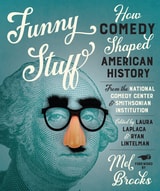
Funny Stuff
How Comedy Shaped American HistoryLaura LaPlaca
Rutgers University Press, 2026
A Junior Library Guild Gold Standard Selection
The National Comedy Center and Smithsonian Institution hold unparalleled collections of artifacts that illustrate the vitality and importance of comedy in American life, from vaudeville, silent films, and TV sitcoms to stand-up, sketch, and cartoons. Now, for the first time, these collections are brought together in vibrant photographs and illuminating essays that tell the story of how comedy shaped American history.
Written by historians responsible for safeguarding these cultural treasures, the book takes readers behind the scenes to uncover the stories behind American heirlooms like Groucho Marx’s tailcoat, George Carlin’s joke files, Carol Burnett’s “Went with the Wind” dress, Johnny Carson’s monologues, and the very first Saturday Night Live script, alongside materials from cultural touchstones like The Simpsons, The Muppet Show, In Living Color, All In the Family, and I Love Lucy.
With a foreword by comedy legend Mel Brooks, this dynamic work offers pop culture aficionados, history lovers, and comedy nerds alike a new perspective on America’s past and who we are as a nation through our comedy.
Furious Feminisms
Alternate Routes on Mad Max: Fury RoadAlexis L. Boylan
University of Minnesota Press, 2019
A provocative peek into this complicated film as a space for subversion, activism, and imaginative power
While both fans and foes point to Mad Max: Fury Road’s feminist credentials, Furious Feminisms asks: is there really anything feminist or radical happening on the screen? The four authors—from backgrounds in art history, American literature, disability studies, and sociology—ask what is possible, desirable, or damaging in theorizing feminism in the contested landscape of the twenty-first century. Can we find beauty in the Anthropocene? Can power be wrested from a violent system without employing and perpetuating violence?
This experiment in collaborative criticism weaves multiple threads of dialogue together to offer a fresh perspective on our current cultural moment.
Forerunners: Ideas First
Short books of thought-in-process scholarship, where intense analysis, questioning, and speculation take the lead
Futures of Chinese Cinema
Technologies and Temporalities in Chinese Screen CulturesEdited by Olivia Khoo and Sean Metzger
Intellect Books, 2009
In recent years, Chinese film has garnered worldwide attention, and this interdisciplinary collection investigates how new technologies, changing production constraints, and shifting viewing practices have shaped perceptions of Chinese screen cultures. For the first time, international scholars from film studies, media studies, history and sociology have come together to examine technology and temporality in Chinese cinema today.
Futures of Chinese Cinema takes an innovative approach, arguing for a broadening of Chinese screen cultures to account for new technologies of screening, from computers and digital video to smaller screens (including mobile phones). It also considers time and technology in both popular blockbusters and independent art films from mainland China, Taiwan, Hong Kong, and the Chinese diasporas. The contributors explore transnational connections, including little-discussed Chinese-Japanese and Sino-Soviet interactions. With an exciting array of essays by established and emerging scholars, Futures of Chinese Cinema represents a fresh contribution to film and cultural studies.
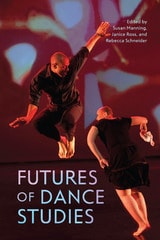
Futures of Dance Studies
Susan Manning
University of Wisconsin Press, 2020
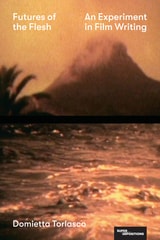
Futures of the Flesh
An Experiment in Film WritingDomietta Torlasco
Northwestern University Press, 2026
Exploring alternative possibilities of viewpoint through cinematic experimentation
In this boldly multidimensional work, Domietta Torlasco alternates between theoretical writings, film essays, and fragmented excerpts from an original screenplay to construct a temporal as well as spatial architecture for her critical intervention. Futures of the Flesh posits that cinematic experimentation holds the strongest potential to reimagine life—its forms, rhythms, and affects—beyond the division between subject and object, human and animal, animate and inanimate. Such potential cannot be clearly located in either space or time but, on the contrary, requires that we think according to momentum, diffraction, and difference.
As a novel notion and the formative medium of both subject and object, the flesh affirms the openness and indefinite generativity of being, allowing for the appearance of new perceptual relations and forms of kinship. Torlasco stages a dialogue between thinkers including Hortense Spillers and Maurice Merleau-Ponty and turns to canonical films, including Blade Runner and Solaris, classic sci-fi literature, such as Octavia Butler’s Kindred, and contemporary video art to elucidate how these media imaginatively rework the distinction between categories of being. This book endeavors to redefine the relation between theory and practice, analysis and creation, to name the primary relations that, under specific techno-aesthetic conditions, enable the emergence of porous, un-bordered forms of life.