Results by title
8642 books match the query '20th century' and 354 start with f

Franklin Furnace and the Spirit of the Avant-Garde
A History of the FutureToni Sant
Intellect Books, 2011
Franklin Furnace is a renowned New York–based artsorganization whose mission is to preserve, document, and present works of avant-garde art by emerging artists—particularly those whose works may be vulnerable due to institutional neglect or politically unpopular content. Over more than thirty years, Franklin Furnace has exhibited works by hundreds of avant-garde artists, some of whom—Laurie Anderson, Vito Acconci, Karen Finley, Guillermo Gómez-Peña, Jenny Holzer, and the Blue Man Group, to name a few—are now established names in contemporary art.
Here, for the first time, is a comprehensive history of this remarkable organization from its conception to the present. Organized around the major art genres that emerged in the second half of the twentieth century, this book intersperses first-person narratives with readings by artists and scholars on issues critical to the organization's success as well as Franklin Furnace's many contributions to avant-garde art.
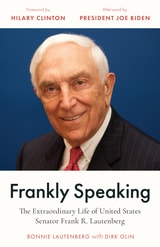
Frankly Speaking
The Extraordinary Life of United States Senator Frank R. LautenbergBonnie Lautenberg
Rutgers University Press, 2024
Told by one of the people who knew him best, his widow Bonnie, Frankly Speaking reveals the political strategies that made Lautenberg one of the Senate’s most powerful advocates for the health and safety of America’s citizens. He championed seemingly minor, unglamorous reforms that made a big difference to everyday lives, from raising the national drinking age to preventing domestic abusers from purchasing guns. These campaigns earned him powerful enemies in the alcohol, tobacco, and firearms industries, and he was subjected to some of the most brutal campaign mudslinging in American history. Yet, as this inspiring biography reveals, New Jersey’s longest-serving senator was not afraid to take big political risks if it meant standing up for his principles, whether that meant opposing the Iraq War or protecting LGBTQ and women’s rights.

Franz Kafka, the Eternal Son
A BiographyPeter-André Alt, Translated from the German by Kristine A. Thorsen
Northwestern University Press, 2018
Franz Kafka remains one of the most influential writers of the twentieth century. His novels, stories, and letters are still regarded today as the epitome of the dark, fascinating, and uncanny, a model of the modernist aesthetic. Peter-André Alt’s landmark biography, Franz Kafka, the Eternal Son, recounts and explores Kafka’s life and literary work throughout the cultural and political upheavals of central Europe.
Alt’s biography explores Franz Kafka’s own view of life and writing as a unity that shaped his identity. He locates links and echoes among the author’s work, life, and surroundings, situating him within the traditions of Prague's German literature, modernity, psychoanalysis, and philosophy as well as within its Jewish culture, arts, theater, and intellectual tradition.
In this biographical tour de force, Kafka emerges as an observant flaneur and wistful loner, an anxious ascetic, an ecstatic and skeptic, a specialist in terror, and a master of irony. Alt masterfully illuminates Kafka's life not as source material but as a mirror of his literary genius. Readers begin to see Kafka’s unforgettable novels and stories as shards reflecting the life of their creator.

Franz Kline
The Artist's MaterialsCorina E. Rogge
J. Paul Getty Trust, The, 2022
Although Franz Kline was one of the seminal figures of the American Abstract Expressionist movement, he is less well known than contemporaries such as Jackson Pollock and Willem de Kooning. This is partly because Kline, unlike most artists in his circle, did not like to write or talk about his own art. In fact, when asked in a panel to discuss abstract art, Kline said, “I thought that was the reason for trying to do it, because you couldn’t [talk about it].” Still, his impact was such that the critic and art historian April Kingsley wrote, “Abstract Expressionism as a movement died with him.”
This volume, the newest addition to the Artist’s Materials series from the Getty Conservation Institute, looks closely at both Kline's life and work, from his early years in Pennsylvania to his later success in New York City. Kline's iconic paintings are poised on a critical cusp: some have already undergone conservation, but others remain unaltered and retain the artist’s color, gloss, and texture, and they are surprisingly vulnerable. The authors’ presentation of rigorous examination and scientific analysis of more than thirty of Kline’s paintings from the 1930s through the 1960s provides invaluable insight into his life, materials, and techniques. This study provides conservators with essential information that will shape future strategies for the care of Kline’s paintings, and offers readers a more thorough comprehension of this underappreciated artist who is so central to American Abstract Expressionism.
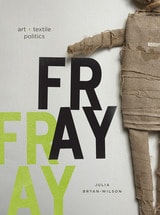
Fray
Art and Textile PoliticsJulia Bryan-Wilson
University of Chicago Press, 2017
Closely examining how amateurs and fine artists in the United States and Chile turned to sewing, braiding, knotting, and quilting amid the rise of global manufacturing, Julia Bryan-Wilson argues that textiles unravel the high/low divide and urges us to think flexibly about what the politics of textiles might be. Her case studies from the 1970s through the 1990s—including the improvised costumes of the theater troupe the Cockettes, the braided rag rugs of US artist Harmony Hammond, the thread-based sculptures of Chilean artist Cecilia Vicuña, the small hand-sewn tapestries depicting Pinochet’s torture, and the NAMES Project AIDS Memorial Quilt—are often taken as evidence of the inherently progressive nature of handcrafted textiles. Fray, however, shows that such methods are recruited to often ambivalent ends, leaving textiles very much “in the fray” of debates about feminized labor, protest cultures, and queer identities; the malleability of cloth and fiber means that textiles can be activated, or stretched, in many ideological directions.
The first contemporary art history book to discuss both fine art and amateur registers of handmaking at such an expansive scale, Fray unveils crucial insights into how textiles inhabit the broad space between artistic and political poles—high and low, untrained and highly skilled, conformist and disobedient, craft and art.
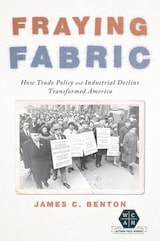
Fraying Fabric
How Trade Policy and Industrial Decline Transformed AmericaJames C. Benton
University of Illinois Press, 2022

Fred in Love
Felice Picano
University of Wisconsin Press, 2005
But when an acquaintance brought his female cat to be serviced by Fred, an entire new set of experiences opened up for the cat-and for Picano, who'd never had the nerve to befriend her owner, his ideal man. The course of love seldom runs straight for cats or for men, and this time would prove (hilariously) no different.
This is another of Picano's distinguished portraits of a vanished era, when a new gay domain was solidifying only a few years after the Stonewall Riots, and the still nascent gay literary world that Picano would help invent was just a conception. Fred in Love is a charming, nostalgic, funny, gossipy, involving, and ultimately enlightening story about how we learn and grow, and how we love-whether the object of our affection is a cat or another human being. It's sure to take its place next to Picano's now classic literary memoirs Ambidextrous, Men Who Loved Me, and A House on the Ocean, a House on the Bay.

Frederic Manning
An Unfinished LifeJonathan L. Marwil
Duke University Press, 1988
How did a classical and noncommercial author come to write a grittily realistic war novel? Manning fled from the attendant publicity, avoiding the limelight assiduously and successfully. Marwil's search for the answer to this riddle and for the details of his life (in some ways the search is as interesting and revealing as the results) and his account of Manning's life and work reveal a great deal of the intellectual and social world of Edwardian and Georgian England.
Frederik Pohl
Michael Page
University of Illinois Press, 2015
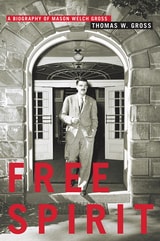
Free Spirit
A Biography of Mason Welch GrossThomas W. Gross
Rutgers University Press, 2022
Free Spirit explores how Gross helped reshape Rutgers from a sleepy college into a world-renowned public research university. It also reveals how he steered the university through the tumult of the Red Scare, civil rights era, and the Vietnam War by taking principled stands in favor of both racial equality and academic freedom. This biography tells the story of how, from an early age, Gross came to believe in the importance of doing what was right, even when the backlash took a toll on his own health.
Written by his youngest son Thomas, this book offers a uniquely well-rounded portrait of Gross as both a public figure and a private person. Covering everything from his service in World War II to his stints as a game-show personality, Free Spirit introduces the reader to a remarkable academic leader.
Free Verse
An Essay on ProsodyCharles O. Hartman
Northwestern University Press, 1996
Free Women
Ethics and Aesthetics in Twentieth-Century Women's FictionKate Fullbrook
Temple University Press, 1990
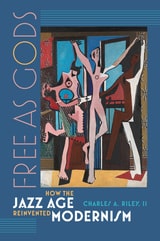
Free as Gods
How the Jazz Age Reinvented ModernismCharles A. Riley
University Press of New England, 2017
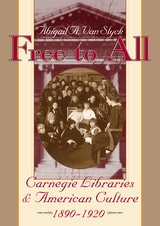
Free to All
Carnegie Libraries & American Culture, 1890-1920Abigail A. Van Slyck
University of Chicago Press, 1996
"The whole story is told here in this book. Carnegie's wishes, the conflicts among local groups, the architecture, development of female librarians. It's a rich and marvelous story, lovingly told."—Alicia Browne, Journal of American Culture
"This well-written and extensively researched work is a welcome addition to the history of architecture, librarianship, and philanthropy."—Joanne Passet, Journal of American History
"Van Slyck's book is a tremendous contribution for its keenness of scholarship and good writing and also for its perceptive look at a familiar but misunderstood icon of the American townscape."—Howard Wight Marshall, Journal of the Society of Architectural Historians
"[Van Slyck's] reading of the cultural coding implicit in the architectural design of the library makes a significant contribution to our understanding of the limitations of the doctrine 'free to all.'"—Virginia Quarterly Review
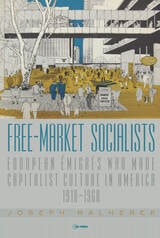
Free-Market Socialists
European Émigrés Who Made Capitalist Culture in America, 1918–1968Joseph Malherek
Central European University Press, 2022
The Hungarian artist-designer László Moholy-Nagy, the Austrian sociologist Paul Lazarsfeld, and his fellow Viennese Victor Gruen—an architect and urban planner—made careers in different fields. Yet they shared common socialist politics, Jewish backgrounds, and experience as refugees from the Nazis. This book tells the story of their intellectual migration from Central Europe to the United States, beginning with the collapse of the Habsburg Empire, and moving through the heady years of newly independent social-democratic republics before the descent into fascism. It follows their experience of exile and adaptation in a new country, and culminates with a surprising outcome of socialist thinking: the opening of the first fully enclosed, air-conditioned suburban shopping center in the United States. Although the American culture they encountered ostensibly celebrated entrepreneurial individualism and capitalistic “free enterprise,” Moholy-Nagy, Lazarsfeld, and Gruen arrived at a time of the progressive economic reforms of the New Deal and an extraordinary open-mindedness about social democracy. This period of unprecedented economic experimentation nurtured a business climate that, for the most part, did not stifle the émigrés’ socialist idealism but rather channeled it as the source of creative solutions to the practical problems of industrial design, urban planning, and consumer behavior.
Based on a vast array of original sources, Malherek interweaves the biographies of these three remarkable personalities and those of their wives, colleagues, and friends with whom they collaborated on innovative projects that would shape the material environment and consumer culture of their adopted home. The result is a narrative of immigration and adaptation that challenges the crude binary of capitalism and socialism with a story of creative economic hybridization.
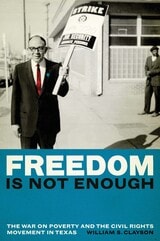
Freedom Is Not Enough
The War on Poverty and the Civil Rights Movement in TexasBy William S. Clayson
University of Texas Press, 2010
Led by the Office of Economic Opportunity, Lyndon Johnson's War on Poverty reflected the president's belief that, just as the civil rights movement and federal law tore down legalized segregation, progressive government and grassroots activism could eradicate poverty in the United States. Yet few have attempted to evaluate the relationship between the OEO and the freedom struggles of the 1960s. Focusing on the unique situation presented by Texas, Freedom Is Not Enough examines how the War on Poverty manifested itself in a state marked by racial division and diversity—and by endemic poverty.
Though the War on Poverty did not eradicate destitution in the United States, the history of the effort provides a unique window to examine the politics of race and social justice in the 1960s. William S. Clayson traces the rise and fall of postwar liberalism in the Lone Star State against a backdrop of dissent among Chicano militants and black nationalists who rejected Johnson's brand of liberalism. The conservative backlash that followed is another result of the dramatic political shifts revealed in the history of the OEO, completing this study of a unique facet in Texas's historical identity.
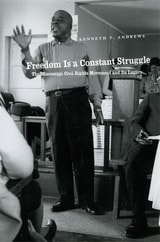
Freedom Is a Constant Struggle
The Mississippi Civil Rights Movement and Its LegacyKenneth T. Andrews
University of Chicago Press, 2004
Freedom Is a Constant Struggle is also the first book of its kind to detail the activities of white supremacists in Mississippi, revealing how white repression and intimidation sparked black activism and simultaneously undermined the movement's ability to achieve far-reaching goals. Andrews shows that the federal government's role was important but reactive as federal actors responded to the sustained struggles between local movements and their opponents. He tracks the mobilization of black activists by the NAACP, the creation of Freedom Summer, efforts to galvanize black voters, the momentous desegregation of public schools and the rise of all-white private academies, and struggles over the economic development of black communities. From this complex history, Andrews shows how the civil rights movement built innovative organizations and campaigns that empowered local leadership and had a lasting legacy in Mississippi and beyond.
Based on an original and creative research design that combines extensive archival research, interviews with activists, and quantitative historical data, Freedom Is a Constant Struggle provides many new insights into the civil rights struggle, and it presents a much broader theory to explain whether and how movements have enduring impacts on politics and society. What results is a work that will be invaluable to students of social movements, democratic politics, and the struggle for racial freedom in the U.S.
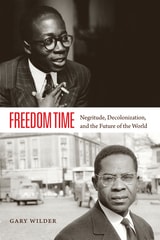
Freedom Time
Negritude, Decolonization, and the Future of the WorldGary Wilder
Duke University Press, 2015
Freedom for Publishing, Publishing for Freedom
Timothy Garton Ash
Central European University Press, 1995

Freedom with Violence
Race, Sexuality, and the US StateChandan Reddy
Duke University Press, 2011
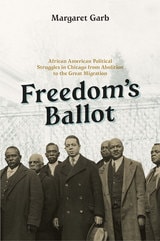
Freedom's Ballot
African American Political Struggles in Chicago from Abolition to the Great MigrationMargaret Garb
University of Chicago Press, 2014
Freedom’s Ballot is the history of three generations of African American activists—the ministers, professionals, labor leaders, clubwomen, and entrepreneurs—who transformed twentieth-century urban politics. This is a complex and important story of how black political power was institutionalized in Chicago in the half-century following the Civil War. Margaret Garb explores the social and political fabric of Chicago, revealing how the physical makeup of the city was shaped by both political corruption and racial empowerment—in ways that can still be seen and felt today.
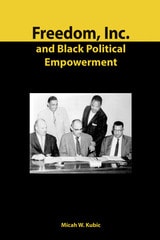
Freedom, Inc. and Black Political Empowerment
Micah W. Kubic
University of Missouri Press, 2016
Much has been written about black urban empowerment and about the candidates—particularly the winning candidates—who are the public face of such shifts in power. Authors invariably mention the important role played by black political organizations in electing black officials or organizing communities, but Micah W. Kubic goes further, making, for the first time, one such organization the focus of a book-length study. Kubic tells the story of black political empowerment in Kansas City through the prism of Freedom, Inc., the nation’s oldest existing black political organization.
Using interviews and observation of participants as well as archival research, Kubic offers historical and political analysis of Freedom, Inc. from its founding in 1962 through its role in municipal elections of 2007. Kubic asserts that strong local organizations are living, dynamic organisms and that they, rather than charismatic candidates or interracial alliances, are the crucial players in both determining political outcomes and advancing black interests in urban areas.
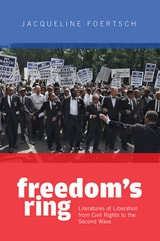
Freedom’s Ring
Literatures of Liberation from Civil Rights to the Second WaveJacqueline Foertsch
Rutgers University Press, 2021

French Colonial Documentary
Mythologies of HumanitarianismPeter J. Bloom
University of Minnesota Press, 2008
Despite altruistic goals, humanitarianism often propagates foreign, and sometimes unjust, power structures where it is employed. Tracing the visual rhetoric of French colonial humanitarianism, Peter J. Bloom’s unexpected analysis reveals how the project of remaking the colonies in the image of France was integral to its national identity.
French Colonial Documentary investigates how the promise of universal citizenship rights in France was projected onto the colonies as a form of evolutionary interventionism. Bloom focuses on the promotion of French education efforts, hygienic reform, and new agricultural techniques in the colonies as a means of renegotiating the social contract between citizens and the state on an international scale. Bloom’s insightful readings disclose the pervasiveness of colonial iconography, including the relationship between “natural man” and colonial subjectivity; representations of the Senegalese Sharpshooters as obedient, brave, and sexualized colonial subjects; and the appeal of exotic adventure narratives in the trans-Saharan film genre.
Examining the interconnection between French documentary realism and the colonial enterprise, Bloom demonstrates how the colonial archive is crucial to contemporary debates about multiculturalism in France.
Peter J. Bloom is associate professor of film and media studies at the University of California-Santa Barbara.y debates about multiculturalism in France.
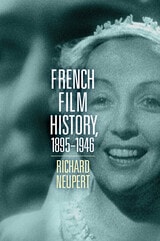
French Film History, 1895–1946
Richard Neupert
University of Wisconsin Press, 2022
Neupert explains the contexts behind the rise of cinema in France, including groundbreaking work by the Lumière family, Georges Méliès, and Alice Guy; the powerhouse studios of Pathé and Gaumont; directors such as René Clair, Germaine Dulac, Marcel Pagnol, and Jean Renoir; and an array of stars, including Max Linder, Jean Gabin, Josephine Baker, and Michèle Morgan. The first fifty years of French film practice established cinema’s cultural and artistic potential, setting the stage for the global post–World War II explosion in commercial movies and art cinema alike. French film and its rich history remain at the heart of cinematic storytelling and our moviegoing pleasure.
French Modern
Norms and Forms of the Social EnvironmentPaul Rabinow
University of Chicago Press, 1995
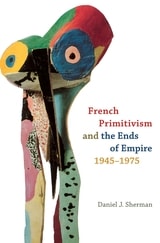
French Primitivism and the Ends of Empire, 1945-1975
Daniel J. Sherman
University of Chicago Press, 2011
For over a century, the idea of primitivism has motivated artistic modernism. Focusing on the three decades after World War II, known in France as “les trentes glorieuses” despite the loss of most of the country’s colonial empire, this probing and expansive book argues that primitivism played a key role in a French society marked by both economic growth and political turmoil.
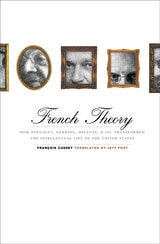
French Theory
How Foucault, Derrida, Deleuze, & Co. Transformed the Intellectual Life of the United StatesFrancois Cusset
University of Minnesota Press, 2008
“A great story, full of twists and turns. . . . Careers made and ruined, departments torn apart, writing programs turned into sensitivity seminars, political witch hunts, public opprobrium, ignorant media attacks, the whole ball of wax. Read it and laugh or read it and weep. I can hardly wait for the movie.” —Stanley Fish, Think Again, New York Times
“In such a difficult genre, full of traps and obstacles, French Theory is a success and a remarkable book in every respect: it is fair, balanced, and informed. I am sure this book will become the reference on both sides of the Atlantic.” —Jacques Derrida
“The Atlantic Ocean has two sides, and so does French Theory. Reinvented in America and betrayed in its own country, it has become the most radical intellectual movement in the West with global reach, rewriting Marx in light of late capitalism. Breathtakingly moving back and forth between the two cultures, Francois Cusset takes us through a dazzling intellectual adventure that illuminates the past thirty years, and many more decades to come.” —Sylvere Lotringer
During the last three decades of the twentieth century, a disparate group of radical French thinkers achieved an improbable level of influence and fame in the United States. Compared by at least one journalist to the British rock ‘n’ roll invasion, the arrival of works by Michel Foucault, Jacques Derrida, Jean-François Lyotard, Jean Baudrillard, Gilles Deleuze, and Félix Guattari on American shores in the late 1970s and 1980s caused a sensation.
Outside the academy, “French theory” had a profound impact on the era’s emerging identity politics while also becoming, in the 1980s, the target of right-wing propagandists. At the same time in academic departments across the country, their poststructuralist form of radical suspicion transformed disciplines from literature to anthropology to architecture. By the 1990s, French theory was woven deeply into America’s cultural and intellectual fabric.
French Theory is the first comprehensive account of the American fortunes of these unlikely philosophical celebrities. François Cusset looks at why America proved to be such fertile ground for French theory, how such demanding writings could become so widely influential, and the peculiarly American readings of these works. Reveling in the gossipy history, Cusset also provides a lively exploration of the many provocative critical practices inspired by French theory. Ultimately, he dares to shine a bright light on the exultation of these thinkers to assess the relevance of critical theory to social and political activism today-showing, finally, how French theory has become inextricably bound with American life.
François Cusset, a writer and intellectual historian, teaches contemporary French thought in Paris at the Institut d’Etudes Politiques and at Columbia University’s Reid Hall. His books include Queer Critics and La Décennie.
Jeff Fort is assistant professor of French at the University of California, Davis. He has translated works by Maurice Blanchot, Jean Genet, and Jean-Luc Nancy.
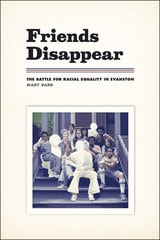
Friends Disappear
The Battle for Racial Equality in EvanstonMary Barr
University of Chicago Press, 2014
In Friends Disappear Barr goes back to her old neighborhood and pieces together a history of Evanston with a particular emphasis on its neighborhoods, its schools, and its work life. She finds that there is a detrimental myth of integration surrounding Evanston despite bountiful evidence of actual segregation, both in the archives and from the life stories of her subjects. Curiously, the city’s own desegregation plan is partly to blame. The initiative called for the redistribution of students from an all-black elementary school to institutions situated in white neighborhoods. That, however, required busing, and between the tensions it generated and obvious markers of class difference, the racial divide, far from being closed, was widened. Friends Disappear highlights how racial divides limited the life chances of blacks while providing opportunities for whites, and offers an insider’s perspective on the social practices that doled out benefits and penalties based on race—despite attempts to integrate.

Frigate HMS Leander
Jantinus Mulder
Amsterdam University Press, 2023

Frigate HNLMS Jacob van Heemskerck
Rindert van Zinderen-Bakker
Amsterdam University Press, 2023

Frigate USS Clark
Rindert van Zinderen-Bakker
Amsterdam University Press, 2023

Frigate USS Clark
Rindert van Zinderen-Bakker
Amsterdam University Press, 2023

From Canton Restaurant to Panda Express
A History of Chinese Food in the United StatesLiu, Haiming
Rutgers University Press, 2015
Finalist in the Culinary History category of the 2016 Gourmand World Cookbook Awards
From Canton Restaurant to Panda Express takes readers on a compelling journey from the California Gold Rush to the present, letting readers witness both the profusion of Chinese restaurants across the United States and the evolution of many distinct American-Chinese iconic dishes from chop suey to General Tso’s chicken. Along the way, historian Haiming Liu explains how the immigrants adapted their traditional food to suit local palates, and gives readers a taste of Chinese cuisine embedded in the bittersweet story of Chinese Americans.
Treating food as a social history, Liu explores why Chinese food changed and how it has influenced American culinary culture, and how Chinese restaurants have become places where shared ethnic identity is affirmed—not only for Chinese immigrants but also for American Jews. The book also includes a look at national chains like P. F. Chang’s and a consideration of how Chinese food culture continues to spread around the globe.
Drawing from hundreds of historical and contemporary newspaper reports, journal articles, and writings on food in both English and Chinese, From Canton Restaurant to Panda Express represents a groundbreaking piece of scholarly research. It can be enjoyed equally as a fascinating set of stories about Chinese migration, cultural negotiation, race and ethnicity, diverse flavored Chinese cuisine and its share in American food market today.
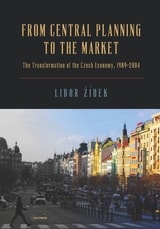
From Central Planning to the Market
Transformation of the Czech Economy 1989 – 2004Libor Zidek
Central European University Press, 2018
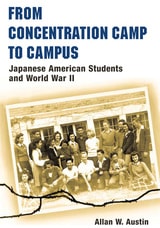
From Concentration Camp to Campus
Japanese American Students and World War IIAllan W. Austin
University of Illinois Press, 2003
Austin argues that the resettled students transformed the attempts at assimilation to create their own meanings and suit their own purposes, and succeeded in reintegrating themselves into the wider American society without sacrificing their connections to community and their Japanese cultural heritage.

From Confinement to Containment
Japanese/American Arts during the Early Cold WarEdward Tang
Temple University Press, 2019
During the early part of the Cold War, Japan emerged as a model ally, and Japanese Americans were seen as a model minority. From Confinement to Containment examines the work of four Japanese and Japanese/American artists and writers during this period: the novelist Hanama Tasaki, the actor Yamaguchi Yoshiko, the painter Henry Sugimoto, and the children’s author Yoshiko Uchida. The backgrounds of the four figures reveal a mixing of nationalities, a borrowing of cultures, and a combination of domestic and overseas interests.
Edward Tang shows how the film, art, and literature made by these artists revealed to the American public the linked processes of U.S. actions at home and abroad. Their work played into—but also challenged—the postwar rehabilitated images of Japan and Japanese Americans as it focused on the history of transpacific relations such as Japanese immigration to the United States, the Asia-Pacific War, U.S. and Japanese imperialism, and the wartime confinement of Japanese Americans. From Confinement to Containment shows the relationships between larger global forces as well as how the artists and writers responded to them in both critical and compromised ways.
From Counterculture to Cyberculture
Stewart Brand, the Whole Earth Network, and the Rise of Digital UtopianismFred Turner
University of Chicago Press, 2006
In the early 1960s, computers haunted the American popular imagination. Bleak tools of the cold war, they embodied the rigid organization and mechanical conformity that made the military-industrial complex possible. But by the 1990s—and the dawn of the Internet—computers started to represent a very different kind of world: a collaborative and digital utopia modeled on the communal ideals of the hippies who so vehemently rebelled against the cold war establishment in the first place.
From Counterculture to Cyberculture is the first book to explore this extraordinary and ironic transformation. Fred Turner here traces the previously untold story of a highly influential group of San Francisco Bay–area entrepreneurs: Stewart Brand and the Whole Earth network. Between 1968 and 1998, via such familiar venues as the National Book Award–winning Whole Earth Catalog, the computer conferencing system known as WELL, and, ultimately, the launch of the wildly successful Wired magazine, Brand and his colleagues brokered a long-running collaboration between San Francisco flower power and the emerging technological hub of Silicon Valley. Thanks to their vision, counterculturalists and technologists alike joined together to reimagine computers as tools for personal liberation, the building of virtual and decidedly alternative communities, and the exploration of bold new social frontiers.
Shedding new light on how our networked culture came to be, this fascinating book reminds us that the distance between the Grateful Dead and Google, between Ken Kesey and the computer itself, is not as great as we might think.

From Dead Ends to Cold Warriors
Constructing American Boyhood in Postwar Hollywood FilmsPeter W.Y. Lee
Rutgers University Press, 2021
From Dickinson to Dylan
Visions of Transcendence in Modernist LiteratureGlenn Hughes
University of Missouri Press, 2020
This work is unique in its extended focus, in a comparative study spanning a century, on the persistence and centrality in modernist literature of the struggle to understand and articulate the dependence of human meaning on the mystery of transcendent meaning. Hughes shows us that each of these authors is a mystic in his or her way, and that none are tempted by the modern inclination to suppose that meaning originates with human beings. Together, they address one of the most difficult and important challenges of modern literature: how to be a mystic in modernity.
From Disarmament to Rearmament
The Reversal of US Policy toward West Germany, 1946–1955Sheldon A. Goldberg
Ohio University Press, 2017
At the end of World War II, the Allies were unanimous in their determination to disarm the former aggressor Germany. As the Cold War intensified, however, the decision whether to reverse that policy and to rearm West Germany as a bulwark against the Soviet threat led to disagreements both within the US government and among members of the nascent NATO alliance. The US military took the practical view that a substantial number of German troops would be required to deter any potential Soviet assault. The State Department, on the other hand, initially advocated an alternative strategy of strengthening European institutions but eventually came around to the military’s position that an armed West Germany was preferable to a weak state on the dividing line between the Western democracies and the Soviet satellite states.
Sheldon A. Goldberg traces the military, diplomatic, and political threads of postwar policy toward West Germany and provides insights into the inner workings of alliance building and the roles of bureaucrats and military officers as well as those of diplomats and statesmen. He draws on previously unexamined primary sources to construct a cogent account of the political and diplomatic negotiations that led to West Germany’s accession to NATO and the shaping of European order for the next forty years.
From Dixie to Rocky Top
Music and Meaning in Southeastern Conference FootballCarrie Tipton
Vanderbilt University Press, 2023
The first book to explore the history of college fight songs as a culturally important phenomenon, From Dixie to Rocky Top zeroes in on the US South, where college football has forged a powerful, quasi-religious sense of meaning and identity throughout the region.
Tracing the story of Southeastern Conference (SEC) fight songs from the late nineteenth to the early twenty-first century, author Carrie Tipton places this popular repertory within the broader commercial music industry and uses fight songs to explore themes of authorship and copyright; the commodification of school spirit; and the construction of race, gender, and regional identity in Southern football culture.
This book unearths the history embedded in SEC football’s music traditions, drawing from the archives of the seventeen universities currently or formerly in the conference. Alongside rich primary sources, Tipton incorporates approaches and literature from sports history, Southern and American history, Southern and American studies, and musicology.
Chronicling iconic Southern fight songs’ origins, dissemination, meanings, and cultural reception over a turbulent century, From Dixie to Rocky Top weaves a compelling narrative around a virtually unstudied body of popular music.
From Du Bois to Obama
African American Intellectuals in the Public ForumCharles Pete Banner-Haley
Southern Illinois University Press, 2014
In his groundbreaking new book Charles Pete Banner-Haley explores the history of African American intellectualism and reveals the efforts of black intellectuals in the ongoing struggle against racism, showing how they have responded to Jim Crow segregation, violence against black Americans, and the more subtle racism of the postintegration age. Banner-Haley asserts that African American intellectuals—including academicians, social critics, activists, and writers—serve to generate debate, policy, and change, acting as a moral force to persuade Americans to acknowledge their history of slavery and racism, become more inclusive and accepting of humanity, and take responsibility for social justice.
Other topics addressed in this insightful study include the disconnection over time between black intellectuals and the masses for which they speak; the ways African American intellectuals identify themselves in relation to the larger black community, America as a whole, and the rest of the world; how black intellectuals have gained legitimacy in American society and have accrued moral capital, especially in the area of civil rights; and how that moral capital has been expended. Among the influential figures covered in the book are W. E. B. Du Bois, Ralph Ellison, Richard Wright, James Weldon Johnson, E. Franklin Frazier, Ralph Bunche, Oliver C. Cox, George S. Schuyler, Zora Neale Hurston, Martin Luther King, Jr., Jesse Jackson, Cornel West, Toni Morrison, bell hooks, Charles Johnson, and Barack Obama.
African American intellectuals, as Banner-Haley makes clear, run the political gamut from liberal to conservative. He discusses the emergence of black conservatism, with its accompanying questions about affirmative action, government intervention on behalf of African Americans, and the notion of a color-blind society. He also looks at how popular music—particularly rap and hip-hop—television, movies, cartoons, and other media have functioned as arenas for investigating questions of identity, exploring whether African American intellectuals can also be authentically black.
A concluding discussion of the so-called browning of America, and the subsequent rise in visibility and influence of black intellectuals culminates with the historic election of President Barack Obama, an African American intellectual who has made significant contributions to American society through his books, articles, and speeches. Banner-Haley ponders what Obama’s election will mean for the future of race relations and black intellectualism in America.
From Edward Brooke to Barack Obama
African American Political Success, 1966-2008Dennis S. Nordin
University of Missouri Press, 2012
In From Edward Brooke to Barack Obama, Dennis S. Nordin navigates the history of biracial elections by examining the experiences of a variety of African American politicians from across the country, revealing how voters, both black and white, respond to the issue of race in an election.
From Edward Brooke to Barack Obama investigates the implications of race in politics, a highly relevant topic in today’s American society. It offers readers a chronological overview of the progress made over the last several decades as well as shows where there is room for growth in the political arena. By taking a pertinent topic for the era and placing it in the context of history, Nordin successfully chronicles the roles of race and race relations in American politics.
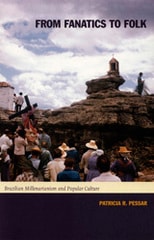
From Fanatics to Folk
Brazilian Millenarianism and Popular CulturePatricia R. Pessar
Duke University Press, 2004
Pessar combines cultural history spanning the colonial period to the present; comparative case studies of the Canudos, Contestado, Juazeiro, and Santa Brígida movements; and three decades of ethnographic research in the Brazilian Northeast. Highlighting the involvement of a broad range of individuals and institutions, the cross-fertilization between movements, contestation and accommodation vis-à-vis the church and state, and matters of spirituality and faith, From Fanatics to Folk reveals Brazilian millenarianism as long-enduring and constantly in flux.

From Football to Soccer
The Early History of the Beautiful Game in the United StatesBrian D. Bunk
University of Illinois Press, 2021
Across North America, native peoples and colonists alike played a variety of kicking games long before soccer's emergence in the late 1800s. Brian D. Bunk examines the development and social impact of these sports through the rise of professional soccer after World War I. As he shows, the various games called football gave women an outlet as athletes and encouraged men to form social bonds based on educational experience, occupation, ethnic identity, or military service. Football also followed young people to college as higher education expanded in the nineteenth century. University play, along with the arrival of immigrants from the British Isles, helped spark the creation of organized soccer in the United States—and the beautiful game's transformation into a truly international sport.
A multilayered look at one game’s place in American life, From Football to Soccer refutes the notion of the U.S. as a land outside of football history.
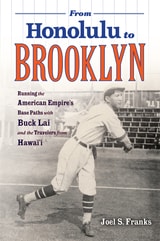
From Honolulu to Brooklyn
Running the American Empire’s Base Paths with Buck Lai and the Travelers from Hawai’iJoel S. Franks
Rutgers University Press, 2022

From Integration to Inclusion
A History of Special Education in the 20th CenturyMargret A. Winzer
Gallaudet University Press, 2009
Since Margret A. Winzer wrote her landmark work The History of Special Education, much has transpired in this field, which she again has captured in a remarkable display of scholarship. Winzer’s new study From Integration to Inclusion: A History of Special Education in the 20th Century focuses chiefly on the significant events of the twentieth and early twenty-first centuries in the United States and Canada. Its key dynamics consist of a retrospective overview of the paradigms that emerged from and shaped special education; a critical assessment of past progress and reform, including failures and disappointments; and an analysis of the theoretical diversity within the discipline.
In this stand-alone volume, Winzer juxtaposes the historical study of disability and of special schooling and service provision with reference to broader social systems, protocols, and practices. She documents how prevailing emotional and intellectual climates influence disability and schooling, and also takes into account the social, political, and ideological factors that affect educational theory and practice. Winzer recognizes that reform has been the Zeitgeist of the history of special education. Crucial problems such as defining exceptional conditions and separating them from one another were formulated in contexts organized along moral, theological, legislative, medical, and social dimensions. Many of these reforms failed for various reasons, which Winzer thoroughly explains in her study. Most of these reforms evolved from the long and honorable pedigree that the field of special education has possessed since its earliest antecedents, now admirably brought up to date by this outstanding work.
From Jail to Jail
Mis Sea#83 Tpg#8Tan Malaka
Ohio University Press, 1991
From Jail to Jail is the political autobiography of Sutan Ibrahim gelar Tan Malaka, an enigmatic and colorful political thinker of twentieth-century Asia, who was one of the most influential figures of the Indonesian Revolution. Variously labeled a communist, Trotskyite, and nationalist, Tan Malaka managed to run afoul of nearly every political group and faction involved in the Indonesian struggle for independence. During his decades of political activity, he spent periods of exile and hiding in nearly every country in Southeast Asia. As a Marxist who was expelled from and became a bitter enemy of his country’s Communist Party and as a nationalist who was imprisoned and murdered by his own government’s forces as a danger to its anticolonial struggle, Tan Malaka was and continues to be soaked in contradiction and controversy.

From Mammies to Militants
Domestics in Black American Literature from Charles Chesnutt to Toni MorrisonTrudier Harris
University of Alabama Press, 2023
From Charles Chesnutt’s The Marrow of Tradition to Toni Morrison’s The Bluest Eye, Black writers, some of whom worked as maids themselves, have manipulated the stereotype in a strategic way as a figure to comment on Black-white relations or to dramatize the conflicts of the Black protagonists. In fact, the characters themselves, like real-life maids, often use the stereotype to their advantage or to trick their oppressors.
Harris combines folkloristic, sociological, historical, and psychological analyses with literary ones, drawing on her own interviews with Black women who worked as domestics. She explores the differences between Northern and Southern maids and between “mammy” and “militant.” Her invaluable book provides a sweeping exploration of Black American writers of the twentieth century, with extended discussion of works by Charles Chesnutt, Kristin Hunter, Toni Morrison, Richard Wright, Ann Petry, William Melvin Kelley, Alice Childress, John A. Williams, Douglas Turner Ward, Barbara Woods, Ted Shine, and Ed Bullins. Often privileging political statements over realistic characterization in the design of their texts, the authors in Harris’s study urged Black Americans to take action to change their powerless conditions, politely if possible, violently if necessary. Through their commitment to improving the conditions of Black people in America, these writers demonstrate the connectedness of art and politics.
In her new afterword, “From Militants to Movie Stars,” Harris looks at domestic workers in African American literature after the original publication of her book in 1982. Exploring five subsequent literary treatments of Black domestic workers from Ernest J. Gaines’s A Lesson Before Dying to Lynn Nottage’s By the Way, Meet Vera Stark, Harris tracks how the landscape of representation of domestic workers has broken with tradition and continues to transform into something entirely new.