Results by title
8642 books match the query '20th century' and 354 start with f
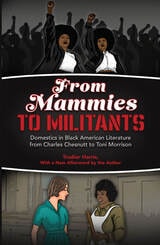
From Mammies to Militants
Domestics in Black American Literature from Charles Chesnutt to Toni MorrisonTrudier Harris
University of Alabama Press, 2023
Unmasking stereotypes and reclaiming identity of Black Womanhood in American Culture.
Welfare queen, hot momma, unwed mother: these stereotypes of Black women share their historical conception in the image of the Black woman as domestic. Focusing on the issue of stereotypes, the new edition of Trudier Harris’s classic 1982 study From Mammies to Militants examines the position of the domestic in Black American literature with a new afterword bringing her analysis into the present.
From Charles Chesnutt’s The Marrow of Tradition to Toni Morrison’s The Bluest Eye, Black writers, some of whom worked as maids themselves, have manipulated the stereotype in a strategic way as a figure to comment on Black-white relations or to dramatize the conflicts of the Black protagonists. In fact, the characters themselves, like real-life maids, often use the stereotype to their advantage or to trick their oppressors.
Harris combines folkloristic, sociological, historical, and psychological analyses with literary ones, drawing on her own interviews with Black women who worked as domestics. She explores the differences between Northern and Southern maids and between “mammy” and “militant.” Her invaluable book provides a sweeping exploration of Black American writers of the twentieth century, with extended discussion of works by Charles Chesnutt, Kristin Hunter, Toni Morrison, Richard Wright, Ann Petry, William Melvin Kelley, Alice Childress, John A. Williams, Douglas Turner Ward, Barbara Woods, Ted Shine, and Ed Bullins. Often privileging political statements over realistic characterization in the design of their texts, the authors in Harris’s study urged Black Americans to take action to change their powerless conditions, politely if possible, violently if necessary. Through their commitment to improving the conditions of Black people in America, these writers demonstrate the connectedness of art and politics.
In her new afterword, “From Militants to Movie Stars,” Harris looks at domestic workers in African American literature after the original publication of her book in 1982. Exploring five subsequent literary treatments of Black domestic workers from Ernest J. Gaines’s A Lesson Before Dying to Lynn Nottage’s By the Way, Meet Vera Stark, Harris tracks how the landscape of representation of domestic workers has broken with tradition and continues to transform into something entirely new.
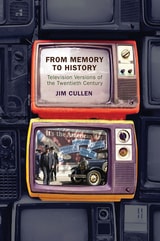
From Memory to History
Television Versions of the Twentieth CenturyJim Cullen
Rutgers University Press, 2021
From Memory to History takes readers on a journey through over fifty years of historical dramas and sitcoms that were set in earlier decades of the twentieth century. Along the way, it explores how comedies like M*A*S*H and Hogan’s Heroes offered veiled commentary on the Vietnam War, how dramas ranging like Mad Men echoed current economic concerns, and how The Americans and Halt and Catch Fire used the Cold War and the rise of the internet to reflect upon the present day. Cultural critic Jim Cullen is lively, informative, and incisive, and this book will help readers look at past times, present times, and prime time in a new light.
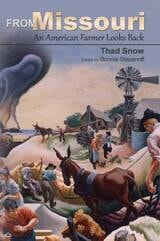
From Missouri
An American Farmer Looks BackThad Snow, Edited by Bonnie Stepenoff
University of Missouri Press, 2012
After years of subjecting the editors of St. Louis newspapers to eloquent letters on subjects as diverse as floods, tariffs, and mules, Thad Snow published his memoir From Missouri in his mid-seventies in 1954. He was barely retired from farming for more than half a century, mostly in the Missouri Bootheel, or “Swampeast Missouri,” as he called it. Now back in print with a new introduction by historian Bonnie Stepenoff, these sketches of a life, a region, and an era will delight readers new to this distinctive American voice as well as readers already familiar with this masterpiece of the American Midwest.
Snow purchased a thousand acres of southeast Missouri swampland in 1910, cleared it, drained it, and eventually planted it in cotton. Although he employed sharecroppers, he grew to become a bitter critic of the labor system after a massive flood and the Great Depression worsened conditions for these already-burdened workers. Shocking his fellow landowners, Snow invited the Southern Tenant Farmers Union to organize the workers on his land. He was even once accused of fomenting a strike and publicly threatened with horsewhipping.
Snow’s admiration for Owen Whitfield, the African American leader of the Sharecroppers’ Roadside Demonstration, convinced him that nonviolent resistance could defeat injustice. Snow embraced pacifism wholeheartedly and denounced all war as evil even as America mobilized for World War II after the attack on Pearl Harbor. In the late 1940s and early 1950s, he became involved with creating Missouri’s conservation movement. Near the end of his life, he found a retreat in the Missouri Ozarks, where he wrote this recollection of his life.
This unique and honest series of personal essays expresses the thoughts of a farmer, a hunter, a husband, a father and grandfather, a man with a soft spot for mules and dogs and all kinds of people. Snow’s prose reveals much about a way of life in the region during the first half of the twentieth century, as well as the social and political events that affected the entire nation. Whether arguing that a good stock dog should be left alone to do its work, explaining the process of making swampland suitable for agriculture, or putting forth his case for world peace, Snow’s ideas have a special authenticity because they did not come from an ivory tower or a think tank—they came From Missouri.

From Pink to Green
Disease Prevention and the Environmental Breast Cancer MovementLey, Barbara L
Rutgers University Press, 2009
Challenging the broader cultural milieu of pink ribbon symbolism and breast cancer "awareness" campaigns, this movement has grown from a handful of community-based organizations into a national entity, shaping the cultural, political, and public health landscape. Much of the activists' everyday work revolves around describing how the so called "cancer industry" downplays possible environmental links to protect their political and economic interests and they demand that the public play a role in scientific, policy, and public health decision-making to build a new framework of breast cancer prevention.
From Pink to Green successfully explores the intersection between breast cancer activism and the environmental health sciences, incorporating public and scientific debates as well as policy implications to public health and environmental agendas.
From Popular to Insurgent Intellectuals
Peasant Catechists in the Salvadoran RevolutionLeigh Binford
Rutgers University Press, 2023
From Power to Prejudice
The Rise of Racial Individualism in Midcentury AmericaLeah N. Gordon
University of Chicago Press, 2015
To answer these questions, From Power to Prejudice examines American academia—both black and white—in the 1940s and ’50s. Gordon presents four competing visions of “the race problem” and documents how an individualistic paradigm, which presented white attitudes as the source of racial injustice, gained traction. A number of factors, Gordon shows, explain racial individualism’s postwar influence: individuals were easier to measure than social forces; psychology was well funded; studying political economy was difficult amid McCarthyism; and individualism was useful in legal attacks on segregation. Highlighting vigorous midcentury debate over the meanings of racial justice and equality, From Power to Prejudice reveals how one particular vision of social justice won out among many contenders.

From Protest to President
A Social Justice Journey through the Emergence of Adult Education and the Birth of Distance LearningGeorge A Pruitt
Rutgers University Press, 2023
From barbershop encounters with Malcolm X to death threats at Illinois State University and gunfire at Towson State, Pruitt provides a powerful narrative poised at the intersection of social justice, higher education and politics. He recounts leadership experiences at HBCUs and public universities across the country, as he advocated for autonomy at Morgan State and fought to preserve Tennessee State University.
His steadfast activism, integrity and courage led to groundbreaking work in providing access to higher education for working adults and the military.
From his days as a student protester in high school and college to his appearances on Capitol Hill, Pruitt has earned the reputation as a candid and influential leader in higher education.
From Puerto Rico To Philadelphia
Puerto Rican Workers and Postwar EconomiesCarmen Whalen
Temple University Press, 2001
Puerto Rican migration to the mainland following World War II took place for a range of reasons -- globalization of the economy, the colonial relationship between the United States and Puerto Rico, state policies, changes in regional and local economies, social networks, and, not least, the decisions made by individual immigrants. In this wide-ranging book, Carmen Whalen weaves them all into a tapestry of Puerto Rican immigration to Philadelphia.
Like African Americans and Mexicans, Puerto Ricans were recruited for low-wage jobs, only to confront racial discrimination as well as economic restructuring. As Whalen shows, they were part of that wave of newcomers who came from areas in the Caribbean, Latin America, and Asia characterized by a heavy U.S. military and economic presence, especially export processing zones looking for a new life in depressed urban environments already populated by earlier labor migrants. But Puerto Rican in-migration was also unique, especially in its regional and gender dimensions. Many migrants came as part of contract labor programs shaped by competing agendas.
By the 1990s, economic conditions, government policies, and racial ideologies had transformed Puerto Rican labor migrants into what has been called "the other underclass." The author analyzes this continuation of "culture and poverty" interpretations and contrasts it with the efforts of Philadelphia's Puerto Ricans to recreate their communities and deal with the impact of economic restructuring and residential segregation in the City of Brotherly Love.

From Racism to Genocide
Anthropology in the Third ReichGretchen E. Schafft
University of Illinois Press, 2007
In paperback for the first time, From Racism to Genocide is an explosive, richly detailed account of how Nazi anthropologists justified racism, developed practical applications of racist theory, and eventually participated in every phase of the Holocaust.
Using original sources and previously unpublished documentation, Gretchen E. Schafft shows the total range of anti-human activity from within the confines of a particular discipline. Based on seven years of archival research in the United States and abroad, the work includes many original photos and documents, most of which have never before been published. It uses primary data and original texts whenever possible, including correspondence written by perpetrators. The book also reveals that the United States was not merely a bystander in this research, but instead contributed professional and financial support to early racial research that continued through the first five years of Hitler’s regime.
From Red-Baiting to Blacklisting
The Labor Plays of Manny FriedBarry B. Witham
Southern Illinois University Press, 2020
Author Barry B. Witham reclaims the work of Manny Fried, an essential American playwright so thoroughly blacklisted after he defied the House Committee on Un-American Activities in 1954, and again in 1964, that his work all but completely disappeared from the canon. Witham details Manny Fried’s work inside and outside the theatre and examines his three major labor plays and the political climate that both nurtured and disparaged their productions. Drawing on never-before-published interview materials, Witham reveals the details of how the United States government worked to ruin Fried’s career.
From Red-Baiting to Blacklisting includes the complete text of Fried’s major labor plays, all long out of print. In Elegy for Stanley Gorski, Fried depicts one of the many red-baiting campaigns that threatened countless unions in the wake of the Taft-Hartley Act and the collusion of the Catholic Church with these activities. In Drop Hammer, Fried tackles the issues of union dues, misappropriation, and potential criminal activities. In the third play, The Dodo Bird, perhaps his most popular, Fried achieves a remarkable character study of a man outsourced from his job by technology and plant closures.
Manny Fried’s plays portray the hard edges of capitalism and government power and illuminate present-day struggles with hostility to labor unions and the passage in several states of right-to-work laws. Fried had no illusions about the government’s determination to destroy communism and unionism—causes to which he was deeply committed.
From Revolutionaries to Citizens
Antimilitarism in France, 1870–1914Paul B. Miller
Duke University Press, 2002
Although more general accounts of the Left’s “failure” to halt international war in August 1914 focus on its lack of unity or the decline of trade unionism, Miller contends that these explanations barely scratch the surface when it comes to interpreting the Left’s overwhelming acceptance of the war. By embedding his cultural analysis of antimilitarist propaganda into the larger political and diplomatic history of prewar Europe, he reveals the Left’s seemingly sudden transformation “from revolutionaries to citizens” as less a failure of resolve than a confession of commonality with the broader ideals of republican France. Examining sources ranging from police files and court records to German and British foreign office memos, Miller emphasizes the success of antimilitarism as a rallying cry against social and political inequities on behalf of ordinary citizens. Despite their keen awareness of the bloodletting that awaited Europe, he claims, antimilitarists ultimately accepted the war with Germany for the same reason they had pursued their own struggle within France: to address injustices and defend the rights of citizens in a democratic society.
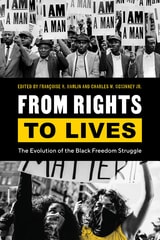
From Rights to Lives
The Evolution of the Black Freedom StruggleEdited by Françoise N. Hamlin and Charles W. McKinney Jr.
Vanderbilt University Press, 2024
From Rights to Lives critically engages the dynamic relationship between these two moments of liberatory possibility on the Black Freedom Struggle timeline. The book’s contributors explore what we can learn when we place these moments of struggle in dialogue with each other. They grapple with how our understanding of the postwar moment shapes our analysis of #BLM and wherein lie the discontinuities, in order to glean lessons for future moments of insurgency.

From Santa Anna to Selena
Notable Mexicanos and Tejanos in Texas History since 1821Harriett Denise Joseph
University of North Texas Press, 2018

From Scratch
Writings in Music TheoryJames TenneyEdited by Larry Polansky, Lauren Pratt, Robert Wannamaker, and Michael Winter
University of Illinois Press, 2019
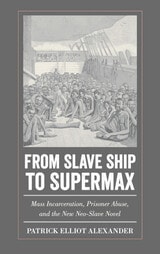
From Slave Ship to Supermax
Mass Incarceration, Prisoner Abuse, and the New Neo-Slave NovelPatrick Elliot Alexander
Temple University Press, 2017
In his cogent and groundbreaking book, From Slave Ship to Supermax, Patrick Elliot Alexander argues that the disciplinary logic and violence of slavery haunt depictions of the contemporary U.S. prison in late twentieth-century Black fiction. Alexander links representations of prison life in James Baldwin’s novel If Beale Street Could Talk to his engagements with imprisoned intellectuals like George Jackson, who exposed historical continuities between slavery and mass incarceration. Likewise, Alexander reveals how Toni Morrison’s Beloved was informed by Angela Y. Davis’s jail writings on slavery-reminiscent practices in contemporary women’s facilities. Alexander also examines recurring associations between slave ships and prisons in Charles Johnson’s Middle Passage, and connects slavery’s logic of racialized premature death to scenes of death row imprisonment in Ernest Gaines’ A Lesson Before Dying.
Alexander ultimately makes the case that contemporary Black novelists depict racial terror as a centuries-spanning social control practice that structured carceral life on slave ships and slave plantations—and that mass-produces prisoners and prisoner abuse in post–Civil Rights America. These authors expand free society’s view of torment confronted and combated in the prison industrial complex, where discriminatory laws and the institutionalization of secrecy have reinstated slavery’s system of dehumanization.
From Solidarity to Martial Law
The Polish Crisis of 1980–1981The National Security Archive Paczkowski
Central European University Press, 2007
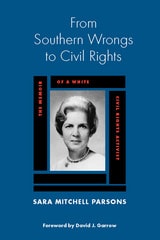
From Southern Wrongs to Civil Rights
The Memoir of a White Civil Rights ActivistSara Mitchell Parsons
University of Alabama Press, 2009
This first-hand account tells the story of turbulent civil rights era Atlanta through the eyes of a white upper-class woman who became an outspoken advocate for integration and racial equality
As a privileged white woman who grew up in segregated Atlanta, Sara Mitchell Parsons was an unlikely candidate to become a civil rights agitator. After all, her only contacts with blacks were with those who helped raise her and those who later helped raise her children. As a young woman, she followed the conventional path expected of her, becoming the dutiful wife of a conservative husband, going to the country club, and playing bridge. But unlike many of her peers, Parsons harbored an increasing uneasiness about racial segregation.In a memoir that includes candid diary excerpts, Parsons chronicles her moral awakening. With little support from her husband, she runs for the Atlanta Board of Education on a quietly integrationist platform and, once elected, becomes increasingly outspoken about inequitable school conditions and the slow pace of integration. Her activities bring her into contact with such civil rights leaders as Martin Luther King, Jr., and his wife, Coretta Scott King. For a time, she leads a dual existence, sometimes traveling the great psychic distance from an NAACP meeting on Auburn Avenue to an all-white party in upscale Buckhead. She eventually drops her ladies' clubs, and her deepening involvement in the civil rights movement costs Parsons many friends as well as her first marriage.
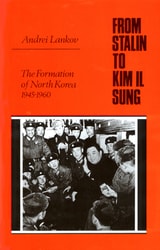
From Stalin to Kim Il Sung
The Formation of North Korea, 1945-1960Lankov, Andrei
Rutgers University Press, 2002
To understand how North Korea has survived as the worlds last Stalinist regime despite international isolationand at enormous human costs to its peopleone must look at how its political system was created. The countrys foundations were laid in the late 1940s and 1950s as a result of interaction between the Soviet Stalinist model, imposed from outside, and local traditions.
Andrei Lankov traces the formation of the North Korean state and the early years of Kim Il Sungs rule, when the future "Great Leader" and his entourage were consolidating their power base. Surveying the situation in North Korea after 1945, Lankov explores the internal composition of the ruling elite, the role of the Soviets, and the uneasy relations between various political groups. He also focuses on how in 1956 Kim Il Sung defeated the only known attempt to oust him and thereby established absolute personal rule beyond either Soviet or Chinese control.
The book is based on previously secret Soviet documents from Russian archives, as well as interviews with Russian and Korean participants.
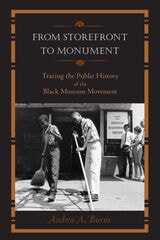
From Storefront to Monument
Tracing the Public History of the Black Museum MovementAndrea A. Burns
University of Massachusetts Press, 2013
Winner of the 2015 National Council on Public History Book Award
Today well over two hundred museums focusing on African American history and culture can be found throughout the United States and Canada. Many of these institutions trace their roots to the 1960s and 1970s, when the struggle for racial equality inspired a movement within the black community to make the history and culture of African America more “public.”
This book tells the story of four of these groundbreaking museums: the DuSable Museum of African American History in Chicago (founded in 1961); the International Afro-American Museum in Detroit (1965); the Anacostia Neighborhood Museum in Washington, D.C. (1967); and the African American Museum of Philadelphia (1976). Andrea A. Burns shows how the founders of these institutions, many of whom had ties to the Black Power movement, sought to provide African Americans with a meaningful alternative to the misrepresentation or utter neglect of black history found in standard textbooks and most public history sites. Through the recovery and interpretation of artifacts, documents, and stories drawn from African American experience, they encouraged the embrace of a distinctly black identity and promoted new methods of interaction between the museum and the local community.
Over time, the black museum movement induced mainstream institutions to integrate African American history and culture into their own exhibits and educational programs. This often controversial process has culminated in the creation of a National Museum of African American History and Culture, now scheduled to open in the nation's capital in 2015.
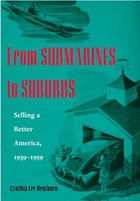
From Submarines to Suburbs
Selling a Better America, 1939–1959Cynthia Lee Henthorn
Ohio University Press, 2006
From Submarines to Suburbs surveys the development, strategy, and effect of these campaigns over a span of twenty pivotal years. Cynthia Lee Henthorn takes a close look at how pre-fabricated suburban houses, high-tech kitchens, and miracle products developed from war-related industries were promoted as the hygienic solutions for establishing this better America, one led by the captains of free enterprise.
As Henthorn demonstrates, wartime advertising and marketing strategies tying consumer prosperity to war were easily adapted in the Cold War era, when a symbiotic relationship between military standing and standards of living intensified in a culture dependent on defense spending. Were the efforts to engineer a better America successful? Using documentary evidence in the form of numerous advertisements, From Submarines to Suburbs stands as a significant contribution to understanding how today’s “better” America evolved.

From Torpedoes to Aviation
Washington Irving Chambers & Technological Innovation in the New Navy 1876 to 1913Stephen K. Stein
University of Alabama Press, 2007
The central figure in the modernization of the U.S. Navy.
The career of Washington Irving Chambers spans a formative period in the development of the United States Navy: He entered the Naval Academy in the doldrum years of obsolete, often rotting ships, and left after he had helped like-minded officers convince Congress and the public of the need to adopt a new naval strategy built around a fleet of technologically advanced battleships. He also laid the groundwork for naval aviation and the important role it would play in the modern navy.
This work covers Chambers’s early naval career, his work at the new Office of Naval Intelligence, his participation in the Greeley Relief Expedition, and a survey for the projected isthmian canal through Nicaragua, before becoming the key advocate for naval modernization. As such, Chambers worked as a pioneering torpedo designer, supervised construction of the Maine, modernized the New York Navy Yard, and became a member of the first permanent faculty at the Naval War College.
During his long career, Chambers not only designed torpedoes, but also several warships, including a prototype Dreadnought-style battleship and a host of small devices that ranged from torpedo guidance systems to the first catapult for launching airplanes from ships. At the close of his career, Chambers purchased the navy’s first aircraft and founded its air arm. Working with Glenn Curtiss, Chambers guided a coalition of aviation enthusiasts and pioneers who popularized naval aviation and demonstrated its capabilities. Chambers arranged the first take-off and landing of an airplane from a ship and other demonstrations of naval aviation. Combined with his tireless advocacy for modernization, these contributions secured a place in naval and aviation history for the innovator.
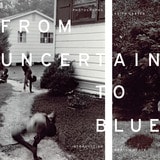
From Uncertain to Blue
By Keith Carter
University of Texas Press, 2011
"In the beginning, there was no real plan, just a road trip that became a journey." In the years 1986 and 1987, Keith Carter and his wife, Patricia, visited one hundred small Texas towns with intriguing names like Diddy Waw Diddy, Elysian Fields, and Poetry. He says, "I tried to make my working method simple and practical: one town, one photograph. I would take several rolls of film but select only one image to represent that dot on my now-tattered map. The titles of the photographs are the actual names of the small towns. . . ." Carter created a body of work that evoked the essence of small-town life for many people, including renowned playwright and fellow Texan, Horton Foote. In 1988, Carter published his one town/one picture collection in From Uncertain to Blue, a landmark book that won acclaim both nationally and internationally for the artistry, timelessness, and universal appeal of its images—and established Carter as one of America's most promising fine art photographers.
Now a quarter century after the book's publication, From Uncertain to Blue has been completely re-envisioned and includes a new essay in which Carter describes how the search for photographic subjects in small towns gradually evolved into his first significant work as an artist. He also offers additional insight into his creative process by including some of his original contact sheets. And Patricia Carter gives her own perspective on their journey in her amplified notes about many of the places they visited as they discovered the world of possibilities from Uncertain to Blue.
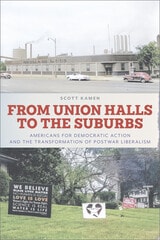
From Union Halls to the Suburbs
Americans for Democratic Action and the Transformation of Postwar LiberalismScott Kamen
University of Massachusetts Press, 2023
For decades, Americans for Democratic Action (ADA) exerted an outsized pull on the political stage. Formed in 1947 by anticommunist liberals such as economist John Kenneth Galbraith and historian Arthur Schlesinger Jr., the ADA established itself as the most prominent liberal organization in the United States for more than a quarter century. Shaped by the ADA, the New Politics movement upended Democratic Party politics with its challenge to the Vietnam War, demands for redistributive economic policies, and development of a far-reaching politics of race, gender, and sexuality.
By bringing the ADA and its influential public intellectuals into the story of the New Politics movement, Scott Kamen reveals how American liberalism shifted away from the working-class concerns of the New Deal era and began to cater to the interests of a new, suburban professional class. By the 1980s, many Democratic politicians, activists, and voters had embraced a neoliberal ideology that coupled socially liberal attitudes with market-based solutions, eschewing an older progressive politics steeped in labor issues.

From Utopia to Apocalypse
Science Fiction and the Politics of CatastrophePeter Y. Paik
University of Minnesota Press, 2010

From Walden Pond to Jurassic Park
Activism, Culture, and American StudiesPaul Lauter
Duke University Press, 2001
With anecdote peppered discussions ranging from specific literary texts and movies to the future of higher education and the efficacy of unions, From Walden Pond to Jurassic Park entertains even as it offers a twenty-first century account of how and why Americanists at home and abroad now do what they do. Drawing on his forty-five years of teaching and research as well as his experience as a political activist and a cultural radical, Lauter shows how a multifaceted increase in the United States’ global dominion has infused a particular political urgency into American Studies. With its military and economic influence, its cultural and linguistic reach, the United States is—for better or for worse—too formidable and potent not to be understood clearly and critically.
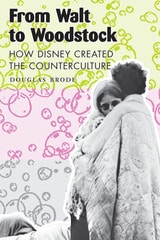
From Walt to Woodstock
How Disney Created the CountercultureBy Douglas Brode
University of Texas Press, 2004
With his thumbprint on the most ubiquitous films of childhood, Walt Disney is widely considered to be the most conventional of all major American moviemakers. The adjective "Disneyfied" has become shorthand for a creative work that has abandoned any controversial or substantial content to find commercial success.
But does Disney deserve that reputation? Douglas Brode overturns the idea of Disney as a middlebrow filmmaker by detailing how Disney movies played a key role in transforming children of the Eisenhower era into the radical youth of the Age of Aquarius. Using close readings of Disney projects, Brode shows that Disney's films were frequently ahead of their time thematically. Long before the cultural tumult of the sixties, Disney films preached pacifism, introduced a generation to the notion of feminism, offered the screen's first drug-trip imagery, encouraged young people to become runaways, insisted on the need for integration, advanced the notion of a sexual revolution, created the concept of multiculturalism, called for a return to nature, nourished the cult of the righteous outlaw, justified violent radicalism in defense of individual rights, argued in favor of communal living, and encouraged antiauthoritarian attitudes. Brode argues that Disney, more than any other influence in popular culture, should be considered the primary creator of the sixties counterculture—a reality that couldn't be further from his "conventional" reputation.

From War to Genocide
Criminal Politics in Rwanda, 1990–1994André Guichaoua, Translated by Don E. Webster, Foreword by Scott Straus
University of Wisconsin Press, 2017
Guichaoua draws on years of meticulous research to describe and analyze this history. He emphasizes that the same virulent controversies that fueled the conflict have often influenced judicial, political, and diplomatic responses to it, reproducing the partisan cleavages between the former belligerents and implicating state actors, international institutions, academics, and the media. Guichaoua insists upon the imperative of absolute intellectual independence in pursuing the truth about some of the gravest human rights violations of the twentieth century.
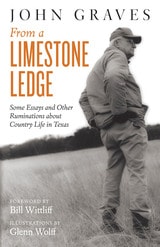
From a Limestone Ledge
Some Essays and Other Ruminations about Country Life in TexasBy John Graves<br>Foreword by Bill Wittliff<br>Illustrations by Glenn Wolff
University of Texas Press, 2016
“Another fine, reflective, anecdotal look at rural Texas.” —New Yorker
“Graves writes eloquently about a countryman’s concerns. There's not a false note in the book.” —Boston Globe
“Like the unmortared stone fences of Graves’s native hill country, From a Limestone Ledge is constructed of bits and pieces never designed to fit together, yet made to achieve a unity that is more enduring than the sum of its individual parts by the hands of a master craftsman.” —Southwestern Historical Quarterly
“The beauty of his work endures, and there is a greater pride in Texans’ hearts for their home, I think, than there would be if he hadn’t written the books he did.” —Rick Bass, Garden & Gun
“In describing the particulars of his surroundings, Graves often was describing the world in microcosm and the place and plight of humankind in it.” —Bryan Woolley, Dallas Morning News
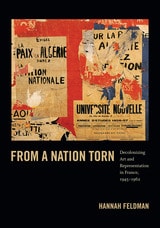
From a Nation Torn
Decolonizing Art and Representation in France, 1945-1962Hannah Feldman
Duke University Press, 2014

From that Place and Time
A Memoir, 1938-1947Dawidowicz, Lucy
Rutgers University Press, 2008
Nancy Sinkoff's new introduction explores the historical forces, particularly the dynamic world of secular Yiddish culture, which shaped Dawidowicz's decision to journey to Poland and her reassessment of those forces in the last years of her life.
From the Berlin Journal
Max Frisch
Seagull Books, 2017
Max Frisch (1911–91) was a giant of twentieth-century German literature. When Frisch moved into a new apartment in Berlin’s Sarrazinstrasse, he began keeping a journal, which he came to call the Berlin Journal. A few years later, he emphasized in an interview that this was by no means a “scribbling book,” but rather a book “fully composed.” The journal is one of the great treasures of Frisch’s literary estate, but the author imposed a retention period of twenty years from the date of his death because of the “private things” he noted in it. From the Berlin Journal now marks the first publication of excerpts from Frisch’s journal. Here, the unmistakable Frisch is back, full of doubt, with no illusions, and with a playfully sharp eye for the world.
From the Berlin Journal pulls from the years 1946–49 and 1966–71. Observations about the writer’s everyday life stand alongside narrative and essayistic texts, as well as finely-drawn portraits of colleagues like Günter Grass, Uwe Johnson, Wolf Biermann, and Christa Wolf, among others. Its foremost quality, though, is the extraordinary acuity with which Frisch observed political and social conditions in East Germany while living in West Berlin.

From the Blue Windows
Recollections of Life in Queenstown, Singapore, in the 1960s and 1970sTan Kok Yang
National University of Singapore Press, 2013
From the Blue Windows is a collection of Tan Kok Yang's memories of growing up in Queenstown back when the tallest residential building there was fourteen storeys, the Alexandra Canal flooded regularly, and wayang shows were a regular feature on Mei Ling Street. He stayed in Princess Estate, an area that was colloquially known as "the Blue Windows" because of its unique blue glass louvred windows.
With nostalgia and a sense of loss, this memoir is a personal tribute to and celebration of Queenstown and a simple but fulfilling way of life that has all but vanished from modern Singapore.
From the Center of Tradition
Critical Perspective on Linda HoganBarbara J. Cook
University Press of Colorado, 2003

From the Civil War to the Apocalypse
Postmodern History and American FictionTimothy Parrish
University of Massachusetts Press, 2008
In addressing the postmodernist claim that history works no differently than fiction, Timothy Parrish rejects the implication that history is dead or hopelessly relativistic. Rather, he shows how the best postmodern novelists compel their readers to accept their narratives as true in the same way that historians expect their readers to accept their narratives as true. These novelists write history as a form of fiction.
If the great pre-modernist American historians are Francis Parkman, George Bancroft, and Henry Adams, who are the great modernist or postmodernist historians? In the twentieth century, Parrish argues, the most powerful works of American history were written by William Faulkner, Toni Morrison, Thomas Pynchon, Don DeLillo, Joan Didion, and Cormac McCarthy. What survives a reading of these novels is the sense that writers otherwise identified as multicultural or postmodern share the view that nothing matters more than history and what one believes its possibilities to be. In other words, Parrish concludes, history, not identity, is the ground of postmodern American fiction.
From the Fiery Furnace to the Promise Land
Stories of a Tennessee Reconstruction CommunitySerina K. Gilbert and Learotha Williams Jr.
Vanderbilt University Press, 2025
In time the community encompassed approximately 1,000 acres with more than 50 homes, several stores, three churches, and an elementary school. But by the mid‑twentieth century, the community had dwindled to just a handful of families. Now all that remains physically is a church and the old school building. But in the hearts of the descendants of those families, Promise Land remains a vital and thriving community of friends, family, and, albeit virtual, neighbors who continue to support each other.
This is the story of this town told through the memories of the people who lived there. Serina Gilbert grew up in the community and is now one of the revered storytellers and story‑keepers of Promise Land. Along with historian Learotha Williams, she is sharing the history of a community that thrived and continues to thrive in the face of almost insurmountable obstacles.
From the Grassroots to the Supreme Court
Brown v. Board of Education and American DemocracyPeter F. Lau, ed.
Duke University Press, 2004
The contributors illuminate the breadth of developments that led to Brown, from the parallel struggles for social justice among African Americans in the South and Mexican, Asian, and Native Americans in the West during the late nineteenth century to the political and legal strategies implemented by the National Association for the Advancement of Colored People (naacp) in the twentieth century. Describing the decision’s impact on local communities, essayists explore the conflict among African Americans over the implementation of Brown in Atlanta’s public schools as well as understandings of the ruling and its relevance among Puerto Rican migrants in New York City. Assessing the legacy of Brown today, contributors analyze its influence on contemporary law, African American thought, and educational opportunities for minority children.
Contributors
Tomiko Brown-Nagin
Davison M. Douglas
Raymond Gavins
Laurie B. Green
Christina Greene
Blair L. M. Kelley
Michael J. Klarman
Peter F. Lau
Madeleine E. Lopez
Waldo E. Martin Jr.
Vicki L. Ruiz
Christopher Schmidt
Larissa M. Smith
Patricia Sullivan
Kara Miles Turner
Mark V. Tushnet
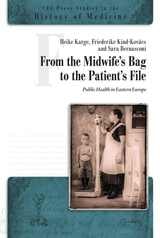
From the Midwife's Bag to the Patient's File
Public Health in Eastern and Southeastern EuropeSara Bernasconi
Central European University Press, 2018
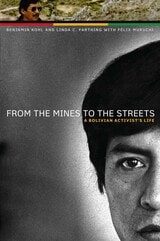
From the Mines to the Streets
A Bolivian Activist’s LifeBy Benjamin Kohl and Linda C. Farthing, with Félix Muruchi
University of Texas Press, 2011
From the Mines to the Streets draws on the life of Félix Muruchi to depict the greater forces at play in Bolivia and elsewhere in South America during the last half of the twentieth century. It traces Félix from his birth in an indigenous family in 1946, just after the abolition of bonded labor, through the next sixty years of Bolivia's turbulent history. As a teenager, Félix followed his father into the tin mines before serving a compulsory year in the military, during which he witnessed the 1964 coup d'état that plunged the country into eighteen years of military rule. He returned to work in the mines, where he quickly rose to become a union leader. The reward for his activism was imprisonment, torture, and exile. After he came home, he participated actively in the struggles against neoliberal governments, which led in 2006—the year of his sixtieth birthday—to the inauguration of Evo Morales as Bolivia's first indigenous president.
The authors weave Muruchi's compelling recollections with contextual commentary that elucidates Bolivian history. The combination of an unforgettable life story and in-depth text boxes makes this a gripping, effective account, destined to become a classic sourcebook.

From the Modernist Annex
American Women Writers in Museums and LibrariesKarin Roffman
University of Alabama Press, 2010

From the Uyu River to Omaha Beach and Beyond
The Life of General Willard G. WymanJed Wyman
University of Missouri Press, 2027
While many scholarly works explore the lives and careers of the United States’ senior WWII commanders—Eisenhower, Bradley, Patton, and MacArthur in particular—the stories of the brigadier and major generals who led at the division and corps level have not received the same degree of focus. Jed Wyman gives these general officers their due by telling the story of his grandfather, General Willard G. Wyman in From the Uyu River to Omaha Beach and Beyond: The Life of General Willard G. Wyman. Although General Wyman is best known for his decisive action on Omaha Beach as assistant division commander of the First Infantry Division, for which he won the Distinguished Service Cross, his career both before and after D-Day is as varied and fascinating as those of his more familiar colleagues.
Wyman’s WWII story is exceptional in its range both geographical—he was one of only a handful of general officers to serve in both the Asian/Pacific and European Theaters—and in rank, as he rose from colonel to major general and division commander over the course of the war. The array of important individuals he encountered and worked with during this demanding time is equally exceptional, including such military luminaries as Joseph Stilwell, Omar Bradley, George Patton, Dwight Eisenhower. There were political encounters as well, the most significant with Chinese Nationalist leader Chiang Kai-shek in Burma, and encounters with prominent journalists and entertainers. None of these people meant as much, however, to Wyman as the GIs under his command, for whom he worked tirelessly to ensure a safe and free return to a normal life.
While many questions about Wyman remain unanswered, the author brings him to life as a reliable, efficient combat commander unhindered by the extreme caution associated with General Lucas at Anzio, free from the impetuous nature exhibited by General Patton with the Brolo landing and Hammelburg raid, and lacking in the vainglorious publicity-seeking of some other prominent generals. More broadly, From the Uyu River to Omaha Beach and Beyond conveys the energy, stamina, presence of mind, critical thinking skills, and rapid decision-making of a number of the United States’ lesser-known brigadier and major generals.
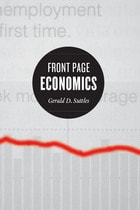
Front Page Economics
Gerald D. Suttles, with Mark D. Jacobs
University of Chicago Press, 2010
In an age when pundits constantly decry overt political bias in the media, we have naturally become skeptical of the news. But the bluntness of such critiques masks the highly sophisticated ways in which the media frame important stories. In Front Page Economics, Gerald Suttles delves deep into the archives to examine coverage of two major economic crashes—in 1929 and 1987—in order to systematically break down the way newspapers normalize crises.
Poring over the articles generated by the crashes—as well as the people in them, the writers who wrote them, and the cartoons that ran alongside them—Suttles uncovers dramatic changes between the ways the first and second crashes were reported. In the intervening half-century, an entire new economic language had arisen and the practice of business journalism had been completely altered. Both of these transformations, Suttles demonstrates, allowed journalists to describe the 1987 crash in a vocabulary that was normal and familiar to readers, rendering it routine.
A subtle and probing look at how ideologies are packaged and transmitted to the casual newspaper reader, Front Page Economics brims with important insights that shed light on our own economically tumultuous times.
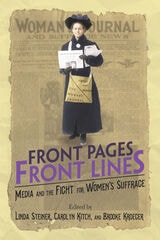
Front Pages, Front Lines
Media and the Fight for Women's SuffrageEdited by Linda Steiner, Carolyn Kitch, and Brooke Kroeger
University of Illinois Press, 2020
This collection offers new research on media issues related to the women's suffrage movement. Contributors incorporate media theory, historiography, and innovative approaches to social movements while discussing the vexed relationship between the media and debates over suffrage. Aiming to correct past oversights, the essays explore overlooked topics such as coverage by African American and Mormon-oriented media, media portrayals of black women in the movement, suffragist rhetorical strategies, elites within the movement, suffrage as part of broader campaigns for social transformation, and the influence views of white masculinity had on press coverage.
Contributors: Maurine H. Beasley, Sherilyn Cox Bennion, Jinx C. Broussard, Teri Finneman, Kathy Roberts Forde, Linda M. Grasso, Carolyn Kitch, Brooke Kroeger, Linda J. Lumsden, Jane Marcellus, Jane Rhodes, Linda Steiner, and Robin Sundaramoorthy
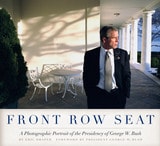
Front Row Seat
A Photographic Portrait of the Presidency of George W. BushBy Eric Draper
University of Texas Press, 2013
America’s forty-third president, George W. Bush, presided over eight of the most dramatic years in recent history, from the 9/11 attacks early in his administration to the worldwide economic crisis of 2008. By his side, recording every event from the momentous to the intimate, was his personal White House photographer, Eric Draper. From a collection of nearly one million photographs, Draper has selected more than one hundred images of President Bush that portray both the public figure and the private man.
Front Row Seat presents a compelling, behind-the-scenes view of the presidency of George W. Bush. Through Draper’s lens, we follow Bush through moments of crisis that called for strong leadership, such as 9/11; emotional meetings with troops in war zones, wounded soldiers at home, and Katrina survivors; and happy, relaxed times with his wife Laura, daughters Barbara and Jenna, and parents President George H. W. and Barbara Bush. We also see Bush at work within his inner circle of trusted advisors, including Vice President Richard Cheney, National Security Advisor and Secretary of State Condoleezza Rice, and Secretary of Defense Donald Rumsfeld.
Capturing moments that reveal the essence of the man, Front Row Seat is an irreplaceable portrait of George W. Bush.

Frontiers of Black Freedom
West Coast Internationalism and Multiracial Solidarity during the 1930sOwen Walsh
University of Illinois Press, 2027
Walsh follows Langston Hughes, Loren Miller, Juanita Harrison, and other figures as they sought freedom from Jim Crow via powerful alliances across racial and national boundaries. Through global travel and local activism, Black intellectuals connected with Mexican, Asian, and Indigenous populations, in ways that stimulated interracial community and radical imagination. Walsh uses Black Americans’ written and visual archives to trace their public and intimate encounters during a decade of crisis. This history illuminates the opportunities and the challenges of forging anti-racist solidarity beyond the nation-state.
Wide-ranging and revealing, Frontiers of Black Freedom highlights the West Coast’s place in global Black politics during the mid-twentieth century.
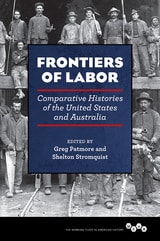
Frontiers of Labor
Comparative Histories of the United States and AustraliaEdited by Greg Patmore and Shelton Stromquist
University of Illinois Press, 2018
Greg Patmore and Shelton Stromquist curate innovative essays that use transnational and comparative analysis to explore the two nations’ differences. The contributors examine five major areas: World War I’s impact on labor and socialist movements; the history of coerced labor; patterns of ethnic and class identification; forms of working-class collective action; and the struggles related to trade union democracy and independent working-class politics. Throughout, many essays highlight how hard-won transnational ties allowed Australians and Americans to influence each other’s trade union and political cultures.
Contributors: Robin Archer, Nikola Balnave, James R. Barrett, Bradley Bowden, Verity Burgmann, Robert Cherny, Peter Clayworth, Tom Goyens, Dianne Hall, Benjamin Huf, Jennie Jeppesen, Marjorie A. Jerrard, Jeffrey A. Johnson, Diane Kirkby, Elizabeth Malcolm, Patrick O’Leary, Greg Patmore, Scott Stephenson, Peta Stevenson-Clarke, Shelton Stromquist, and Nathan Wise

Frontiers of Screen History
Imagining European Borders in Cinema, 1945-2010Edited by Raita Merivirta, Kimmo Ahonen, Heta Mulari, and Rami Mähkä
Intellect Books, 2013
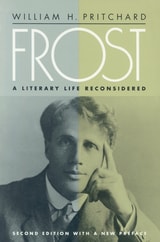
Frost
A Literary Life ReconsideredWilliam H. Pritchard
University of Massachusetts Press, 1993
Although this book does not attempt to revive the image of Frost as a benign, white-haired sage, it does present him in a strikingly different light than did Lawrence Thompson’s controversial three-volume biography. William H. Pritchard sees Frost whole, demonstrating the complex interaction between the poet’s life and work. Based not only on the poetry, but on letters, notebooks, recorded interviews, and public appearances as well, Frost: A Literary Life Reconsidered examines the most interesting and significant aspects of Frost’s life and poetry and offers an attentive, sensitive portrait of an artist whose critical reputation continues to grow.

Frozen
Mary Casanova
University of Minnesota Press, 2013
Sixteen-year-old Sadie Rose hasn’t said a word in eleven years—ever since the day she was found lying in a snowbank during a howling storm. Like her voice, her memories of her mother and what happened that night were frozen.
Set during the roaring 1920s in the beautiful, wild area on Rainy Lake where Minnesota meets Canada, Frozen tells the remarkable story of Sadie Rose, whose mother died under strange circumstances the same night that Sadie Rose was found, unable to speak, in a snowbank. Sadie Rose doesn’t know her last name and has only fleeting memories of her mother—and the conflicting knowledge that her mother had worked in a brothel. Taken in as a foster child by a corrupt senator, Sadie Rose spends every summer along the shores of Rainy Lake, where her silence is both a prison and a sanctuary.
One day, Sadie Rose stumbles on a half dozen faded, scandalous photographs—pictures, she realizes, of her mother. They release a flood of puzzling memories, and these wisps of the past send her at last into the heart of her own life’s great mystery: who was her mother, and how did she die? Why did her mother work in a brothel—did she have a choice? What really happened that night when a five-year-old girl was found shivering in a snowbank, her voice and identity abruptly shattered?
Sadie Rose’s search for her personal truth is laid against a swirling historical drama—a time of prohibition and women winning the right to vote, political corruption, and a fevered fight over the area’s wilderness between a charismatic, unyielding, powerful industrialist and a quiet man battling to save the wide, wild forests and waters of northernmost Minnesota. Frozen is a suspenseful, moving testimonial to the haves and the have-nots, to the power of family and memory, and to the extraordinary strength of a young woman who has lost her voice in nearly every way—but is utterly determined to find it again.
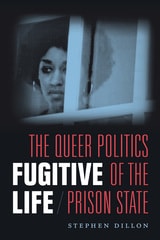
Fugitive Life
The Queer Politics of the Prison StateStephen Dillon
Duke University Press, 2018
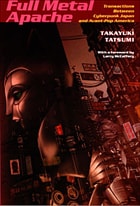
Full Metal Apache
Transactions Between Cyberpunk Japan and Avant-Pop AmericaTakayuki Tatsumi
Duke University Press, 2006
Full Metal Apache introduces English-language readers to a vast array of Japanese writers and performers and considers their work in relation to the output of William Gibson, Thomas Pynchon, H. G. Wells, Jack London, J. G. Ballard, and other Westerners. Tatsumi moves from the poetics of metafiction to the complex career of Madame Butterfly stories and from the role of the Anglo-American Lafcadio Hearn in promoting Japanese folklore within Japan during the nineteenth century to the Japanese monster Godzilla as an embodiment of both Japanese and Western ideas about the Other. Along the way, Tatsumi develops original arguments about the self-fashioning of “Japanoids” in the globalist age, the philosophy of “creative masochism” inherent within postwar Japanese culture, and the psychology of “Mikadophilia” indispensable for the construction of a cyborg identity. Tatsumi’s exploration of the interplay between Japanese and American cultural productions is as electric, ebullient, and provocative as the texts and performances he analyzes.