Results by title
482 books match the query '17th Century' and 14 start with g
GENDER AND PETTY VIOLENCE IN LONDON, 1680-1720
JENNINE HURL-EAMON
The Ohio State University Press, 2005
Looking at a heretofore overlooked set of archival records of London in the late 17th and early 18th centuries, Hurl-Eamon reassesses the impact of gender on petty crime and its prosecution during the period. This book offers a new approach to the growing body of work on the history of violence in past societies. By focusing upon low-cost prosecutions in minor courts, Hurl-Eamon uncovers thousands of assaults on the streets of early modern London. Previous histories stressing the masculine nature of past violence are questioned here: women perpetrated one-third of all assaults. In looking at more mundane altercations rather than the homicidal attacks studied in previous histories, the book investigates violence as a physical language, with some forms that were subject to gender constraints, but many of which were available to both men and women. Quantitative analyses of various circumstances surrounding the assaults—including initial causes, weapons used, and injuries sustained—outline the patterns of violence as a language.
Hurl-Eamon also stresses the importance of focusing on the prosecutorial voice. In bringing the court’s attention to petty attacks, thousands of early modern men and women should be seen as agents rather than victims. This view is especially interesting in the context of domestic violence, where hundreds of wives and servants prosecuted patriarchs for assault, and in the Mohock Scare of 1712, where London’s populace rose up in opposition to aristocratic violence. The discussion is informed by a detailed knowledge of assault laws and the rules governing justices of the peace.
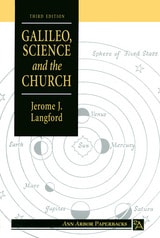
Galileo, Science and the Church
Jerome J. Langford
University of Michigan Press, 1992
Gaming the Stage
Playable Media and the Rise of English Commercial TheaterGina Bloom
University of Michigan Press, 2018
Gaming the Stage also introduces a new archive for game studies: scenes of onstage gaming, which appear at climactic moments in dramatic literature. Bloom reveals plays to be systems of information for theater spectators: games of withholding, divulging, speculating, and wagering on knowledge. Her book breaks new ground through examinations of plays such as The Tempest, Arden of Faversham, A Woman Killed with Kindness, and A Game at Chess; the histories of familiar games such as cards, backgammon, and chess; less familiar ones, like Game of the Goose; and even a mixed-reality theater videogame.
Gehennical Fire
The Lives of George Starkey, an American Alchemist in the Scientific RevolutionWilliam R. Newman
University of Chicago Press, 2002
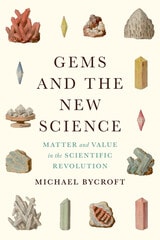
Gems and the New Science
Matter and Value in the Scientific RevolutionMichael Bycroft
University of Chicago Press, 2026
In Gems and the New Science, Michael Bycroft argues that gems were connected to major developments in the “new science” between the sixteenth and nineteenth centuries. As he explains, precious and semiprecious stones were at the center of dramatic shifts in natural knowledge in early modern Europe. They were used to investigate luminescence, electricity, combustion, chemical composition, and more. They were collected by naturalists; measured by mathematicians; and rubbed, burned, and dissolved by experimental philosophers. This led to the demise of the traditional way of classifying gems—which grouped them by transparency, color, and locality—and the turn to density, refraction, chemistry, and crystallography as more reliable guides for sorting these substances.
The science of gems shows that material evaluation was as important as material production in the history of science. It also shows the value of seeing science as the product of the interaction between different material worlds. The book begins by bringing these insights to bear on five themes of the Scientific Revolution. Each of the subsequent chapters deals with a major episode in early modern science, from the expansion of natural history in the sixteenth century to the emergence of applied science early in the nineteenth century. This important work is not only the first book-length history of the science of gems but also a fresh interpretation of the Scientific Revolution and an argument for using a new form of materialism to understand the evolution of science.
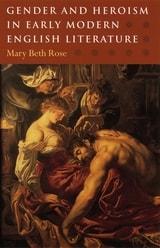
Gender and Heroism in Early Modern English Literature
Mary Beth Rose
University of Chicago Press, 2001
Interweaving discourses of gender, Rose explores ways in which this heroics of endurance became the dominant model. She examines the glamorous, failed destinies of heroes in plays by Shakespeare, Jonson, and Marlowe; Elizabeth I's creation of a heroic identity in her public speeches; the autobiographies of four ordinary women thrust into the public sphere by civil war; and the seduction of heroes into slavery in works by Milton, Aphra Behn, and Mary Astell. Ultimately, her study demonstrates the importance of the female in the creation of modern heroism, while offering a critique of both idealized action and suffering.
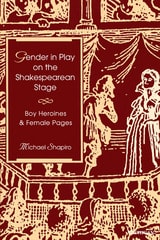
Gender in Play on the Shakespearean Stage
Boy Heroines and Female PagesMichael Shapiro
University of Michigan Press, 1996
Shapiro's study centers on the five plays in which Shakespeare employed the figure of the "female page": The Two Gentlemen of Verona, The Merchant of Venice, As You Like It, Twelfth Night, and Cymbeline. Combining theater and social history, Shapiro locates Shakespeare's work in relation to controversies over gender roles and cross-dressing in Elizabethan England.
The popularity of the "female page" is examined as a playful literary and theatrical way of confronting, avoiding, or merely exploiting issues such as the place of women in a patriarchal culture and the representation of women on stage. Looking beyond and behind the stage for the cultural anxieties that found their way into Shakespearean drama, Shapiro considers such cases as cross-dressing women in London being punished as prostitutes and the alleged homoerotic practices of the apprentices who played female roles in adult companies. Shapiro also traces other Elizabethan dramatists' varied uses of the cross-dressing motif, especially as they were influenced by Shakespeare's innovations.
"Shapiro's engaging study is distinguished by the scope of interrelated topics it draws together and the balance of critical perspectives it brings to bear on them." --Choice
Michael Shapiro is Professor of English, University of Illinois, Urbana.

Gerrard Winstanley
The Digger's Life and LegacyJohn Gurney
Pluto Press, 2012
John Gurney reveals the hidden history of Winstanley and his movement. As part of the radical ferment which swept England at the time of the civil war, Winstanley led the Diggers in taking over land and running it as 'a common treasury for all' – provoking violent opposition from landowners. Gurney also guides us through Winstanley's writings, which are among the most remarkable prose writings of his age.
Gerrard Winstanley: The Digger's Life and Legacy is a must read for students of English history and all those seeking to re-claim the commons today.
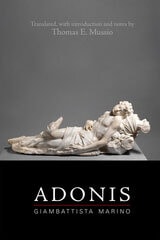
Giambattista Marino
AdonisThomas E. Mussio
Arizona Center for Medieval and Renaissance Studies, 2019
Translated, with introduction and notes by Thomas E. Mussio.
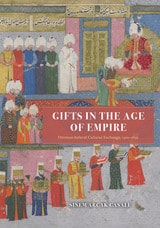
Gifts in the Age of Empire
Ottoman-Safavid Cultural Exchange, 1500–1639Sinem Arcak Casale
University of Chicago Press, 2023
When the Safavid dynasty, founded in 1501, built a state that championed Iranian identity and Twelver Shi'ism, it prompted the more established Ottoman Empire to align itself definitively with Sunni legalism. The political, religious, and military conflicts that arose have since been widely studied, but little attention has been paid to their diplomatic relationship. Sinem Arcak Casale here sets out to explore these two major Muslim empires through a surprising lens: gifts. Countless treasures—such as intricate carpets, gilded silver cups, and ivory-tusk knives—flowed from the Safavid to the Ottoman Empire throughout the sixteenth century. While only a handful now survive, records of these gifts exist in court chronicles, treasury records, poems, epistolary documents, ambassadorial reports, and travel narratives. Tracing this elaborate archive, Casale treats gifts as representative of the complicated Ottoman-Safavid coexistence, demonstrating how their rivalry was shaped as much by culture and aesthetics as it was by religious or military conflict. Gifts in the Age of Empire explores how gifts were no mere accessories to diplomacy but functioned as a mechanism of competitive interaction between these early modern Muslim courts.

Global Goods and the Country House
Comparative Perspectives, 1650–1800Edited by Jon Stobart
University College London, 2023
Global goods were central to the material culture of eighteenth-century country houses. Across Europe, mahogany furniture, Chinese wallpapers, and Indian textiles formed the backdrop to genteel practices of drinking sweetened coffee, tea, and chocolate from Chinese porcelain. They tied these houses and their wealthy owners into global systems of supply and the processes of colonialism and empire.
Global Goods and the Country House builds on these narratives and then challenges them by decentering our perspective. It offers a comparative framework that explores the definition, ownership, and meaning of global goods outside the usual context of European imperial powers. What were global goods and what did they do for and mean to wealthy landowners in places at the “periphery” of Europe (Sweden and Wallachia), in the British colonies of North America and the Caribbean, or in the extra-colonial context (Japan or Rajasthan)? By placing these goods in their specific material context—from the English country house to the princely palaces of Rajasthan—we gain a better understanding of their use and meaning and of their role in linking the global and the local.
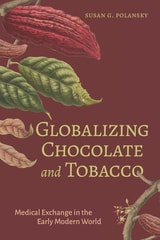
Globalizing Chocolate and Tobacco
Medical Exchange in the Early Modern WorldSusan G. Polansky
Bucknell University Press, 2026
This groundbreaking volume explores two early and opposing Spanish medical perspectives on chocolate and other New World substances. In the early 1600s, doctors Bartolomé Marradón and Antonio Colmenero de Ledesma returned from travels to the Americas with starkly different views: Marradón cautioned against tobacco and offered only limited approval of chocolate, while Colmenero vigorously defended chocolate’s health benefits. Their writings, translated and circulated across Europe, helped transform chocolate from a medicinal drink into a global commodity. Featuring the first bilingual edition of Marradón’s Dialogue (1618)—in full Spanish and English—and a new bilingual presentation of Colmenero’s influential Curious Treatise (1631), this book provides rare insight into early modern medical thought, cultural exchange, and the globalization of taste. Essential for readers of food history, early modern medicine, and transatlantic interchange, it uniquely reveals how debates over health, culture, and commerce brewed in a cup of chocolate.
Published by Bucknell University Press. Distributed worldwide by Rutgers University Press.
God Owes Us Nothing
A Brief Remark on Pascal's Religion and on the Spirit of JansenismLeszek Kolakowski
University of Chicago Press, 1995
"Several books a year wrestle with that hoary conundrum, but few so dazzlingly as the Polish philosopher's latest."—Carlin Romano, Washington Post Book World
"Kolakowski's fascinating book and its debatable thesis raise intriguing historical and theological questions well worth pursuing."—Stephen J. Duffy, Theological Studies
"Kolakowski's elegant meditation is a masterpiece of cultural and religious criticism."—Henry Carrigan, Cleveland Plain Dealer
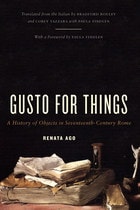
Gusto for Things
A History of Objects in Seventeenth-Century RomeRenata Ago
University of Chicago Press, 2013