Results by title
805 books match the query '18th Century' and 20 start with g

GENDER AND PETTY VIOLENCE IN LONDON, 1680-1720
JENNINE HURL-EAMON
The Ohio State University Press, 2005
Looking at a heretofore overlooked set of archival records of London in the late 17th and early 18th centuries, Hurl-Eamon reassesses the impact of gender on petty crime and its prosecution during the period. This book offers a new approach to the growing body of work on the history of violence in past societies. By focusing upon low-cost prosecutions in minor courts, Hurl-Eamon uncovers thousands of assaults on the streets of early modern London. Previous histories stressing the masculine nature of past violence are questioned here: women perpetrated one-third of all assaults. In looking at more mundane altercations rather than the homicidal attacks studied in previous histories, the book investigates violence as a physical language, with some forms that were subject to gender constraints, but many of which were available to both men and women. Quantitative analyses of various circumstances surrounding the assaults—including initial causes, weapons used, and injuries sustained—outline the patterns of violence as a language.
Hurl-Eamon also stresses the importance of focusing on the prosecutorial voice. In bringing the court’s attention to petty attacks, thousands of early modern men and women should be seen as agents rather than victims. This view is especially interesting in the context of domestic violence, where hundreds of wives and servants prosecuted patriarchs for assault, and in the Mohock Scare of 1712, where London’s populace rose up in opposition to aristocratic violence. The discussion is informed by a detailed knowledge of assault laws and the rules governing justices of the peace.
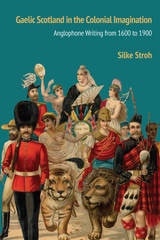
Gaelic Scotland in the Colonial Imagination
Anglophone Writing from 1600 to 1900Silke Stroh
Northwestern University Press, 2017
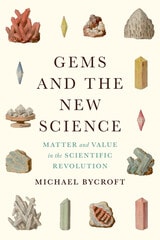
Gems and the New Science
Matter and Value in the Scientific RevolutionMichael Bycroft
University of Chicago Press, 2026
In Gems and the New Science, Michael Bycroft argues that gems were connected to major developments in the “new science” between the sixteenth and nineteenth centuries. As he explains, precious and semiprecious stones were at the center of dramatic shifts in natural knowledge in early modern Europe. They were used to investigate luminescence, electricity, combustion, chemical composition, and more. They were collected by naturalists; measured by mathematicians; and rubbed, burned, and dissolved by experimental philosophers. This led to the demise of the traditional way of classifying gems—which grouped them by transparency, color, and locality—and the turn to density, refraction, chemistry, and crystallography as more reliable guides for sorting these substances.
The science of gems shows that material evaluation was as important as material production in the history of science. It also shows the value of seeing science as the product of the interaction between different material worlds. The book begins by bringing these insights to bear on five themes of the Scientific Revolution. Each of the subsequent chapters deals with a major episode in early modern science, from the expansion of natural history in the sixteenth century to the emergence of applied science early in the nineteenth century. This important work is not only the first book-length history of the science of gems but also a fresh interpretation of the Scientific Revolution and an argument for using a new form of materialism to understand the evolution of science.
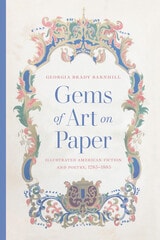
Gems of Art on Paper
Illustrated American Fiction and Poetry, 1785–1885Georgia Brady Barnhill
University of Massachusetts Press, 2021
In the immediate aftermath of the Revolutionary War, only the wealthiest Americans could afford to enjoy illustrated books and prints. But, by the end of the next century, it was commonplace for publishers to load their books with reproductions of fine art and beautiful new commissions from amateur and professional artists.
Georgia Brady Barnhill, an expert on the visual culture of this period, explains the costs and risks that publishers faced as they brought about the transition from a sparse visual culture to a rich one. Establishing new practices and investing in new technologies to enhance works of fiction and poetry, bookmakers worked closely with skilled draftsmen, engravers, and printers to reach an increasingly literate and discriminating American middle class. Barnhill argues that while scholars have largely overlooked the efforts of early American illustrators, the works of art that they produced impacted readers' understandings of the texts they encountered, and greatly enriched the nation's cultural life.
Genre, Race, and the Production of Subjectivity in German Romanticism
Stephanie Galasso
Northwestern University Press, 2024
Late Enlightenment philosophers and writers like Herder, Goethe, and Schiller broke with conventions of form and genre to prioritize an idealized, and racially coded, universality. Newly translated literatures from colonial contexts served as the basis for their evaluations of how to contribute to a distinctly “German” national literary tradition, one that valorized modernity and freedom and thus fortified crucial determinants of modern concepts of whiteness. Through close readings of both canonical and less-studied Romantic texts, Stephanie Galasso examines the intimately entwined histories of racialized subjectivity and aesthetic theory and shows how literary genre is both symptomatic and generative of the cultural violence that underpinned the colonial project.
Poetic expression and its generic conventions continue to exert pressure on the framing and reception of the stories that can be told about interpersonal and structural experiences of oppression. Genre, Race, and the Production of Subjectivity in German Romanticism explores how white subjectivity is guarded by symbolic and material forms of violence.
Geography Unbound
French Geographic Science from Cassini to HumboldtAnne Marie Claire Godlewska
University of Chicago Press, 1999
Anne Godlewska examines this crisis, the often conservative reactions of geographers to it, and the work of researchers at the margins of the field who helped chart its future course. She tells her story partly through the lives and careers of individuals, from the deposed cabinet geographer Cassini IV to Volney, von Humboldt, and Letronne (innovators in human, physical, and historical geography), and partly through the institutions with which they were associated such as the Encyclopédie and the Jesuit and military colleges.
Geography Unbound presents an insightful portrait of a crucial period in the development of modern geography, whose unstable disciplinary status is still very much an issue today.
Geography and Enlightenment
Edited by David N. Livingstone and Charles W. J. Withers
University of Chicago Press, 1999
The first set of chapters charts the intellectual and geographical contexts in which Enlightenment ideas began to form, including both the sites in which knowledge was created and discussed and the different means used to investigate the globe. Detailed explorations of maps created during this period show how these new ways of representing the world and its peoples influenced conceptions of the nature and progress of human societies, while studies of the travels of people and ideas reveal the influence of far-flung places on Enlightenment science and scientific credibility. The final set of chapters emphasizes the role of particular local contexts in Enlightenment thought.
Contributors are Michael T. Bravo, Paul Carter, Denis Cosgrove, Stephen Daniels, Matthew Edney, Anne Marie Claire Godlewska, Peter Gould, Michael Heffernan, David N. Livingstone, Dorinda Outram, Chris Philo, Roy Porter, Nicolaas Rupke, Susanne Seymour, Charles Watkins, and Charles W. J. Withers.
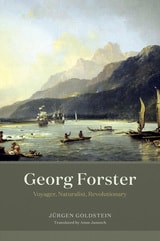
Georg Forster
Voyager, Naturalist, RevolutionaryJürgen Goldstein
University of Chicago Press, 2019
“Stunning. . . . Read this book: in equal measure it will give you hope and trouble your dreams.”—Laura Dassow Walls, author of Henry David Thoreau: A Life and Passage to Cosmos: Alexander von Humboldt’s Shaping of America
Georg Forster (1754–94) was in many ways self-taught and rarely had two cents to rub together, but he became one of the most dynamic figures of the Enlightenment: a brilliant writer, naturalist, explorer, illustrator, translator—and a revolutionary. Granted the extraordinary opportunity to sail around the world as part of Captain James Cook’s fabled crew, Forster touched icebergs, walked the beaches of Tahiti, visited far-flung foreign nations, lived with purported cannibals, and crossed oceans and the equator. Forster recounted the journey in his 1777 book A Voyage Round the World, a work of travel and science that not only established Forster as one of the most accomplished stylists of the time—and led some to credit him as the inventor of the literary travel narrative—but also influenced other German trailblazers of scientific and literary writing, most notably Alexander von Humboldt. A superb essayist, Forster made lasting contributions to our scientific—and especially botanical and ornithological—knowledge of the South Seas.
Having witnessed more egalitarian societies in the southern hemisphere, Forster returned after more than three years at sea to a monarchist Europe entering the era of revolution. When, following the French Revolution of 1789, French forces occupied the German city of Mainz, Forster became a leading political actor in the founding of the Republic of Mainz—the first democratic state on German soil.
In an age of Kantian reason, Forster privileged experience. He claimed a deep connection between nature and reason, nature and politics, nature and revolution. His politics was radical in its understanding of revolution as a natural phenomenon, and in this often overlooked way his many facets—as voyager, naturalist, and revolutionary—were intertwined.
Yet, in the constellation of the Enlightenment’s trailblazing naturalists, scientists, political thinkers, and writers, Forster’s star remains relatively dim today: the Republic of Mainz was crushed, and Forster died in exile in Paris. This book is the source of illumination that Forster’s journey so greatly deserves. Tracing the arc of this unheralded polymath’s short life, Georg Forster explores both his contributions to literature and science and the enduring relationship between nature and politics that threaded through his extraordinary four decades.
George Galphin's Intimate Empire
The Creek Indians, Family, and Colonialism in Early AmericaBryan C. Rindfleisch
University of Alabama Press, 2019
A native of Ireland, George Galphin arrived in South Carolina in 1737 and quickly emerged as one of the most proficient deerskin traders in the South. This was due in large part to his marriage to Metawney, a Creek Indian woman from the town of Coweta, who incorporated Galphin into her family and clan, allowing him to establish one of the most profitable merchant companies in North America. As part of his trade operations, Galphin cemented connections with Indigenous and European peoples across the South, while simultaneously securing links to merchants and traders in the British Empire, continental Europe, and beyond.
In George Galphin’s Intimate Empire: The Creek Indians, Family, and Colonialism in Early America, Bryan C. Rindfleisch presents a complex narrative about eighteenth-century cross-cultural relationships. Reconstructing the multilayered bonds forged by Galphin and challenging scholarly understandings of life in the Native South, the American South more broadly, and the Atlantic World, Rindfleisch looks simultaneously at familial, cultural, political, geographical, and commercial ties—examining how eighteenth-century people organized their world, both mentally and physically. He demonstrates how Galphin’s importance emerged through the people with whom he bonded. At their most intimate, Galphin’s multilayered relationships revolved around the Creek, Anglo-French, and African children who comprised his North American family, as well as family and friends on the other side of the Atlantic.
Through extensive research in primary sources, Rindfleisch reconstructs an expansive imperial world that stretches across the American South and reaches into London and includes Indians, Europeans, and Africans who were intimately interconnected and mutually dependent. As a whole, George Galphin’s Intimate Empire provides critical insights into the intensely personal dimensions and cross-cultural contours of the eighteenth-century South and how empire-building and colonialism were, by their very nature, intimate and familial affairs.
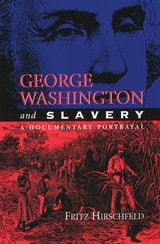
George Washington and Slavery
A Documentary PortrayalFritz Hirschfeld
University of Missouri Press, 1997
"I never mean (unless some particular circumstance should compel me to it) to possess another slave by purchase; it being among my first wishes to see some plan adopted, by which slavery in this country may be abolished by slow, sure and imperceptible degrees."—George Washington, September 9, 1786
No history of racism in America can be considered complete without taking into account the role that George Washington—the principal founding father—played in helping to mold the racist cast of the new nation. Because General Washington—the universally acknowledged hero of the Revolutionary War—in the postwar period uniquely combined the moral authority, personal prestige, and political power to influence significantly the course and the outcome of the slavery debate, his opinions on the subject of slaves and slavery are of crucial importance to understanding how racism succeeded in becoming an integral and official part of the national fabric during its formative stages.The successful end of the War for Independence in 1783 brought George Washington face-to-face with a fundamental dilemma: how to reconcile the proclaimed ideals of the revolution with the established institution of slavery. So long as black human beings in America could legally be considered the chattel property of whites, the rhetoric of equality and individual freedom was hollow. Progressive voices urged immediate emancipation as the only way to resolve the contradiction; the Southern slave owners, of course, stood firm for the status quo. Washington was caught squarely in the middle.
As a Virginia plantation proprietor and a lifelong slaveholder, Washington had a substantial private stake in the economic slave system of the South. However, in his role as the acknowledged political leader of the country, his overriding concern was the preservation of the Union. If Washington publicly supported emancipation, he would almost certainly have to set an example and take steps to dispose of his Mount Vernon slaves. If he spoke out on the side of slavery, how could he legitimately and conscientiously expect to uphold and defend the humanistic goals and moral imperatives of the new nation as expressed in the Declaration of Independence and embodied in the Constitution and the Bill of Rights? His was a balancing act that became more and more difficult to sustain with the passing years.
Relying primarily on Washington's own words—his correspondence, diaries, and other written records—supplemented by letters, comments, and eyewitness reports of family members, friends, employees, aides, correspondents, colleagues, and visitors to Mount Vernon, together with contemporary newspaper clippings and official documents pertaining to Washington's relationships with African Americans, Fritz Hirschfeld traces Washington's transition from a conventional slaveholder to a lukewarm abolitionist. George Washington and Slavery will be an essential addition to the historiography of eighteenth-century America and of Washington himself.
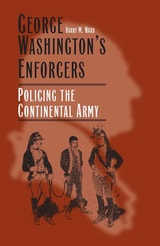
George Washington's Enforcers
Policing the Continental ArmyHarry M. Ward
Southern Illinois University Press, 2006
A well-disciplined army was vital to win American independence, but policing soldiers during the Revolution presented challenges. George Washington’s Enforcers: Policing the Continental Army examines how justice was left to the overlapping duties of special army personnel and how an improvised police force imposed rules and regulations on the common soldier. Historian Harry M. Ward describes these methods of police enforcement, emphasizing the brutality experienced by the enlisted men who were punished severely for even light transgressions. This volume explores the influences that shaped army practice and the quality of the soldiery, the enforcement of military justice, the use of guards as military police, and the application of punishment.
Washington’s army, which adopted the organization and justice code of the British army, labored under the direction of ill-trained and arrogant officers. Ward relates how the enlisted men, who had a propensity for troublemaking and desertion, not only were victims of the double standard that existed between officers and regular troops but also lacked legal protection in the army. The enforcement of military justice afforded the accused with little due process support.
Ward discusses the duties of the various personnel responsible for training and enforcing the standards of behavior, including duty officers, adjutants, brigade majors, inspectors, and sergeant majors. He includes the roles of life guards, camp guards, quarter guards, picket men, and safe guards, whose responsibilities ranged from escorting the commander in chief, intercepting spies and stragglers, and protecting farmers from marauding soldiers to searching for deserters, rounding up unauthorized personnel, and looking for delinquents in local towns and taverns.
George Washington’s Enforcers, which includes sixteen illustrations, also addresses the executions of the period, as both ritual and spectacle, and the deterrent value of capital punishment. Ward explains how Washington himself mixed clemency with severity and examines how army policies tested the mettle of this chief disciplinarian, who operated by the dictates of military necessity as perceived at the time.
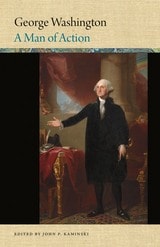
George Washington
A Man of ActionJohn P. Kaminski
Wisconsin Historical Society Press, 2017

Georges Cuvier, Fossil Bones, and Geological Catastrophes
New Translations and Interpretations of the Primary TextsMartin J. S. Rudwick
University of Chicago Press, 1997

Global Goods and the Country House
Comparative Perspectives, 1650–1800Edited by Jon Stobart
University College London, 2023
Global goods were central to the material culture of eighteenth-century country houses. Across Europe, mahogany furniture, Chinese wallpapers, and Indian textiles formed the backdrop to genteel practices of drinking sweetened coffee, tea, and chocolate from Chinese porcelain. They tied these houses and their wealthy owners into global systems of supply and the processes of colonialism and empire.
Global Goods and the Country House builds on these narratives and then challenges them by decentering our perspective. It offers a comparative framework that explores the definition, ownership, and meaning of global goods outside the usual context of European imperial powers. What were global goods and what did they do for and mean to wealthy landowners in places at the “periphery” of Europe (Sweden and Wallachia), in the British colonies of North America and the Caribbean, or in the extra-colonial context (Japan or Rajasthan)? By placing these goods in their specific material context—from the English country house to the princely palaces of Rajasthan—we gain a better understanding of their use and meaning and of their role in linking the global and the local.

Global Trade and Visual Arts in Federal New England
Patricia Johnston
University of New Hampshire Press, 2014
This book will appeal to a broad audience of historians and students of American visual art, as well as scholars and students of fine and decorative arts.
Hardcover is un-jacketed.
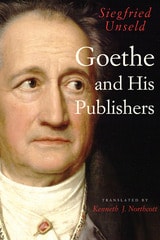
Goethe and His Publishers
Siegfried Unseld
University of Chicago Press, 1996
Goethe and His Publishers organizes for the first time the myriad details of Goethe's career in print. Director of the German publishing company Suhrkamp Verlag, Siegfried Unseld brings a singular perspective to this biography, focusing our attention on an essential component of Goethe's literary endeavors: his relationship to his publishers. Carefully examining each work, Unseld covers the range of Goethe's oeuvre, from first anonymous publications to eventual monumental editions brought out by Johann Friedrich Cotta, the most renowned publisher of his day.
Unseld sifts through the rich correspondence between Goethe and his publishers, as well as letters to and from friends, colleagues, and contemporaries. Analyzing publishing contracts, draft contracts, and historical documents, Unseld reveals the tremendous energy Goethe exerted on behalf of his manuscripts. During negotiations he was sometimes circumspect and reserved, other times demanding and assertive. These exchanges not only shed new light on Goethe's complex character but also show how he changed the author's role in the publishing process. Thus, this work offers a penetrating study on the intricate and many-tiered relations between author and publisher, then and today.
Goethe and His Publishers celebrates Goethe's works, his life, and his times, from the viewpoint of a publisher today. Written by an individual who has devoted much of his life to the study of the poet whom he reveres, such a personal approach not only forms an excellent introduction to Goethe's work but helps restore Goethe to his rightful place in the world of letters.

Goethe
Journeys of the MindGabrielle Bersier, Nancy Boerner, and Peter Boerner
Haus Publishing, 2018
While Goethe’s Italian Journey is a classic piece of travel writing, it was the product of his only extended physical journey. The majority, rather, were of the mind, taken amid the pages of books by others. In his reading, Goethe was the prototypical eighteenth-century armchair traveler, developing knowledge of places both near and far through the words and eyewitness accounts of others. In Goethe: Journeys of the Mind, Nancy Boerner and Gabrielle Bersier explore what it was that made the great writer distinct from his peers and offer insight into the ways that Goethe was able to explore the cultures and environments of places he never saw with his own eyes.
Grammars of Approach
Landscape, Narrative, and the Linguistic PicturesqueCynthia Wall
University of Chicago Press, 2019
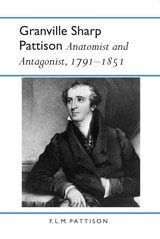
Granville Sharp Pattison
Anatomist and Antagonist, 1791-1851F. L. M. Pattison
University of Alabama Press, 1987
The stormy life of one of the most colorful and complex characters in early 19th-century medicine
Guyasuta and the Fall of Indian America
Brady J. Crytzer
Westholme Publishing, 2013
Nearly a century before the United States declared the end of the Indian Wars, the fate of Native Americans was revealed in the battle of Fallen Timbers. In 1794, General Anthony Wayne led the first American army— the Legion of the United States—against a unified Indian force in the Ohio country. The Indians were routed and forced to vacate their lands. It was the last of a series of Indian attempts in the East to retain their sovereignty and foreshadowed what would occur across the rest of the continent. In Guyasuta and the Fall of Indian America, historian Brady J. Crytzer traces how American Indians were affected by the wars leading to American Independence through the life of one of the period’s most influential figures. Born in 1724, Guyasuta is perfectly positioned to understand the emerging political landscape of America in the tumultuous eighteenth century. As a sachem of the vaunted Iroquois Confederacy, for nearly fifty years Guyasuta dedicated his life to the preservation and survival of Indian order in a rapidly changing world, whether it was on the battlefield, in the face of powerful imperial armies, or around a campfire negotiating with his French, British, and American counterparts. Guyasuta was present at many significant events in the century, including George Washington’s expedition to Fort Le Boeuf, the Braddock disaster of 1755, Pontiac’s Rebellion and the Battle of Bushy Run in 1763, and the Battle of Oriskany during the American Revolution. Guyasuta’s involvement in the French and British wars and the American War for Independence were all motivated by a desire to retain relevance for Indian society. It was only upon the birth of the United States of America that Guyasuta finally laid his rifle down and watched as his Indian world crumbled beneath his feet. A broken man, debilitated by alcoholism, he died near Pittsburgh in 1794.
Supported by extensive research and full of compelling drama, Guyasuta and the Fall of Indian America unravels the tangled web of alliances, both white and native, and explains how the world of the American Indians could not survive alongside the emergent United States.