Results by title
8642 books match the query '20th century' and 162 start with g
Gaillard in Deaf America
A Portrait of the Deaf Community, 1917, Henri GaillardHenri Gaillard
Gallaudet University Press, 2002
In 1917, Henri Gaillard led a delegation of deaf French men to the United States for the centennial celebration of the American School for the Deaf (ASD). The oldest school for deaf students in America, ASD had been cofounded by renowned deaf French teacher Laurent Clerc, thus inspiring Gaillard’s invitation. Gaillard visited deaf people everywhere he went and recorded his impressions in a detailed journal. His essays present a sharply focused portrait of the many facets of Deaf America during a pivotal year in its history.
Gaillard crossed the Atlantic only a few weeks after the United States entered World War I. In his writings, he reports the efforts of American deaf leaders to secure employment for deaf workers to support the war effort. He also witnesses spirited speeches at the National Association of the Deaf convention decrying the replacement of sign language by oral education. Gaillard also depicts the many local institutions established by deaf Americans, such as Philadelphia’s All Souls Church, founded in 1888 by the country’s first ordained deaf pastor, and the many deaf clubs established by the first wave of deaf college graduates in their communities. His journal stands as a unique chronicle of the American Deaf community during a remarkable era of transition.
Galveston and the 1900 Storm
Catastrophe and CatalystBy Patricia Bellis Bixel and Elizabeth Hayes Turner
University of Texas Press, 2000
Runner-up, Spur Award for Best Western Nonfiction—Contemporary, Western Writers Of America, 2001
The Galveston storm of 1900 reduced a cosmopolitan and economically vibrant city to a wreckage-strewn wasteland where survivors struggled without shelter, power, potable water, or even the means to summon help. At least 6,000 of the city's 38,000 residents died in the hurricane. Many observers predicted that Galveston would never recover and urged that the island be abandoned. Instead, the citizens of Galveston seized the opportunity, not just to rebuild, but to reinvent the city in a thoughtful, intentional way that reformed its government, gave women a larger role in its public life, and made it less vulnerable to future storms and flooding.
This extensively illustrated history tells the full story of the 1900 Storm and its long-term effects. The authors draw on survivors' accounts to vividly recreate the storm and its aftermath. They describe the work of local relief agencies, aided by Clara Barton and the American Red Cross, and show how their short-term efforts grew into lasting reforms. At the same time, the authors reveal that not all Galvestonians benefited from the city's rebirth, as African Americans found themselves increasingly shut out from civic participation by Jim Crow segregation laws. As the centennial of the 1900 Storm prompts remembrance and reassessment, this complete account will be essential and fascinating reading for all who seek to understand Galveston's destruction and rebirth.
Gambling on Ore
The Nature of Metal Mining in the United States, 1860–1910Kent Curtis
University Press of Colorado, 2013
In Montana, legal issues and politics—such as unexpected consequences of federal mining law and the electrification of the United States—further complicated the mining industry’s already complex relationship to geology, while government policy, legal frameworks, dominant understandings of nature, and the exigencies of profit and production drove the industry in momentous and surprising directions. Despite its many uncertainties, mining became an important part of American culture and daily life.
Gambling on Ore unpacks the tangled relationships between mining and the natural world that gave material possibility to the age of electricity. Metal mining has had a profound influence on the human ecology and the social relationships of North America through the twentieth century and throughout the world after World War II. Understanding how we forged these relationships is central to understanding the environmental history of the United States after 1850.

Gamelan Gong Kebyar
The Art of Twentieth-Century Balinese MusicMichael Tenzer
University of Chicago Press, 2000
Combining the tools of the anthropologist, composer, music theorist, and performer, Tenzer moves fluidly between ethnography and technical discussions of musical composition and structure. In an approach as intricate as one might expect in studies of Western classical music, Tenzer's rigorous application of music theory and analysis to a non-Western orchestral genre is wholly original. Illustrated throughout, the book also includes nearly 100 pages of musical transcription (in Western notation) that correlate with 55 separate tracks compiled on two accompanying compact discs.
The most ambitious work on gamelan since Colin McPhee's classic Music in Bali, this book will interest musicians of all kinds and anyone interested in the art and culture of Southeast Asia, Indonesia, and Bali.
Gangsters to Governors
The New Bosses of Gambling in AmericaClary, David
Rutgers University Press, 2017
Winner of the 2018 Bronze Current Events Book Award from the Independent Publisher Book Awards
Generations ago, gambling in America was an illicit activity, dominated by gangsters like Benny Binion and Bugsy Siegel. Today, forty-eight out of fifty states permit some form of legal gambling, and America’s governors sit at the head of the gaming table. But have states become addicted to the revenue gambling can bring? And does the potential of increased revenue lead them to place risky bets on new casinos, lotteries, and online games?
In Gangsters to Governors, journalist David Clary investigates the pros and cons of the shift toward state-run gambling. Unearthing the sordid history of America’s gaming underground, he demonstrates the problems with prohibiting gambling while revealing how today’s governors, all competing for a piece of the action, promise their citizens payouts that are rarely delivered.
Clary introduces us to a rogue’s gallery of colorful characters, from John “Old Smoke” Morrissey, the Irish-born gangster who built Saratoga into a gambling haven in the nineteenth century, to Sheldon Adelson, the billionaire casino magnate who has furiously lobbied against online betting. By exploring the controversial histories of legal and illegal gambling in America, he offers a fresh perspective on current controversies, including bans on sports and online betting. Entertaining and thought-provoking, Gangsters to Governors considers the past, present, and future of our gambling nation.
Author's website (http://www.davidclaryauthor.com)
Gaps
A NovelBohumil Hrabal
Northwestern University Press, 2011
Gaps is a more overtly political novel than either In-House Weddings or Vita Nuova. The 1968 Soviet invasion of Czechoslovakia and the subsequent repression of artistic freedom figure prominently. Hrabal is placed on the "liquidated writers" list, and copies of his novel Poupata (Buds) are disposed of at the paper salvage where he once worked. Hrabal's decision to tell his autobiography in his wife Eliska's voice highlights their very close relationship and lovingly details her deep influence on his work. Every movement, sound, fragrance, and color is detailed, creating a collage of Bohumil and Eliska's life together, an unforgettable picture that reveals the author's innermost attitudes to life, love, and the pursuit of his own art.
Garden Apartments
The History of a Low-Rent UtopiaJoshua B. Freeman
University of Chicago Press, 2026
Eminent historian Joshua Freeman rescues garden apartments—typically low-rise multifamily residences that enclose or are surrounded by landscaped gardens—from their invisibility in the American landscape. He details their outsized influence on housing policy and social policy as they helped upgrade living standards for working people. Inspired by the architectural innovations and socialist politics of British garden cities, Red Vienna, and German modernist housing in the 1920s, these large, centrally managed projects were mostly not public housing, but their capitalist developers worked with governments to keep down rents. The results were often relatively small apartments and large communal spaces, aimed at fostering actual American community.
Garland in His Own Time
A Biographical Chronicle of His Life, Drawn from Recollections, Interviews, and Memoirs by Family, Friends, and AssociatesKeith Newlin
University of Iowa Press, 2013
Gary Snyder and the Pacific Rim
Creating Countercultural CommunityTimothy Gray
University of Iowa Press, 2006
Gray’s introduction tracks the increased use of “Pacific Rim discourse” by politicians and business leaders following World War II. Ensuing chapters analyze Snyder’s countercultural invocation of this regional idea, concentrating on the poet’s migratory or “creaturely” sensibility, his gift for literary translation, his physical embodiment of trans-Pacific ideals, his role as tribal spokesperson for Haight-Ashbury hippies, and his burgeoning interest in environmental issues. Throughout, Gray’s citations of such writers as Allen Ginsberg, Philip Whalen, and Joanne Kyger shed light on Snyder’s communal role, providing an amazingly intimate portrait of the west coast counterculture. An interdisciplinary project that utilizes models of ecology, sociology, and comparative religion to supplement traditional methods of literary biography, Gary Snyder and the Pacific Rim offers a unique perspective on Snyder’s life and work.
This book will fascinate literary and Asian studies scholars as well as the general reader interested in the Beat movement and multicultural influences on poetry.
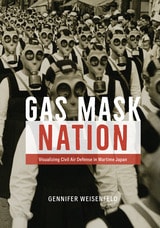
Gas Mask Nation
Visualizing Civil Air Defense in Wartime JapanGennifer Weisenfeld
University of Chicago Press, 2023
Airplanes, gas masks, and bombs were common images in wartime Japan. Yet amid these emblems of anxiety, tasty caramels were offered to children with paper gas masks as promotional giveaways, and magazines featured everything from attractive models in the latest civil defense fashion to futuristic weapons.
Gas Mask Nation explores the multilayered construction of an anxious yet perversely pleasurable visual culture of Japanese civil air defense—or bōkū—through a diverse range of artworks, photographs, films and newsreels, magazine illustrations, postcards, cartoons, advertising, fashion, everyday goods, government posters, and state propaganda. Gennifer Weisenfeld reveals the immersive aspects of this culture, in which Japan’s imperial subjects were mobilized to regularly perform highly orchestrated civil air defense drills throughout the country.
The war years in Japan are often portrayed as a landscape of privation and suppression under the censorship of the war machine. But alongside the horrors, pleasure, desire, wonder, creativity, and humor were all still abundantly present in a period before air raids went from being a fearful specter to a deadly reality.
Gastrodiplomacy
Chinese Exclusion and the Ascent of Chinese Restaurants in New York City, 1870–1943Heather Ruth Lee
University of Chicago Press, 2027
Traces how Chinese migrants challenged racialization and disenfranchisement by establishing Chinese restaurants during the Gilded Age.
In Gastrodiplomacy, Heather Ruth Lee dives deep into not just the history of Chinese restaurants in early twentieth-century New York City but the delicate, inchoate, and constantly evolving dynamics among their owners, workers, and their predominantly white clientele. Lee argues that the stylistic and capitalist choices made by restaurateurs (“gastrodiplomats”) had outsized political effects on paternalistic white diners (“gastroliberals”) who patronized their establishments, particularly when it came to racial relations in cities that were growing and diversifying. Lee is not starry-eyed—satisfying white tongues and stomachs didn’t lead to an urban utopia of peace, harmony, and brotherhood—but she shows the great and subtle influences of Chinese migrants on American urban space, culture, and metropolitan identity in a defining time.
In Lee’s capable and compelling telling, the Chinese restaurant becomes a distinctive locus for the negotiation of political power, cultural influence, urban identity, and more. Gastrodiplomacy reveals much about burgeoning and increasingly cosmopolitan American cities, as well as about their dynamic relationships with the fluidities of the American character.
Gay Bar
The Fabulous, True Story of a Daring Woman and Her Boys in the 1950sWill Fellows and Helen P. Branson
University of Wisconsin Press, 2026
Vivacious, unconventional, candid, and straight, Helen Branson operated a gay bar in Los Angeles in the 1950s—America’s most anti-gay decade. After years of fending off drunken passes as an entertainer in cocktail bars, this divorced grandmother preferred the wit, variety, and fun she found among homosexual men. Enjoying their companionship and deploring their plight, she gave her gay friends a place to socialize. Though at the time California statutes prohibited homosexuals from gathering in bars, Helen’s place was relaxed, suave, and remarkably safe from police raids and other anti-homosexual hazards. In 1957 she published her extraordinary memoir Gay Bar, the first book by a heterosexual to depict the lives of homosexuals with admiration, respect, and love.
In this new edition of Gay Bar, Will Fellows interweaves Branson’s chapters with historical perspective provided through his own insightful commentary and excerpts gleaned from letters and essays appearing in gay publications of the period. Also included is the original introduction to the book by maverick 1950s psychiatrist Blanche Baker. The eclectic selection of voices gives the flavor of American life in that extraordinary age of anxiety, revealing how gay men saw themselves and their circumstances, and how others perceived them.
Outstanding Book, selected by the Public Library Association
Best Books for High Schools, selected by the American Association of School Libraries
Gay Liberation after May '68
Guy Hocquenghem
Duke University Press, 2022
Gay Print Culture
A Transnational History of North AmericaJuan Carlos Mezo González
Duke University Press, 2026

Gaylord Nelson
Champion for Our EarthSheila Terman Cohen
Wisconsin Historical Society Press, 2010
Born in Clear Lake, Wisconsin, in 1916, Gaylord grew up as immersed in his parents' political work and community service as he was in playing practical jokes and exploring the natural world surrounding his home town. Along the way he encountered experiences that would shape him in fundamental ways: as a man who stood up for what he believed in the face of opposition and yet who also understood how to treat his opponents with respect. Both traits would serve him well as he rose from law student to state senator to Wisconsin governor and finally to three terms as a United States Senator.
Nelson fought to treat all races equally and to condemn McCarthy-era paranoia, but his greatest contribution was to sound the alarm about another battle: the fight to save the natural world and the earth itself. It was his idea to use teach-ins to let people know that the environment needed their help. Thanks to him, more natural resources were conserved and new laws demanded clean air and water. Now, every year on April 22, people all over the world plant trees and pick up litter to celebrate Earth Day. The Earth and its inhabitants aren't safe yet, but Gaylord Nelson demonstrated that even one person can help to save the world.
Gender Politics in Modern China
Writing and FeminismTani E. Barlow, ed.
Duke University Press, 1993
Ranging from interviews with contemporary writers, to historical accounts of gendered writing in Taiwan and semi-colonial China, to close feminist readings of individual authors, these essays confront the degree to which textual stategies construct notions of gender. Among the specific themes discussed are: how femininity is produced in texts by allocating women to domestic space; the extent to which textual production lies at the base of a changing, historically specific code of the feminine; the extent to which women in modern Chinese societies are products of literary canons; the ways in which the historical processes of gendering have operated in Chinese modernity vis à vis modernity in the West; the representation of feminists as avengers and as westernized women; and the meager recognition of feminism as a serious intellectual current and a large body of theory.
Originally published as a special issue of Modern Chinese Literature (Spring & Fall 1988), this expanded book represents some of the most compelling new work in post-Mao feminist scholarship and will appeal to all those concerned with understanding a revitalized feminism in the Chinese context.
Contributors. Carolyn Brown, Ching-kiu Stephen Chan, Sung-sheng Yvonne Chang, Yu-shih Chen, Rey Chow, Randy Kaplan, Richard King, Wolfgang Kubin, Wendy Larson, Lydia Liu, Seung-Yeun Daisy Ng, Jon Solomon, Meng Yue, Wang Zheng
Gender Violence in Peace and War
States of ComplicitySanford, Victoria
Rutgers University Press, 2016
Gender and Nation in the Spanish Modernist Novel
Roberta Johnson
Vanderbilt University Press, 2003
The book begins by tracing the history of public discourse on gender from the 1890s through the 1930s, a discourse that included the rise of feminism. Each chapter then analyzes works by female and male novelists that address key issues related to gender and nationalism: the concept of intrahistoria, or an essential Spanish soul; modernist uses of figures from the Spanish literary tradition, notably Don Quixote and Don Juan; biological theories of gender prevalent in the 1920s and 1930s; and the growth of an organized feminist movement that coincided with the burgeoning Republican movement.
This is the first book dealing with this period of Spanish literature to consider women novelists, such as Maria Martinez Sierra, Carmen de Burgos, and Concha Espina, alongside canonical male novelists, including Miguel de Unamuno, Ramon del Valle-Inclan, and Pio Baroja. With its contrasting conceptions of modernism, Johnson's work provides a compelling new model for bridging the gender divide in the study of Spanish fiction.
Gender and the Civil Rights Movement
Ling, Peter J
Rutgers University Press, 2004
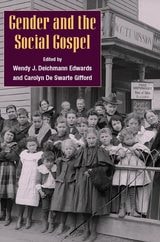
Gender and the Social Gospel
Edited by Wendy J. Deichmann Edwards and Carolyn De Swarte Gifford
University of Illinois Press, 2003
A practical theological response to the stark realities of poverty and injustice prevalent in turn-of-the-century America, the social gospel movement sought to apply the teachings of Jesus and the message of Christian salvation to society by striving to improve the lives of the impoverished and the disenfranchised. The contributors to this volume set out to broaden our understanding of this radical movement by examining the lives of some of its passionate and vibrant female participants and the ways in which their involvement expanded and enriched the scope of its activity.
In addition to examining the lives of individual women, the essays in Gender and the Social Gospel contain broader analyses of the gender and racial issues that have caused the histories of movements such as the social gospel to be viewed almost exclusively in terms of their male, European-American, intellectual participants at the expense of the women, African Americans, and Canadians whose contributions were just as worthy of attention.
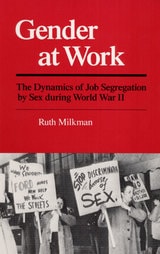
Gender at Work
The Dynamics of Job Segregation by Sex during World War IIRuth Milkman
University of Illinois Press, 1987
Women's entry into so-called men's work during World War II sparked conflicts at the time and when men returned at war's end. Ruth Milkman delves into the issues in play and the prewar origins of traditional patterns of gender segregation in the workplace. Ranging from the dynamics on the shop floor to hiring patterns, Milkman pays particular attention to automobile and electrical manufacturing. She analyzes a number of persistent questions, including management's decision to re-embrace gender segregation after the war; women's lack of protest; the failure of unions to protect women; and how related employer strategies helped control labor by maintaining women's place as workers paid less than men.
Gender, Separatist Politics, and Embodied Nationalism in Cameroon
Jacqueline-Bethel Tchouta Mougoué
University of Michigan Press, 2019
Gender, Separatist Politics, and Embodied Nationalism in Cameroon illuminates how issues of ideal womanhood shaped the Anglophone Cameroonian nationalist movement in the first decade of independence in Cameroon, a west-central African country. Drawing upon history, political science, gender studies, and feminist epistemologies, the book examines how formally educated women sought to protect the cultural values and the self-determination of the Anglophone Cameroonian state as Francophone Cameroon prepared to dismantle the federal republic. The book defines and uses the concept of embodied nationalism to illustrate the political importance of women’s everyday behavior—the clothes they wore, the foods they cooked, whether they gossiped, and their deference to their husbands. The result, in this fascinating approach, reveals that West Cameroon, which included English-speaking areas, was a progressive and autonomous nation. The author’s sources include oral interviews and archival records such as women’s newspaper advice columns, Cameroon’s first cooking book, and the first novel published by an Anglophone Cameroonian woman.
Gender, Sexuality, and the Cold War
A Global PerspectivePhilip E. Muehlenbeck
Vanderbilt University Press, 2017
Gender, Sexuality, and the Cold War brings together a diverse group of scholars whose combined research spans fifteen countries across five continents, claiming a place as the first volume to examine how issues of gender and sexuality impacted both the domestic and foreign policies of states, far beyond the borders of the United States, during the tumult of the Cold War.
Table of Contents
Preface
Introduction: Hidden in Plain Sight: The Histories of Gender and Sexuality during the Cold War
Marko Dumančić
Part I: Sexuality
Faceless and Stateless: French Occupation Policy toward Women and Children in Postwar Germany (1945-1949)
Katherine Rossy
Patriarchy and Segregation: Policing Sexuality in US-Icelandic Military Relations
Valur Ingimundarson
Queering Subversives in Cold War Canada
Patrizia Gentile
"Nonreligious Activities": Sex, Anticommunism, and Progressive Christianity in Late Cold War Brazil
Benjamin A. Cowan
Manning the Enemy: US Perspectives on International Birthrates during the Cold War
Kathleen A. Tobin
Part II: Femininities
Indian Peasant Women's Activism in a Hot Cold War
Elisabeth Armstrong
The Medicalization of Childhood in Mexico during the Early Cold War, 1945-1960
Nichole Sanders
Africa's Kitchen Debate: Ghanaian Domestic Space in the Age of the Cold War
Jeffrey S. Ahlman
Mobilizing Women? State Feminisms in Communist Czechoslovakia and Socialist Egypt
May Hawas and Philip E. Muehlenbeck
A Vietnamese Woman Directs the War Story: Duc Hoan, 1937-2003
Karen Turner
Global Feminism and Cold War Paradigms: Women's International NGOs and the United Nations, 1970-1985
Karen Garner
Part III: Masculinities
"Men of the World" or "Uniformed Boys"? Hegemonic Masculinity and the British Army in the Era of the Korean War
Grace Huxford
Yuri Gagarin and Celebrity Masculinity in Soviet Culture
Erica L. Fraser

Gendering Bodies/Performing Art
Dance and Literature in Early Twentieth-Century British CultureAmy Koritz
University of Michigan Press, 1995

Gendering the Fair
Histories of Women and Gender at World's FairsEdited by TJ Boisseau and Abigail M. Markwyn
University of Illinois Press, 2010
General Education in the Social Sciences
Centennial Reflections on the College of the University of ChicagoEdited by John J. MacAloon
University of Chicago Press, 1992
Social Science 2 holds the place of honor among these educational projects. For more than half a century, Soc 2 has been one of the most influential courses in American undergraduate education. This unique, year-long course, the oldest and most distinguished of its kind at any American university, has served as an ongoing experiment in how the social sciences can be taught and learned in the general education context.
In this collection John MacAloon has gathered essays by fourteen eminent social scientists—such as David Riesman, Michael Schudson, and F. Champion Ward—who as either teachers or students were profoundly shaped by Soc 2. Their multifarious and selective memories—full of dissonances and harmonies of recollection, judgment, and voice—create a compelling biography of a course and a college that have survived tumultous change through sustained and committed argument.
This book will be of great interest to anyone interested not only in the theory but the practice of higher education.
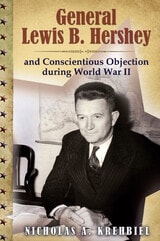
General Lewis B. Hershey and Conscientious Objection during World War II
Nicholas A. Krehbiel
University of Missouri Press, 2012
Seeking to correct these omissions in history, Nicholas A. Krehbiel provides the most comprehensive and well-rounded examination to date of General Hershey’s work as the developer and protector of alternative service programs for conscientious objectors. Hershey, whose Selective Service career spanned three major wars and six presidential administrations, came from a background with a tolerance for pacifism. He served in the National Guard and later served in both World War I and the interwar army. A lifelong military professional, he believed in the concept of the citizen soldier—the civilian who responded to the duty of service when called upon. Yet embedded in that idea was his intrinsic belief in the American right to religious freedom and his notion that religious minorities must be protected.
What to do with conscientious objectors has puzzled the United States throughout its history, and prior to World War II, there was no unified system for conscientious objectors. The Selective Service Act of 1917 only allowed conscientious objection from specific peace sects, and it had no provisions for public service. In action, this translated to poor treatment of conscientious objectors in military prisons and camps during World War I. In response to demands by the Historic Peace Churches (the Brethren, Mennonites, and the Society of Friends) and other pacifist groups, the government altered language in the Selective Service Act of 1940, stating that conscientious objectors should be assigned to noncombatant service in the military but, if opposed to that, would be assigned to “work of national importance under civilian direction.”
Under the direction of President Franklin D. Roosevelt and with the cooperation of the Historic Peace Churches, Hershey helped to develop Civilian Public Service in 1941, a program that placed conscientious objectors in soil conservation and forestry work camps, with the option of moving into detached services as farm laborers, scientific test subjects, and caregivers, janitors, and cooks at mental hospitals. Although the Civilian Public Service program only lasted until 1947, alternative service was required for all conscientious objectors until the end of the draft in 1973.
Krehbiel delves into the issues of minority rights versus mandatory military service and presents General Hershey’s pivotal role in the history of conscientious objection and conscription in American history. Archival research from both Historic Peace Churches and the Selective Service makes General Lewis B. Hershey and Conscientious Objection during World War II the definitive book on this subject.
Generous Betrayal
Politics of Culture in the New EuropeUnni Wikan
University of Chicago Press, 2002
Comparing her native Norway to Western Europe and the United States, Wikan focuses on people caught in turmoil, how institutions function, and the ways in which public opinion is shaped and state policies determined. Contradictions arise between policies of respect for minority cultures, welfare, and freedom, but the goal is the same: to create a society committed to both social justice and respect for human rights.
Writing with power and grace, Wikan makes a plea for a renewed moral vitality and human empathy that can pave the way for more effective social policies and create change.
Genre Fission
A New Discourse Practice for Culture StudiesMarleen S. Barr
University of Iowa Press, 2000
Barr expands postmodern assumptions about cultural studies by suggesting that "genre fission" is occurring among discrete literary and cultural "types" of events--mainstream novels, science fiction, historical narratives, film, paintings, and museum displays. For her literary insights, Barr turns her attention to such mainstream authors as Saul Bellow, John Updike, Marge Piercy, and John Barth as well as science fiction writers Ursula Le Guin and Octavia Butler and Hispanic American writers Julia Alvarez, Ana Castillo, and Cristina García, among others.
Barr moves from literary to culture studies by addressing such phenomena from contemporary mass culture as the urban landscapes of New York and Los Angeles, Jackie Kennedy, the Star Trek industry, Lynn Redgrave, Amsterdam's red light district, Lorena Bobbitt, and the Apollo astronauts--to provide only a few of the relevant examples. Thus Genre Fission attains what Barr herself designates (in describing the art of Judy Chicago and Lee Bontecou) as "utopian interweavings of difference," crossing numerous boundaries in order to frame a larger territory for exploration.
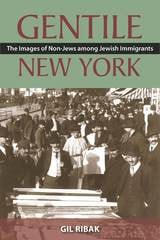
Gentile New York
The Images of Non-Jews among Jewish ImmigrantsRibak, Gil
Rutgers University Press, 2012
The very question of “what do Jews think about the goyim” has fascinated Jews and Gentiles, anti-Semites and philo-Semites alike. Much has been written about immigrant Jews in nineteenth- and twentieth-century New York City, but Gil Ribak’s critical look at the origins of Jewish liberalism in America provides a more complicated and nuanced picture of the Americanization process.
Gentile New York examines these newcomers’ evolving feelings toward non-Jews through four critical decades in the American Jewish experience. Ribak considers how they perceived Gentiles in general as well as such different groups as “Yankees” (a common term for WASPs in many Yiddish sources), Germans, Irish, Italians, Poles, and African Americans. As they discovered the complexity of America’s racial relations, the immigrants found themselves at odds with “white” American values or behavior and were drawn instead into cooperative relationships with other minorities. Sparked with many previously unknown anecdotes, quotations, and events, Ribak’s research relies on an impressive number of memoirs, autobiographies, novels, newspapers, and journals culled from both sides of the Atlantic.
Gentlemen's Disagreement
Alfred Kinsey, Lewis Terman, and the Sexual Politics of Smart MenPeter Hegarty
University of Chicago Press, 2013
Geographies of Mars
Seeing and Knowing the Red PlanetK. Maria D. Lane
University of Chicago Press, 2011
A highly original exploration of geography’s spatial dimensions at the beginning of the twentieth century, offering a new view of the mapping of far-off worlds.
One of the first maps of Mars, published by an Italian astronomer in 1877, with its pattern of canals, fueled belief in intelligent life forms on the distant red planet—a hope that continued into the 1960s. Although the Martian canals have long since been dismissed as a famous error in the history of science, K. Maria D. Lane argues that there was nothing accidental about these early interpretations. Indeed, she argues, the construction of Mars as an incomprehensibly complex and engineered world both reflected and challenged dominant geopolitical themes during a time of major cultural, intellectual, political, and economic transition in the Western world.
Geographies of Mars telescopes in on a critical period in the development of the geographical imagination, when European imperialism was at its zenith and American expansionism had begun in earnest. Astronomers working in the new observatories of the American Southwest or in the remote heights of the South American Andes were inspired, Lane finds, by their own physical surroundings and used representations of the Earth’s arid landscapes to establish credibility for their observations of Mars. With this simple shift to the geographer’s point of view, Lane deftly explains some of the most perplexing stances on Mars taken by familiar protagonists such as Percival Lowell, Alfred Russel Wallace, and Lester Frank Ward.

Geography's Quantitative Revolutions
Edward A. Ackerman and the Cold War Origins of Big DataElvin Wyly
West Virginia University Press, 2019
Do you have a smartphone? Billions of people on the planet now navigate their daily lives with the kind of advanced Global Positioning System capabilities once reserved for the most secretive elements of America’s military-industrial complex. But when so many people have access to the most powerful technologies humanity has ever devised for the precise determination of geographical coordinates, do we still need a specialized field of knowledge called geography?
Just as big data and artificial intelligence promise to automate occupations ranging from customer service and truck driving to stock trading and financial analysis, our age of algorithmic efficiency seems to eliminate the need for humans who call themselves geographers—at the precise moment when engaging with information about the peoples, places, and environments of a diverse world is more popular than ever before. How did we get here? This book traces the recent history of geography, information, and technology through the biography of Edward A. Ackerman, an important but forgotten figure in geography’s “quantitative revolution.” It argues that Ackerman’s work helped encode the hidden logics of a distorted philosophical heritage—a dangerous, cybernetic form of thought known as militant neo-Kantianism—into the network architectures of today’s pervasive worlds of surveillance capitalism.
Geological Sciences in the Antebellum South
Edited by James X. Corgan
University of Alabama Press, 1982
Tracing the roots of earth science before the Civil War.
Geological Sciences in the Antebellum South by James Corgan offers a rich and revealing examination of the origins and development of geological inquiry in the American South during the decades (1796-1850s) leading up to the Civil War. At a time when scientific disciplines in the United States were still taking shape, Southern scholars, educators, and naturalists played a critical—if often overlooked—role in advancing geological knowledge. Corgan brings this history to life through a careful exploration of the people, institutions, and ideas that defined early earth science in the region.
From the study of mineral resources and soil composition to the broader effort to understand the region’s unique landscapes, geology intersected with agriculture, industry, and economic development in powerful ways. Corgan demonstrates how these scientific endeavors were shaped by—and in turn helped shape—the cultural and intellectual environment of the South. This book also highlights the contributions of key figures and institutions that fostered scientific inquiry, including early universities, state surveys, and learned societies. These networks connected Southern researchers to national and international scientific communities, positioning the region as an active participant in the broader expansion of 19th-century science. At the same time, the book addresses the challenges and limitations faced by Southern scientists, offering a nuanced perspective on how regional identity, resources, and social structures influenced the trajectory of scientific progress.
By situating geology within the broader context of antebellum history, Corgan provides readers with a deeper understanding of how scientific thought developed alongside—and in dialogue with—the political, economic, and cultural forces of the period. The result is a compelling interdisciplinary study that bridges the history of science and Southern history, shedding new light on a formative era in American intellectual life. Geological Sciences in the Antebellum South will appeal to historians, geologists, and scholars of American studies. It is an essential resource for anyone interested in the foundations of scientific inquiry in the United States and the enduring impact of geology on the development of the American South.

Georg Lukacs and Thomas Mann
A Study in the Sociology of LiteratureMarcus, Judith
University of Massachusetts Press, 1987
Georg Lukács, the philosopher and literary critic, and Thomas Mann, the creative artist were two towering figures in the twentieth-century European intellectual life. Although they enjoyed a fruitful literary relationship, the two men never established an intimate friendship. In fact, Lukács once said that the only “dark spot” and “unsolved mystery” in his life was Mann’s life-long unresponsiveness to him as a bad person. Based primarily on Lukács, Katja Mann, Ernst Bloch, Arnold Hauser, and others, Part I of this study traces the development of “spiritual-intellectual symbiosis” between Lukács and Mann that lasted at least until the First World War. Part 2 turns to the question of the inspirational sources for Mann’s fictional characters, Leo Naphta, in his novel The Magic Mountain. Exploring the claim that Lukács himself was the model for his protagonist, Judith Marcus looks at the “Jewish intellectual” as an ideal type throughout Mann’s oeuvre. She concludes that Naphta’s totalitarian personality was inspired by the radicalism, rigidity, dogmatism, and asceticism of the young, then non-Marxist Lukács, and that is was in part these very traits in Lukács that stymied the growth of personal intimacy between the two men.
George F. Kennan and the Origins of Containment, 1944-1946
The Kennan-Lukacs CorrespondenceGeorge F. Kennan & Jonh Lukacs
University of Missouri Press, 1997
In 1945 the United States saw the Soviet Union as its principal ally. By 1947, it saw the Soviet Union as its principal opponent. How did this happen? Historian John Lukacs has provided an answer to this question through an exchange of letters with George F. Kennan. Their correspondence deals with the antecedents of containment between 1944 and 1946, during most of which time Kennan was at the American embassy in Moscow.
Kennan had strong opinions about America's appropriate role during and after World War II and is perhaps best known as the architect of America's containment policy. Much has been written about Kennan and containment, but relatively little is known about the events that made him compose and send the Long Telegram in 1946 that ultimately became the draft for foreign policy dealing with the Soviets in the following forty years.
These letters show Kennan's fear of the extent to which the United States misunderstood the Soviet regime. Especially in 1944, at the time of the Russians' betrayal of the Warsaw Uprising, it became evident that the Soviets were interested in establishing their rigid domination of Eastern and Central Europe and dividing the continent.
Kennan's letters to Lukacs are thorough and detailed, suggesting that the Truman administration was not in the least premature in opposing the Soviet Union. Indeed, both correspondents suggest that these decisions should have been made earlier. This series of letters will add greatly to our understanding of what preceded containment and the Cold War in 1947.
German Autumn
Stig Dagerman
University of Minnesota Press, 2011
In late 1946, Stig Dagerman was assigned by the Swedish newspaper Expressen to report on life in Germany immediately after the fall of the Third Reich. First published in Sweden in 1947, German Autumn, a collection of the articles written for that assignment, was unlike any other reporting at the time. While most Allied and foreign journalists spun their writing on the widely held belief that the German people deserved their fate, Dagerman disagreed and reported on the humanness of the men and women ruined by the war—their guilt and suffering. Dagerman was already a prominent writer in Sweden, but the publication and broad reception of German Autumn throughout Europe established him as a compassionate journalist and led to the long-standing international influence of the book.
Presented here in its first American edition with a compelling new foreword by Mark Kurlansky, Dagerman’s essays on the tragic aftermath of war, suffering, and guilt are as hauntingly relevant today amid current global conflict as they were sixty years ago.
German Colonialism in a Global Age
Bradley Naranch and Geoff Eley, eds.
Duke University Press, 2015
Contributors. Dirk Bönker, Jeff Bowersox, David Ciarlo, Sebastian Conrad, Christian S. Davis, Geoff Eley, Jennifer Jenkins, Birthe Kundus, Klaus Mühlhahn, Bradley Naranch, Deborah Neill, Heike Schmidt, J. P. Short, George Steinmetz, Dennis Sweeney, Brett M. Van Hoesen, Andrew Zimmerman
German Jews Beyond Judaism
George L. Mosse, With a critical introduction by David J. Sorkin
University of Wisconsin Press, 2025
German Jews Beyond Judaism was, in Mosse’s own estimation, his “most personal book, almost a confession of faith.” David J. Sorkin’s new critical introduction illustrates how Mosse’s life and values both shaped and exemplified his historical analysis and offers potential meanings of his intellectual legacy for the present day.
German Pop Culture
How "American" Is It?Agnes C Mueller, Editor
University of Michigan Press, 2004
Surrounding this indisputable phenomena, questions of the role and place of a "popular" German culture continue to trigger heated debate. Embraced by some as a welcome means to break out of the German monocultural mind-set, American-shaped "pop" culture is rejected by others as "polluting" established values, leveling necessary differentiation, and ultimately being driven by a capitalist consumer society rather than by moral or aesthetic standards.
This collaborative volume addresses a number of intriguing questions: What do Germans envisage when they speak of the "Americanization" of their literature and music? How do artists respond to today's media culture? What does this mean for the current political dimension of German-American relations? Can one speak meaningfully of an "Americanized" German culture? In addressing these and other questions, this work fills a gap in existing scholarship by investigating German popular culture from a multidisciplinary, international perspective.
Contributors to this volume:
Winfried Fluck, Gerd Gemünden, Lutz Koepnick, Barbara Kosta, Sara Lennox, Thomas Meinecke, Uta Poiger, Matthias Politycki, Thomas Saunders, Eckhard Schumacher, Marc Silberman, Frank Trommler, Sabine von Dirke
German Propaganda and U.S. Neutrality in World War I
Chad R. Fulwider
University of Missouri Press, 2016
In the fading evening light of August 4, 1914, Great Britain’s H.M.S. Telconia set off on a mission to sever the five transatlantic cables linking Germany and the United States. Thus Britain launched its first attack of World War I and simultaneously commenced what became the war’s most decisive battle: the battle for American public opinion.
In this revealing study, Chad Fulwider analyzes the efforts undertaken by German organizations, including the German Foreign Ministry, to keep the United States out of the war. Utilizing archival records, newspapers, and “official” propaganda, the book also assesses the cultural impact of Germany’s political mission within the United States and comments upon the perception of American life in Europe during the early twentieth century.
German Women for Empire, 1884-1945
Lora Wildenthal
Duke University Press, 2001
In confrontation and sometimes cooperation with men over their place in the colonial project, German women launched nationalist and colonialist campaigns for increased settlement and new state policies. Wildenthal analyzes recently accessible Colonial Office archives as well as mission society records, periodicals, women’s memoirs, and fiction to show how these women created niches for themselves in the colonies. They emphasized their unique importance for white racial “purity” and the inculcation of German culture in the family. While pressing for career opportunities for themselves, these women also campaigned against interracial marriage and circulated an image of African and Pacific women as sexually promiscuous and inferior. As Wildenthal discusses, the German colonial imaginary persisted even after the German colonial empire was no longer a reality. The women’s colonial movement continued into the Nazi era, combining with other movements to help turn the racialist thought of the late-nineteenth and early-twentieth centuries into the hierarchical evaluation of German citizens as well as colonial subjects.
Students and scholars of women’s history, modern German history, colonial politics and culture, postcolonial theory, race/ethnicity, and gender will welcome this groundbreaking study.
Germans and Jews
The Right, the Left, and the Search for a "Third Force" in Pre-Nazi GermanyGeorge L. Mosse
University of Wisconsin Press, 2023
This innovative perspective has implications for understanding not only the rise of fascism and Nazism in Germany but also the rise and fall of the New Left in the United States and Europe, which was occurring at the time of Mosse’s writing. A new critical introduction by Sarah Wobick-Segev, research associate at the University of Hamburg, places Mosse’s work in its historical and intellectual contexts and draws lessons for students and scholars today.

Germany 1945-1990
A Parallel HistoryJürgen Weber
Central European University Press, 2004
This book offers lively description and convincing interpretation of the most significant events, cruxes and ongoing themes in German history from the end of the Second World War up to the present. The main features of the last fifty years are not only succinctly and vividly presented and interpreted, they are also placed in the context of international political developments.
The chronologies that accompany each chapter record the most important dates, facts and names occurring in the narrative. Jürgen Weber’s text supplies the reader with a combination of vivid descriptive history, easily absorbed chronology, and a reliable reference work for the parallel lives of the two Germanies, a product of the Cold War.
Germany and Its Gypsies
A Post-Auschwitz OrdealGilad Margalit
University of Wisconsin Press, 2002
Historian Gilad Margalit eloquently fills a tragic gap in the historical record with this sweeping examination of the plight of Gypsies in Germany before, during, and since the era of the Third Reich.
Germany and Its Gypsies reveals the painful record of the official treatment of the German Gypsies, a people whose future, in the shadow of Auschwitz, remains uncertain. Margalit follows the story from the heightened racism of the nineteenth century to the National Socialist genocidal policies that resulted in the murder of most German Gypsies, from the shifting attitudes in the two Germanys in 1945 through reunification and up to the present day.
Drawing upon a rich variety of sources, Margalit considers the pivotal historic events, legal arguments, debates, and changing attitudes toward the status of the German Gypsies and shines a vitally important light upon the issue of ethnic groups and their victimization in society. The result is a powerful and unforgettable testament.
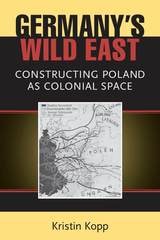
Germany's Wild East
Constructing Poland as Colonial SpaceKristin Kopp
University of Michigan Press, 2012
While conventional definitions locate colonial space overseas, Kristin Kopp argues that it was possible to understand both distant continents and adjacent Eastern Europe as parts of the same global periphery dependent upon Western European civilizing efforts. However, proximity to the source of aid translated to greater benefits for Eastern Europe than for more distant regions.

Germany, Propaganda and Total War, 1914-1918
David Welch
Rutgers University Press, 2000
Adolf Hitler, writing in Mein Kampf, was scathing in his condemnation of German propaganda in the First World War, declaring that Germany had failed to recognize propaganda as a weapon of the first order. This despite the fact that propaganda had been regarded, arguably for the first time, as an intrinsic part of the war effort.
David Welch has written the first book to fully examine German society — politics, propaganda, public opinion, and total war — in the Great War. Drawing on a wide range of sources — from posters, newspapers, journals, film, parliamentary debates, police and military reports, and private papers — Welch argues that the moral collapse of Germany was due less to the failure to disseminate propaganda than to the inability of the military authorities and the Kaiser to reinforce this propaganda, and to acknowledge the importance of public opinion in forging an effective link between leadership and the people.
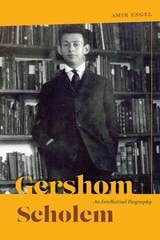
Gershom Scholem
An Intellectual BiographyAmir Engel
University of Chicago Press, 2017
As Engel shows, in his search for the truth of Jewish mysticism Scholem molded the vast literature of Jewish mystical lore into a rich assortment of stories that unveiled new truths about the modern condition. Positioning Scholem’s work and life within early twentieth-century Germany, Palestine, and later the state of Israel, Engel intertwines Scholem’s biography with his historiographical work, which stretches back to the Spanish expulsion of Jews in 1492, through the lives of Rabbi Isaac Luria and Sabbatai Zevi, and up to Hasidism and the dawn of the Zionist movement. Through parallel narratives, Engel touches on a wide array of important topics including immigration, exile, Zionism, World War One, and the creation of the state of Israel, ultimately telling the story of the realizations—and failures—of a dream for a modern Jewish existence.
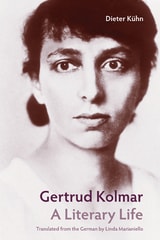
Gertrud Kolmar
A Literary LifeDieter Kühn
Northwestern University Press, 2013
Linda Marianiello here translates into English for the first time Dieter Kühn’s highly praised and definitive biography of one of Germany’s greatest poets, Gertrud Kolmar. Kolmar carried German-language poetry to new heights, speaking truth in a time when many poets collapsed in the face of increasing Nazi repression. Born Gertrud Käthe Chodziesner in Berlin in 1894, she completed her first collection, Poems, in 1917. She took her pen name, Kolmar, from the name of the town where her family originated.
Kolmar’s third collection of poems appeared in 1938 but soon disappeared in the wake of the overall repression of Jewish authors. At the time, she served as secretary to her father, Ludwig Chodziesner, a prominent lawyer. In 1941, the Nazis compelled her to work in a German armaments factory. Even as a forced laborer, the strength of her poetic voice grew, perhaps reaching its highest level before her deportation to Auschwitz. From gentle nature verses to stirring introspection, these are poems in which we can still find ourselves today. Both she and her father died in Nazi concentration camps, he in 1942, she the following year. The translation of Dieter Kühn’s biography conveys the tragic, yet courageous, life of a great poet to an English-speaking audience.
Gertrude Stein's Surrealist Years
Ery Shin
University of Alabama Press, 2020
Gertrude Stein’s Surrealist Years brings to life Stein’s surrealist sensibilities and personal values borne from her WWII anxieties, not least of which originated in a dread of anti-Semitism. Stein’s earlier works such as Tender Buttons and Lucy Church Amiably tend to prioritize formal innovations over narrative-building and overt political motifs. However, Ery Shin argues that Stein’s later works engage more with storytelling and life-writing in startling ways—most emphatically and poignantly through the surrealist lens.
Beginning with The Autobiography of Alice B. Toklas and continuing in later works, Stein renders legible her war-torn era’s jarring dystopian energies through narratives filled with hallucinatory visions, teleportation, extreme coincidences, action reversals, doppelgangers, dream sequences spanning both sleeping and waking states, and great whiffs of the occult. Such surrealist gestures are predicated on Stein’s return to the independent clause and, by extension, to plot, characterization, and anecdotes. By summoning the marvelous in a historically situated world, Stein joins her surrealist contemporaries in their own ambivalent crusade on behalf of historiography.
Besides illuminating Stein’s art and life, the surrealist framework developed here brings readers deeper into those philosophical ideas invoked by war. Topics of discussion emphasize how varied Jewish experiences were in Hitler’s Europe, how outliers like Stein can be included in the surrealist project, surrealism’s theoretical bind in the face of WWII, and the age-old question of artistic legacy.