Results by title
664 books match the query 'Ancient & Classical' and 19 start with g
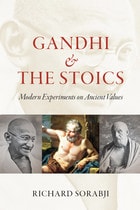
Gandhi and the Stoics
Modern Experiments on Ancient ValuesRichard Sorabji
University of Chicago Press, 2012

Giza and the Pyramids
The Definitive HistoryMark Lehner and Zahi Hawass
University of Chicago Press, 2017
The celebrated Great Pyramid of Khufu, or Cheops, is the only one of the seven wonders of the ancient world still standing, but there is much more to Giza. Though we imagine the pyramids of Khufu, Khafre, and Menkaure and the Sphinx rising from the desert, isolated and enigmatic, they were once surrounded by temples, noble tombs, vast cemeteries, and even harbors and teeming towns. This unparalleled account describes that past life in vibrant detail, along with the history of exploration, the religious and social function of the pyramids, how the pyramids were built, and the story of Giza before and after the Old Kingdom. Hundreds of illustrations, including vivid photographs of the monuments, excavations, and objects, as well as plans, reconstructions, and images from remote-controlled cameras and laser scans, help bring these monuments to life.
Through the ages, Giza and the pyramids have inspired extraordinary speculations and wild theories, but here, in this definitive account, is the in-depth story as told by the evidence on the ground and by the leading authorities on the site.

God of Many Names
Play, Poetry and Power in Hellenic Thought, From Homer to AristotleMihai I. Spariosu
Duke University Press, 1991
Building upon the scholarship of an earlier volume, Dionysus Reborn, Spariosu her continues to draw on Dionysus—the “God of many names,” of both poetic play and sacred power—as a mythical embodiment of the two sides of the classical Greek mentality. Combining philosophical reflection with close textual analysis, the author examines the divided nature of the Hellenic mentality in such primary canonic texts as the Iliad, the Odyssey, the Theogony, Works and Days, the most well-known of the Presocratic fragments, Euripides’ Bacchae, Aristophanes’ The Frogs, Plato’s Republic and Laws, and Aristotle’s Poetics and Politics.
Spariosu’s model illuminates the many of the most enduring questions in contemporary humanistic study and addresses modern questions about the nature of the interrelation of poetry, ethics, and politics.
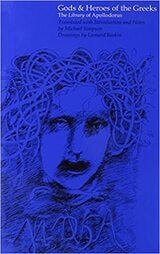
Gods and Heroes of the Greeks
The "Library" of ApollodorusMichael Simpson
University of Massachusetts Press, 1976
The immortal characters of Greek mythology enact their dramas, conflicts, and passions in the Library of Apollodorus. Probably composed in the first century A.D., it is the only Greek handbook of mythology to survive antiquity, and is a major source of our knowledge of Greek myths.
Beginning with the birth of the gods and ending with the death of Odysseus, the Library traces the destinies of such great mythic figures as Prometheus, Oedipus, Heracles, Daedalus, and the heroes of the Trojan War. Sir James G. Frazer called the Library “an accurate record of what the Greeks in general believed about the origin an early history of the world and their race.”
Michael Simpson’s new translation captures the fine simplicity and straightforwardness of the original. Leonard Baskin’s drawings throw a unique contemporary light on this ancient world.
Gods in Dwellings
Temples and Divine Presence in the Ancient Near EastMichael B. Hundley
SBL Press, 2013
In this book devoted exclusively to temples and perceptions of the divine presences that inhabit them, Michael B. Hundley focuses on the official religions of the ancient Near East and explores the interface between the human and the divine within temple environs.
Hundley identifies common ancient Near Eastern temple systems and examines issues that include what temple structures communicate, how temples were understood to function, temple ideology, the installation of divine presence in a temple, the connection between presence and physical representation, and human service to the deity.
Drawing on architectural and spatial theory, ritual theory, theories of language, art history, archaeology, sociocultural anthropology, and comparative studies, Hundley offers a single interpretive lens through which to view temple worship.
Features:
- A close examination of temples in Egypt, Mesopotamia, Hittite Anatolia, and Syria-Palestine
- An interdisciplinary treatment of architecture, language, ritual, and art
- A dual focus on how a deity's divine presence connects to space and art and how human service to the deity maintains the deity's active presence
Golden Cynthia
Essays on PropertiusSharon L. James, Editor
University of Michigan Press, 2022
The elegiac poet Propertius responds in his verse to the complex changes that Rome underwent in his period, taking on numerous topics including poetic and sexual rivalry, visual art, violence, inability to control the elusive mistress, imperialism, colonialism, civil war, the radical new shape of the Roman state under the new monarch Augustus, and more. These essays, by well-known scholars of Roman elegy, offer new ways of reading Propertius’ topics, attitudes, and poetics.
This book begins with two distinguished essays by the late Barbara Flaschenriem, whose work on Propertius remains influential. The other contributions, offered in honor of her, are by Diane Rayor, Andrew Feldherr, Ellen Greene, Lowell Bowditch, Alison Keith, and volume editor Sharon L. James. These essays explore topics including Propertian didacticism, dream interpretation, visual art and formalism, sex and violence, Roman imperialism and its connection to the elegiac puella, and Propertius’ engagement, in Book 4, with Vergil’s poetry.
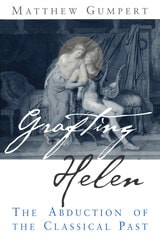
Grafting Helen
The Abduction of the Classical PastMatthew Gumpert
University of Wisconsin Press, 2001
Grafting Helen looks at "classicism"—the privileged rhetorical language for describing cultural origins in the West—as a protracted form of cultural embezzlement. No coin in the realm has been more valuable, more circulated, more coveted, or more counterfeited than the one that bears the face of Helen of Troy. Gumpert uncovers Helen as the emblem for the past as something to be stolen, appropriated, imitated, extorted, and coveted once again.
Tracing the figure of Helen from its classical origins through the Middle Ages, the French Renaissance, and the modern era, Gumpert suggests that the relation of current Western culture to the past is not like the act of coveting; it is the act of coveting, he argues, for it relies on the same strategies, the same defenses, the same denials, and the same delusions.
Greek Gods in the East
Hellenistic Iconographic Schemes in Central AsiaLadislav Stanco
Karolinum Press, 2012
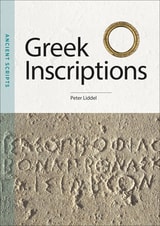
Greek Inscriptions
Ancient ScriptsPeter Liddel
J. Paul Getty Trust, The, 2025
Ancient Greek inscriptions are crucially important in understanding the cultures of Greece and the Mediterranean in antiquity. They provide glimpses of the behavior of the people of the time, including clues about their mindsets and aspirations. These public records combine word and image in a multitude of ways and are rich in the insights they offer.
The inscriptions examined in this volume come from a range of objects on metal or stone that include laws, decrees, accounts and inventories, honorific texts, dedications to deities, and funerary epitaphs. They give a broad view of interstate relations, historical narratives, and the political administration of various city-states while also providing new perspectives on concepts such as democracy, citizenship, gender, ethnicity, religion, and the supernatural. Peter Liddel emphasizes the physical form of the texts alongside their importance in understanding ancient Greek culture. Accessible and insightful, Greek Inscriptions both highlights the significance and history of these artifacts and examines their reception in the modern world.
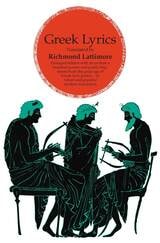
Greek Lyrics, Second Edition
More than a Hundred Poems and Poetic Fragments from the Great Age of Greek Lyric PoetryRichmond Lattimore
University of Chicago Press, 1960
In this second edition of Greek Lyrics, translator and editor Richmond Lattimore brings together a vast assortment of seventh-and sixth-century Greek lyric, elegiac, and iambic poetry. For the Greekless student or curious scholar, these translations showcase the diversity of poetic subjects in classical antiquity, which range from love poems to medical inscriptions and drinking songs. Gracefully and robustly translated by a number of top-tier translators, this volume includes poets such as Archílochus, Callínus, Semónides of Amórgos, Hippónax, Tyrtaéus, Mimnérmus, Solon, Phocýlides, Xenóphanes, Theógnis, Terpánder, Alcman, Stesíchorus, íbycus, Sappho, Alcaéus, Anácreon, Hýbrias, Praxílla, Corínna, Simónides of Ceos, Pindar, and Bacchýlides.
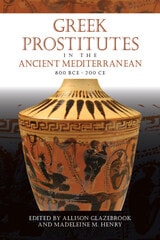
Greek Prostitutes in the Ancient Mediterranean, 800 BCE–200 CE
Allison Glazebrook
University of Wisconsin Press, 2011
Greek Prostitutes in the Ancient Mediterranean, 800 BCE–200 CE challenges the often-romanticized view of the prostitute as an urbane and liberated courtesan by examining the social and economic realities of the sex industry in Greco-Roman culture. Departing from the conventional focus on elite society, these essays consider the Greek prostitute as displaced foreigner, slave, and member of an urban underclass.
The contributors draw on a wide range of material and textual evidence to discuss portrayals of prostitutes on painted vases and in the literary tradition, their roles at symposia (Greek drinking parties), and their place in the everyday life of the polis. Reassessing many assumptions about the people who provided and purchased sexual services, this volume yields a new look at gender, sexuality, urbanism, and economy in the ancient Mediterranean world.
Greek Tragedies 1
Aeschylus: Agamemnon, Prometheus Bound; Sophocles: Oedipus the King, Antigone; Euripides: HippolytusEdited by Mark Griffith, Glenn W. Most, David Grene, and Richmond Lattimore
University of Chicago Press, 2013
Greek Tragedies 2
Aeschylus: The Libation Bearers; Sophocles: Electra; Euripides: Iphigenia among the Taurians, Electra, The Trojan WomenEdited by Mark Griffith, Glenn W. Most, David Grene, and Richmond Lattimore
University of Chicago Press, 2013
Greek Tragedies 3
Aeschylus: The Eumenides; Sophocles: Philoctetes, Oedipus at Colonus; Euripides: The Bacchae, AlcestisEdited by Mark Griffith, Glenn W. Most, David Grene, and Richmond Lattimore
University of Chicago Press, 2013
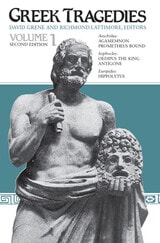
Greek Tragedies, Volume 1
Edited by David Grene and Richmond Lattimore
University of Chicago Press, 1991
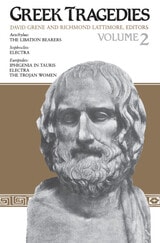
Greek Tragedies, Volume 2
Edited by David Grene and Richmond Lattimore
University of Chicago Press, 1960
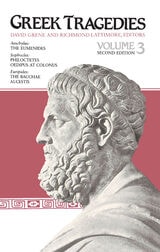
Greek Tragedies, Volume 3
Edited by David Grene and Richmond Lattimore
University of Chicago Press, 1991
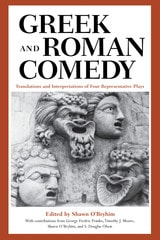
Greek and Roman Comedy
Translations and Interpretations of Four Representative PlaysEdited by Shawn O'Bryhim
University of Texas Press, 2001
Much of what we know of Greco-Roman comedy comes from the surviving works of just four playwrights—the Greeks Aristophanes and Menander and the Romans Plautus and Terence. To introduce these authors and their work to students and general readers, this book offers a new, accessible translation of a representative play by each playwright, accompanied by a general introduction to the author's life and times, a scholarly article on a prominent theme in the play, and a bibliography of selected readings about the play and playwright.
This range of material, rare in a single volume, provides several reading and teaching options, from the study of a single author to an overview of the entire Classical comedic tradition. The plays have been translated for readability and fidelity to the original text by established Classics scholars. Douglas Olson provides the translation and commentary for Aristophanes' Acharnians, Shawn O'Bryhim for Menander's Dyskolos, George Fredric Franco for Plautus' Casina, and Timothy J. Moore for Terence's Phormio.
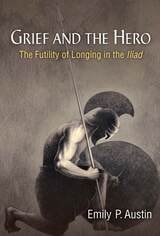
Grief and the Hero
The Futility of Longing in the IliadEmily P. Austin
University of Michigan Press, 2021
Grief and the Hero examines Achilles’ experience of the futility of grief in the context of the Iliad’s study of anger. No action can undo his friend Patroklos’ death, but the experience of death drives him to behave as though he can achieve something restorative. Rather than assuming that grief gives rise to anger, as most scholars have done, Grief and the Hero pays close attention to the poem’s representation of the origin of these emotions. In the Iliad, only Achilles’ grief for Patroklos is joined with the word pothê, “longing”; no other grief in the poem is described with this term. The Iliad depicts Achilles’ grief as the rupture of shared life—an insight that generates a new way of reading the epic. Achilles’ anguish drives him to extremes, oscillating between self-isolation and seeking communal expressions of grief; between weeping abundantly and relentlessly pursuing battle; between varied threats of mutilation, deeds of vengeance, and other vows. Yet his yearning for life shared with Patroklos is the common denominator. Here lies the profound insight of the Iliad. All of Achilles’ grief-driven deeds arise from his longing for life with Patroklos, and thus all of these deeds are, in a deep sense, futile. He yearns for something unattainable—undoing the reality of death. Grief and the Hero will appeal not only to scholars and students of Homer but to all humanists. Loss, longing, and even revenge touch many human lives, and the insights of the Iliad have broad resonance.