Results by title
1038 books match the query 'Antiquities' and 16 start with g
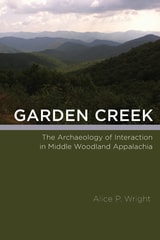
Garden Creek
The Archaeology of Interaction in Middle Woodland AppalachiaAlice P. Wright
University of Alabama Press, 2020
Presents archaeological data to explore the concept of glocalization as applied in the Hopewell world
Originally coined in the context of twentieth-century business affairs, the term glocalization describes how the global circulation of products, services, or ideas requires accommodations to local conditions, and, in turn, how local conditions can significantly impact global markets and relationships. Garden Creek: The Archaeology of Interaction in Middle Woodland Appalachia presents glocalization as a concept that can help explain the dynamics of cross-cultural interaction not only in the present but also in the deep past.
Alice P. Wright uses the concept of glocalization as a framework for understanding the mutual contributions of large-scale and small-scale processes to prehistoric transformations. Using geophysical surveys, excavations, and artifact analysis, Wright shows how Middle Woodland cultural contact wrought changes in religious practices, such as mound building and the crafting of ritual objects for exchange or pilgrimage.
Wright presents and interprets original archaeological data from the Garden Creek site in western North Carolina as part of a larger study of the Hopewell Interaction Sphere, a well-known but poorly understood episode of cross-cultural interaction that linked communities across eastern North America during the Middle Woodland period. Although Hopewellian culture contact did not encompass the entire planet, it may have been “global” to those who experienced and created it, as it subsumed much of the world as Middle Woodland people knew it. Reimagining Hopewell as an episode of glocalization more fully accounts for the diverse communities, interests, and processes involved in this “global” network.
Gardens of Prehistory
The Archaeology of Settlement Agriculture in Greater MesoamericaThomas W. Killion
University of Alabama Press, 1992
The prehistoric agricultural systems of the New World provided the foundations for a diverse set of complex social developments ranging from the puebloan societies of the American Southwest to the archaic state polities of Mesoamerica and the Andean region. From the tropical forests of Central America to the arid environments or northern New Mexico, Native American farmers made use of a distinctive set of cultigens and cropping systems that supported—with varying degrees of success—growing populations and expanding economies. Lacking most domesticated animals, so important to the mixed agricultural systems of the Old World, Precolumbian farmers developed intensive and resilient systems of agricultural production. These systems supported large societies of people who altered the landscapes they inhabited and generated a unique archaeological record of the evolution of farming in the New World.
Gheo-Shih
An Archaic Macroband Camp in the Valley of OaxacaFrank Hole and Kent V. Flannery
University of Michigan Press, 2024
Giza and the Pyramids
The Definitive HistoryMark Lehner and Zahi Hawass
University of Chicago Press, 2017
The celebrated Great Pyramid of Khufu, or Cheops, is the only one of the seven wonders of the ancient world still standing, but there is much more to Giza. Though we imagine the pyramids of Khufu, Khafre, and Menkaure and the Sphinx rising from the desert, isolated and enigmatic, they were once surrounded by temples, noble tombs, vast cemeteries, and even harbors and teeming towns. This unparalleled account describes that past life in vibrant detail, along with the history of exploration, the religious and social function of the pyramids, how the pyramids were built, and the story of Giza before and after the Old Kingdom. Hundreds of illustrations, including vivid photographs of the monuments, excavations, and objects, as well as plans, reconstructions, and images from remote-controlled cameras and laser scans, help bring these monuments to life.
Through the ages, Giza and the pyramids have inspired extraordinary speculations and wild theories, but here, in this definitive account, is the in-depth story as told by the evidence on the ground and by the leading authorities on the site.
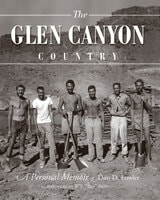
Glen Canyon Country, The
A Personal MemoirDon D Fowler
University of Utah Press, 2011
In his new book, The Glen Canyon Country, archaeologist Don D. Fowler shares the history of a place and the peoples who sojourned there over the course of several thousand years. To tell this story, he weaves his personal experience as a student working on the Glen Canyon Salvage Project with accounts of early explorers, geologists, miners, railroad developers, settlers, river runners, and others who entered this magical place. The book details the canyon’s story via historical and scientific summaries, biographical sketches, personal memoir, and previously unpublished photos of the land and its explorers.
Glen Canyon
An Archaeological SummaryJesse D Jennings
University of Utah Press, 1998
In 1956, Congress passed legislation that provided authorization and funds for emergency research to be conducted in Glen Canyon in response to the threat of losses posted by the construction of the Glen Canyon Dam in northern Arizona. For eight years, scientists worked against the clock to record the archaeology, geology, history, and paleontology of the region before the waters of Lake Powell covered the area.
In this highly interpretive summary, Jesse Jennings preserves the achievements of the salvage team and explains how the finds affected previous conclusions. Maps and photographs capture archaeological artifacts as well as the landscape of the area. This book also highlights the larger consequences of the massive salvage project — among them the stimulation of additional Southwest research, the applications of techniques made in response to emergency situations, and a valuable perspective on the Pueblo culture. Because this area is becoming increasingly controversial, with a raging debate over whether Lake Powell should be drained, Glen Canyon: An Archaeological Summary stands as more than a model of salvage archaeology. It is also a record and testament of the rich history of Glen Canyon.
God-Apes and Fossil Men
Paleoanthropology of South AsiaKenneth A. R. Kennedy
University of Michigan Press, 2000
Great Basin Rock Art
Archaeological PerspectivesAngus R. Quinlan
University of Nevada Press, 2007
Rock art is one of humankind’s most ancient forms of artistic expression, and one of its most enigmatic. For centuries, scholars and other observers have struggled to interpret the meaning of the mysterious figures incised or painted on natural rocks and to understand their role in the lives of their long-vanished creators. The Great Basin of the American West is especially rich in rock art, but until recently North American archaeologists have largely ignored these most visible monuments left by early Native Americans and have given little attention to the terrain surrounding them. In Great Basin Rock Art, twelve respected rock art researchers examine a number of significant sites from the dual perspectives of settlement archaeology and contemporary Native American interpretations of the role of rock art in their cultural past. The authors demonstrate how modern archaeological methodology and interpretations are providing a rich physical and cultural context for these ancient and hitherto puzzling artifacts. They offer exciting new insights into the lives of North America’s first inhabitants. This is essential reading for anyone interested in the petroglyphs of the American West and in the history of the Great Basin and its original peoples.
Great House Communities across the Chacoan Landscape
John Kantner
University of Arizona Press, 2000
Great Maya Droughts in Cultural Context
Case Studies in Resilience and VulnerabilityGyles Iannone
University Press of Colorado, 2014
The Great Maya Droughts in Cultural Context offers new insights into the complicated series of events that impacted the decline of Maya civilization. This significant contribution to our increasingly comprehensive understanding of ancient Maya culture will be of interest to students and scholars of archaeology, anthropology, geography, and environmental studies.
Greater Chaco Landscape
Ancestors, Scholarship, and AdvocacyRuth M. Van Dyke
University Press of Colorado, 2020
Contributors analyze many different dimensions of the Chacoan landscape and present the most effective, innovative, and respectful means of studying them, focusing on the significance of thousand-year-old farming practices; connections between early great houses outside the canyon and the rise of power inside it; changes to Chaco’s roads over time as observed in aerial imagery; rock art throughout the greater Chaco area; respectful methods of examining shrines, crescents, herraduras, stone circles, cairns, and other landscape features in collaboration with Indigenous colleagues; sensory experiences of ancient Chacoans via study of the sightlines and soundscapes of several outlier communities; and current legal, technical, and administrative challenges and options concerning preservation of the landscape.
An unusually innovative and timely volume that will be available both in print and online, with the online edition incorporating video chapters presented by Acoma, Diné, Zuni, and Hopi cultural experts filmed on location in Chaco Canyon, The Greater Chaco Landscape is a creative collaboration with Native voices that will be a case study for archaeologists and others working on heritage management issues across the globe. It will be of interest to archaeologists specializing in Chaco and the Southwest, interested in remote sensing and geophysical landscape-level investigations, and working on landscape preservation and phenomenological investigations such as viewscapes and soundscapes.
Contributors: R. Kyle Bocinsky, G. B. Cornucopia, Timothy de Smet, Sean Field, Richard A. Friedman, Dennis Gilpin, Presley Haskie, Tristan Joe, Stephen H. Lekson, Thomas Lincoln, Michael P. Marshall, Terrance Outah, Georgiana Pongyesva, Curtis Quam, Paul F. Reed, Octavius Seowtewa, Anna Sofaer, Julian Thomas, William B. Tsosie Jr., Phillip Tuwaletstiwa, Ernest M. Vallo Jr., Carla R. Van West, Ronald Wadsworth, Robert S. Weiner, Thomas C. Windes, Denise Yazzie, Eurick Yazzie
Greater Mesoamerica
The Archaeology of West and Northwest MexicoMichael S Foster
University of Utah Press, 2000
Edited by Michael S. Foster and Shirley Gorenstein
Archaeology
Mesoamerican studies, as they are still practiced today, are framed by the Spanish colonial intrusion into Mexico from the east, and subsequent involvement with the Aztec Empire. Greater Mesoamerica expands the definition of "Mesoamerica" beyond the more traditionally accepted central Mexican areas to both western and northwestern Mexico where sophisticated cultures were flourishing outside the realm of Spanish influence. It is the first comprehensive overview of both regions since the Handbook of Middle American Indians was published in the early 1970s.
Based on recent archaeological surveys and excavations, the chapters in this volume provide current, comprehensive, area-by-area summaries of the region's Precolumbian past, noting the discovery of new cultural configurations, new connections, and new complexities.
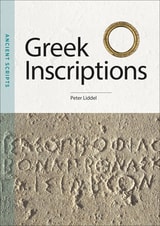
Greek Inscriptions
Ancient ScriptsPeter Liddel
J. Paul Getty Trust, The, 2025
Ancient Greek inscriptions are crucially important in understanding the cultures of Greece and the Mediterranean in antiquity. They provide glimpses of the behavior of the people of the time, including clues about their mindsets and aspirations. These public records combine word and image in a multitude of ways and are rich in the insights they offer.
The inscriptions examined in this volume come from a range of objects on metal or stone that include laws, decrees, accounts and inventories, honorific texts, dedications to deities, and funerary epitaphs. They give a broad view of interstate relations, historical narratives, and the political administration of various city-states while also providing new perspectives on concepts such as democracy, citizenship, gender, ethnicity, religion, and the supernatural. Peter Liddel emphasizes the physical form of the texts alongside their importance in understanding ancient Greek culture. Accessible and insightful, Greek Inscriptions both highlights the significance and history of these artifacts and examines their reception in the modern world.
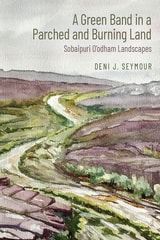
Green Band in a Parched and Burning Land
Sobaipuri O’odham Landscapesby Deni J. Seymour
University Press of Colorado, 2022
First and foremost irrigation farmers, the Sobaipuri O’odham permanently occupied verdant strips along all the major rivers in the region—including the headwaters of the San Pedro and various other areas thought to be beyond their domain. Seymour draws on career-spanning fieldwork, conversations with direct descendants (the O’odham residents of Wa:k), and recent breakthroughs in archaeological, ethnographic, and ethnohistorical research to shed light on their unique forms of landscape use, settlement patterns, and way of life. She details the building materials, linear site layout, and other elements of their singular archaeological signature; newly established dating for individual sites, complex building episodes, and occupational sequences; and evidence of cumulative village occupation as well as the habitation of river valleys and other locales long after supposed abandonment. The book also explains the key relationships between site distributions and landscape characteristics.
Addressing some of the longest-standing archaeological and historical questions about the Sobaipuri O’odham, A Green Band in a Parched and Burning Land reorients the discussion of their crucial place in the history of the region in constructive new directions.
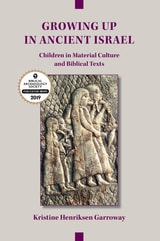
Growing Up in Ancient Israel
Children in Material Culture and Biblical TextsKristine Henriksen Garroway
SBL Press, 2018
The first expansive reference examining the texts and material culture related to children in ancient Israel
Growing Up in Ancient Israel uses a child-centered methodology to investigate the world of children in ancient Israel. Where sources from ancient Israel are lacking, the book turns to cross-cultural materials from the ancient Near East as well as archaeological, anthropological, and ethnographic sources. Acknowledging that childhood is both biologically determined and culturally constructed, the book explores conception, birth, infancy, dangers in childhood, the growing child, dress, play, and death. To bridge the gap between the ancient world and today’s world, Kristine Henriksen Garroway introduces examples from contemporary society to illustrate how the Hebrew Bible compares with a Western understanding of children and childhood.
Features:
- More than fifty-five illustrations illuminating the world of the ancient Israelite child
- An extensive investigation of parental reactions to the high rate of infant mortality and the deaths of infants and children
- An examination of what the gendering and enculturation process involved for an Israelite child
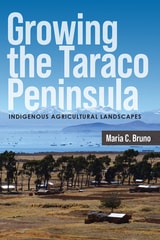
Growing the Taraco Peninsula
Indigenous Agricultural LandscapesMaria C. Bruno
University Press of Colorado, 2024
Beginning with the first small-scale communities of the Formative period (1500 BCE–500 CE) through the development of the Tiwanaku state (500–1100 CE), Bruno draws upon ethnographic insights from modern-day Indigenous farming practices on the peninsula as well as archaeological evidence from excavations at four sites to explore the landscapes and human-plant relationships that Taraco communities created through their agricultural practices. Through evaluation of environmental data on climate and land-use dynamics—rainfall, lake level, and soil character and distribution—she proposes a new hypothesis of how raised-field agriculture may have emerged in the region. With a detailed analysis of foodways at the Kala Uyuni site, her study reveals how Indigenous Taraco communities sustainably incorporated crops and wild plants into their daily and special-occasion meals, connecting the agricultural landscapes to local and regional social and political dynamics.
Bringing together several indicators of the region’s long-term history and demonstrating that shifts in agriculture do not neatly correspond to the changes traditionally highlighted by archaeological culture histories, Growing the Taraco Peninsula reveals Indigenous landscape creation through farming on the Taraco peninsula as a critical example of sustainability. This valuable contribution to Andean archaeology is also of interest to scholars, students, and the general reader concerned about the environment, sustainable farming, sustainability, Andean history, and the Indigenous peoples of the Americas.