167 books match the query 'Artists, Architects, Photographers' and 7 start with g
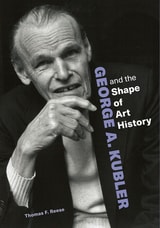
cover of George A. Kubler and the Shape of Art History

George A. Kubler and the Shape of Art History

Thomas F. Reese

J. Paul Getty Trust, The, 0

An illuminating intellectual biography of a pioneering and singular figure in American art history.
 
Art historian George A. Kubler (1912–1996) was a foundational scholar of ancient American art and archaeology as well as Spanish and Portuguese architecture. During over five decades at Yale University, he published seventeen books that included innovative monographs, major works of synthesis, and an influential theoretical treatise. In this biography, Thomas F. Reese analyzes the early formation, broad career, and writings of Kubler, casting nuanced light on the origins and development of his thinking.
 
Notable in Reese’s discussion and contextualization of Kubler’s writings is a revealing history and analysis of his Shape of Time—a book so influential to students, scholars, artists, and curious readers in multiple disciplines that it has been continuously in print since 1962. Reese reveals how pivotal its ideas were in Kubler’s own thinking: rather than focusing on problems of form as an ordering principle, he increasingly came to sequence works by how they communicate meaning. The author demonstrates how Kubler, who professed to have little interest in theory, devoted himself to the craft of art history, discovering and charting the rules that guided the propagation of structure and significance through time.

[more]
cover of George Caleb Bingham: Missouri's Famed Painter and Forgotten Politician

George Caleb Bingham

Missouri's Famed Painter and Forgotten Politician

Paul C. Nagel

University of Missouri Press, 2005
In this fascinating work, Paul Nagel tells the full story of George Caleb Bingham (1811–1879), one of America’s greatest nineteenth-century painters. While Nagel assesses Bingham’s artistic achievements, he also portrays another very important part of the artist’s career—his service as a statesman and political leader in Missouri. Until now, Bingham’s public service has been largely forgotten, overshadowed by his triumph as a great artist. Yet Nagel finds there were times when Bingham yearned more to be a successful politician than to be a distinguished painter.
            Born in Virginia, Bingham moved with his family to Missouri when he was eight years old. He spent his youth in Arrow Rock, Missouri, and returned there as an adult. He also kept art studios in Columbia and St. Louis. In his last years, he served as the first professor of art at the University of Missouri in Columbia. Because of his ties to the state, he was known nationally as “the Missouri artist.” Bingham began his distinguished public service to Missouri as a member of the legislature. During the Civil War, he grew even more politically involved, holding the office of state treasurer, and he remained active throughout the period of Reconstruction. From 1875 to 1877, Bingham served as Missouri’s adjutant general, with most of that time spent in Washington, D. C., where he attempted to settle Missourians’ war claims against the federal government.
            Contrary to the idyllic scenes portrayed in most of his paintings, Bingham’s life ranged from moments of high achievement to times of intense distress and humiliation. His career was often touched by controversy, sorrow, and frustration. Personal letters and other manuscripts reveal Bingham’s life to be quite complicated, and Paul Nagel attempts to uncover the truth in this biography.
            Beautifully illustrated, this book includes a magnificent landscape entitled Horse Thief, which had been missing since Bingham painted it sometime around 1852. Recently discovered by art historian Fred R. Kline, this splendid work will appear in print for the first time. Anyone who has an interest in art, Missouri history, or politics will find this new book extremely valuable.
[more]
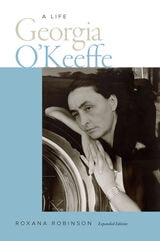
cover of Georgia O'Keeffe: A Life

Georgia O'Keeffe

A Life

Roxana Robinson

Brandeis University Press, 2020

One of the greatest and most admired artists of the twentieth century, Georgia O’Keeffe led a life rich in intense relationships—with family, friends, and especially with fellow artist Alfred Stieglitz. Her extraordinary accomplishments, such as the often eroticized flowers, bones, stones, skulls, and pelvises she painted with such command, are all the more remarkable when seen in the context of the struggle she waged between the rigorous demands of love and work.

When Roxana Robinson’s definitive biography of O’Keeffe was first published in 1989, it received rave reviews and was named a New York Times Notable Book of the Year. This new edition features a new foreword by the author setting O’Keefe in an artistic context over the last thirty years since the book was first published, as well as previously unpublished letters of the young O’Keeffe to her lover, Arthur MacMahon. It also relates the story of Robinson’s own encounter with the artist. As interest in O’Keeffe continues to grow among museum-goers and scholars alike, this book remains indispensable for understanding her life and art.
[more]
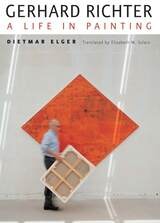
cover of Gerhard Richter: A Life in Painting

Gerhard Richter

A Life in Painting

Dietmar Elger

University of Chicago Press, 2010

Gerhard Richter is one of the most important and influential artists of the post-war era. For decades he has sought innovative ways to make painting more relevant, often through a multifaceted dialogue with photography. Today Richter is most widely recognized for the photo-paintings he made during the 1960s that rely on images culled from mass media and pop culture. Always fascinated with the limits and uncertainties of representation, he has since then produced landscapes, abstractions, glass and mirror constructions, prints, sculptures, and installations.


Though Richter has been known in the United States for quite some time, the highly successful retrospective of his work at the MoMA in 2002 catapulted him to unprecedented fame. Enter noted curator Dietmar Elger, who here presents the first biography of this contemporary artist. Written with full access to Richter and his archives, this fascinating book offers unprecedented insight into his life and work. Elger explores Richter’s childhood in Nazi Germany; his years as a student and mural painter in communist East Germany; his time in the West during the turbulent 1960s and ’70s, when student protests, political strife, and violence tore the Federal Republic of Germany apart; and his rise to international acclaim during the 1980s and beyond.


Richter has always been a difficult personality to parse and the seemingly contradictory strands of his artistic practice have frustrated and sometimes confounded critics. But the extensive interviews on which this book is based disclose a Richter who is far more candid, personal, and vivid than ever before. The result is a book that will be the foundational portrait of this artist for years to come.

[more]
cover of Get the Picture: A Personal History of Photojournalism

Get the Picture

A Personal History of Photojournalism

John G. Morris

University of Chicago Press, 2002

How do photojournalists get the pictures that bring us the action from the world's most dangerous places? How do picture editors decide which photos to scrap and which to feature on the front page?

Find out in Get the Picture, a personal history of fifty years of photojournalism by one of the top journalists of the twentieth century. John G. Morris brought us many of the images that defined our era, from photos of the London air raids and the D-Day landing during World War II to the assassination of Robert Kennedy. He tells us the inside stories behind dozens of famous pictures like these, which are reproduced in this book, and provides intimate and revealing portraits of the men and women who shot them, including Robert Capa, Henri Cartier-Bresson, and W. Eugene Smith. A firm believer in the power of images to educate and persuade, Morris nevertheless warns of the tremendous threats posed to photojournalists today by increasingly chaotic wars and the growing commercialism in publishing, the siren song of money that leads editors to seek pictures that sell copies rather than those that can change the way we see the world.
[more]
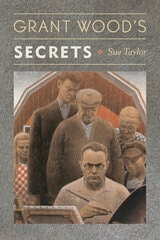
cover of Grant Wood’s Secrets

Grant Wood’s Secrets

Sue Taylor

University of Delaware Press, 2011

Incorporating copious archival research and original close readings of American artist Grant Wood’s iconic as well as lesser-known works, Grant Wood’s Secrets reveals how his sometimes anguished psychology was shaped by his close relationship with his mother and how he channeled his lifelong oedipal guilt into his art. Presenting Wood’s abortive autobiography “Return from Bohemia” for the first time ever, Sue Taylor integrates the artist’s own recollections into interpretations of his art. As Wood dressed in overalls and boasted about his beloved Midwest, he consciously engaged in regionalist strategies, performing a farmer masquerade of sorts. In doing so, he also posed as conventionally masculine, hiding his homosexuality from his rural community. Thus, he came to experience himself as a double man. This book conveys the very real threats under which Wood lived and pays tribute to his resourceful responses, which were often duplicitous and have baffled art historians who typically take them at face value.

Published by University of Delaware Press. Distributed worldwide by Rutgers University Press.
[more]
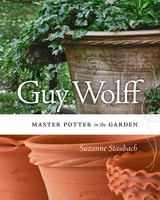
cover of Guy Wolff: Master Potter in the Garden

Guy Wolff

Master Potter in the Garden

Suzanne Staubach

University Press of New England, 2013

If you mention Guy Wolff to a serious gardener, that gardener will almost certainly admit to either owning a Guy Wolff flowerpot or coveting one. Wolff’s pots—some small and perfect for a sunny windowsill, others massive and just right for a favorite outdoor spot—are widely considered to be the epitome of gardenware. Their classical proportions, simple decoration, and the marks of Wolff’s hands all combine to make plants look their best. His pots possess an honesty and liveliness that machine-made flowerpots lack. Wolff is probably the best-known potter working in the United States today. In gardening circles, he is a highly revered horticultural icon; gardeners flock to his lectures and demonstrations. His work also appeals to lovers of design and fine arts: visit the personal gardens of landscape designers, and you will see Guy Wolff pots. Step inside the gates of estate gardens, and you will see Guy Wolff pots. Yet he is a potter’s potter. He’s a big ware thrower, a skill few have today. He thinks deeply about what he calls the architecture of pots and the importance of handmade objects in our lives. Whether you are a longtime collector of Wolff’s pots, anxious to buy your first one, or simply intrigued by the beauty and practicality of hand-crafted goods in our fast-paced era, you’ll want to add this richly illustrated book to your library.
[more]