1272 books match the query 'Asia' and 38 start with g

cover of Gamelan Gong Kebyar: The Art of Twentieth-Century Balinese Music

Gamelan Gong Kebyar

The Art of Twentieth-Century Balinese Music

Michael Tenzer

University of Chicago Press, 2000

The Balinese gamelan, with its shimmering tones, breathless pace, and compelling musical language, has long captivated musicians, composers, artists, and travelers. Here, Michael Tenzer offers a comprehensive and durable study of this sophisticated musical tradition, focusing on the preeminent twentieth-century genre, gamelan gong kebyar.

Combining the tools of the anthropologist, composer, music theorist, and performer, Tenzer moves fluidly between ethnography and technical discussions of musical composition and structure. In an approach as intricate as one might expect in studies of Western classical music, Tenzer's rigorous application of music theory and analysis to a non-Western orchestral genre is wholly original. Illustrated throughout, the book also includes nearly 100 pages of musical transcription (in Western notation) that correlate with 55 separate tracks compiled on two accompanying compact discs.

The most ambitious work on gamelan since Colin McPhee's classic Music in Bali, this book will interest musicians of all kinds and anyone interested in the art and culture of Southeast Asia, Indonesia, and Bali.
[more]
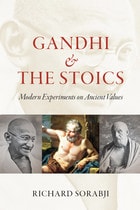
cover of Gandhi and the Stoics: Modern Experiments on Ancient Values

Gandhi and the Stoics

Modern Experiments on Ancient Values

Richard Sorabji

University of Chicago Press, 2012
“Was Gandhi a philosopher? Yes.” So begins this remarkable investigation of the guiding principles that motivated the transformative public acts of one of the top historical figures of the twentieth century. Richard Sorabji, continuing his exploration of the many connections between South Asian thought and ancient Greek and Roman philosophy, brings together in this volume the unlikely pairing of Mahatma Gandhi and the Stoics, uncovering a host of parallels that suggests a deep affinity spanning the two millennia between them.
 
While scholars have long known Gandhi’s direct Western influences to be Platonic and Christian, Sorabji shows how a look at Gandhi’s convergence with the Stoics works mutually, throwing light on both of them. Both emphasized emotional detachment, which provided a necessary freedom, a suspicion of universal rules of conduct that led to a focus not on human rights but human duties—the personally determined paths each individual must make for his or her self. By being indifferent, paradoxically, both the Stoics and Gandhi could love manifoldly. In drawing these links to the fore, Sorabji demonstrates the comparative consistency of Gandhi’s philosophical ideas, isolating the specific ideological strengths that were required to support some of the most consequential political acts and experiments in how to live.
[more]
cover of Gandhi in India: In His Own Words

Gandhi in India

In His Own Words

Mahatma Gandhi and Martin Green

Brandeis University Press, 1987

[more]
cover of Gas Mask Nation: Visualizing Civil Air Defense in Wartime Japan

Gas Mask Nation

Visualizing Civil Air Defense in Wartime Japan

Gennifer Weisenfeld

University of Chicago Press, 2023

A fascinating look at the anxious pleasures of Japanese visual culture during World War II.
 
Airplanes, gas masks, and bombs were common images in wartime Japan. Yet amid these emblems of anxiety, tasty caramels were offered to children with paper gas masks as promotional giveaways, and magazines featured everything from attractive models in the latest civil defense fashion to futuristic weapons.
 
Gas Mask Nation
explores the multilayered construction of an anxious yet perversely pleasurable visual culture of Japanese civil air defense—or bōkū—through a diverse range of artworks, photographs, films and newsreels, magazine illustrations, postcards, cartoons, advertising, fashion, everyday goods, government posters, and state propaganda. Gennifer Weisenfeld reveals the immersive aspects of this culture, in which Japan’s imperial subjects were mobilized to regularly perform highly orchestrated civil air defense drills throughout the country.
 
The war years in Japan are often portrayed as a landscape of privation and suppression under the censorship of the war machine. But alongside the horrors, pleasure, desire, wonder, creativity, and humor were all still abundantly present in a period before air raids went from being a fearful specter to a deadly reality.
 
[more]
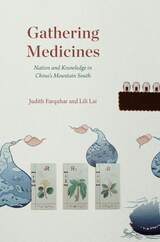
cover of Gathering Medicines: Nation and Knowledge in China’s Mountain South

Gathering Medicines

Nation and Knowledge in China’s Mountain South

Judith Farquhar and Lili Lai

University of Chicago Press, 2021

In the early 2000s, the central government of China encouraged all of the nation’s registered minorities to “salvage, sort, synthesize, and elevate” folk medical knowledges in an effort to create local health care systems comparable to the nationally supported institutions of traditional Chinese medicine. Gathering Medicines bears witness to this remarkable moment of knowledge development while sympathetically introducing the myriad therapeutic traditions of southern China.
 
Over a period of six years, Judith Farquhar and Lili Lai worked with seven minority nationality groups in China’s southern mountains, observing how medicines were gathered and local healing systems codified. Gathering Medicines shares their intimate view of how people understand ethnicity, locality, the body, and nature. This ethnography of knowledge diversities in multiethnic China is a testament to the rural wisdom of mountain healers, one that theorizes, from the ground up, the dynamic encounters between formal statist knowledge and the popular authority of the wild.

[more]
cover of Gathering the Ashes

Gathering the Ashes

Amritlal Nagar

Seagull Books, 2016

Most discussions of India’s First War of Independence from British colonial rule in 1857 have centered on the role played by the Mughal emperor, the nawab of Awadh, and other sundry members of mostly urban nobility. What has remained missing from this coverage is how ordinary people across the countryside experienced the rebellion and how they passed their stories down to the following generations. In 1957, eminent Hindi writer Amritlal Nagar set out to correct this, travelling through villages and towns scattered across India’s heartland and painstakingly gathering reminiscences and popular ballads about the revolt—its celebrated and unsung heroes, its survivors and martyrs, and where and how various battles were fought. Aging courtesans, bedridden octogenarians, and nameless singers poured their hearts out to Nagar, and the substantial volume he put together made it clear, even to the lay reader, that nothing can stop the spread of a revolution whose time has come.

Translated from Hindi for the first time by Mrinal Pande, Gathering the Ashes is a poignant look into history, enriched by Pande’s useful afterword and a reminiscence by Nagar’s son.
[more]
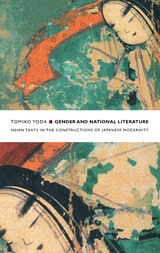
cover of Gender and National Literature: Heian Texts in the Constructions of Japanese Modernity

Gender and National Literature

Heian Texts in the Constructions of Japanese Modernity

Tomiko Yoda

Duke University Press, 2004

Boldly challenging traditional understandings of Heian literature, Tomiko Yoda reveals the connections between gender, nationalism, and cultural representation evident in prevailing interpretations of classic Heian texts. Renowned for the wealth and sophistication of women’s writing, the literature of the Heian period (794–1192) has long been considered central to the Japanese literary canon and Japanese national identity. Yoda historicizes claims about the inherent femininity of this literature by revisiting key moments in the history of Japanese literary scholarship from the eighteenth century to the present. She argues that by foregrounding women’s voices in Heian literature, the discipline has repeatedly enacted the problematic modernizing gesture in which the “feminine” is recognized, canceled, and then contained within a national framework articulated in masculine terms.

Moving back and forth between a critique of modern discourses on Heian literature and close analyses of the Heian texts themselves, Yoda sheds light on some of the most persistent interpretive models underwriting Japanese literary studies, particularly the modern paradigm of a masculine national subject. She proposes new directions for disciplinary critique and suggests that historicized understandings of premodern texts offer significant insights into contemporary feminist theories of subjectivity and agency.
[more]
cover of Gender and Sustainability: Lessons from Asia and Latin America

Gender and Sustainability

Lessons from Asia and Latin America

Edited by María Luz Cruz-Torres and Pamela McElwee

University of Arizona Press, 2012

This is one of the first books to address how gender plays a role in helping to achieve the sustainable use of natural resources. The contributions collected here deal with the struggles of women and men to negotiate such forces as global environmental change, economic development pressures, discrimination and stereotyping about the roles of women and men, and diminishing access to natural resources—not in the abstract but in everyday life. Contributors are concerned with the lived complexities of the relationship between gender and sustainability.

Bringing together case studies from Asia and Latin America, this valuable collection adds new knowledge to our understanding of the interplay between local and global processes. Organized broadly by three major issues—forests, water, and fisheries—the scholarship ranges widely: the gender dimensions of the illegal trade in wildlife in Vietnam; women and development issues along the Ganges River; the role of gender in sustainable fishing in the Philippines; women’s inclusion in community forestry in India; gender-based confrontations and resistance in Mexican fisheries; environmentalism and gender in Ecuador; and women’s roles in managing water scarcity in Bolivia and addressing sustainability in shrimp farming in the Mekong Delta.

Together these chapters show why gender issues are important for understanding how communities and populations deal daily with the challenges of globalization and environmental change. Through their rich ethnographic research, the contributors demonstrate that gender analysis offers useful insights into how a more sustainable world can be negotiated—one household and one community at a time.

Contributors
 
Stephanie Buechler
María Luz Cruz-Torres
Linda D’Amico
Georgina Drew
James Eder
Lisa L. Gezon
Pamela McElwee
Neera Singh
Hong Anh Vu
Amber Wutich
[more]
cover of Gender, Health, and History in Modern East Asia

Gender, Health, and History in Modern East Asia

Edited by Angela Ki Che Leung and Izumi Nakayama

Hong Kong University Press, 2017
This groundbreaking volume captures and analyzes the exhilarating and at times disorienting experience when scientists, government officials, educators, and the general public in East Asia tried to come to terms with the introduction of Western biological and medical sciences to the region. The nexus of gender and health is a compelling theme, for this is an area in which private lives and personal characteristics encounter the interventions of public policies. The nine empirically based studies by scholars of history of medicine, sociology, anthropology, and STS (science, technology, and society), spanning Japan, Korea, China, Taiwan, and Hong Kong from the 1870s to the present, demonstrate just how tightly concerns with gender and health have been woven into the enterprise of modernization and nation-building throughout the long twentieth century. The concepts of “gender” and “health” have become so commonly used that one might overlook that they are actually complicated notions with vexed histories even in their native contexts. Transposing such terminologies into another historical or geographical dimension is fraught with problems, and what makes the East Asian cases in this volume particularly illuminating is that they present concepts of gender and health in motion. The studies show how individuals and societies made sense of modern scientific discourses on diseases, body, sex, and reproduction, redefining existing terms in the process and adopting novel ideas to face new challenges and demands.
[more]
cover of Gendered Memories: An Imaginary Museum for Ding Ling and Chinese Female Revolutionary Martyrs

Gendered Memories

An Imaginary Museum for Ding Ling and Chinese Female Revolutionary Martyrs

Xian Wang

University of Michigan Press, 2025
Gendered Memories: An Imaginary Museum for Ding Ling and Chinese Female Revolutionary Martyrs takes readers on a journey through the lives and legacies of Chinese female revolutionary martyrs, revealing how their sacrifices have been remembered, commemorated, and manipulated throughout history. This innovative book blends historical narratives with personal narratives, creating an “imaginary museum” where the stories of these women are brought to life. Author Xian Wang employs this imaginary museum to create a conceptual space mirroring an actual museum that juxtaposes historical narratives with countermemories of Chinese female revolutionaries, such as the prominent writer Ding Ling. Exploring Ding’s experiences with martyrdom and the commemoration of female revolutionary martyrs associated with her, the book provides a compelling argument that female revolutionary martyrdom reinforces, rather than rejects, the traditional concept of female chastity martyrdom. Narratives that challenge established gender norms, particularly those surrounding female chastity, have often been silenced or overlooked in the collective memory of these female revolutionary martyrs. By delving into these countermemories, Wang provides fresh insights into gendered violence, memories, and politics in modern Chinese literature and culture.
[more]
cover of Gendered Power: Educated Women of the Meiji Empress' Court

Gendered Power

Educated Women of the Meiji Empress' Court

Mamiko C. Suzuki

University of Michigan Press, 2019
Gendered Power sheds light on the sources of power for three prominent women of the Meiji period: Meiji Empress Haruko; public speaker, poet, and diarist Nakajima Shoen; and educator and prolific author Shimoda Utako. By focusing on the role Chinese classics (kanbun) played in the language employed by elite women, the chapters focus on how Empress Haruko, Shoen, and Shimoda Utako contributed new expectations for how women should participate in a modernizing Japan. By being in the public eye, all three women countered criticism of and commentary on their writings and activities, which they parried by navigating gender constraints. The success or failure as women ascribed to these three figures sheds light on the contradictions inhabited by them during a transformative period for Japanese women.  
 
By proposing and interrogating the possibility of Meiji women’s power, the book examines contradictions that were symptomatic of their struggles within the vast social, cultural, and political transformations that took place during the period. The book demonstrates that an examination of that conflict within feminist history is crucial in order to understand what radical resistance meant in the face of women-centered authority.

 
[more]
cover of Genre Networks and Empire: Rhetoric in Early Imperial China

Genre Networks and Empire

Rhetoric in Early Imperial China

Xiaoye You

Southern Illinois University Press, 2023

A decolonial reading of Han Dynasty rhetoric reveals the logics and networks that governed early imperial China
 
In Genre Networks and Empire, Xiaoye You integrates a decolonial and transnational approach to construct a rhetorical history of early imperial China. You centers ancient Chinese rhetoric by focusing on how an imperial matrix of power was established in the Han Dynasty through genres of rhetoric and their embodied circulation, and through epistemic constructs such as the Way, heaven, ritual, and yin-yang.
 
Through the concept of genre networks, derived from both ancient Chinese and Western scholarship, You unlocks the mechanisms of early Chinese imperial bureaucracy and maps their far-reaching influence. He considers the communication of governance, political issues, court consultations, and the regulation of the inner quarters of empire. He closely reads debates among government officials, providing insight into their efforts to govern and legitimize the regime and their embodiment of different schools of thought. Genre Networks and Empire embraces a variety of rhetorical forms, from edicts, exam essays, and commentaries to instruction manuals and memorials. It captures a range of literary styles serving the rhetorical purposes of praise and criticism. In the context of court documentation, these genre networks reflect systems of words in motion, mediated governmental decisions and acts, and forms of governmental logic, strategy, and reason.
 
A committed work of decolonial scholarship, Genre Networks and Empire shows, through Chinese words and writing, how the ruling elites of Han China forged a linguistic matrix of power, a book that bears implications for studies of rhetoric and empire in general.
 
[more]
cover of Geocultural Power: China's Quest to Revive the Silk Roads for the Twenty-First Century

Geocultural Power

China's Quest to Revive the Silk Roads for the Twenty-First Century

Tim Winter

University of Chicago Press, 2019

Launched in 2013, China's Belt and Road Initiative is forging connections in infrastructure, trade, energy, finance, tourism, and culture across Eurasia and Africa. This extraordinarily ambitious strategy places China at the center of a geography of overland and maritime connectivity stretching across more than sixty countries and incorporating almost two-thirds of the world’s population. But what does it mean to revive the Silk Roads for the twenty-first century?
 
Geocultural Power explores this question by considering how China is couching its strategy for building trade, foreign relations, and energy and political security in an evocative topography of history. Until now Belt and Road has been discussed as a geopolitical and geoeconomic project. This book introduces geocultural power to the analysis of international affairs. Tim Winter highlights how many countries—including Iran, Sri Lanka, Kenya, Malaysia, Indonesia, Pakistan, and others—are revisiting their histories to find points of diplomatic and cultural connection. Through the revived Silk Roads, China becomes the new author of Eurasian history and the architect of the bridge between East and West. In a diplomatic dance of forgetting, episodes of violence, invasion, and bloodshed are left behind for a language of history and heritage that crosses borders in ways that further the trade ambitions of an increasingly networked China-driven economy.
[more]
cover of Geographical Sources of Ming-Qing History

Geographical Sources of Ming-Qing History

Timothy Brook

University of Michigan Press, 2002

First published in 1988 in response to the growing need for documentation concerning local history in the late imperial period, Geographical Sources provides bibliographical data regarding two distinct genres: route books, and topographical and institutional gazetteers. In its second edition, this essential research tool has been completely revised and expanded with close to one hundred new entries, which provide complete coverage of these important sources for research in Chinese social, cultural, and religious history. The separate introductions to the two genres introduce the student to the history and uses of these materials. In addition to providing bibliographic data and noting variant editions, each entry provides locations where a work or its later editions can be found, whether in North America, Europe, China, or Japan.
[more]
cover of Geopolitical Exotica: Tibet in Western Imagination

Geopolitical Exotica

Tibet in Western Imagination

Dibyesh Anand

University of Minnesota Press, 2008

Geopolitical Exotica examines exoticized Western representations of Tibet and Tibetans and the debate over that land’s status with regard to China. Concentrating on specific cultural images of the twentieth century—promulgated by novels, popular films, travelogues, and memoirs—Dibyesh Anand lays bare the strategies by which “Exotica Tibet” and “Tibetanness” have been constructed, and he investigates the impact these constructions have had on those who are being represented.

Although images of Tibet have excited the popular imagination in the West for many years, Geopolitical Exotica is the first book to explore representational practices within the study of international relations. Anand challenges the parochial practices of current mainstream international relations theory and practice, claiming that the discipline remains mostly Western in its orientation. His analysis of Tibet’s status with regard to China scrutinizes the vocabulary afforded by conventional international relations theory and considers issues that until now have been undertheorized in relation to Tibet, including imperialism, history, diaspora, representation, and identity.

In this masterfully synthetic work, Anand establishes that postcoloniality provides new insights into themes of representation and identity and demonstrates how IR as a discipline can meaningfully expand its focus beyond the West.

Dibyesh Anand is a reader in international relations at the University of Westminster, London.
[more]
cover of German Colonialism Revisited: African, Asian, and Oceanic Experiences

German Colonialism Revisited

African, Asian, and Oceanic Experiences

Nina Berman, Klaus Mühlhahn, and Patrice Nganang, editors

University of Michigan Press, 2018

German Colonialism Revisited brings together military historians, art historians, literary scholars, cultural theorists, and linguists to address a range of issues surrounding colonized African, Asian, and Oceanic people’s creative reactions to and interactions with German colonialism. This scholarship sheds new light on local power dynamics; agency; and economic, cultural, and social networks that preceded and, as some now argue, ultimately structured German colonial rule. Going beyond issues of resistance, these essays present colonialism as a shared event from which both the colonized and the colonizers emerged changed.
[more]
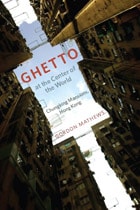
cover of Ghetto at the Center of the World: Chungking Mansions, Hong Kong

Ghetto at the Center of the World

Chungking Mansions, Hong Kong

Gordon Mathews

University of Chicago Press, 2011

There is nowhere else in the world quite like Chungking Mansions, a dilapidated seventeen-story commercial and residential structure in the heart of Hong Kong’s tourist district. A remarkably motley group of people call the building home; Pakistani phone stall operators, Chinese guesthouse workers, Nepalese heroin addicts, Indonesian sex workers, and traders and asylum seekers from all over Asia and Africa live and work there—even backpacking tourists rent rooms. In short, it is possibly the most globalized spot on the planet.

But as Ghetto at the Center of the World shows us, a trip to Chungking Mansions reveals a far less glamorous side of globalization. A world away from the gleaming headquarters of multinational corporations, Chungking Mansions is emblematic of the way globalization actually works for most of the world’s people. Gordon Mathews’s intimate portrayal of the building’s polyethnic residents lays bare their intricate connections to the international circulation of goods, money, and ideas. We come to understand the day-to-day realities of globalization through the stories of entrepreneurs from Africa carting cell phones in their luggage to sell back home and temporary workers from South Asia struggling to earn money to bring to their families. And we see that this so-called ghetto—which inspires fear in many of Hong Kong’s other residents, despite its low crime rate—is not a place of darkness and desperation but a beacon of hope.

Gordon Mathews’s compendium of riveting stories enthralls and instructs in equal measure, making Ghetto at the Center of the World not just a fascinating tour of a singular place but also a peek into the future of life on our shrinking planet.
[more]
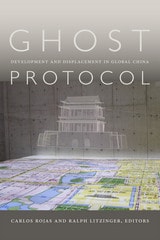
cover of Ghost Protocol: Development and Displacement in Global China

Ghost Protocol

Development and Displacement in Global China

Carlos Rojas and Ralph A. Litzinger, editors

Duke University Press, 2016

Even as China is central to the contemporary global economy, its socialist past continues to shape its capitalist present. This volume's contributors see contemporary China as haunted by the promises of capitalism, the institutional legacy of the Maoist regime, and the spirit of Marxist resistance. China's development does not result from historical imperatives or deliberate economic strategies, but from the effects of discrete practices the contributors call protocols, which stem from an overlapping mix of socialist and capitalist institutional strategies, political procedures, legal regulations, religious rituals, and everyday practices. Analyzing the process of urbanization and the ways marginalized communities and migrant workers are positioned in relation to the transforming social landscape, the contributors show how these protocols constitute the Chinese national imaginary while opening spaces for new emancipatory possibilities. Offering a nuanced theory of contemporary China's hybrid political economy, Ghost Protocol situates China's development at the juncture between the world as experienced and the world as imagined.

Contributors. Yomi Braester, Alexander Des Forges, Kabzung, Rachel Leng, Ralph A. Litzinger, Lisa Rofel, Carlos Rojas, Bryan Tilt, Robin Visser, Biao Xiang, Emily T. Yeh

[more]
cover of Ghostly Desires: Queer Sexuality and Vernacular Buddhism in Contemporary Thai Cinema

Ghostly Desires

Queer Sexuality and Vernacular Buddhism in Contemporary Thai Cinema

Arnika Fuhrmann

Duke University Press, 2016
Through an examination of post-1997 Thai cinema and video art Arnika Fuhrmann shows how vernacular Buddhist tenets, stories, and images combine with sexual politics in figuring current struggles over notions of personhood, sexuality, and collective life. The drama, horror, heritage, and experimental art films she analyzes draw on Buddhist-informed conceptions of impermanence and prominently feature the motif of the female ghost. In these films the characters' eroticization in the spheres of loss and death represents an improvisation on the Buddhist disavowal of attachment and highlights under-recognized female and queer desire and persistence. Her feminist and queer readings reveal the entangled relationships between film, sexuality, Buddhist ideas, and the Thai state's regulation of heteronormative sexuality. Fuhrmann thereby provides insights into the configuration of contemporary Thailand while opening up new possibilities for thinking about queer personhood and femininity.
[more]
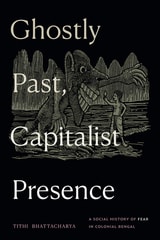
cover of Ghostly Past, Capitalist Presence: A Social History of Fear in Colonial Bengal

Ghostly Past, Capitalist Presence

A Social History of Fear in Colonial Bengal

Tithi Bhattacharya

Duke University Press, 2024
In Ghostly Past, Capitalist Presence, Tithi Bhattacharya maps the role that Bengali ghosts and ghost stories played in constituting the modern Indian nation, and the religious ideas seeded therein, as it emerged in dialogue with European science. Bhattacharya introduces readers to the multifarious habits and personalities of Bengal’s traditional ghosts and investigates and mourns their eventual extermination. For Bhattacharya, British colonization marked a transition from the older, multifaith folk world of traditional ghosts to newer and more frightening specters. These "modern" Bengali ghosts, borne out of a new rationality, were homogeneous specters amenable to "scientific" speculation and invoked at séance sessions in elite drawing rooms. Reading literature alongside the colonial archive, Bhattacharya uncovers a new reordering of science and faith from the middle of the nineteenth century. She argues that these shifts cemented the authority of a rising upper-caste colonial elite who expelled the older ghosts in order to recast Hinduism as the conscience of the Indian nation. In so doing, Bhattacharya reveals how capitalism necessarily reshaped Bengal as part of the global colonial project.
[more]
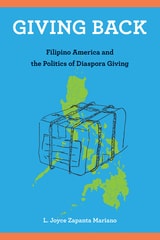
cover of Giving Back: Filipino America and the Politics of Diaspora Giving

Giving Back

Filipino America and the Politics of Diaspora Giving

L. Joyce Zapanta Mariano

Temple University Press, 2021

Many Filipino Americans feel obligated to give charitably to their families, their communities, or social development projects and organizations back home. Their contributions provide relief to poor or vulnerable Filipinos, and address the forces that maintain poverty, vulnerability, and exploitative relationships in the Philippines. This philanthropy is a result of both economic globalization and the migration of Filipino professionals to the United States. But it is also central to the moral economies of Filipino migration, immigration, and diasporic return. Giving-related practices and concerns—and the bonds maintained through giving—infuse what it means to be Filipino in America.

Giving Back shows how integral this system is for understanding Filipino diaspora formation. Joyce Mariano “follows the money” to investigate the cultural, social, economic, and political conditions of diaspora giving. She takes an interdisciplinary approach to reveal how power operates through this charity and the ways the global economic and cultural dimensions of this practice reinforce racial subordination and neocolonialism. Giving Back explores how this charity can stabilize overlapping systems of inequality as well as the contradictions of corporate social responsibility programs in diaspora.
[more]
cover of Global Digital Cultures: Perspectives from South Asia

Global Digital Cultures

Perspectives from South Asia

Aswin Punathambekar and Sriram Mohan, Editors

University of Michigan Press, 2019
Digital media histories are part of a global network, and South Asia is a key nexus in shaping the trajectory of digital media in the twenty-first century. Digital platforms like Facebook, WhatsApp, and others are deeply embedded in the daily lives of millions of people around the world, shaping how people engage with others as kin, as citizens, and as consumers. Moving away from Anglo-American and strictly national frameworks, the essays in this book explore the intersections of local, national, regional, and global forces that shape contemporary digital culture(s) in regions like South Asia: the rise of digital and mobile media technologies, the ongoing transformation of established media industries, and emergent forms of digital media practice and use that are reconfiguring sociocultural, political, and economic terrains across the Indian subcontinent. From massive state-driven digital identity projects and YouTube censorship to Tinder and dating culture, from Twitter and primetime television to Facebook and political rumors, Global Digital Cultures focuses on enduring concerns of representation, identity, and power while grappling with algorithmic curation and data-driven processes of production, circulation, and consumption.

 
[more]
cover of Global Icons: Apertures to the Popular

Global Icons

Apertures to the Popular

Bishnupriya Ghosh

Duke University Press, 2011
A widely disseminated photograph of Phoolan Devi, India’s famous bandit queen, surrendering to police forces in 1983 became an emotional touchstone for Indians who saw the outlaw as a lower-caste folk hero. That affective response was reignited in 1994 with the release of a feature film based on Phoolan Devi’s life. Despite charges of murder, arson, and looting pending against her, the bandit queen was elected to India’s parliament in 1996. Bishnupriya Ghosh considers Phoolan Devi, as well as Mother Teresa and Arundhati Roy, the prize winning author turned environmental activist, to be global icons: highly visible public figures capable of galvanizing intense affect and sometimes even catalyzing social change. Ghosh develops a materialist theory of global iconicity, taking into account the emotional and sensory responses that these iconic figures elicit, the globalized mass media through which their images and life stories travel, and the multiple modernities within which they are interpreted. The collective aspirations embodied in figures such as Barack Obama, Eva Perón, and Princess Diana show that Ghosh’s theory applies not just in South Asia but around the world.
[more]
cover of Global/Local: Cultural Production and the Transnational Imaginary

Global/Local

Cultural Production and the Transnational Imaginary

Rob Wilson and Wimal Dissanayake, eds.

Duke University Press, 1996

This groundbreaking collection focuses on what may be, for cultural studies, the most intriguing aspect of contemporary globalization—the ways in which the postnational restructuring of the world in an era of transnational capitalism has altered how we must think about cultural production. Mapping a "new world space" that is simultaneously more globalized and localized than before, these essays examine the dynamic between the movement of capital, images, and technologies without regard to national borders and the tendency toward fragmentation of the world into increasingly contentious enclaves of difference, ethnicity, and resistance.

Ranging across issues involving film, literature, and theory, as well as history, politics, economics, sociology, and anthropology, these deeply interdisciplinary essays explore the interwoven forces of globalism and localism in a variety of cultural settings, with a particular emphasis on the Asia-Pacific region. Powerful readings of the new image culture, transnational film genre, and the politics of spectacle are offered as is a critique of globalization as the latest guise of colonization. Articles that unravel the complex links between the global and local in terms of the unfolding narrative of capital are joined by work that illuminates phenomena as diverse as "yellow cab" interracial sex in Japan, machinic desire in Robocop movies, and the Pacific Rim city. An interview with Fredric Jameson by Paik Nak-Chung on globalization and Pacific Rim responses is also featured, as is a critical afterword by Paul Bové.

Positioned at the crossroads of an altered global terrain, this volume, the first of its kind, analyzes the evolving transnational imaginary—the full scope of contemporary cultural production by which national identities of political allegiance and economic regulation are being undone, and in which imagined communities are being reshaped at both the global and local levels of everyday existence.
[more]
cover of Globalizing Afghanistan: Terrorism, War, and the Rhetoric of Nation Building

Globalizing Afghanistan

Terrorism, War, and the Rhetoric of Nation Building

Zubeda Jalalzai and David Jefferess, eds.

Duke University Press, 2011

Globalizing Afghanistan offers a kaleidoscopic view of Afghanistan and the global networks of power, influence, and representation in which it is immersed. The military and nation-building interventions initiated by the United States in reaction to the events of September 11, 2001, are the background and motivation for this collection, but they are not the immediate subject of the essays. Seeking to understand the events of the past decade in a broad frame, the contributors draw on cultural and postcolonial approaches to provide new insights into this ongoing conflict. They focus on matters such as the implications of Afghanistan’s lucrative opium trade, the links between the contemporary Taliban movement and major events in the Islamic world and Central Asia since the early twentieth century, and interactions between transnational feminist organizations and the Afghan women’s movement. Several contributors address questions of representation. One looks at portrayals of Afghan women by the U.S. government and Western media and feminists. Another explores the surprisingly prominent role of Iranian filmmaking in the production of a global cinematic discourse about Afghanistan. A Pakistani journalist describes how coverage of Afghanistan by reporters working from Pakistan’s Khyber-Pakhtoonkhwa (formerly the North West Frontier Province) has changed over the past decade. This rich panoply of perspectives on Afghanistan concludes with a reflection on how academics might produce meaningful alternative viewpoints on the exercise of American power abroad.

Contributors. Gwen Bergner, Maliha Chishti, Cheshmak Farhoumand-Sims, Nigel C. Gibson, Zubeda Jalalzai, David Jefferess, Altaf Ullah Khan, Kamran Rastegar, Rodney J. Steward, Imre Szeman

[more]
cover of Go East, Young Man: Imagining the American West as the Orient

Go East, Young Man

Imagining the American West as the Orient

Richard Francaviglia

Utah State University Press, 2011

Transference of orientalist images and identities to the American landscape and its inhabitants, especially in the West—in other words, portrayal of the West as the “Orient”—has been a common aspect of American cultural history. Place names, such as the Jordan River or Pyramid Lake, offer notable examples, but the imagery and its varied meanings are more widespread and significant. Understanding that range and significance, especially to the western part of the continent, means coming to terms with the complicated, nuanced ideas of the Orient and of the North American continent that European Americans brought to the West. Such complexity is what historical geographer Richard Francaviglia unravels in this book.

 Since the publication of Edward Said’s book, Orientalism, the term has come to signify something one-dimensionally negative. In essence, the orientalist vision was an ethnocentric characterization of the peoples of Asia (and Africa and the “Near East”) as exotic, primitive “others” subject to conquest by the nations of Europe. That now well-established point, which expresses a postcolonial perspective, is critical, but Francaviglia suggest that it overlooks much variation and complexity in the views of historical actors and writers, many of whom thought of western places in terms of an idealized and romanticized Orient. It likewise neglects positive images and interpretations to focus on those of a decadent and ostensibly inferior East.

 We cannot understand well or fully what the pervasive orientalism found in western cultural history meant, says Francaviglia, if we focus only on its role as an intellectual engine for European imperialism. It did play that role as well in the American West. One only need think about characterizations of American Indians as Bedouins of the Plains destined for displacement by a settled frontier. Other roles for orientalism, though, from romantic to commercial ones, were also widely in play. In Go East, Young Man, Francaviglia explores a broad range of orientalist images deployed in the context of European settlement of the American West, and he unfolds their multiple significances.
[more]
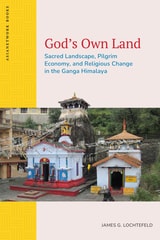
cover of God’s Own Land: Sacred Landscape, Pilgrim Economy, and Religious Change in the Ganga Himalaya

God’s Own Land

Sacred Landscape, Pilgrim Economy, and Religious Change in the Ganga Himalaya

James G. Lochtefeld

Lever Press, 2026

God’s Own Land follows the tectonic shift from traditional religious pilgrimage in the early twentieth-century to contemporary pilgrim tourism, in which ever-burgeoning visitor numbers have brought both benefits and challenges to the Garhwal region of India—the source of Hindu India’s sacred river, the Ganges. Despite Hinduism’s regional and sectarian variation, India’s Garhwal Himalaya region is one the most sacred places to Hindus, drawing pilgrims across sectarian lines from throughout the subcontinent and the world. This sacred land—dev bhumi or “land of the gods”—appears in foundational Hindu stories describing the presence and activity of gods, goddesses, saints, and cultural heroes.  

This study from James G. Lochtefeld draws out Hindu convictions regarding the Garhwal’s eternal and continuing sanctity as a holy region, based on the premise of an “imagined landscape.” This region is strongly associated with divine activity and yet this landscape is also a real place with a real history inhabited by real people, who have historically been poor because of the challenges created by the region’s geography. Juxtaposing the history of the region with its construction in the Hindu imaginary, this multidisciplinary study unpacks the nuanced image of the region, its religious significance, and the impacts of pilgrimages on the community through textual, historical, and ethnographic methods.
[more]
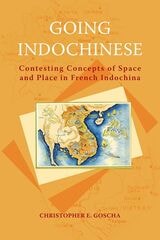
cover of Going Indochinese

Going Indochinese

Christopher E. Goscha

National University of Singapore Press, 2012

Why, Benedict Anderson once asked, did Javanese become Indonesian in 1945 whereas the Vietnamese balked at becoming Indochinese? In this classic study, Goscha shows that Vietnamese of all political colours came remarkably close to building a modern national identity based on the colonial model of Indochina while Lao and Cambodian nationalists rejected this precisely because it represented a Vietnamese entity. First published in 1995, the revised edition of this remarkable study is augmented with new material by the author and a foreword by Eric Jennings.
[more]
cover of Good-Bye to Old Peking: The Wartime Letters Of U.S. Marine Captain John Seymour Letcher, 1937-1939

Good-Bye to Old Peking

The Wartime Letters Of U.S. Marine Captain John Seymour Letcher, 1937-1939

John Seymour Letcher

Ohio University Press, 1998

For two and a half years (1937-1939), Captain John Seymour Letcher commanded a company of the U.S. Embassy Marine Guard in Peking. During that time, he wrote a series of letters to his parents in Virginia describing the life of a Westerner in the former imperial city. During that same time, China was invaded by Japan.

Captain Letcher describes the flavor of life in pre-Communist China — the food, servants, cold Peking winters and torrid summers, hunting, and excursions to the major tourist sites.

But his letters also tell of the Japanese slaughter of Chinese troops in the opening days of the Sino-Japanese War. He wrote about life in a city under Japanese occupation and the stirring story of the Chinese guerrillas rebounding from devastating defeat.

These letters and accompanying introduction, preface, and notes, draw attention to the Western experience in a place and time largely overlooked by military historians and modern China specialists.
[more]
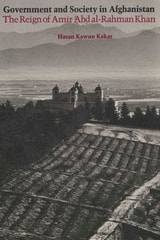
cover of Government and Society in Afghanistan: The Reign of Amir ‘Abd al-Rahman Khan

Government and Society in Afghanistan

The Reign of Amir ‘Abd al-Rahman Khan

By Hasan Kawun Kakar

University of Texas Press, 1979

This is an authoritative study of the administrative, social, and economic structure of Afghanistan during a decisive stage in its history. The period covered—the reign of the "Iron" Amir Rahman Khan—was in many ways the beginning of modern Afghanistan as a cohesive nation. Although Afghanistan had emerged as an entity in 1747, it was actually under the Amir that its borders were established, its internal unification completed, and the modern concept of nationhood implanted.

Kakar approaches this complex process by taking into consideration both the internal and the external forces that influenced its development. Thus, modernization, centralization, and nationalization are seen as both defensive reactions to European imperialism and necessary preconditions to capital formation and, consequently, industrialization.

The first part of the book covers the government of the Amir, from the personality of the ruler down to the operation of his new bureaucrats at the local level. Here Kakar presents a comprehensive treatment of the Afghan system of taxation and local government. The second part views these economic and social institutions from the perspective of the major segments of the populace—nomads, townsmen, tribes, women, slaves, landowners, mullahs, merchants, and so forth.

[more]
cover of Governor, Traveller, Scholar, Spy: The Career of Sir Cecil Clementi

Governor, Traveller, Scholar, Spy

The Career of Sir Cecil Clementi

Graham Hutchings

Hong Kong University Press, 2026

Governor, Traveller, Scholar, Spy traces the life and career of the talented colonial administrator Sir Cecil Clementi, who rose to become governor of Hong Kong and then the Straits Settlements. He governed Hong Kong at a time of revolutionary upheaval in China which brought the city to its economic knees and threatened Britain’s possession of the territory. Clementi strongly objected to London’s attempts to come to terms with Chiang Kai-shek’s Nationalist government and sought to protect Hong Kong from the intellectual currents sweeping through the mainland by making the city a bastion of traditional Chinese culture. As Governor of Straits Settlements and High Commissioner of the Federated Malay States, he championed the traditional rights of the Malay rulers and suppressed national sentiment among Malaya’s swelling Chinese population. Alarmed by his determination to press ahead with such policies despite opposition, the government in London forced Clementi into early retirement.

This is the first full-length biography of a highly gifted colonial administrator who spent half of his roughly 30-year career in Hong Kong and played a major role in the city’s history. As a young official, Clementi quickly mastered Chinese and published translations of Cantonese poetry. He undertook epic journeys across China on intelligence-gathering missions, was closely involved in the land settlement in the New Territories, and the creation of Hong Kong University. As governor, he championed the development of Kai Tak airport and the provision of Hong Kong’s water supply. He also appointed the first Chinese member of the city’s Executive Council. Yet he resisted reforms to the controversial mui-tsai system under which Chinese girls served as housemaids to Chinese families on the grounds that it was a Chinese "tradition." This study of his career, in which he was also posted to British Guiana and Ceylon, sheds light on how Britain administered the far-flung territories that formed its empire.
[more]
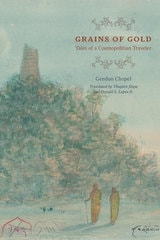
cover of Grains of Gold: Tales of a Cosmopolitan Traveler

Grains of Gold

Tales of a Cosmopolitan Traveler

Gendun Chopel

University of Chicago Press, 2013
In 1941, philosopher and poet Gendun Chopel (1903–51) sent a large manuscript by ship, train, and yak across mountains and deserts to his homeland in the northeastern corner of Tibet. He would follow it five years later, returning to his native land after twelve years in India and Sri Lanka. But he did not receive the welcome he imagined: he was arrested by the government of the regent of the young Dalai Lama on trumped-up charges of treason. He emerged from prison three years later a broken man and died soon after.
 
Gendun Chopel was a prolific writer during his short life. Yet he considered that manuscript, which he titled Grains of Gold, to be his life’s work, one to delight his compatriots with tales of an ancient Indian and Tibetan past, while alerting them to the wonders and dangers of the strikingly modern land abutting Tibet’s southern border, the British colony of India. Now available for the first time in English, Grains of Gold is a unique compendium of South Asian and Tibetan culture that combines travelogue, drawings, history, and ethnography. Gendun Chopel describes the world he discovered in South Asia, from the ruins of the sacred sites of Buddhism to the Sanskrit classics he learned to read in the original. He is also sharply, often humorously critical of the Tibetan love of the fantastic, bursting one myth after another and finding fault with the accounts of earlier Tibetan pilgrims. Exploring a wide range of cultures and religions central to the history of the region, Gendun Chopel is eager to describe all the new knowledge he gathered in his travels to his Buddhist audience in Tibet.
 
At once the account of the experiences of a tragic figure in Tibetan history and the work of an extraordinary scholar, Grains of Gold is an accessible, compelling work animated by a sense of discovery of both a distant past and a strange present.
[more]
cover of Green Chili and Other Impostors

Green Chili and Other Impostors

Furstenau, Nina Mukerjee

University of Iowa Press, 2021

Follow a food trail and you’ll find yourself crisscrossing oceans. Join M. F. K. Fisher Grand Prize for Excellence in Culinary Writing award-winning author Nina Mukerjee Furstenau as she picks through lost tastes with recipes as codes to everything from political resistance to comfort food and much more. Pinpoint the entry of the Portuguese in India by following green chili trails; find the origins of limes; trace tomatoes and potatoes in India to the Malabar Coast; consider what makes a food, or even a person, foreign and marvel how and when they cease to be.

Food history is a world heritage story that has all the drama of a tense thriller or maybe a mystery. Whose food is it? Who gets to tell its tale? Respect for food history might tame the accusations of appropriation, but what is at stake as food traditions and biodiversity ebb away is the great, and not always good, story of us.
 
[more]
cover of Green Communication and China: On Crisis, Care, and Global Futures

Green Communication and China

On Crisis, Care, and Global Futures

Jingfang Liu

Michigan State University Press, 2020

How does China speak for nature? How are the pollution and climate change crises being addressed? What are the possibilities and limitations of mobilizing publics to care about the environment through new media, tourism, and government policy? Green Communication and China is the first volume to identify the importance of studying environmental communication in, about, and with China, a rising global environmental leader whose ecological and political controversies often make international headlines. Organized into three sections on communicating crisis, communicating care, and environmental futurity, these essays span multimodal communication practices and methods in green public culture and address topics ranging from The North Face advertisements to NGO advocacy to global governmental policy. The volume showcases the work of leading scholars, all of them deeply intimate with China, in disciplines ranging from cultural studies and rhetoric to public opinion polling, discourse analysis, ethnic studies, and sociology. These complex projects engage transnational and national politics, ecological and economic challenges, media saturation, and government control. Holding these tensions together without glossing over differences, Green Communication and China will inform new agendas for environmental communication in China, the United States, and beyond.
[more]
cover of Greener Pastures: Politics, Markets, and Community among a Migrant Pastoral People

Greener Pastures

Politics, Markets, and Community among a Migrant Pastoral People

Arun Agrawal

Duke University Press, 1999

Social scientists theorizing about political economy and the allocation of resources have usually omitted migrant communities from their studies. In Greener Pastures Arun Agrawal uses the story of the Raikas, a little-known group of migrant shepherds in western India, to reexamine current scholarship on markets and exchange, local and state politics, and community and hierarchy. The Raikas are virtually invisible in the regions through which they travel, as well as to the wider Indian society, yet they must operate as part of these larger spheres for their economic survival.

Agrawal analyzes the institutions developed by the shepherds to solve livelihood problems. First, by focusing on the relations of the shepherds with their landholder neighbors, he explains why the shepherds migrate. He shows that struggles between these two groups led to a sociopolitical squeeze on the access of shepherds to the fodder resources they need to feed their sheep. Then, in an examination of why the shepherds migrate in groups, he demonstrates how their migratory lives depend on market exchanges and points to the social and political forces that influence prices and determine profits. Finally, he looks at decision-making processes such as division of labor and the delegation of power. Politics is ubiquitous in the interactions of the shepherds with their neighbors and with state officials, in their exchanges in markets and with farmers, and in their internal relations as a community.

Interspersing the words of the Raikas themselves with a sophisticated deployment of political theory, Agrawal has produced a volume that will interest scholars in a broad range of academic disciplines, including Asian studies, political science, human ecology, anthropology, comparative politics, rural sociology, and environmental studies and policy.
[more]
cover of Greening China: The Benefits of Trade and Foreign Direct Investment

Greening China

The Benefits of Trade and Foreign Direct Investment

Ka Zeng and Joshua Eastin

University of Michigan Press, 2011

“The authors make some very critical interventions in this debate and scholars engaged in the environmental ‘pollution haven’ and ‘race to the bottom’ debates will need to take the arguments made here seriously, re-evaluating their own preferred theories to respond to the insightful theorizing and empirically rigorous testing that Zeng and Eastin present in the book.”
—Ronald Mitchell, University of Oregon

China has earned a reputation for lax environmental standards that allegedly attract corporations more interested in profit than in moral responsibility and, consequently, further negate incentives to raise environmental standards. Surprisingly, Ka Zeng and Joshua Eastin find that international economic integration with nation-states that have stringent environmental regulations facilitates the diffusion of corporate environmental norms and standards to Chinese provinces. At the same time, concerns about “green” tariffs imposed by importing countries encourage Chinese export-oriented firms to ratchet up their own environmental standards. The authors present systematic quantitative and qualitative analyses and data that not only demonstrate the ways in which external market pressure influences domestic environmental policy but also lend credence to arguments for the ameliorative effect of trade and foreign direct investment on the global environment.
[more]
cover of Guide to the Flowers of Western China

Guide to the Flowers of Western China

Christopher Grey-Wilson and Phillip Cribb

Royal Botanic Gardens, Kew, 2023

A completely revised and updated second edition of the essential field guide and reference work.

Since the publication of the first edition of Guide to the Flowers of Western China in 2011, there have been great strides in knowledge of the flora of China through international collaboration. Many plants included in the first edition have been revisited in the wild, while areas hitherto inaccessible have opened up, if sometimes only temporarily. Great advances in systematic botany have occurred since the publication of the first edition, particularly with the widespread availability of rapid DNA analysis. The result of this has been an influx of new photographs and data, and the need for a second edition of Guide to the Flowers of Western China.

 
[more]
cover of Guns of February: Ordinary Japanese Soldiers' Views of the Malayan Campaign and the Fall of Singapore, 1941-42

Guns of February

Ordinary Japanese Soldiers' Views of the Malayan Campaign and the Fall of Singapore, 1941-42

Henry Frei

National University of Singapore Press, 1990

Guns of February shows the Fall of Singapore and Japan's 1941 military campaign in Malaya through the eyes of Japanese soldiers who took part, based on interviews, memoirs, war diaries, and other Japanese-language sources. Although an enormous number of books have been published on Japan's wartime advance into Southeast Asia, few books in English make much use of Japanese sources, and they reveal little of what happened on the Japanese side. In the words of the author, the Japanese"'advance by brigade groups', 'outflank the defence', 'sustain many casualties', and remain altogether a largely faceless mass bicycling their way down to Singapore." In Guns of February some of the voices of these soldiers are finally heard, and they tell a fascinating story. A few of them were professional soldiers who served their country with commitment and dedication, but many were conscripts hoping to stay alive, curious and apprehensive about the countries they entered, and moved by the plight of the people whose cities and towns they sometimes destroyed. Many were young men, interested in girls and in the sights and sounds of Southeast Asia, but also missing their families and the familiar world of Japan. It is a picture far removed from the staple view of the remorseless and fanatic Japanese soldier totally devoted to his Emperor and determined to die for his country. In writing this account of the Japanese advance on Singapore, the author attempted to show the universal humanity of the actors concerned.
[more]