Results by title
264 books match the query 'Asian Studies' and 7 start with g
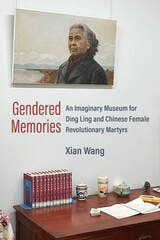
Gendered Memories
An Imaginary Museum for Ding Ling and Chinese Female Revolutionary MartyrsXian Wang
University of Michigan Press, 2025
Global Storytelling, vol. 4, no. 2
Netflix and East Asian Audiovisual Culture (Winter 2024)Special Issue Editor: Dal Yong Jin
Michigan Publishing Services, 2024
Global Storytelling, vol. 5, no. 1
Digital Narratives in Transnational Circulation: Power, Vulnerability, and Creative PossibilitySpecial Issue Editors: Jun Lei and Shaohua Guo
Michigan Publishing Services, 2025
Global Storytelling: Journal of Digital and Moving Images, housed at the Academy of Film and published by Michigan Publishing, is an open access, peer-reviewed international and interdisciplinary journal for intellectual debates concerning the politics, economics, culture, media, and technology of the moving image.
Global Storytelling, vol. 5, no. 2
Visual Storytelling and Entrepreneurship: The Representations of Daily LifeSpecial Issue Editors: Erick Behar-Villegas and Víctor Manuel Jiménez-Rodríguez
Michigan Publishing Services, 2026
Global Storytelling: Journal of Digital and Moving Images, housed at the Academy of Film and published by Michigan Publishing, is an open access, peer-reviewed international and interdisciplinary journal for intellectual debates concerning the politics, economics, culture, media, and technology of the moving image.
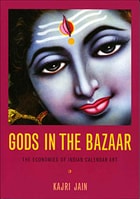
Gods in the Bazaar
The Economies of Indian Calendar ArtKajri Jain
Duke University Press, 2007
Jain draws on interviews with artists, printers, publishers, and consumers as well as analyses of the prints themselves to trace the economies—of art, commerce, religion, and desire—within which calendar images and ideas about them are formulated. For Jain, an analysis of the bazaar, or vernacular commercial arena, is crucial to understanding not only the calendar art that circulates within the bazaar but also India’s postcolonial modernity and the ways that its mass culture has developed in close connection with a religiously inflected nationalism. The bazaar is characterized by the coexistence of seemingly incompatible elements: bourgeois-liberal and neoliberal modernism on the one hand, and vernacular discourses and practices on the other. Jain argues that from the colonial era to the present, capitalist expansion has depended on the maintenance of these multiple coexisting realms: the sacred, the commercial, and the artistic; the official and the vernacular.

Governing Genealogies of International Film Education
Hadi Gharabaghi and Terri Ginsberg
Temple University Press, 2026
The editors of and contributors to Governing Genealogies of International Film Education offer a critical historiographic understanding of governmentalized film education during the Cold War. Chapters examine the production of hygiene and cultural films in Travancore, India during the postcolonial period, and Michigan State University’s documentary collaboration with Iran during the 1970s, among other topics, elucidating cinema’s deployment as a state apparatus and its implications for global cultures, subject positions, and social relations.
Governing Genealogies of International Film Education investigates this distinct modality of cultural production and policy to shed necessary light on the ideological overdetermination of institutionalized film education as well as on audiovisual education as an international academic discipline. The contributors show how governmentalized film education has taught American exceptionalism, hegemony, and colonialism. They also theorize about and provide methodological examples of how film archives and film studies have framed prevailing understandings of cinema’s role in American and world history.
Contributors: Kaveh Askari, Zoë Druick, Bindu Menon Mannil, Wissam Mouawad, and the editors
Growing Old in a New China
Transitions in Elder CareRose K. Keimig
Rutgers University Press, 2021