Results by title
169 books match the query 'Auto-narrator' and 3 start with g
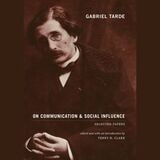
Gabriel Tarde On Communication and Social Influence
Selected PapersGabriel Tarde
University of Chicago Press, 1969
This is an auto-narrated audiobook version of this book.
Gabriel Tarde ranks as one of the most outstanding sociologists of nineteenth-century France, though not as well known by English readers as his peers Comte and Durkheim. This book makes available Tarde’s most important work and demonstrates his continuing relevance to a new generation of students and thinkers.
Tarde’s landmark research and empirical analysis drew upon collective behavior, mass communications, and civic opinion as elements to be explained within the context of broader social patterns. Unlike the mass society theorists that followed in his wake, Tarde integrated his discussions of societal change at the macrosocietal and individual levels, anticipating later twentieth-century thinkers who fused the studies of mass communications and public opinion research.
Terry N. Clark’s introduction, considered the premier guide to Tarde’s opus, accompanies this important work, reprinted here for the first time in forty years.
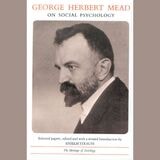
George Herbert Mead on Social Psychology
George Herbert Mead
University of Chicago Press, 1964
One of the most brilliantly original of American pragmatists, George Herbert Mead published surprisingly few major papers and not a single book during his lifetime. Yet his influence on American sociology and social psychology since World War II has been exceedingly strong.
This volume is a revised and enlarged edition of the book formerly published under the title The Social Psychology of George Herbert Mead. It contains selections from Mead's posthumous books: Mind, Self, and Society; Movements of Thought in the Nineteenth Century; The Philosophy of the Act; and The Philosophy of the Present, together with an incisive, newly revised, introductory essay by Anselm Strauss on the importance of Mead for contemporary social psychology.
"Required reading for the social scientist."—Milton L. Barron, Nation
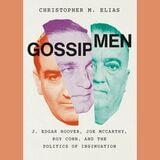
Gossip Men
J. Edgar Hoover, Joe McCarthy, Roy Cohn, and the Politics of InsinuationChristopher M. Elias
University of Chicago Press, 2021
This is an auto-narrated audiobook edition of this book.
J. Edgar Hoover, Joseph McCarthy, and Roy Cohn were titanic figures in midcentury America, wielding national power in government and the legal system through intimidation and insinuation. Hoover’s FBI thrived on secrecy, threats, and illegal surveillance, while McCarthy and Cohn will forever be associated with the infamous anticommunist smear campaign of the early 1950s, which culminated in McCarthy’s public disgrace during televised Senate hearings. In Gossip Men, Christopher M. Elias takes a probing look at these tarnished figures to reveal a host of startling new connections among gender, sexuality, and national security in twentieth-century American politics. Elias illustrates how these three men solidified their power through the skillful use of deliberately misleading techniques like implication, hyperbole, and photographic manipulation. Just as provocatively, he shows that the American people of the 1950s were particularly primed to accept these coded threats because they were already familiar with such tactics from widely popular gossip magazines.
By using gossip as a lens to examine profound issues of state security and institutional power, Elias thoroughly transforms our understanding of the development of modern American political culture.