208 books match the query 'Autobiography' and 6 start with g
cover of Genre of Autobiography in Victorian Literature

Genre of Autobiography in Victorian Literature

Clinton Machann

University of Michigan Press, 1994
Clinton Machann challenges recent popular approaches to the Victorian autobiography that treat the genre ahistorically or as a subgenre of fiction. Machann argues instead for considering these autobiographies interntextually and as a historically defined genre that can profitably be studied as nonfiction and as a referential art. The plots of Victorian autobiographies are highliy variable in terms of developing motifs and tropes. Autobiographers undergo spiritual and mental crises, live out Romantic and biblical myths, follow historical and scientific paradigms and the dynamic patterns of their own ideas. Nevertheless, underlying this diversity are profound structural similarities in plots of self-development and the implied relationships between self and public works and ideas. In the course of discussing eleven Victorian autobiographies in chronological order, Machann suggests many formal and conventional continuities among them. The eleven autobiographies include those of John Stuart Mill, Anthony Trollope, John Ruskin, and Charles Darwin, among other luminaries of the Victorian era. Juxtaposing well-known works with less familiar ones, Machann helps the reader to explore the boundaries of the genre, appreciate stylistic variations, and identify profound structural similarities, all of which result from the larger Victorian culture. This book will be of interest to students of the Victorian era as well as scholars of life-writing and historical constructions of self.
[more]
cover of Genre of Autobiography in Victorian Literature

Genre of Autobiography in Victorian Literature

Clinton Machann

University of Michigan Press, 1995
Clinton Machann challenges recent popular approaches to the Victorian autobiography that treat the genre ahistorically or as a subgenre of fiction. Machann argues instead for considering these autobiographies interntextually and as a historically defined genre that can profitably be studied as nonfiction and as a referential art. The plots of Victorian autobiographies are highliy variable in terms of developing motifs and tropes. Autobiographers undergo spiritual and mental crises, live out Romantic and biblical myths, follow historical and scientific paradigms and the dynamic patterns of their own ideas. Nevertheless, underlying this diversity are profound structural similarities in plots of self-development and the implied relationships between self and public works and ideas. In the course of discussing eleven Victorian autobiographies in chronological order, Machann suggests many formal and conventional continuities among them. The eleven autobiographies include those of John Stuart Mill, Anthony Trollope, John Ruskin, and Charles Darwin, among other luminaries of the Victorian era. Juxtaposing well-known works with less familiar ones, Machann helps the reader to explore the boundaries of the genre, appreciate stylistic variations, and identify profound structural similarities, all of which result from the larger Victorian culture. This book will be of interest to students of the Victorian era as well as scholars of life-writing and historical constructions of self.
[more]
cover of Getting A Life: Everyday Uses of Autobiography

Getting A Life

Everyday Uses of Autobiography

Sidonie Smith

University of Minnesota Press, 1996
[more]
cover of God: The Autobiography

God

The Autobiography

Franco Ferrucci

University of Chicago Press, 1996
At the center of Franco Ferrucci's God: An Autobiography is one tender, troubled character: God. In the beginning is God's solitude, and because God is lonely he creates the world. He falls in love with Earth, plunges into the oceans, lives as plant and reptile and bird. His every thought and mood serve to populate the planet, with consequences that run away from him—sometimes delightfully, sometimes unfortunately. Witty, thought-provoking, and beautifully translated, this playful and irresistible Short will leave you wondering where philosophy ends and fiction begins, while it recounts thousands of years of religious thought—and reminds you that above all else, God knows how to tell a good story.

[more]
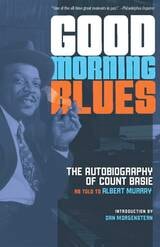
cover of Good Morning Blues: The Autobiography of Count Basie

Good Morning Blues

The Autobiography of Count Basie

Count Basie

University of Minnesota Press, 2016

Count Basie was one of America’s pre-eminent and influential jazz pianists, bandleaders, and composers, known for such classics as “Jumpin’ at the Woodside,” “Goin’ to Chicago Blues,” “Sent for You Yesterday and Here You Come Today,” and “One O’Clock Jump.” In Good Morning Blues, Basie recounts his life story to Albert Murray, from his childhood years playing ragtime with his own pickup band at dances and pig roasts, to his years in New York City in search of opportunity, to rollicking anecdotes of Basie’s encounters with Fats Waller, Frank Sinatra, Fred Astaire, Sammy Davis Jr., Quincy Jones, Billie Holliday, and Tony Bennett. In this classic of jazz autobiography that was ten years in the making, Albert Murray brings the voice of Count Basie to the printed page in what is both testimony and tribute to an incredibly rich life.
[more]
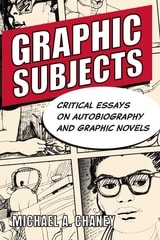
cover of Graphic Subjects: Critical Essays on Autobiography and Graphic Novels

Graphic Subjects

Critical Essays on Autobiography and Graphic Novels

Michael A. Chaney

University of Wisconsin Press, 2011

Some of the most noteworthy graphic novels and comic books of recent years have been entirely autobiographical. In Graphic Subjects, Michael A. Chaney brings together a lively mix of scholars to examine the use of autobiography within graphic novels, including such critically acclaimed examples as Art Spiegelman’s Maus, David Beauchard’s Epileptic, Marjane Satrapi’s Persepolis, Alan Moore’s Watchmen, and Gene Yang’s American Born Chinese.

            These essays, accompanied by visual examples, illuminate the new horizons that illustrated autobiographical narrative creates. The volume insightfully highlights the ways that graphic novelists and literary cartoonists have incorporated history, experience, and life stories into their work. The result is a challenging and innovative collection that reveals the combined power of autobiography and the graphic novel.
[more]