384 books match the query 'Black Studies (Global)' and 6 start with g
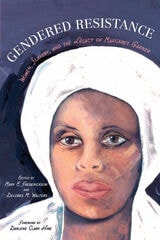
cover of Gendered Resistance: Women, Slavery, and the Legacy of Margaret Garner

Gendered Resistance

Women, Slavery, and the Legacy of Margaret Garner

Edited by Mary E. Frederickson and Delores M. Walters

University of Illinois Press, 2013
Inspired by the searing story of Margaret Garner, the escaped slave who in 1856 slit her daughter's throat rather than have her forced back into slavery, the essays in this collection focus on historical and contemporary examples of slavery and women's resistance to oppression from the nineteenth century to the twenty-first. Each chapter uses Garner's example--the real-life narrative behind Toni Morrison's Beloved andthe opera Margaret Garner--as a thematic foundation for an interdisciplinary conversation about gendered resistance in locations including Brazil, Yemen, India, and the United States. 
 
Contributors are Nailah Randall Bellinger, Olivia Cousins, Mary E. Frederickson, Cheryl Janifer LaRoche, Carolyn Mazloomi, Cathy McDaniels-Wilson, Catherine Roma, Huda Seif, S. Pearl Sharp, Raquel Luciana de Souza, Jolene Smith, Veta Tucker, Delores M. Walters, Diana Williams, and Kristine Yohe.

[more]
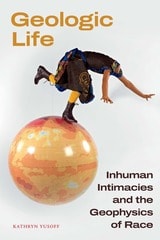
cover of Geologic Life: Inhuman Intimacies and the Geophysics of Race

Geologic Life

Inhuman Intimacies and the Geophysics of Race

Kathryn Yusoff

Duke University Press, 2024
In Geologic Life, Kathryn Yusoff theorizes the processes by which race and racialization emerged geologically. Examining both the history of geology as a discipline and ongoing mineral and resource extraction, Yusoff locates forms of imperial geology embedded in Western and Enlightenment thought and highlights how it creates anti-Black, anti-Indigenous, and anti-Brown environmental and racial injustices. Throughout, she outlines how the disciplines of geology and geography—and their conventions: surveying, identifying, classifying, valuing, and extracting—established and perpetuated colonial practices that ordered the world and people along a racial axis. Examining the conceptualization of the inhuman as political, geophysical, and paleontological, Yusoff unearths an apartheid of materiality as distinct geospatial forms. This colonial practice of geology organized and underpinned racialized accounts of space and time in ways that materially made Anthropocene Earth. At the same time, Yusoff turns to Caribbean, Indigenous, and Black thought to chart a parallel geologic epistemology of the "earth-bound" that challenges what and who the humanities have chosen to overlook in its stories of the earth. By reconsidering the material epistemologies of the earth as an on-going geotrauma in colonial afterlives, Yusoff demonstrates that race is as much a geological formation as a biological one.
[more]
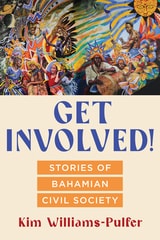
cover of Get Involved!: Stories of Bahamian Civil Society

Get Involved!

Stories of Bahamian Civil Society

Kim Williams-Pulfer

Rutgers University Press, 2024

Philanthropy is commonly depicted as a universal practice and is either valued for supporting community transformation or critiqued for limiting social justice. However, dominant definitions and even popular connotations tend to privilege wealthy Western approaches. Using the Caribbean as a rich site of observance and concentrating on the island nation-state of The Bahamas, Get Involved! uncovers the hidden and under-documented activities of “philanthropy from below,” revealing a broader conception of philanthropy and civil society, especially within Black and other historically marginalized populations. Kim Williams-Pulfer draws on narrative analysis from enslavement to the current post-post-colonial moment, depicting the repertoires and practices of primarily Afro-Bahamians through the stories emerging from history (including the transnational observations of Zora Neale Hurston, social movements, and political and social institution building), the arts (from Junkanoo, literature, and visual practices), to the lived experiences of contemporary civil society leaders. Get Involved! shows the long history and continued significance of civil society and philanthropic engagement in The Bahamas, the circum-Caribbean, and the wider African Diaspora.

Junkanoo is the national cultural festival of The Bahamas.  It fosters a sense of community pride, identity, companionship, spirituality and unity. Watch a video about Junknoo:
https://www.youtube.com/watch?v=tnMpMesNb1Q&t=14s
[more]
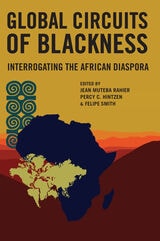
cover of Global Circuits of Blackness: Interrogating the African Diaspora

Global Circuits of Blackness

Interrogating the African Diaspora

Edited by Jean Muteba Rahier, Percy C. Hintzen, and Felipe Smith

University of Illinois Press, 2010
Global Circuits of Blackness is a sophisticated analysis of the interlocking diasporic connections between Africa, Europe, the Caribbean, and the Americas. A diverse and gifted group of scholars delve into the contradictions of diasporic identity by examining at close range the encounters of different forms of blackness converging on the global scene.
 
Contributors examine the many ways blacks have been misrecognized in a variety of contexts. They also explore how, as a direct result of transnational networking and processes of friction, blacks have deployed diasporic consciousness to interpellate forms of white supremacy that have naturalized black inferiority, inhumanity, and abjection. Various essays document the antagonism between African Americans and Africans regarding heritage tourism in West Africa, discuss the interaction between different forms of blackness in Toronto's Caribana Festival, probe the impact of the Civil Rights movement in America on diasporic communities elsewhere, and assess the anxiety about HIV and AIDS within black communities. The volume demonstrates that diaspora is a floating revelation of black consciousness that brings together, in a single space, dimensions of difference in forms and content of representations, practices, and meanings of blackness. Diaspora imposes considerable flexibility in what would otherwise be place-bound fixities.
 
Contributors are Marlon M. Bailey, Jung Ran Forte, Reena N. Goldthree, Percy C. Hintzen, Lyndon Phillip, Andrea Queeley, Jean Muteba Rahier, Stéphane Robolin, and Felipe Smith.
[more]
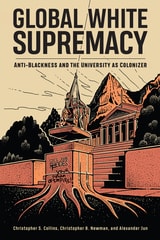
cover of Global White Supremacy: Anti-Blackness and the University as Colonizer

Global White Supremacy

Anti-Blackness and the University as Colonizer

Christopher S. Collins

Rutgers University Press, 2023
Knowledge is more expansive than the boundaries of the Western university model and its claim to be the dominant—or only—rigorous house of knowledge. In the former colonies of Europe (e.g., South Africa, Brazil, and Oceania), the curriculum, statues, architectures, and other aspects of the university demonstrate the way in which it is a fixture in empire maintenance. The trajectory of global White supremacy is deeply historical and contemporary—it is a global, transnational, and imperial phenomenon. White supremacy is sustained through the construction of inferiority and anti-Blackness. The context, history, and perspective offered by Collins, Newman, and Jun should serve as an introduction to the disruption of the ways in which university and academic dispositions have and continue to serve as sites of colonial and White supremacist preservation—as well as sites of resistance. 
 
[more]
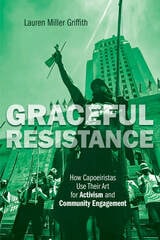
cover of Graceful Resistance: How Capoeiristas Use Their Art for Activism and Community Engagement

Graceful Resistance

How Capoeiristas Use Their Art for Activism and Community Engagement

Lauren Miller Griffith

University of Illinois Press, 2023

Capoeira began as a martial art developed by enslaved Afro-Brazilians. Today, the practice incorporates song, dance, acrobatics, and theatrical improvisation—and leads many participants into activism.

Lauren Miller Griffith’s extensive participant observation with multiple capoeira groups informs her ethnography of capoeiristas--both individuals and groups--in the United States. Griffith follows practitioners beyond their physical training into social justice activities that illuminate capoeira’s strong connection to resistance and subversion. As both individuals and communities of capoeiristas, participants march against racial discrimination, celebrate Martin Luther King Jr. Day and Juneteenth, organize professional clothing drives for job seekers, and pursue economic and environmental justice in their neighborhoods. For these people, capoeira becomes a type of serious leisure that contributes to personal growth, a sense of belonging, and an overall sense of self, while also imposing duties and obligations.

An innovative look at capoeira in America, Graceful Resistance reveals how the practicing of an art can catalyze action and transform communities.

[more]