Results by title
178 books match the query 'Buildings' and 4 start with g
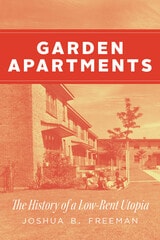
Garden Apartments
The History of a Low-Rent UtopiaJoshua B. Freeman
University of Chicago Press, 2026
Eminent historian Joshua Freeman rescues garden apartments—typically low-rise multifamily residences that enclose or are surrounded by landscaped gardens—from their invisibility in the American landscape. He details their outsized influence on housing policy and social policy as they helped upgrade living standards for working people. Inspired by the architectural innovations and socialist politics of British garden cities, Red Vienna, and German modernist housing in the 1920s, these large, centrally managed projects were mostly not public housing, but their capitalist developers worked with governments to keep down rents. The results were often relatively small apartments and large communal spaces, aimed at fostering actual American community.
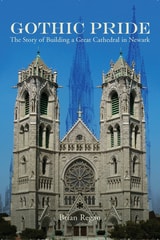
Gothic Pride
The Story of Building a Great Cathedral in NewarkRegan, Brian
Rutgers University Press, 2012
Calling upon a wealth of primary sources, Brian Regan describes in a compelling narrative the cathedral’s almost century-long history. He traces the project to its origins in the late 1850s and the great expectations held by the project’s prime movers—all passionate about Gothic architecture and immensely proud of Newark—that never wavered despite numerous setbacks and challenges. Construction did not begin until 1898 and, when completed in 1954, the cathedral became New Jersey’s largest church—and the most expensive Catholic church ever built in America. During Pope John Paul II’s visit to the United States in 1995, he celebrated evening prayer at the Cathedral. On that occasion, the Cathedral of the Sacred Heart was elevated to a basilica to become the Cathedral Basilica of the Sacred Heart.
Meticulously researched, Gothic Pride brings to life the people who built, contributed to, and worshipped in Sacred Heart, recalling such remarkable personalities as George Hobart Doane, Jeremiah O’Rourke, Gonippo Raggi, and Archbishop Thomas Walsh. In many ways, the cathedral’s story is a lens that lets us look at the history of Newark itself—its rise as an industrial city and its urban culture in the nineteenth century; its transformation in the twentieth century; its immigrants and the profound effects of their cultures, especially their religion, on American life; and the power of architecture to serve as a symbol of community values and pride..
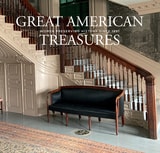
Great American Treasures
Women Preserving History Since 1891Carol Cadou
The Artist Book Foundation, 2025
Great American Treasures is a comprehensive survey of America's historic sites and buildings, their furnishings, and their gardens.
America’s historic sites, homes, and public buildings are a living record of the diverse ethnicities that, over four centuries, helped to build a growing nation. Since 1891, the National Society of the Colonial Dames of America (NSCDA) has actively promoted our national heritage through historic preservation, restoration, and the interpretation of historic sites across the United States. In conjunction with NSCDA, in 2025 The Artist Book Foundation (TABF) published Great American Treasures, a comprehensive survey of the architecture, furnishings, and gardens that epitomize the nation’s diverse material culture over more than 400 years.
The publication features the NSCDA’s collection of historic places, which span the sixteenth to the twentieth centuries, and highlights the residences of those who established themselves in America during this time. It features an array of buildings that speak to the diversity of traditions, people, and architecture in a growing nation—from English Georgian houses on the eastern seaboard to a French Colonial dwelling in Missouri and mission houses in Hawai’i. This survey illuminates the stories and material traditions of the wide range of individuals who contributed to the founding of the United States and to the development of America as a dynamic multicultural nation.
Many of the sites tell the stories of familiar historic figures like George and Martha Washington, John Adams, James and Dolley Madison, John Quincy Adams, Benjamin Franklin, and George Mason. Other sites offer the narratives of figures who contributed to America’s artistic heritage, such as John James Audubon and John Smibert, or those who helped to shape the country’s mercantile system, like Frederick Van Cortlandt and James Logan. Some places were designed by well-known architects such as Robert Mills or McKim, Mead & White, while most were the work of unknown or little-known architects, builders, joiners, and slave laborers. The classic architecture of these sites, their exquisite furnishings and lush gardens, and even the headstones in historic cemeteries all provide a window into the rich diversity of men, women, and children—free, indentured, and enslaved—who came together to build America.

Guidance Note 3
Inspection & TestingThe Institution of Engineering and Technology
The Institution of Engineering and Technology, 2015