Results by title
335 books match the query 'Caribbean & Latin American Studies' and 10 start with g
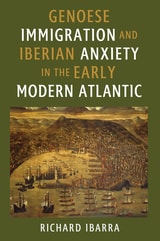
Genoese Immigration and Iberian Anxiety in the Early Modern Atlantic
Richard Ibarra
University of Delaware Press, 2027
This book explores the experiences of Genoese immigrants in the sixteenth-century Iberian Atlantic, focusing on how they navigated issues of identity and community membership across generations and transnational movement. Moving to cities like Seville, as well as Santo Domingo and Mexico City, Genoese families encountered both tremendous opportunities and significant challenges in establishing their lives, reaching a communal apogee—the “Genoese Century”—while they faced increasing Iberian anxieties. While some found ways to integrate into Iberian society through religious and charitable activities, retaining references to their Genoese past, others dissimulated or renounced their Genoese identity. Through a combination of notarial and inquisition records, litigation to prove nobility (hidalguía) and purity of blood (limpieza de sangre), literary narratives, and funerary monuments, Richard Ibarra provides insights into the changing identity claims of Genoese families and the broader attitudes toward foreigners in Iberian society that reached beyond perceived religious and ethnic difference.
Geographies of Relation
Diasporas and Borderlands in the AmericasTheresa Delgadillo
University of Michigan Press, 2024
Not only does Delgadillo offer a rare extended analysis of Black Latinidades in Chicanx literature and theory, but she also considers over a century’s worth of literary, cinematic, and performative texts to support her argument about the significance of these cultural sites and overlaps. Chapters illuminate the significance of Toña La Negra in the Golden Age of Mexican cinema, reconsider feminist theorist Gloria Anzaldúa’s work in revising exclusionary Latin American ideologies of mestizaje, delve into the racial and gender frameworks Sandra Cisneros attempts to rewrite, unpack encounters between African Americans and Black Puerto Ricans in texts by James Baldwin and Marta Moreno Vega, explore the African diaspora in colonial and contemporary Peru through Daniel Alarcón’s literature and the documentary Soy Andina, and revisit the centrality of Black power in ending colonialism in Cuban narratives. Geographies of Relation demonstrates the long histories of networks and exchanges across the Americas as well as the interrelationships among Indigenous, Black, African American, mestizx, Chicanx, and Latinx peoples. It offers a compelling argument that geographies of relation are as significant as national frameworks in structuring cultural formation and change in this hemisphere.
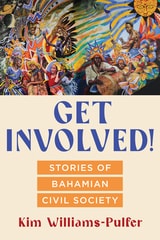
Get Involved!
Stories of Bahamian Civil SocietyKim Williams-Pulfer
Rutgers University Press, 2024
Junkanoo is the national cultural festival of The Bahamas. It fosters a sense of community pride, identity, companionship, spirituality and unity. Watch a video about Junknoo:
https://www.youtube.com/watch?v=tnMpMesNb1Q&t=14s
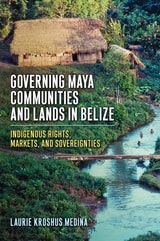
Governing Maya Communities and Lands in Belize
Indigenous Rights, Markets, and SovereigntiesLaurie Kroshus Medina
Rutgers University Press, 2024
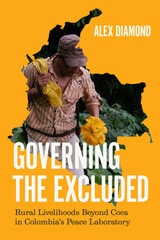
Governing the Excluded
Rural Livelihoods Beyond Coca in Colombia's Peace LaboratoryAlex Diamond
University of Chicago Press, 2026
The Colombian village of Briceño might, at first glimpse, look like many communities in the rural Global South. Many of the people living there rely on small-scale farming, even as a newly constructed hydroelectric dam threatens traditional livelihoods. Yet after decades where Briceño suffered from a bloody conflict, the village has more recently become central to the nation’s hopes for peace. In Governing the Excluded, sociologist Alex Diamond shares a closer look at Briceño and offers unique insight not only into the contemporary Colombian state but to how people across the Global South are struggling to maintain rural livelihoods amid economic dispossession.
Governing the Excluded describes a landmark peace process between the Colombian government and the radical FARC guerrillas from the perspective of Colombian farmers, drawing links between economic transformation, drug economies, and armed conflict. Exclusion from global markets for traditional crops like coffee first pushed farmers to grow coca, the raw material for cocaine. This ushered in an era of violent conflict for control of the illicit economy, while farmers continued to be priced out of legal markets. In exchange for peace and state protection, farmers ultimately agreed to sacrifice profitable coca. But with its disappearance, they now find themselves dependent on the state: for machinery to maintain the roads they need to get legal harvests to market, municipal jobs that are the only decent work available, and for public resources to subsidize food crops with razor-thin profit margins. Ongoing economic struggles in the legal sector make the state’s newfound authority tenuous, as some villagers replant coca, abandon the village for uncertain urban futures, or join a rearmed guerrilla group.
Informed by deep ethnographic research and firsthand stories from Briceño residents, Governing the Excluded shows that when it comes to the forces driving dispossession—be they international corporate megaprojects, global food prices, or national initiatives to replace coca cultivation—state authority goes only so far as its ability to sustain local livelihoods.
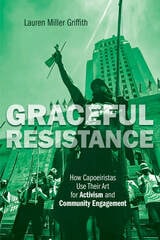
Graceful Resistance
How Capoeiristas Use Their Art for Activism and Community EngagementLauren Miller Griffith
University of Illinois Press, 2023
Capoeira began as a martial art developed by enslaved Afro-Brazilians. Today, the practice incorporates song, dance, acrobatics, and theatrical improvisation—and leads many participants into activism.
Lauren Miller Griffith’s extensive participant observation with multiple capoeira groups informs her ethnography of capoeiristas--both individuals and groups--in the United States. Griffith follows practitioners beyond their physical training into social justice activities that illuminate capoeira’s strong connection to resistance and subversion. As both individuals and communities of capoeiristas, participants march against racial discrimination, celebrate Martin Luther King Jr. Day and Juneteenth, organize professional clothing drives for job seekers, and pursue economic and environmental justice in their neighborhoods. For these people, capoeira becomes a type of serious leisure that contributes to personal growth, a sense of belonging, and an overall sense of self, while also imposing duties and obligations.
An innovative look at capoeira in America, Graceful Resistance reveals how the practicing of an art can catalyze action and transform communities.

Grounding Practice
Dancing Haiti on Tè GliseDasha A. Chapman
University of Michigan Press, 2027
Grounding Practice: Dancing Haiti on Tè Glise tracks the responsive physical techniques Haitian dancers devised for navigating precarity, making place, and igniting repair in the decade following the 2010 earthquake. Via the concept “grounding practice,” which connotes the powerful community building and placemaking made possible by the teaching and practice of Haitian folkloric dance, this interdisciplinary study illustrates how the embodied labor of revitalizing traditions took on increasing relevance as vital reparative worldmaking amidst instability, or tè glise–—Haitian Creole for sliding land or slippery ground.
The dancers in Grounding Practice regenerate understandings of Haitian dance’s potential for fomenting decolonial consciousness, meaningfully sustaining African-derived culture, birthing new social relations, activating the queer potentials of tradition, and ultimately making place. Through ethnography and vivid descriptions, Dasha A. Chapman’s attention to embodied knowledge illuminates how movement practice operates as a site of theorization—wherein not just subjectivity, but also concepts of sovereignty, relation, and futurity, are articulated through the body. Paying homage to important forebears yet moving us beyond static narratives, this study brings our understanding of Haitian dance—and Haiti—through expansive landscapes into the contemporary.
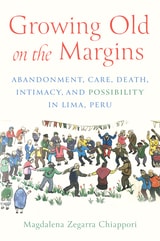
Growing Old on the Margins
Abandonment, Care, Death, Intimacy, and Possibility in Lima, PeruMagdalena Zegarra Chiappori
Rutgers University Press, 2027
Growing Old on the Margins is a moving portrait of aging at the edge of social life. Set in a state-run shelter for older adults in urban Lima, Peru, the book traces the everyday lives of men and women who have been left behind by family, institutions, and the promises of care. Based on more than two years of close ethnographic engagement, it follows residents as they navigate loneliness, illness, intimacy, and the quiet anticipation of death. Through small gestures—shared silences, requests for affection, moments of tenderness and conflict—the book reveals how people strive to remain present in a world that offers them little reason to hope. Care appears here not as a simple act of kindness, but as a fragile and uneven practice, shaped by scarcity, power, and moral ambiguity. Attentive to suffering without romanticizing it, Growing Old on the Margins reflects on what it means to age, endure, and remain human when one’s life is no longer considered worthy of attention.
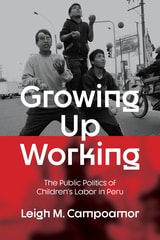
Growing Up Working
The Public Politics of Children's Labor in PeruLeigh M. Campoamor
University of Texas Press, 2026
A deep ethnography on children who work in Lima, Peru, and a critique of the global anti-child labor effort.
Children juggling at traffic lights and selling candy from car to car are ubiquitous in Lima, Peru’s capital, making the country a hotspot for child labor reformers. Even when the intentions behind the anti-child labor movement are benevolent, in practice this effort affects children and their families in unexpected and often harmful ways.
Anthropologist Leigh Campoamor argues that the concept of child labor is stuck in an industrial-era framing that fails to capture the reality of working youth in the global south today. Following children who work on Lima’s streets through their daily routines, Campoamor shows how these youth—and often their mothers—become subjects of moral intervention by state institutions, NGOs, and the general public. Arguing that reformers reinforce hierarchies of race, class, gender and age in the name of children's rights, Growing Up Working shows how working youth assert agency while also performing invisible caring and affective labor that doesn't count as work under neoliberal capitalism. Campoamor follows the children at the center of her ethnography into adulthood, providing an intimate and dynamic portrait of their lives while critiquing the ways anti–child labor discourses imagine working children’s futures.
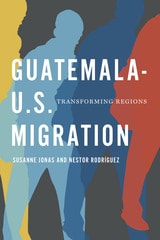
Guatemala-U.S. Migration
Transforming RegionsBy Susanne Jonas and Nestor Rodríguez
University of Texas Press, 2015
Guatemala-U.S. Migration: Transforming Regions is a pioneering, comprehensive, and multifaceted study of Guatemalan migration to the United States from the late 1970s to the present. It analyzes this migration in a regional context including Guatemala, Mexico, and the United States. This book illuminates the perilous passage through Mexico for Guatemalan migrants, as well as their settlement in various U.S. venues. Moreover, it builds on existing theoretical frameworks and breaks new ground by analyzing the construction and transformations of this migration region and transregional dimensions of migration.
Seamlessly blending multiple sociological perspectives, this book addresses the experiences of both Maya and ladino Guatemalan migrants, incorporating gendered as well as ethnic and class dimensions of migration. It spans the most violent years of the civil war and the postwar years in Guatemala, hence including both refugees and labor migrants. The demographic chapter delineates five phases of Guatemalan migration to the United States since the late 1970s, with immigrants experiencing both inclusion and exclusion very dramatically during the most recent phase, in the early twenty-first century. This book also features an innovative study of Guatemalan migrant rights organizing in the United States and transregionally in Guatemala/Central America and Mexico. The two contrasting in-depth case studies of Guatemalan communities in Houston and San Francisco elaborate in vibrant detail the everyday experiences and evolving stories of the immigrants’ lives.