264 books match the query 'Chicago (Ill.)' and 12 start with g

cover of Gabriel's Fire: A Memoir

Gabriel's Fire

A Memoir

Luis Gabriel Aguilera

University of Chicago Press, 2000

Like many boys, Luis Gabriel Aguilera grew up with cartoons, music, friends, and first loves. As he entered his teenage years, he faced the typical questions of adolescence—what kind of person did he want to be? how should he live his life? But for Aguilera, now in his twenties, these questions had a particular urgency. A Mexican immigrant, he came of age in a Polish neighborhood on the South Side of Chicago that was encroached upon by threats of gangs and drugs. He attended Catholic school and, at age thirteen, began an affair with one of the teachers at the local elementary school. All the while he documented his teenage years in a series of journals, which have now grown into Gabriel's Fire.

Aguilera's memoir is not just an account of race relations and street life in the inner city, nor of the plight of the immigrant and the dilemma of class identity for a "minority" family. Gabriel's Fire also movingly recounts the peculiarly daunting and inspiring moments of a particular age, riddled with confusion, desires, and duties and recorded by an exceptionally observant and articulate young man. Aguilera writes that he "grew into" the English language when he was eleven or twelve, and his recollections reflect his newfound delight with words—the conversations, arguments, taunts, song lyrics, and casual interchanges of his youth are rendered here with an immediacy and directness rare in contemporary memoirs.

Both a picture of American culture of the 1980s and 1990s and a coming-of-age story, Gabriel's Fire counters mainstream and mass-mediated images of the inner city, Hispanic culture, and troubled youth. In its honesty and energy, it is a poignant and compelling story of one man's formative years.
[more]
cover of Ghosts of Chicago: Stories

Ghosts of Chicago

Stories

John McNally

Northwestern University Press, 2010
Chicago is famously a "city of neighborhoods" that somehow balances metropolitan and parochial life. In the seventeen vividly rendered stories in Ghosts of Chicago, John McNally likewise captures the poignancy of both the shared experiences of a city and the interior details of his everyday characters.While McNally resurrects Chicago icons and institutions—including John Belushi, Walter Payton, and Richard J. Daley make appearances, and WGN’s "Creature Features" and a morning show for children featuring a silent goose are settings-- he is ultimately interested in the human condition, whether it’s railroad mogul George Pullman remembering his greatest triumph or the host of Romper Room experiencing her own awakening during the sexual revolution.Other stories tell of everyday people who must confront their own private ghosts—an accountant who falls in love with a woman who is in love with a man on death row; the son of a realtor who discovers his father’s secret life; a memoirist whose dark night of the soul leads him on a journey from which he may never return.McNally may be writing about Chicago—in the words of a Chicago Sun-Times reviewer, "He may have physically left Chicago, but the city has never left him"—but like Faulkner’s Yoknapatawpha or Sherwood Anderson’s Winesburg, the stories in this book transcend place.
[more]
cover of Global Decisions, Local Collisions: Urban Life In The New World Order

Global Decisions, Local Collisions

Urban Life In The New World Order

David Ranney

Temple University Press, 2002
The politics of the past must be rethought. They were designed for a world where the U.S. manufactured at home, and where portions of U.S.-based labor had traded social stability for high wages. In this thought-provoking work, David Ranney shows how our world has changed and offers a plan for remaking progressive politics to meet the crises brought about by what George H. W. Bush first termed "the new world order. "Drawing from his experiences in Chicago politics, first as a factory worker and later as an activist and academic, Ranney shows how the increasing mobility of capital, the easy availability of credit, and a changing government policies have reshaped the urban world where U.S. workers live their everyday lives. This is not the story of the interconnectedness of modern business, but rather the need for self-respecting people who bring home a weekly paycheck to see the common, global problems they face, and to work together to bring about meaningful change.Showing how globalization has led to specific local consequences for cities and the workers that inhabit them, David Ranney presents a means for taking stock of the effects of globalization; a look at these changes in labor markets; economic development politics; housing policy; and employment policies; and an organizing strategy for this new economic and social era.
[more]
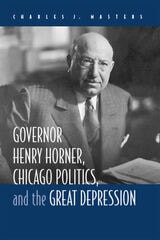
cover of Governor Henry Horner, Chicago Politics, and the Great Depression

Governor Henry Horner, Chicago Politics, and the Great Depression

Charles J. Masters

Southern Illinois University Press, 2007
Many have never heard of Governor Henry Horner of Illinois, yet his story is remarkable. Governor Henry Horner, Chicago Politics, and the Great Depression focuses on Horner’s career in law and politics from 1915 to 1940, while examining the economic and political dynamics of Illinois during the darkest period in American history. This principled governor managed to maintain his political integrity in a climate where honesty was a liability, says author Charles J. Masters, but the few historians who include Horner in their narratives offer contradictory and dismissive characterizations of him. Masters corrects the public record and reintroduces Horner to political lore as a man who brazenly fought both the Chicago Democratic machine that worked to plot his downfall and Roosevelt’s White House to steadfastly do right by the people of Illinois.
In this first book-length treatment of Horner in over thirty-five years, Masters traces the politician’s career, the history and politics of Chicago, and the effects of the Great Depression in Illinois. The volume details Horner’s life as a lawyer, probate judge, and two-term Democratic governor of Illinois. Horner’s relationships with President Franklin D. Roosevelt and such political players as Michael “Hinky Dink” Kenna, “Bathhouse” John Coughlin, and Chicago mayors Carter Harrison, Anton Cermak, and Ed Kelly are set against a backdrop of assassination, political sniping, court-packing schemes, Prohibition, and the New Deal.
Governor Henry Horner, Chicago Politics, and the Great Depression examines the governor’s management of the political and economic challenges of the state when millions of Americans were jobless, homeless, and hungry. The severely divergent economic and political positions of the state’s northern industrial and southern agrarian interests made the period even darker. Masters shows how Horner stemmed foreclosures, dealt with bank closings, placated unpaid teachers, soothed massive labor unrest, fed the hungry, and confronted the ever-present threat of revolution. While Hitler’s Germany was spreading Nazism throughout Europe, some Americans were questioning the fundamental order of their own political system, suggesting that socialism, communism, or Nazism could offer a better way. Masters addresses how Horner, Illinois’ first Jewish governor, dealt with these challenges to the U.S. political system.
A story long absent from the historical record, GovernorHenry Horner, Chicago Politics, and the Great Depression offers a portrait of the man, his style of governance, his successes, and his failures. The volume, with eight illustrations, effectively reevaluates Horner’s historical reputation and role in Illinois politics in the midst of the worst economic depression in our nation’s history.
[more]
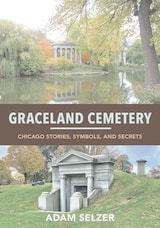
cover of Graceland Cemetery: Chicago Stories, Symbols, and Secrets

Graceland Cemetery

Chicago Stories, Symbols, and Secrets

Adam Selzer

University of Illinois Press, 2022

Chosen for the 2024 Illinois Reads Program by the Illinois Reading Council

One of Chicago’s landmark attractions, Graceland Cemetery chronicles the city’s sprawling history through the stories of its people. Local historian and Graceland tour guide Adam Selzer presents ten walking tours covering almost the entirety of the cemetery grounds. While nodding to famous Graceland figures from Marshall Field to Ernie Banks to Ludwig Mies van der Rohe, Selzer also leads readers past the vaults, obelisks, and other markers that call attention to less recognized Chicagoans like:

  • Jessie Williams de Priest, the Black wife of a congressman whose 1929 invitation to a White House tea party set off a storm of controversy;
  • Engineer and architect Fazlur Khan, the Bangladeshi American who revived the city's skyscraper culture;
  • The still-mysterious Kate Warn (listed as Warn on her tombstone), the United States’ first female private detective.

Filled with photographs and including detailed maps of each tour route, Graceland Cemetery is an insider's guide to one of Chicago's great outdoor destinations for city lore and history.
[more]
cover of Grafters and Goo Goos: Corruption and Reform in Chicago

Grafters and Goo Goos

Corruption and Reform in Chicago

James L. Merriner

Southern Illinois University Press, 2008

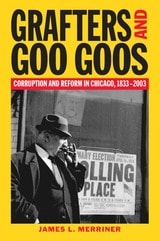
Chicago’s reputation for corruption is the basis of local and national folklore and humor. Grafters and Goo Goos: Corruption and Reform in Chicago, 1833–2003 unfolds the city’s notorious history of corruption and the countervailing reform struggles that largely failed to clean it up. More than a regional history of crime in politics, this wide-ranging account of governmental malfeasances traces ongoing public corruption and reform to its nineteenth-century democratic roots. Former Chicago journalist James L. Merriner reveals the battles between corrupt politicos and ardent reformers to be expressions of conflicting class, ethnic, and religious values.

From Chicago’s earliest years in the 1830s, the city welcomed dollar-chasing businessmen and politicians, swiftly followed by reformers who strived to clean up the attendant corruption. Reformers in Chicago were called “goo goos,” a derisive epithet short for “good-government types.” Grafters and Goo Goos contends a certain synergy defined the relationship between corruption and reform. Politicians and reformers often behaved similarly, their separate ambitions merging into a conjoined politics of interdependency wherein the line between heroes and villains grew increasingly faint. The real story, asserts Merriner, has less to do with right against wrong than it does with the ways the cultural backgrounds of politicians and reformers steered their own agendas, animating and defining each other by their opposition.

Drawing on original and archival research, Merriner identifies constants in the struggle between corruption and reform amid a welter of changing social circumstances and customs—decades of alternating war and peace, hardships and prosperity. Three areas of reform and resistance are identified: structural reform of the political system to promote honesty and efficiency, social reform to provide justice to the lower classes, and moral reform to combat vice. “In the matter of corruption and reform, the constants might be stronger than the variables,” writes Merriner in the Preface. “The players, rules, and scorekeepers change, but not the essential game.”

Complemented by eighteen illustrations, Grafters and Goo Goos is rife with shocking and amusing anecdotes and peppered with the personalities of famous muckrakers, bootleggers, mayors, and mobsters. While other studies have profiled infamous Chicago corruption cases and figures such as Al Capone and Richard J. Daley, this is the first to provide an overview appropriate for historians and general readers alike. In examining Chicago’s notorious saga of corruption and reform against a backdrop of social history, Merriner calls attention to our constant problems of both civic and national corruption and contributes to larger discussions about the American experiment of democratic self-government.
[more]
cover of Grant Park: The Evolution of Chicago's Front Yard

Grant Park

The Evolution of Chicago's Front Yard

Dennis H. Cremin

Southern Illinois University Press, 2013


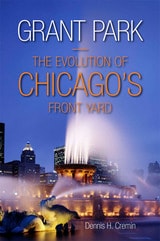
On November 4, 2008, when president-elect Barack Obama celebrated his victory with more than one hundred thousand supporters in Chicago, everyone knew where to meet. Long considered the showplace and cultural center of Chicago, Grant Park has been the site of tragedy and tension, as well as success and joy. In addition to serving as the staging grounds for Abraham Lincoln’s funeral procession through the city, the park has been the setting for civil rights protests and the 1968 Democratic National Convention demonstrations. The faithful attended the open-air mass of Pope John Paul II in Grant Park, and fans gathered there to cheer for the Chicago Bulls after their championship wins. The long park overlooking the beautiful waters of Lake Michigan has played an active part in Chicago and U. S. history.
 
In 1836, only three years after Chicago was founded, Chicagoans set aside the first narrow shoreline as public ground and declared it “forever open, clear, and free. . . .” Chicago historian and author Dennis H. Cremin reveals that despite such intent, the transformation of Grant Park to the spectacular park it is more than 175 years later was a gradual process, at first fraught with a lack of funding and organization, and later challenged by erosion, the railroads, automobiles, and a continued battle between original intent and conceptions of progress. Throughout the book, Cremin shows that while Grant Park’s landscape and uses have changed throughout its rocky history, the public ground continues to serve “as a display case for the city and a calling card to visitors.” Amply illustrated with maps and images from throughout Chicago’s history, Grant Park shows readers how Chicago’s “front yard” developed into one of the finest urban parks in the country today.

2014 Illinois State Historical Society Book of the Year
 

[more]
cover of Great American City: Chicago and the Enduring Neighborhood Effect

Great American City

Chicago and the Enduring Neighborhood Effect

Robert J. Sampson

University of Chicago Press, 2012
For over fifty years numerous public intellectuals and social theorists have insisted that community is dead. Some would have us believe that we act solely as individuals choosing our own fates regardless of our surroundings, while other theories place us at the mercy of global forces beyond our control. These two perspectives dominate contemporary views of society, but by rejecting the importance of place they are both deeply flawed. Based on one of the most ambitious studies in the history of social science, Great American City argues that communities still matter because life is decisively shaped by where you live.
 
To demonstrate the powerfully enduring impact of place, Robert J. Sampson presents here the fruits of over a decade’s research in Chicago combined with his own unique personal observations about life in the city, from Cabrini Green to Trump Tower and Millennium Park to the Robert Taylor Homes. He discovers that neighborhoods influence a remarkably wide variety of social phenomena, including crime, health, civic engagement, home foreclosures, teen births, altruism, leadership networks, and immigration. Even national crises cannot halt the impact of place, Sampson finds, as he analyzes the consequences of the Great Recession and its aftermath, bringing his magisterial study up to the fall of 2010.
 
Following in the influential tradition of the Chicago School of urban studies but updated for the twenty-first century, Great American City is at once a landmark research project, a commanding argument for a new theory of social life, and the story of an iconic city.
[more]
cover of Great American City: Chicago and the Enduring Neighborhood Effect

Great American City

Chicago and the Enduring Neighborhood Effect

Robert J. Sampson

University of Chicago Press, 2024

Great American City demonstrates the powerfully enduring impact of place.
 
Based on one of the most ambitious studies in the history of social science, Robert J. Sampson’s Great American City presents the fruits of over a decade’s research to support an argument that we all feel and experience every day: life is decisively shaped by your neighborhood.

Engaging with the streets and neighborhoods of Chicago, Sampson, in this new edition, reflects on local and national changes that have transpired since his book’s initial publication, including a surge in gun violence and novel forms of segregation despite an increase in diversity. New research, much of it a continuation of the influential discoveries in Great American City, has followed, and here, Sampson reflects on its meaning and future directions. Sampson invites readers to see the status of the research initiative that serves as the foundation of the first edition—the Project on Human Development in Chicago Neighborhoods (PHDCN)—and outlines the various ways other scholars have continued his work. Both accessible and incisively thorough, Great American City is a must-read for anyone interested in cutting-edge urban sociology and the study of crime.
 
[more]
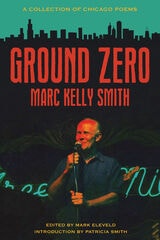
cover of Ground Zero: A Collection of Chicago Poems

Ground Zero

A Collection of Chicago Poems

Marc Kelly Smith; Edited by Mark Eleveld; With an introduction by Patricia Smith

Northwestern University Press, 2021

Inception and implosion, Chicago’s grit and grandiosity all come together in the finite poetic power of the original Slam igniter, renowned poet Marc Kelly Smith and his retrospect denotation, Ground Zero. 

A cultural, community, and adversarial figure, Smith has challenged the status quo and raised new questions about an environment in a state of continuous calamity. Smith’s power and influence have inspired celebrated figures who cut their teeth on both the stage and the page under his watchful eye—always speaking in the traditions of Carl Sandburg and Gwendolyn Brooks. Ground Zero challenges but pays homage to the thousand underbellies of Chicago with Smith’s wicked, cigarette-in-the-beer language: “I ain’t diggin’ no concrete coffin, / No backyard mausoleum / To keep me a pickle sweet aplenty / Plied with sardines and pork sausage wieners / Livin’ out the chance that some bubble-flesh victim / Will come puckered up and scabby lipped / To kiss me in the name of a new mankind.”

Ground Zero leaves no doubt. The Slampapi / instigator / visionary / you-may-love-me-or-hate-me-but-my-history-will-always-be-chiseled-in-everything-the-poetry-world-does-next collects a survey of his land and his experience, no matter how beautiful or flawed. This book lets the landmines of imagery and Chicago’s slow and uneasy drawl showcase one of our most original voices.
[more]
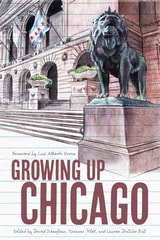
cover of Growing Up Chicago

Growing Up Chicago

Edited by David Schaafsma, Roxanne Pilat, and Lauren DeJulio Bell, Foreword by Luis Alberto Urrea

Northwestern University Press, 2021

Growing Up Chicago is a collection of coming-of-age stories that reflects the diversity of the city and its metropolitan area. Primarily memoir, the book collects work by writers who spent their formative years in the region to ask: What characterizes a Chicago author? Is it a certain feel to the writer’s language? A narrative sensibility? The mention of certain neighborhoods or locales? Contributors to the volume include renowned writers Ana Castillo, Stuart Dybek, Emil Ferris, Charles Johnson, Rebecca Makkai, Erika L. Sánchez, and George Saunders, as well as emerging talents. While the authors represented here write from distinct local experiences, some universals emerge, including the abiding influence of family and friends and the self-realizations earned against the background of a place sparkling with promise and riven by inequality, a place in constant flux.

The stories evoke childhood trips to the Art Institute of Chicago, nighttime games of ringolevio, and the giant neon Magikist lips that once perched over the expressway, sharing perspectives that range from a young man who dreams of becoming an artist to a single mother revisiting her Mexican roots, from a woman’s experience with sexual assault to a child’s foray into white supremacy. This book memorably explores culture, social identity, and personal growth through the eyes of Chicagoans, affirming that we each hold the ability to shape the places in which we live and write and read as much as those places shape us.
[more]
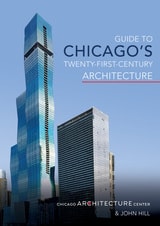
cover of Guide to Chicago's Twenty-First-Century Architecture

Guide to Chicago's Twenty-First-Century Architecture

Chicago Architecture Center and John Hill

University of Illinois Press, 2021

Exploring a new century of architecture in the Windy City

Chicago's wealth of architectural treasures makes it one of the world's majestic cityscapes. Published in collaboration with the Chicago Architecture Center, this easy-to-use guide invites you to discover the new era of twenty-first-century architecture in the Windy City via two hundred architecturally significant buildings and spaces in the city and suburbs. Features include:
  • Entries organized by neighborhood
  • Maps with easy-to-locate landmarks and mass transit options
  • Background on each entry, including the design architect, name and address, description, and other essential information
  • Sidebars on additional sites and projects
  • A detailed supplemental section with a glossary, selected bibliography, and indexes by architect, building name, and building type

Up-to-date and illustrated with almost four hundred color photos, the Guide to Chicago's Twenty-First-Century Architecture takes travelers and locals on a journey into an ever-changing architectural mecca.

[more]