496 books match the query 'Christian Theology' and 14 start with g
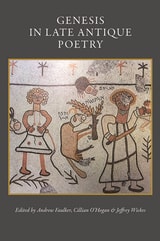
cover of Genesis in Late Antique Poetry

Genesis in Late Antique Poetry

Andrew Faulkner

Catholic University of America Press, 2022
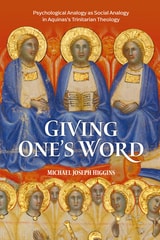
The biblical book of Genesis stands nearly without parallel in the shared history of Judaism, Christianity, and Islam. Because of its abiding importance to late antique theology and practical life across religious boundaries, it gave rise to a wide range of literary responses. The essays in this book study an array of Jewish and Christian responses to Genesis as they took shape in specific literary forms—the unique genres of late antique poetry. While late antique and early medieval Jews and Christians did not always agree in their interpretations of Genesis, they participated broadly in a shared culture of poetic production. Some of these poetic genres paralleled one another simply as distinct examples of metered speech, while others emerged in conversation and through mutual influence. Though late antique poems developed in a variety of languages and across religious boundaries, scholarly study of late antique poetry has tended to isolate the phenomenon according to language. As a corrective to this linguistic isolation, this book initiates a comparative conversation around the Jewish and Christian poetry that emerged in late antique Aramaic, Greek, Hebrew, Latin, and Syriac. Tending equally to exegetical content and literary form, the essays in this book sit at the intersection of a variety of scholarly conversations—around the history of biblical exegesis, the formation of late antique and early medieval literature and literary culture, and the comparative study of Judaism and Christianity.
[more]
cover of Giving One's Word: Interpersonal Love, Knowledge, and Self-Giving in Aquinas's Psychological Analogy for the Trinity

Giving One's Word

Interpersonal Love, Knowledge, and Self-Giving in Aquinas's Psychological Analogy for the Trinity

Michael Joseph Higgins

Catholic University of America Press, 2025
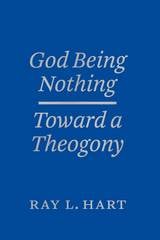
According to the vast majority of recent Trinitarian theologians, to believe in the Trinity is to believe that God is Love: it is to believe in three divine Persons who know each other, love each other, and give themselves to each other. St. Thomas Aquinas is rarely invoked as a patron of such a social approach to the Trinity. Aquinas’s Trinitarian theology, after all, revolves around the immanent processions of a Word and Love within the unity of the divine essence. Many have assumed that this “psychological analogy” is removed from—or even incompatible with—interpersonal knowledge, love, and self-giving. Some have concluded that Aquinas is therefore unable to accommodate a social Trinity. Others have argued that he is open to a social Trinity, but that his psychological categories need to be complemented by a more overtly social framework. This study, however, shows that these psychological categories themselves are shot through with interpersonal knowledge, love, and self-giving. More specifically, Aquinas’s psychological analogy is often accused of emphasizing the unity of the divine essence at the expense of the distinction of the divine Persons. In fact, it emphasizes distinction just as basically as it emphasizes unity, and it ensures that the distinction between the divine Persons is a radical one. Similarly, it is criticized for being a matter of self-knowledge instead of interpersonal knowledge, self-love instead of interpersonal love, and self-regard instead of self-giving. In fact, it is a matter of self-knowledge as interpersonal knowledge, self-love as interpersonal love, and self-regard as self-giving: it ensures that there can be no self-knowledge or self-love in God that is not just as basically interpersonal knowledge, interpersonal love, and interpersonal self-giving. Aquinas’s psychological analogy, then, does not shut down the possibility of interpersonal Trinity. Nor does it need to be complemented from the outside by an interpersonal Trinity. Instead, it contains within itself an intensely interpersonal Trinity.
[more]
cover of God Being Nothing: Toward a Theogony

God Being Nothing

Toward a Theogony

Ray L. Hart

University of Chicago Press, 2016

In this long-awaited work, Ray L. Hart offers a radical speculative theology that profoundly challenges classical understandings of the divine. God Being Nothing contests the conclusions of numerous orthodoxies through a probing question: How can thinking of God reach closure when the subjects of creation are themselves unfinished, when God’s self-revelation in history is ongoing, when the active manifestation of God is still occurring?

Drawing on a lifetime of reading in philosophy and religious thought, Hart unfolds a vision of God perpetually in process: an unfinished God being self-created from nothingness. Breaking away from the traditional focus on divine persons, Hart reimagines the Trinity in terms of theogony, cosmogony, and anthropogony in order to reveal an ever-emerging Godhead who encompasses all of temporal creation and, within it, human existence. The book’s ultimate implication is that Being and Nonbeing mutually participate in an ongoing process of divine coming-to-birth and dying that implicates all things, existent and nonexistent, temporal and eternal. God’s continual generation from nothing manifests the full actualization of freedom: the freedom to create ex nihilo.
[more]
cover of God Is Love: Thomas Aquinas on the Being and Action of the Holy Spirit

God Is Love

Thomas Aquinas on the Being and Action of the Holy Spirit

Michael D. Torre

Catholic University of America Press, 2026
This book dedicates three essays each to three different theological problems regarding the Holy Spirit: In God and for Us (The "Filioque" and "Uncreated Grace"); Thomas's Understanding (Not His Commentators) of the Relation between nature and sanctifying grace; and our ability (and that of the angels at their creation) in fact to resist God' grace and thus be the first cause of sin. This later problem is developed in an "excursus" on the way God moves the free will, one that takes into consideration much recent work on this issue and situates the essays' position in relation to it. The book ends with a brief epilogue on the credibility of God, again giving Thomas's account of this. The principal aim throughout is to understand the doctrine of Thomas Aquinas. It places his views in relation to three audiences: chiefly to the orthodox regarding the first issue; to Catholics in relation to the second; and to Protestants in relation to the third. Thus, its second aim is to join "ecumenical debate" about these matters. The essays were mostly written to be delivered orally, to an informed audience of philosophers and theologians., but one that consisted of "generalists" and serious students of Thomas, as well as of "professional" philosophers and theologians. All three of the debated issues discussed have generated an enormous amount of disagreement and debate, not a little of it being quite "technical." Thus, each issue would easily require a long and significant book to be addressed as it deserves. The essays do not do this, but they do indicate what Torre holds is the "directive line" of Thomas's thought that deserves to be defended and developed in each case, and, in each case, this line is held to be markedly different than many have thought it to be.
[more]
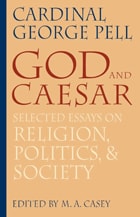
cover of God and Caesar: Selected Essays on Religion, Politics, & Society

God and Caesar

Selected Essays on Religion, Politics, & Society

George Pell

Catholic University of America Press, 2007
Drawing on a deep knowledge of history and human affairs, the essays pinpoint the key issues facing Christians and non-believers in determining the future of modern democratic life
[more]
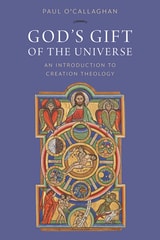
cover of God's Gift of the Universe: An Introduction to Creation Theology

God's Gift of the Universe

An Introduction to Creation Theology

Paul O'Callaghan

Catholic University of America Press, 2021

There are many ways of understanding the reality of the world we live in and experience. Science, philosophy, art all offer us ample descriptions, explanations and intuitions. But Christian believers go beyond all that, for they attempt to understand the origins of the universe in terms of the creation of the world by God. Revelation tells us what God had in mind when he made the world ex nihilo, without presuppositions of any kind. God’s Gift of the Universe attempts to present the principal elements and stages of creation theology. The doctrine is to be found fundamentally, of course, in Scripture, both Old and New Testament, which describes the world in the light of God’s word. Yet since God actually gave existence to the world, down to the last detail, our reflection on God’s word not only explains the reality of creation, how it works, its nature, as science does. It also explains how creation came into being in the mind and heart of the Triune God, and, ultimately, why God created the world. In God’s Gift of the Universe, a considerable effort has been spent throughout the book on the Christological and Trinitarian aspects of creation, particularly in the theology of Church Fathers. Creation is presented besides in a deeply eschatological key, for God created the world for purpose of making his glory eternally manifest. The book also considers the way God ‘intervenes’ in the life of the created world, through conservation in being and providence. The meaning of time, matter and spirit are considered. The need for ecological awareness is central. One aspect of the mystery of creation that receives special attention is the presence of evil in the world. This is of particular importance once we accept that God made the world, whole and entire, thus assuming responsibility for the world as it is. The origin of evil through the sin of spiritual creatures provides the ultimate though not the only explanation of the mystery of evil. Particular consideration is given to the reality of ‘original sin’.
[more]
cover of God, He Who Is: De Deo ut uno

God, He Who Is

De Deo ut uno

Serge-Thomas Bonino

Catholic University of America Press, 2026
"What is God?" asked Thomas Aquinas as a child. Contemplation of the mystery of God, in the light of reason enlightened by faith, is the heart of the theological enterprise. It is based on the Revelation that God has made of himself in the history of salvation and, in order to foster the understanding of faith, it assumes the best of metaphysical reflection, since the saving God revealed in Jesus Christ is not another God than the Creator of heaven and earth, the subsisting Being, the First Cause of all being. The One God deals with a first "part" of the mystery of God: God contemplated in the unity of the essence common to the three persons of the Holy Trinity. It explores the ways of our knowledge (section 1) and presents the theological question of his existence (section 2). It then sets out the perfections of God's very being (simplicity, goodness, infinity, eternity, etc.)(section 3) and, after a critical review of the value of theoretical knowledge and language (section 4), presents the principles of his action (knowledge, will, omnipotence) (section 5). The One God is a continuation of the treatises De Deo ut uno, which, in the form of a systematic, historical and doctrinal commentary on questions 2-26 of the Prima pars of the Summa Theologiae of Saint Thomas Aquinas, have succeeded one another throughout the history of the Thomist tradition. Its aim is to update a theology treatise that is unjustly neglected today and to offer teachers and students a solid and informed manual on this fundamental subject.
[more]
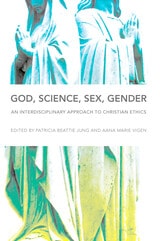
cover of God, Science, Sex, Gender: An Interdisciplinary Approach to Christian Ethics

God, Science, Sex, Gender

An Interdisciplinary Approach to Christian Ethics

Edited by Patricia Beattie Jung and Aana Marie Vigen with John Anderson

University of Illinois Press, 2010

God, Sex, Science, Gender: An Interdisciplinary Approach to Christian Ethics is a timely, wide-ranging attempt to rescue dialogues on human sexuality, sexual diversity, and gender from insular exchanges based primarily on biblical scholarship and denominational ideology. Too often, dialogues on sexuality and gender devolve into the repetition of party lines and defensive postures, without considering the interdisciplinary body of scholarly research on this complex subject. This volume expands beyond the usual parameters, opening the discussion to scholars in the humanities, social sciences, and natural sciences to foster the development of Christian sexual ethics for contemporary times.

Essays by prominent and emerging scholars in the fields of anthropology, sociology, psychology, philosophy, literary studies, theology, and ethics reveal how faith and reason can illuminate our understanding of human sexual and gender diversity. Focusing on the intersection of theology and science and incorporating feminist theory, God, Science, Sex, Gender is a much-needed call for Christian ethicists to map the origins and full range of human sexual experience and gender identity. Essays delve into why human sexuality and gender can be so controversial in Christian contexts, investigate the complexity of sexuality in humans and other species, and reveal the implications of diversity for Christian moral theology.

Contributors are Joel Brown, James Calcagno, Francis J. Catania, Pamela L. Caughie, Robin Colburn, Robert Di Vito, Terry Grande, Frank Fennell, Anne E. Figert, Patricia Beattie Jung, Fred Kniss, John McCarthy, Jon Nilson, Stephen J. Pope, Susan A. Ross, Joan Roughgarden, and Aana Marie Vigen.
[more]
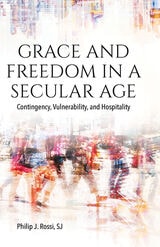
cover of Grace and Freedom in a Secular Age: Contingency, Vulnerability, and Hospitality

Grace and Freedom in a Secular Age

Contingency, Vulnerability, and Hospitality

Philip J. Rossi

Catholic University of America Press, 2022
In the course of a long and distinguished academic and civic career, the Canadian philosopher Charles Taylor has been, for articulate atheists and learned believers alike, an incisive, insightful, gracious, and challenging conversation partner on issues that arise at the intersection and interaction of religion, society, and culture. Grace and Freedom in a Secular Age offers a concise exposition of key ideas – contingency, otherness, freedom, vulnerability and mutuality – that inform his probing analyses of the dynamics of religious belief and religious denial in the pervasive contemporary culture he calls a “a secular age,” within which religious belief and practice have, for many, become just an option. Those ideas provide the basis from which Rossi argues that, despite a clear-eyed recognition of the deep fractures of meaning and the pervasive fragmentation of once stable societal connections that a secular age has brought in its wake, Taylor also sees and affirms strong grounds for hope in a healing of our broken and fractured world and for the possibilities—and the importance of—active human participation in that healing. Taylor points to signs indicative of potent re-compositions and renewals taking place in religious belief and practice from its interaction with the dynamics of secular culture, particularly ones that make possible radical enactments of deeper human solidarity and mutuality, of which the one most often potent is the reconciliation of enemies. In pointing out these signs, Taylor suggests a richly expansive reading of the Christian doctrine of Creation, as it marks the radical contingency of all that is upon a freely bestowed divine self-giving: Creation is the ongoing enactment of the divine hospitality of the Triune God.
[more]
cover of Grace, Predestination, and the Permission of Sin: A Thomistic Analysis

Grace, Predestination, and the Permission of Sin

A Thomistic Analysis

Taylor O'Neill

Catholic University of America Press, 2019
Grace, Predestination, and the Permission of Sin seeks to analyze a revisionist movement within Thomism in the 20th century over and against the traditional or classical Thomistic commentatorial treatment of physical premotion, grace, and the permission of sin, especially as these relate to the mysteries of predestination and reprobation. The over-arching critique leveled by the revisionists against the classic treatment is that Bañezian scholasticism had disregarded the dissymmetry between the line of good (God's causation of salutary acts) and the line of evil (God's permission of defect and sin). The teaching of St. Thomas is explored via intimate consideration of his texts. The thought of St. Thomas is then compared with the work of Domingo Bañez and the foremost 'Bañezian' of the 20th century, Reginald Garrigou-Lagrange. The work then shifts to a consideration of the major players of the revisionist treatment, including Francisco Marín-Sola, Jacques Maritain, and Bernard Lonergan. Jean-Herve Nicolas is also taken up as one who had held both accounts during his lifetime. The work analyzes and critiques the revisionist theories according to the fundamental tenets of the classical account. Upon final analysis, it seeks to show that the classical account sufficiently distances God's causal role in regard to free salutary acts and His non-causal role in regard to free sinful acts. Moreover, the revisionist account presents significant metaphysical problems and challenges major tenets of classical theism, such as the divine omnipotence, simplicity, and the exhaustive nature of divine providence. Finally, the implications of the traditional view are considered in light of the spiritual life. It is argued that the classical account is the only one which provides an adequate theological foundation for the Church's robust mystical and spiritual tradition, and in particular, the abandonment to divine providence.
[more]
cover of Group Identity and Religious Individuality in Late Antiquity

Group Identity and Religious Individuality in Late Antiquity

Eric Rebillard

Catholic University of America Press, 2015
To understand the past, we necessarily group people together and, consequently, frequently assume that all of its members share the same attributes. In this ground-breaking volume, Eric Rebillard and Jörg Rüpke bring renowned scholars together to challenge this norm by seeking to rediscover the individual and to explore the dynamics between individuals and the groups to which they belong.
[more]
cover of Growing into God: The Fathers of the Church on Christian Maturity

Growing into God

The Fathers of the Church on Christian Maturity

John Gavin

Catholic University of America Press, 2025

Many studies of spiritual development exist under the heading of “Christian Perfection.” However, John Gavin revisits such topics as asceticism, prayer, sacraments, virtues, and spiritual combat through scriptural and patristic texts that present the Christian life as one of growth from spiritual infancy to a particular fulfillment or end (telos): divinized humanity as formed and revealed in Jesus Christ. Thus, though Christian maturity does incorporate such things as physical and cognitive development, its true distinction lies in its gifted, supernatural end that does not exclude human freedom. Part One establishes the pillars of Christian maturity – form and finality; virtue and character; vocation and mission – and explores the opposition to maturation in the form of demonic infantilism. Part Two examines the means of maturity given to us in the life of the Church: the Scriptures, the Mysteries (Sacraments), and asceticism. Finally, Part Three reviews four figures of Christian adulthood: the Witness, the Teacher, the Servant, and the Fool. A concluding chapter applies the insights from the previous chapters to our modern world to see in what ways our times need to “grow up.” Growing into God includes a variety of early Christian voices: Irenaeus of Lyons, Origen of Alexandria, Gregory of Nazianzus, Gregory of Nyssa, Basil of Caeserea, Augustine of Hippo, Ambrose of Milan, John Cassian, Dionysius the Areopagite, Mark the Monk, John Moschos, Maximus the Confessor, Symeon the Holy Fool, and others. Their collective insights, all the fruits of great learning and the contemplation of God’s Word, describe a wondrous figure: the mature saint transformed by union with the Father, Son, and Spirit.
[more]
cover of Guadalupe in New Spain: Sermons, 1731-1747

Guadalupe in New Spain

Sermons, 1731-1747

Bartolome Felipe de Ita y Parra

Catholic University of America Press, 2027
Bartolomé Felipe de Ita y Parra was the most influential preacher in New Spain on Our Lady of Guadalupe. His orations helped advance expansive growth in Guadalupan devotion. The advocacy of Ita y Parra and his fellow Guadalupan promoters culminated in Pope Benedict XIV’s 1754 endorsement of Guadalupe as the patroness of New Spain, the first major international recognition of the Guadalupe tradition. While Guadalupan studies have tended to focus on the origins of her cult in the sixteenth century, the most pivotal turning points in Guadalupe’s devotional ascent occurred in the eighteenth century. A monograph dedicated to Ita y Parra’s impact on this decisive evolution is long overdue. Moreover, his sermons illuminate the theology of divine providence at the heart of colonial Guadalupan sermons and devotion, indeed at the core of colonial Catholicism and society. Guadalupe in New Spain breaks new ground through a critical examination of Ita y Parra’s Guadalupan sermons and their significance for understanding the most renowned Christian tradition indigenous to the American hemisphere.
[more]
cover of Guy de Brès on the Lord’s Supper as the Focus of his Ministry and Theology

Guy de Brès on the Lord’s Supper as the Focus of his Ministry and Theology

Byunghoon Kang

Central European University Press, 2026

Guy de Bres (ca.1522-1567) was an important figure in the Dutch Reformation. He was the author of the Belgic Confession, which is still among the confessional texts of many Dutch denominations. One of the key points of his choice for Reformed doctrine was the Lord’s Supper. It was ultimately the illegal ministry of this for which he was sentenced to death. This study describes De Bres’ view of the Lord’s Supper as expressed in his writings against the background of the Reformation in the Low Countries. If you would like to order the book for delivery outside of the Netherlands, please email orders@aup.nl
[more]