Results by title
233 books match the query 'Cold War' and 6 start with g
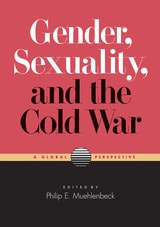
Gender, Sexuality, and the Cold War
A Global PerspectivePhilip E. Muehlenbeck
Vanderbilt University Press, 2017
As Marko Dumančić writes in his introduction to Gender, Sexuality, and the Cold War, "despite the centrality of gender and sexuality in human relations, their scholarly study has played a secondary role in the history of the Cold War. . . . It is not an exaggeration to say that few were left unaffected by Cold War gender politics; even those who were in charge of producing, disseminating, and enforcing cultural norms were called on to live by the gender and sexuality models into which they breathed life." This underscores the importance of this volume, as here scholars tackle issues ranging from depictions of masculinity during the all-consuming space race, to the vibrant activism of Indian peasant women during this period, to the policing of sexuality inside the militaries of the world.
Gender, Sexuality, and the Cold War brings together a diverse group of scholars whose combined research spans fifteen countries across five continents, claiming a place as the first volume to examine how issues of gender and sexuality impacted both the domestic and foreign policies of states, far beyond the borders of the United States, during the tumult of the Cold War.
Table of Contents
Preface
Introduction: Hidden in Plain Sight: The Histories of Gender and Sexuality during the Cold War
Marko Dumančić
Part I: Sexuality
Faceless and Stateless: French Occupation Policy toward Women and Children in Postwar Germany (1945-1949)
Katherine Rossy
Patriarchy and Segregation: Policing Sexuality in US-Icelandic Military Relations
Valur Ingimundarson
Queering Subversives in Cold War Canada
Patrizia Gentile
"Nonreligious Activities": Sex, Anticommunism, and Progressive Christianity in Late Cold War Brazil
Benjamin A. Cowan
Manning the Enemy: US Perspectives on International Birthrates during the Cold War
Kathleen A. Tobin
Part II: Femininities
Indian Peasant Women's Activism in a Hot Cold War
Elisabeth Armstrong
The Medicalization of Childhood in Mexico during the Early Cold War, 1945-1960
Nichole Sanders
Africa's Kitchen Debate: Ghanaian Domestic Space in the Age of the Cold War
Jeffrey S. Ahlman
Mobilizing Women? State Feminisms in Communist Czechoslovakia and Socialist Egypt
May Hawas and Philip E. Muehlenbeck
A Vietnamese Woman Directs the War Story: Duc Hoan, 1937-2003
Karen Turner
Global Feminism and Cold War Paradigms: Women's International NGOs and the United Nations, 1970-1985
Karen Garner
Part III: Masculinities
"Men of the World" or "Uniformed Boys"? Hegemonic Masculinity and the British Army in the Era of the Korean War
Grace Huxford
Yuri Gagarin and Celebrity Masculinity in Soviet Culture
Erica L. Fraser
[more]
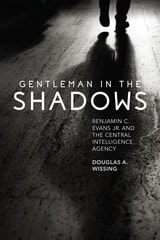
Gentleman in the Shadows
Benjamin C. Evans Jr. and the Central Intelligence AgencyDouglas A. Wissing
Indiana Historical Society Press, 2019
Gentleman in the Shadows is a biography of Benjamin C. Evans Jr., a Central Intelligence Agency executive who operated at the top levels of the U.S. intelligence community during the darkest days of the Cold War. After serving as a covert case officer in revolutionary Havana, Cuba, and then managing The Asia Foundation, a sprawling CIA front organization, Evans was promoted to the CIA headquarters’ seventh floor, where the executive directorate team managed world-changing intelligence missions. A socially adept administrator, Evans was the CIA Executive Secretary for seven Directors of Central Intelligence under four presidential administrations. Evans was part of the tumultuous period that included America’s crusade to democratize Occupied Japan, the Korean War, nuclear standoffs with the Soviet Union, the anti-Castro counterrevolutionary movement that climaxed in the Bay of Pigs invasion, the Vietnam War, Watergate, and the Family Jewels furor after the CIA’s dirty secrets were revealed. Through his marriage, Evans was a member of America’s elite, which figured so prominently in the U.S. intelligence services. Born and raised in a prosperous family in Crawfordsville, Indiana, Evans was imbued with conservative Hoosier values that celebrated servant-leadership. Following his graduation from the U.S. Military Academy at West Point, Evans’s social savvy and encultured mores stood him in good stead in Occupied Japan, where he served as aide-de-camp to General Eugene Harrison, a decorated World War II intelligence officer and Occupation administrator. It was in Occupied Japan that Evans and the general’s stepdaughter, Jan King, fell in love, and later married. When President Harry Truman recognized he needed a foreign intelligence service, General Harrison was on the commission that established what came to be the CIA. Not too many years later, Harrison and his cohorts insured that his son-in-law Evans, by then a respected military intelligence officer, was offered a position in the agency.CIA families not uncommonly led double lives of sequestered thoughts, unasked questions, and intimate deception. An empathetic family man, Evans paid a psychological price for his emotionally isolated life in the clandestine service.Gentleman in the Shadows is a biography of Benjamin C. Evans Jr., a Central Intelligence Agency executive who operated at the top levels of the U.S. intelligence community during the darkest days of the Cold War. After serving as a covert case officer in revolutionary Havana, Cuba, and then managing The Asia Foundation, a sprawling CIA front organization, Evans was promoted to the CIA headquarters’ seventh floor, where the executive directorate team managed world-changing intelligence missions. A socially adept administrator, Evans was the CIA Executive Secretary for seven Directors of Central Intelligence under four presidential administrations. Evans was part of the tumultuous period that included America’s crusade to democratize Occupied Japan, the Korean War, nuclear standoffs with the Soviet Union, the anti-Castro counterrevolutionary movement that climaxed in the Bay of Pigs invasion, the Vietnam War, Watergate, and the Family Jewels furor after the CIA’s dirty secrets were revealed. Through his marriage, Evans was a member of America’s elite, which figured so prominently in the U.S. intelligence services. Born and raised in a prosperous family in Crawfordsville, Indiana, Evans was imbued with conservative Hoosier values that celebrated servant-leadership. Following his graduation from the U.S. Military Academy at West Point, Evans’s social savvy and encultured mores stood him in good stead in Occupied Japan, where he served as aide-de-camp to General Eugene Harrison, a decorated World War II intelligence officer and Occupation administrator. It was in Occupied Japan that Evans and the general’s stepdaughter, Jan King, fell in love, and later married. When President Harry Truman recognized he needed a foreign intelligence service, General Harrison was on the commission that established what came to be the CIA. Not too many years later, Harrison and his cohorts insured that his son-in-law Evans, by then a respected military intelligence officer, was offered a position in the agency.CIA families not uncommonly led double lives of sequestered thoughts, unasked questions, and intimate deception. An empathetic family man, Evans paid a psychological price for his emotionally isolated life in the clandestine service.
[more]

Global Rivalries From the Cold War to Iraq
Kees van der Pijl
Pluto Press, 2006
This book offers a highly original analysis of world events in the light of the Iraq War. It explores the history and development of relations between major countries in the international community and the impact that successive wars and changes in the global political economy have had on the way states relate to each other today.
Tracing the liberal state structure back to the closing stages of the English Civil War and settlement in North America, it argues that the rise of the English-speaking West has created rivalries between contender states that are never entirely put to rest. With each round of Western expansion, new rivalries are created.
Offering a truly global analysis that covers every area of the world - from Europe and America to China, the Middle East, Latin America and Russia -- he analyses the development of international relations post WWII, and questions whether the neoliberal project and its human rights ideology have collapsed back into authoritarianism under the guise of the 'war on terror'.
[more]
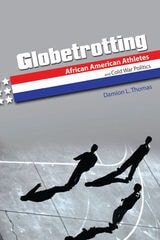
Globetrotting
African American Athletes and Cold War PoliticsDamion L. Thomas
University of Illinois Press, 2012
Throughout the Cold War, the Soviet Union deplored the treatment of African Americans by the U.S. government as proof of hypocrisy in the American promises of freedom and equality. This probing history examines government attempts to manipulate international perceptions of U.S. race relations during the Cold War by sending African American athletes abroad on goodwill tours and in international competitions as cultural ambassadors and visible symbols of American values.
Damion L. Thomas follows the State Department's efforts from 1945 to 1968 to showcase prosperous African American athletes including Jackie Robinson, Jesse Owens, and the Harlem Globetrotters as the preeminent citizens of the African Diaspora, rather than as victims of racial oppression. With athletes in baseball, track and field, and basketball, the government relied on figures whose fame carried the desired message to countries where English was little understood. However, eventually African American athletes began to provide counter-narratives to State Department claims of American exceptionalism, most notably with Tommie Smith and John Carlos's famous black power salute at the 1968 Mexico City Olympics.
Exploring the geopolitical significance of racial integration in sports during the early days of the Cold War, this book looks at the Eisenhower and Kennedy administrations' attempts to utilize sport to overcome hostile international responses to the violent repression of the civil rights movement in the United States. Highlighting how African American athletes responded to significant milestones in American racial justice such as the 1954 Brown v. Board of Education decision and the passage of the 1964 Civil Rights Act, Thomas surveys the shifting political landscape during this period as African American athletes increasingly resisted being used in State Department propaganda and began to use sports to challenge continued oppression.
[more]
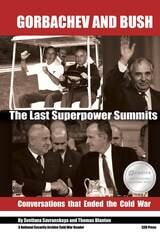
Gorbachev and Bush
The Last Superpower Summits. Conversations that Ended the Cold WarThe National Security Archive Savranskaya
Central European University Press, 2020
This book presents and interprets archival records of the meetings between Mikhail Gorbachev and George W. Bush between 1989 and 1991, including transcripts of conversations between top leaders on the rapid and monumental events of the final days of the Cold War. Particularly effective interlocutors were the foreign ministers Eduard Shevardnadze and James Baker, especially interesting when they interacted directly with Bush or Gorbachev. The documents were obtained from the Gorbachev Foundation and the Russian State Archives and from the United States government through requests under the Freedom of Information Act. Taking place at a time of revolutionary change in Eastern Europe, stimulated in part by Gorbachev and by Eastern Europeans (the Solidarity movement, dissidents, reform communists), the Malta Summit of 1989 and subsequent meetings helped defuse any potential for superpower conflict. Each of the five summits is covered in a separate chapter, introduced by an essay that places the transcripts in historical context. The anthology offers a fascinating glimpse into the relationship that defined the last, waning years of the Cold War—a unique record of these historic, highest-level conversations that effectively brought it to a close. The quality and scope of the dialogue between these world leaders was unprecedented and is likely never to be repeated.
[more]
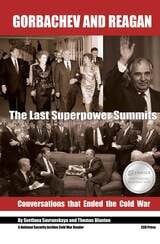
Gorbachev and Reagan
The Last Superpower Summits. Conversations that Ended the Cold WarThe National Security Archive Savranskaya
Central European University Press, 2020
This book is the culmination of twenty years of research in which the editors gathered thousands of pages documenting the most important conversations of the late Cold War. Every word Ronald Reagan and Mikhail Gorbachev said to each other in their five superpower summits from 1985 to 1988 is included in this volume. The editors argue in their contextual essays and detailed notes that these summits fueled a learning process on both sides of the Cold War. Their anthology provides insight into the nuanced shifts of monumentally important discussions, showing how Moscow’s sense of threat was eased and how a hawkish Reagan softened his tone in negotiations during his second presidential term. Documents from foreign ministers Eduard Shevardnadze and George Shultz offer a particularly intriguing look into the handful of conversations that ended almost half a century of conflict. These verbatim transcripts, until now top secret, are combined with fascinating photos and crucial information from declassified preparatory and after-action documents from both the Americans and Soviets, obtained in the US through the Freedom of Information Act and in Russia from the Gorbachev Foundation, the State Archive of the Russian Federation in Moscow, and from the personal files of Anatoly Chernyaev, Gorbachev’s foreign policy adviser.
[more]