Results by title
118 books match the query 'College teachers' and 3 start with g
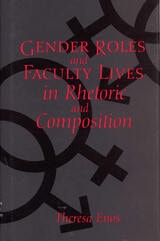
Gender Roles and Faculty Lives in Rhetoric and Composition
Theresa Enos
Southern Illinois University Press, 1997
Combining anecdotal evidence (the personal stories of rhetoric and composition teachers) with hard data, Theresa Enos offers documentation for what many have long suspected to be true: lower-division writing courses in colleges and universities are staffed primarily by women who receive minimal pay, little prestige, and lessened job security in comparison to their male counterparts. Male writing faculty, however, also are affected by factors such as low salaries because of the undervaluation of a field considered feminized. As Enos notes in her preface: "The rhetoric of our institutional lives is connected especially to the negotiations of gender roles in rhetoric and composition."
Enos describes and classifies narratives gathered from surveys, interviews, and campus visits and interweaves these narratives with statistical data gathered from national surveys that show gendered experiences in the profession. Enos discusses the ways in which these experiences affect the working conditions of writing teachers and administrators in various programs at different types of institutions.
Enos points out that fields in which women excel—and are acknowledged—receive less prestige than other fields. On the university level, those genres in which women have demonstrated competence are not taken as seriously as those dominated by men. In practical terms, academia affords more glory for teaching literature than for teaching rhetoric and composition.
Within the field of rhetoric and composition, however, Enos finds it difficult to determine why the accomplishments of women receive less credit than those of men. She speculates as to whether it is part of the larger pattern in society—and in academia—to value men more than women or something in the field itself that keeps women from real power, even though women make up the majority of composition and rhetoric teachers.
Enos provides fascinating personal histories of composition and rhetoric teachers whose work has been largely disregarded. She also provides information about writing programs, teaching, administrative responsibilities, ranks among teachers, ages, salary, tenure status, distribution of research, service responsibilities, records of publication, and promotion and tenure guidelines.

Good Knights
Ralph McInerny
St. Augustine's Press, 2010
These stories represent an intermediate stage in the evolution of the Knight brothers in Ralph McInerny’s fiction. In The Noonday Devil, Phil, in his capacity as private detective, was fairly close to the action, but by no means the major character. Roger, his blimp-sized brother, entered obliquely into the story but ended by starring in the finale.
Readers liked them, in particular Roger. So McInerny brought them back in Easeful Death, where they are far more central and Roger occupies much space, physically and narratively. And so it might have remained. When McInerny was asked to do a Notre Dame series of mysteries, he decided to bring Roger to South Bend as the Huneker Professor of Catholic Studies, accompanied by the semi-retired Phil, who has the full menu of Notre Dame sports to keep him occupied. Prior to starting the series, McInerny wanted to reacquaint himself with the Knights and hit upon the idea of doing a series of Knight brothers stories in Crisis, a magazine he founded with Michael Novak. Before moving them to South Bend, he wanted to see them in action, working out of New York, always driving in the specially designed van, never flying, to the cities were their client lived.
Good Knights is the result of putting these eight Knights brothers’ stories together. Call them finger exercises in character. The response to them in the magazine was gratifying, and with them behind him, McInerny launched the Notre Dame series, with On This Rockne in 1996, thirteen years and thirteen novels ago. But the origins of that successful series is seen here.
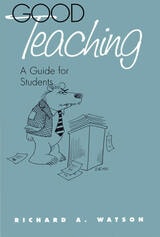
Good Teaching
A Guide for StudentsRichard A. Watson
Southern Illinois University Press, 1997
From junior college to Ivy League university, the level of teaching ranges from "great to awful," according to Richard A. Watson, who explains not only how to survive but how to profit from and enjoy your college experience.
To help students make important personal choices—what school? what major? what classes?—Watson explains such broad areas as administrative structure, institutional goals, and faculty aspirations.
Charging the student with the ultimate responsibility for learning, Watson presents certain academic facts of life: teaching is not the primary concern of either the faculty or the administration in most institutions; few professors on the university level have had any training in teaching, and even fewer started out with teaching as their goal; senior professors do not teach much (the higher the rank and salary, the less time in the classroom), and those seeking tenure must emphasize research to survive; and almost certainly, the bad teacher who is a good researcher will get paid more than the good teacher who does not publish.
This is a book about good teaching and how to find it. Rejecting the conventional wisdom that a professor devoted to research will not be effective in the classroom, Watson advises that you take classes from the professor you may have been cautioned to avoid.