Results by title
851 books match the query 'Congresses' and 21 start with g
G7 Current Account Imbalances
Sustainability and AdjustmentEdited by Richard H. Clarida
University of Chicago Press, 2007
The current account deficit of the United States is more than six percent of its gross domestic product—an all-time high. And the rest of the world, including other G7 countries such as Japan and Germany, must collectively run current account surpluses to finance this deficit. How long can such unevenness between imports and exports be sustained, and what form might their eventual reconciliation take? Putting forth scenarios ranging from a gradual correction to a crash landing for the dollar, G7 Current Account Imbalances brings together economists from around the globe to consider the origins, status, and future of those disparities.
An esteemed group of collaborators here examines the role of the bursting of the dot-com bubble, the history of previous episodes of current account adjustments, and the possibility of the Euro surpassing the dollar as the leading international reserve currency. Though there are areas of broad agreement—that the imbalances will ultimately decline and that currency revaluations will be part of the solution—many areas of contention remain regarding both the dangers of imbalances and the possible forms of adjustment.
This volume will be of tremendous value to economists, politicians, and business leaders alike as they look to the future of the G7 economies.

Galbert of Bruges and the Historiography of Medieval Flanders
Jeff Rider
Catholic University of America Press, 2009
Gambling
Public Policies And The Social SciencesWilliam R. Eadington
University of Nevada Press, 2002
Gardens of Prehistory
The Archaeology of Settlement Agriculture in Greater MesoamericaThomas W. Killion
University of Alabama Press, 1992
The prehistoric agricultural systems of the New World provided the foundations for a diverse set of complex social developments ranging from the puebloan societies of the American Southwest to the archaic state polities of Mesoamerica and the Andean region. From the tropical forests of Central America to the arid environments or northern New Mexico, Native American farmers made use of a distinctive set of cultigens and cropping systems that supported—with varying degrees of success—growing populations and expanding economies. Lacking most domesticated animals, so important to the mixed agricultural systems of the Old World, Precolumbian farmers developed intensive and resilient systems of agricultural production. These systems supported large societies of people who altered the landscapes they inhabited and generated a unique archaeological record of the evolution of farming in the New World.
Gender and Family Issues in the Workplace
Francine D. Blau
Russell Sage Foundation, 1997
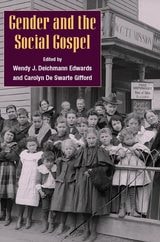
Gender and the Social Gospel
Edited by Wendy J. Deichmann Edwards and Carolyn De Swarte Gifford
University of Illinois Press, 2003
A practical theological response to the stark realities of poverty and injustice prevalent in turn-of-the-century America, the social gospel movement sought to apply the teachings of Jesus and the message of Christian salvation to society by striving to improve the lives of the impoverished and the disenfranchised. The contributors to this volume set out to broaden our understanding of this radical movement by examining the lives of some of its passionate and vibrant female participants and the ways in which their involvement expanded and enriched the scope of its activity.
In addition to examining the lives of individual women, the essays in Gender and the Social Gospel contain broader analyses of the gender and racial issues that have caused the histories of movements such as the social gospel to be viewed almost exclusively in terms of their male, European-American, intellectual participants at the expense of the women, African Americans, and Canadians whose contributions were just as worthy of attention.
Gendering Disability
Smith, Bonnie G
Rutgers University Press, 2004
Disability and gender, terms that have previously seemed so clear-cut, are becoming increasingly complex in light of new politics and scholarship. These words now suggest complicated sets of practices and ways of being.
Contributors to this innovative collection explore the intersection of gender and disability in the arts, consumer culture, healing, the personal and private realms, and the appearance of disability in the public sphere—both in public fantasies and in public activism. Beginning as separate enterprises that followed activist and scholarly paths, gender and disability studies have reached a point where they can move beyond their boundaries for a common landscape to inspire new areas of inquiry. Whether from a perspective in the humanities, social sciences, sciences, or arts, the shared subject matter of gender and disability studies—the body, social and cultural hierarchy, identity, discrimination and inequality, representation, and political activism—insistently calls for deeper conversation. This volume provides fresh findings not only about the discrimination practiced against women and people with disabilities, but also about the productive parallelism between these two categories.

Genetic Algorithms in Engineering Systems
A.M.S. Zalzala
The Institution of Engineering and Technology, 1997

Genetics, Disability, and Deafness
John Vickrey Van Cleve
Gallaudet University Press, 2004
Pulitzer Prize-winning author Louis Menand begins this wide-ranging volume with an essay that extols diversity and warns of the dangers of modifying the human genome. Nora Groce reviews the ways that societies have defined disability and creates an interpretive framework for discussing the relationship between culture and disability.
In essays devoted to historical perspective, Brian H. Greenwald comments upon the real “toll” taken by A. G. Bell’s insistence upon oralism, while Joseph J. Murray weighs the nineteenth-century debate over whether deaf-deaf marriages should be encouraged. John S. Schuchman’s chilling account of deafness and eugenics in the Nazi era adds wrenching reinforcement to the impetus to include disabled people in genetics debates.
Mark Willis offers an intensely personal reflection on the complexities of genetic alteration, addressing both his heart condition and his blindness in surprisingly different ways. Anna Middleton extends Willis’s concepts in her discussion of couples currently considering the use of genetic knowledge and technology to select for or against a gene that causes deafness.
In the part on the science of genetics, Orit Dagan, Karen B. Avraham, Kathleen S. Arnos, and Arti Pandya clarify the choices presented by genetic engineering, and geneticist Walter E. Nance emphasizes the importance of science in offering individuals knowledge from which they can fashion their own decisions. In the concluding section, Christopher Krentz raises moral questions about the ever-continuing search for human perfection, and Michael Bérubé argues that disability should be considered democratically to ensure full participation of disabled people in all decisions that might affect them.
Geography and Ownership as Bases for Economic Accounting
Edited by Robert E. Baldwin, Robert E. Lipsey, and J. David Richardson
University of Chicago Press, 1998
This volume gives trade and international economists the data and resources to renew discussion of this timely issue.
Geological Sciences in the Antebellum South
Edited by James X. Corgan
University of Alabama Press, 1982
Tracing the roots of earth science before the Civil War.
Geological Sciences in the Antebellum South by James Corgan offers a rich and revealing examination of the origins and development of geological inquiry in the American South during the decades (1796-1850s) leading up to the Civil War. At a time when scientific disciplines in the United States were still taking shape, Southern scholars, educators, and naturalists played a critical—if often overlooked—role in advancing geological knowledge. Corgan brings this history to life through a careful exploration of the people, institutions, and ideas that defined early earth science in the region.
From the study of mineral resources and soil composition to the broader effort to understand the region’s unique landscapes, geology intersected with agriculture, industry, and economic development in powerful ways. Corgan demonstrates how these scientific endeavors were shaped by—and in turn helped shape—the cultural and intellectual environment of the South. This book also highlights the contributions of key figures and institutions that fostered scientific inquiry, including early universities, state surveys, and learned societies. These networks connected Southern researchers to national and international scientific communities, positioning the region as an active participant in the broader expansion of 19th-century science. At the same time, the book addresses the challenges and limitations faced by Southern scientists, offering a nuanced perspective on how regional identity, resources, and social structures influenced the trajectory of scientific progress.
By situating geology within the broader context of antebellum history, Corgan provides readers with a deeper understanding of how scientific thought developed alongside—and in dialogue with—the political, economic, and cultural forces of the period. The result is a compelling interdisciplinary study that bridges the history of science and Southern history, shedding new light on a formative era in American intellectual life. Geological Sciences in the Antebellum South will appeal to historians, geologists, and scholars of American studies. It is an essential resource for anyone interested in the foundations of scientific inquiry in the United States and the enduring impact of geology on the development of the American South.
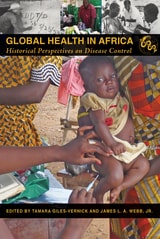
Global Health in Africa
Historical Perspectives on Disease ControlTamara Giles-Vernick
Ohio University Press, 2013
Global Health in Africa is a first exploration of selected histories of global health initiatives in Africa. The collection addresses some of the most important interventions in disease control, including mass vaccination, large-scale treatment and/or prophylaxis campaigns, harm reduction efforts, and nutritional and virological research.The chapters in this collection are organized in three sections that evaluate linkages between past, present, and emergent. Part I, “Looking Back,” contains four chapters that analyze colonial-era interventions and reflect upon their implications for contemporary interventions. Part II, “The Past in the Present,” contains essays exploring the historical dimensions and unexamined assumptions of contemporary disease control programs. Part III, “The Past in the Future,” examines two fields of public health intervention in which efforts to reduce disease transmission and future harm are premised on an understanding of the past.
This much-needed volume brings together international experts from the disciplines of demography, anthropology, and historical epidemiology. Covering health initiatives from smallpox vaccinations to malaria control to HIV campaigns, Global Health in Africa offers a first comprehensive look at some of global health’s most important challenges.
Global Hermeneutics. Reflections and Consequences
Knut Holter
SBL Press, 2010
A collection of essays from the International Cooperation Initiative of the Society of Biblical Literature
This first volume in the International Voices in Biblical Studies series stimulates and facilitates a global hermeneutic in which centers and margins fade. The collection explores the global context within which biblical studies and interpretation take place, includes three case studies from different regions, and reflections on the consequences of global hermeneutics on biblical interpretation and on translation.Features
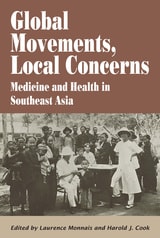
Global Movements, Local Concerns
Medicine and Health in Southeast AsiaEdited by Laurence Monnais and Harold J. Cook
National University of Singapore Press, 2012
Globalization in Historical Perspective
Edited by Michael D. Bordo, Alan M. Taylor, and Jeffrey G. Williamson
University of Chicago Press, 2003
This volume collects eleven papers doing exactly that and more. The first group of essays explores how the process of globalization can be measured in terms of the long-term integration of different markets-from the markets for goods and commodities to those for labor and capital, and from the sixteenth century to the present. The second set of contributions places this knowledge in a wider context, examining some of the trends and questions that have emerged as markets converge and diverge: the roles of technology and geography are both considered, along with the controversial issues of globalization's effects on inequality and social justice and the roles of political institutions in responding to them. The final group of essays addresses the international financial systems that play such a large part in guiding the process of globalization, considering the influence of exchange rate regimes, financial development, financial crises, and the architecture of the international financial system itself.
This volume reveals a much larger picture of the process of globalization, one that stretches from the establishment of a global economic system during the nineteenth century through the disruptions of two world wars and the Great Depression into the present day. The keen analysis, insight, and wisdom in this volume will have something to offer a wide range of readers interested in this important issue.

God's Providence and Randomness in Nature
Scientific and Theological PerspectivesRobert John Russell
Templeton Press, 2019
In October 2014, a group of mathematicians, physicists, ecologists, philosophers, and theologians gathered at a special conference in Berkeley, California, to present the results of a two-year research program dubbed “Project SATURN.” This program explored many rich avenues of thought at the intersection of modern science and Christian theology. Chief among them is the possibility that specific processes might be so complex that they do not have sufficient physical causes. Known as “ontological indeterminism,” this idea has profound implications for theology. Specifically, it allows God to be thought of as acting providentially within nature without violating the laws and processes of nature.
Such a momentous insight could influence how we understand free will, natural evil, suffering in nature, and the relation between divine providence and human evolution. The essays collected here discussed these topics and were initially presented at the 2014 conference. Part I establishes the scientific basis for conceptualizing specific processes in the universe as inherently random and possibly indeterministic. Part II discusses the philosophical and theological issues that spring from this understanding. Together they represent the cutting edge of thought in the increasingly productive dialogue between science and theology.
Short for the “Scientific and Theological Understandings of Randomness in Nature,” Project SATURN was created by the Center for Theology and the Natural Sciences, a Program of the Graduate Theological Union, Berkeley. It was funded with a grant administered by Calvin College and provided by the John Templeton Foundation.
God, Science, Sex, Gender
An Interdisciplinary Approach to Christian EthicsEdited by Patricia Beattie Jung and Aana Marie Vigen with John Anderson
University of Illinois Press, 2010
God, Sex, Science, Gender: An Interdisciplinary Approach to Christian Ethics is a timely, wide-ranging attempt to rescue dialogues on human sexuality, sexual diversity, and gender from insular exchanges based primarily on biblical scholarship and denominational ideology. Too often, dialogues on sexuality and gender devolve into the repetition of party lines and defensive postures, without considering the interdisciplinary body of scholarly research on this complex subject. This volume expands beyond the usual parameters, opening the discussion to scholars in the humanities, social sciences, and natural sciences to foster the development of Christian sexual ethics for contemporary times.
Essays by prominent and emerging scholars in the fields of anthropology, sociology, psychology, philosophy, literary studies, theology, and ethics reveal how faith and reason can illuminate our understanding of human sexual and gender diversity. Focusing on the intersection of theology and science and incorporating feminist theory, God, Science, Sex, Gender is a much-needed call for Christian ethicists to map the origins and full range of human sexual experience and gender identity. Essays delve into why human sexuality and gender can be so controversial in Christian contexts, investigate the complexity of sexuality in humans and other species, and reveal the implications of diversity for Christian moral theology.
Contributors are Joel Brown, James Calcagno, Francis J. Catania, Pamela L. Caughie, Robin Colburn, Robert Di Vito, Terry Grande, Frank Fennell, Anne E. Figert, Patricia Beattie Jung, Fred Kniss, John McCarthy, Jon Nilson, Stephen J. Pope, Susan A. Ross, Joan Roughgarden, and Aana Marie Vigen.

Government of the Shadows
Parapolitics and Criminal SovereigntyEric Wilson
Pluto Press, 2009
Government of the Shadows analyses the concept of clandestine government. It explores how covert political activity and transnational organised crime are linked -- and how they ultimately work to the advantage of state and corporate power.
The book shows that legitimate government is now routinely accompanied by extra-governmental covert operations. Using a variety of case studies, from the mafia in Italy to programmes for food and reconstruction in Iraq, the contributors illustrate that para-political structures are not 'deviant', but central to the operation of global governments.
The creation of this truly parallel world-economy, the source of huge political and economic potential, entices states to undertake new forms of regulation, either through their own intelligence agencies, or through the more shadowy world of criminal cartels.
Grammatical Interfaces in HPSG
Edited by Ronnie Cann, Claire Grover, and Philip H. Miller
CSLI, 2001
Growth Theories in Light of the East Asian Experience
Edited by Takatoshi Ito and Anne O. Krueger
University of Chicago Press, 1995
The theory explored in this volume attributes the phenomenal economic success of these countries to, among other factors, the role of an outward orientation—a focus on exporting rather than on protecting home markets. In addition, the importance of exchange rate behavior, of the supportive role of government policy, and of the accumulation and promotion of physical and human capital are explored in detail. This collection also examines the extent to which growth in each country became self-sustaining once it began.
Demonstrating the relevance of endogenous growth theory for studying this important region, this fourth volume in the NBER-East Asia Seminar on Economics series will be of interest to observers of East Asian affairs.
Growth and Productivity in East Asia
Edited by Takatoshi Ito and Andrew K. Rose
University of Chicago Press, 2004
Takatoshi Ito and Andrew K. Rose have organized a group of collaborators from several Asian countries, the United States, and other parts of the globe who ably balance both macroeconomic and microeconomic study with theoretical and empirical approaches. Growth and Productivity in East Asia gives special attention to the causes for the unusual success of Australia, one of the few nations to maintain unprecedented economic growth despite the 1997 Asian financial crisis and the 2001 global downturn. A new database comprising eighty-four Japanese sectors reveals new findings for the last thirty years of sectoral productivity and growth in Japan. Studies focusing on Indonesia, Taiwan, and Korea also consider productivity and its relationship to research and development, foreign ownership, and policy reform in such industries as manufacturing, automobile production, and information technology.