Results by title
62 books match the query 'Consumption (Economics)' and 3 start with g
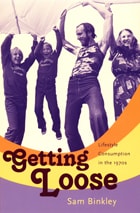
Getting Loose
Lifestyle Consumption in the 1970sSam Binkley
Duke University Press, 2007
Through a sociological analysis of the countercultural print culture of the 1970s, Sam Binkley investigates the dissemination of these self-loosening narratives and their widespread appeal to America’s middle class. He describes the rise of a genre of lifestyle publishing that emerged from a network of small offbeat presses, mostly located on the West Coast. Amateurish and rough in production quality, these popular books and magazines blended Eastern mysticism, Freudian psychology, environmental ecology, and romantic American pastoralism as they offered “expert” advice—about how to be more in touch with the natural world, how to release oneself into trusting relationships with others, and how to delve deeper into the body’s rhythms and natural sensuality. Binkley examines dozens of these publications, including the Whole Earth Catalog, Rainbook, the Catalog of Sexual Consciousness, Celery Wine, Domebook, and Getting Clear.
Drawing on the thought of Pierre Bourdieu, Zygmunt Bauman, and others, Binkley explains how self-loosening narratives helped the middle class confront the modernity of the 1970s. As rapid social change and political upheaval eroded middle-class cultural authority, the looser life provided opportunities for self-reinvention through everyday lifestyle choice. He traces this ethos of self-realization through the “yuppie” 1980s to the 1990s and today, demonstrating that what originated as an emancipatory call to loosen up soon evolved into a culture of highly commercialized consumption and lifestyle branding.
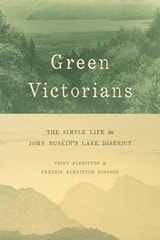
Green Victorians
The Simple Life in John Ruskin's Lake DistrictVicky Albritton and Fredrik Albritton Jonsson
University of Chicago Press, 2016
At the center of their social experiment was the charismatic art critic and political economist John Ruskin. Albritton and Albritton Jonsson show how Ruskin’s followers turned his theory into practice in a series of ambitious local projects ranging from hand spinning and woodworking to gardening, archaeology, and pedagogy. This is a lively yet unsettling story, for there was a dark side to Ruskin’s community as well—racist thinking, paternalism, and technophobia. Richly illustrated, Green Victorians breaks new ground, connecting the ideas and practices of Ruskin’s utopian community with the problems of ethical consumption then and now.
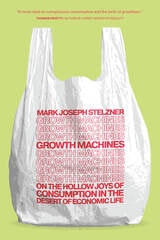
Growth Machines
On the Hollow Joys of Consumption in the Desert of Economic LifeMark Joseph Stelzner
University of Chicago Press, 2026
A provocative look at America’s compulsion to consume and our obsession’s surprising—and strange—origins.
In a capitalist society, people sell their labor to purchase staples like food, shelter, and anxiety medication. That’s the equation of everyday economic life that we’ve always been told is true. Except, is it really that simple anymore? No matter how unmaterialistic you may think you are, odds are that deep within is a drive to consume because it feels good: books you won’t read, clothes you won’t like and might wear even less, a replacement phone whose novelty runs out as quickly as its upgrade hits the market. But what drives this impulse?
In Growth Machines, Mark Joseph Stelzner shows how today’s consumers are now programmed by a US economy intent on infinite growth to work for goods they’ve been convinced they need and conditioned to want. Stelzner establishes the gaps between economic thinking and economic reality, arguing that consumption is no longer just a reflection of needs, but rather, it reflects a need for transaction—in many cases, a treat we seek out because it feels good. We work not only to be able to consume the essentials for living, but also to consume for consumption's sake. Yet such consumption doesn’t make us happier. Stelzner traces this strange nature of consumption to an environmental source: an economy that demands growth. To keep its economy pumping, the US must keep Americans consuming. This makes Stelzner’s book an uncomfortable reflection on how we internalize our economy. To be an American is to consume; to consume is what makes America.