Results by title
476 books match the query 'Criticism' and 9 start with g

Gaze and Voice as Love Objects
SIC 1Renata Salecl and Slavoj Žižek, eds.
Duke University Press, 1996
The first detailed Lacanian elaboration of this topic, Gaze and Voice as Love Objects examines the status of gaze, voice, and love in philosophy from Plato to Kant, in ideology from early Christianity to contemporary cynicism, in music from Hildegard of Bingen to Richard Wagner, in literature from Edith Wharton's Age of Innocence to Kazuo Ishiguro's The Remains of the Day, and in cinema from Michael Powell's Peeping Tom to Kieslowski's A Short Film on Love. Throughout, the contributors seek to show that the conflict between the sexes is the site of a larger battle over the destiny of modernity. With insights into the underlying target of racist and sexist violence, this book offers surprising revelations into the nature of an ancient enigma—love.
Contributors. Elisabeth Bronfen, Mladen Dolar, Fredric Jameson, Renata Salecl, Slavoj Žižek, Alenka Zupancic

Genre Matters
Essays in Theory and CriticismEdited by Garin Dowd, Lesley Stevenson, and Jeremy Strong
Intellect Books, 2006
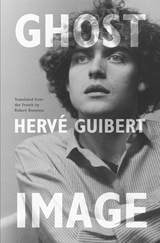
Ghost Image
Hervé Guibert
University of Chicago Press, 2014
Both a memoir and an exploration of the artistic process, Ghost Image not only reveals Guibert’s particular experience as a gay artist captivated by the transience and physicality of his media and his life, but also his thoughts on the more technical aspects of his vocation. In one essay, Guibert searches through a cardboard box of family portraits for clues—answers, or even questions—about the lives of his parents and more distant relatives. Rifling through vacation snapshots and the autographed images of long-forgotten film stars, Guibert muses, “I don’t even recognize the faces, except occasionally that of an aunt or great-aunt, or the thin, fair face of my mother as a young girl.” In other essays, he explains how he composes his photographs, and how—in writing—he seeks to escape and correct the inherent limits of his technique, to preserve those images lost to his technical failings as a photographer.
With strains of Jean Genet and recurring themes that speak to the work of contemporary artists across a range of media, Guibert’s Ghost Image is a beautifully written, melancholic ode to existence and art forms both fleeting and powerful—a unique memoir at the nexus of family, memory, desire, and photography.
Given Time II
Jacques Derrida
University of Chicago Press, 2026
The long-awaited conclusion to Derrida’s seminar on the gift and time.
In 1991, Jacques Derrida published the first half of a seminar delivered from 1978 to 1979 on gifts and time, but the second installment (though expected) was not completed in his lifetime. Given Time II completes the seminar with eight sessions that showcase Derrida’s most advanced work on the problematic of the gift in Heidegger, with deep dives into some of the most difficult texts in the Heideggerian corpus, including “The Origin of the Work of Art,” “The Thing,” and “On Time and Being.”
Beyond Heidegger, Derrida engages Claude Lévi-Strauss, Marcel Mauss, Maurice Blanchot, Jacques Lacan, and others on the act of giving and receiving, the sacrificial gift, and more. Throughout, Derrida identifies a paradox of gift giving: for the gift to be received as a gift, it must not appear as such, since gifts often involve a cycle of debt and repayment. Given Time II is a uniquely Derridean treatment of an important subject in the work of Heidegger and beyond.
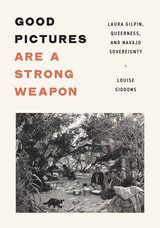
Good Pictures Are a Strong Weapon
Laura Gilpin, Queerness, and Navajo SovereigntyLouise Siddons
University of Minnesota Press, 2024
What are the limits of political solidarity, and how can visual culture contribute to social change?
A fundamental dilemma exists in documentary photography: can white artists successfully portray Indigenous lives and communities in a manner that neither appropriates nor romanticizes them? With an attentive and sensitive eye, Louise Siddons examines lesbian photographer Laura Gilpin’s classic 1968 book The Enduring Navaho to illuminate the intersectional politics of photography, Navajo sovereignty, and queerness over the course of the twentieth century.
Gilpin was a New York–trained fine arts photographer who started working with Navajo people when her partner accepted a job as a nurse in Arizona. She spent more than three decades documenting Navajo life and creating her book in collaboration with Navajo friends and colleagues. Framing her lesbian identity and her long relationship with the Navajo people around questions of allyship, Good Pictures Are a Strong Weapon addresses the long and problematic history of White photographers capturing images of Native life. Simultaneously, Siddons uses Gilpin’s work to explore the limitations of White advocacy in a political moment that emphasized the need for Indigenous visibility and voices.
Good Pictures Are a Strong Weapon introduces contemporary Diné (Navajo) artists as interlocutors, critics, and activists whose work embodies and extends the cultural sovereignty politics of earlier generations and makes visible the queerness often left implicit in Gilpin’s photographs. Siddons puts their work in conversation with Gilpin’s, taking up her mandate to viewers and readers of The Enduring Navajo to address Navajo aesthetics, traditions, politics, and people on their own terms.
Retail e-book files for this title are screen-reader friendly with images accompanied by short alt text and/or extended descriptions.
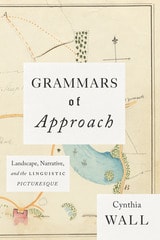
Grammars of Approach
Landscape, Narrative, and the Linguistic PicturesqueCynthia Wall
University of Chicago Press, 2019
Gramsci at Sea
Sharad Chari
University of Minnesota Press, 2023
How might an oceanic Gramsci speak to Black aquafuturism and other forms of oceanic critique? This succinct work reads Antonio Gramsci’s writings on the sea, focused in his prison notes on waves of imperial power in the inter-war oceans of his time. Sharad Chari argues that the imprisoned militant’s method is oceanic in form, and that this oceanic Marxism can attend to the roil of sociocultural dynamics, to waves of imperial power, as well as to the capacity of Black, Drexciyan, and other forms of oceanic critique to “storm” us on different shores.
Graphic Assembly
Montage, Media, and Experimental Architecture in the 1960sCraig Buckley
University of Minnesota Press, 2018
An innovative look at the contribution of montage to twentieth-century architecture—now in paperback
Graphic Assembly unearths the role played by montage and collage in the development of architectural culture over the past century, revealing their unexamined yet crucial significance. Craig Buckley brings together experimental architectural practices based in London, Paris, Vienna, and Florence, showing how breakthroughs in optical media and printing technologies enabled avant-garde architects to reimagine their field.
Graphic Assembly considers a range of architects and movements from the 1950s through the early ’70s, including Theo Crosby, Hans Hollein, and John McHale; the magazine Clip-Kit; and the groups Archigram, Superstudio, and Utopie. It gives a thorough account of how montage concepts informed the design of buildings, prototypes, models, exhibitions, and multimedia environments, accompanied by Buckley’s insightful interpretations of the iconic images, exhibitions, and buildings of the 1960s that mark how the decade is remembered.
Richly illustrated with never-before-published material from more than a dozen archives and private collections, Graphic Assembly offers a comparative overview of the network of experimental architectural practice in Europe. It provides a deep historical account of the cut-and-paste techniques now prevalent with architecture’s digital turn, demonstrating the great importance of montage to architecture past, present, and future.

Grievance
In FragmentsGrant Farred
Prickly Paradigm Press, 2024
Grievance is an American mode of being that can be traced back to the Declaration of Independence, that is at the root of the Civil War and accounts in large measure for the failure of Reconstruction, that runs through the Civil Rights moment, and that showed itself again in the events of January 6, 2021. Grievance, in America, always concatenates with racism and evinces itself most violently in those moments when white supremacy, fallaciously, presents itself as being under attack. This book explores this elemental yet destructive thread of the American character.