Results by title
120 books match the query 'Cultural Policy' and 2 start with g
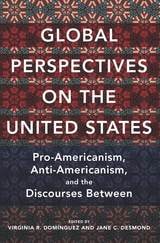
Global Perspectives on the United States
Pro-Americanism, Anti-Americanism, and the Discourses BetweenEdited by Virginia R. Dominguez and Jane C. Desmond
University of Illinois Press, 2017
This daring collaborative effort showcases dialogues between international scholars engaged with the United States from abroad. The writers investigate the analytic methods and choices that label certain talk, images, behaviors, and allusions as "American" and how to read the data on such material. The editors present the essays in pairs that overlap in theme or region. Each author subsequently comments on the other's work. A third scholar or team of scholars from a different discipline or geographic location then provides another level of analysis. Contributors: Andrzej Antoszek, Sophia Balakian, Zsófia Bán, Sabine Bröck, Ian Condry, Kate Delaney, Jane C. Desmond, Virginia R. Dominguez, Ira Dworkin, Richard Ellis, Guillermo Ibarra, Seyed Mohammad Marandi, Giorgio Mariani, Ana Mauad, Loes Nas, Edward Schatz, Manar Shorbagy, Kristin Solli, Amy Spellacy, and Michael Titlestad.
[more]
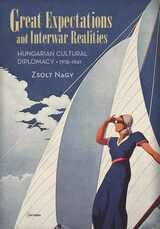
Great Expectations and Interwar Realities
Cultural Diplomacy in Horthy's HungaryZsolt Nagy
Central European University Press, 2017
After the shock of the 1920 Treaty of Trianon, which Hungarians perceived as an unfair dictate, the leaders of the country found it imperative to change Hungary’s international image in a way that would help the revision of the post-World War I settlement. The monograph examines the development of interwar Hungarian cultural diplomacy in three areas: universities, the tourist industry, and the media—primarily motion pictures and radio production. It is a story of the Hungarian elites’ high hopes and deep-seated anxieties about the country’s place in a Europe newly reconstructed after World War I, and how these elites perceived and misperceived themselves, their surroundings, and their own ability to affect the country’s fate. The defeat in the Great War was crushing, but it was also stimulating, as Nagy documents in his examination of foreign language journals, tourism, radio, and other tools of cultural diplomacy. The mobilization of diverse cultural and intellectual resources, the author argues, helped establish Hungary’s legitimacy in the international arena, contributed to the modernization of the country, and established a set of enduring national images. Though the study is rooted in Hungary, it explores the dynamic and contingent relationship between identity construction and transnational cultural and political currents in East-Central European nations in the interwar period.
[more]