Results by title
71 books match the query 'Digital' and 7 start with g
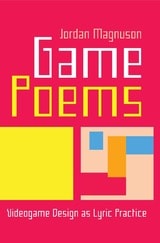
Game Poems
Videogame Design as Lyric PracticeJordan Magnuson
Amherst College Press, 2023
Scholars, critics, and creators describe certain videogames as being “poetic,” yet what that means or why it matters is rarely discussed. In Game Poems: Videogame Design as Lyric Practice, independent game designer Jordan Magnuson explores the convergences between game making and lyric poetry and makes the surprising proposition that videogames can operate as a kind of poetry apart from any reliance on linguistic signs or symbols.
This rigorous and accessible short book first examines characteristics of lyric poetry and explores how certain videogames can be appreciated more fully when read in light of the lyric tradition—that is, when read as “game poems.” Magnuson then lays groundwork for those wishing to make game poems in practice, providing practical tips and pointers along with tools and resources. Rather than propose a monolithic framework or draw a sharp line between videogame poems and poets and their nonpoetic counterparts, Game Poems brings to light new insights for videogames and for poetry by promoting creative dialogue between disparate fields. The result is a lively account of poetic game-making praxis.
“Everyone who loves the true power of games will benefit from the treasure trove of insights in Game Poems.” — Jesse Schell, author of The Art of Game Design
“Magnuson shines a sensitive and incisive light on small, often moving, videogames.” — D. Fox Harrell, Ph.D., Professor of Digital Media, Computing, and Artificial Intelligence, MIT
“[Game Poems] tells a new story about games— that games can be lyrical, beautiful, emotionally challenging—to inspire creators and critics alike.” —Noah Wardrip-Fruin, author of How Pac-Man Eats
“Even as the news swells with impending doom for creativity, writing, and text itself, this literate and crafty book pursues poetry not through implacable algorithms but in concrete and personal play. It should be an indispensable guide for anyone who aims to maintain the true, human promise of technical poetics.”—Stuart Moulthrop, coauthor of Twining: Critical and Creative Approaches to Hypertext Narratives
“For far too long videogames have flourished – and commanded both capital and attention – in a kind of counterculture that they seem to have created as if ex nihilo for themselves and their players. But we are these players, and their culture has always been integrated with all of our own. In this evenhanded artist-scholar’s ars poetica Jordan Magnuson respects the material cultural specificity of videogames while regarding them through the ‘lens of poetry’ in order to discover – and help create – a practice and an art of Game Poems within the wider field. Magnuson formally, int(erv)entionally embraces this art as lyrically poetic.”—John Cayley, Brown University
“In Game Poems, Magnuson listens carefully to videogames, and hears them speak to questions of art, language, and meaning that connect our written past to our software future. Read this book and you will hear it too.”—Frank Lantz, Director, NYU Game Center
“Jordan Magnuson has created a work that ties together the worlds of poetry and videogames in a deep and enlightening way. For those of us who care about the potential of poetic games, Jordan greatly improves the language of how we talk about them and expands our ability to see what this unique form can become. This is one of my favorite books on game design and I apologize in advance to those whom I will end up cornering and not being able to stop talking to about it.”—Benjamin Ellinger, Game Design Program Director, DigiPen Institute of Technology
“A groundbreaking and accessible book that helps us think about games as poems. With patient tenacity, Magnuson teases out what he felt for years as he engaged in his own practice of making videogames. His mission to help us apply a ‘lyric reading’ to games so that our engagement with, and appreciation of, games can be enhanced feels deeply personal. Drawing from a wide range of games and computational media scholars, poetry scholars, game creators, and poets, Magnuson provides a rigorous, balanced, and unique interdisciplinary contribution. A must-read for videogame scholars, practicing game makers, and anyone interested in the potential of ‘game poems.’”—Susana Ruiz, University of California, Santa Cruz
“This book tenaciously wrenches videogame hermeneutics from the insatiable maws of rhetoric and narratology—to the cheers of poets everywhere. In elucidating the lyric characteristics of the "game poem," Magnuson demonstrates not just that poetry is a useful lens for understanding videogames, but also that videogames can be a useful lens for understanding poetry. A rewarding text for scholars, game designers, poets, and anyone in between.”—Allison Parrish, Interactive Telecommunications Program and Interactive Media Arts, NYU
“A concise, passionate articulation - and defense! - of an artistic space between poems and videogames. If game scholars wish to prove that they are not engaged merely in an apologetics for violent pornography, they need only to teach this book.”—Chris Bateman, author of Imaginary Games and 21st Century Game Design
“I feel I've found a kindred spirit in Jordan Magnuson and his practical recommendations for creating distilled, compelling, personal videogames – throw out the conventions of game design one at a time? Yes, please! The revelation for me in this book, however, is the heat and power of the language of poets and poetry brought close to videogame design. There's much in here worth pursuing to kindle the fires of new and exciting videogame poems, and Jordan is a capable and delightfully humble guide.”—Pippin Barr, author of How to Play a Video Game and The Stuff Games Are Made Of
“With Game Poems, Jordan Magnuson lays to rest any last vestige of the notion that the implicit limits of games are as ‘entertainment products’. By taking games seriously as successors of the lyric poetry tradition, he opens up new avenues for how game designers can think about what they do, how critical game theorists can approach their many-faceted object of study, and how players can more fully engage with videogames.”—Soraya Murray, author of On Video Games
“Game Poems shines an important light on a neglected area of videogame theory and provides unique guidance for those interested in exploring the poetic potential of videogames.”—Jenova Chen, designer of Flow, Flower, Journey, and Sky: Children of the Light
“Popular frameworks for video game scholarship consistently fail to account for the most avant-garde and affective works of interactive art. With Game Poems, Jordan Magnuson provides not only a lens to understand these diverse and important titles but also a guide to constructing the next generation of personal and incisive games. With numerous examples from decades of experimental games, including Magnuson's own minimalist and insightful work, this book is an excellent introduction to the form for neophytes as well as finally providing words to describe a movement that many experienced game poets previously understood only intuitively.”—Gregory Avery-Weir, creator of The Majesty of Colors and Looming
“Jordan Magnuson is one of a surprisingly small group of artists who see in the technology of videogames a versatile medium capable of expressing much more than conventional games.”—Michaël Samyn, co-founder, Tale of Tales; co-creator of Sunset, The Graveyard, and The Path
“So much has been written about what games are, and yet there’s always a new way of thinking about them. In Jordan Magnuson’s Game Poems we discover that games are also a lyrical form of art; that games can be understood as poetry, and that the making games as poetry creates new modes of artistic expression. Jordan Magnuson’s book is a fascinating exploration of games as poetry, and the poetry of play.”—Miguel Sicart, author of Play Matters, Beyond Choices: The Design of Ethical Gameplay, and Playing Software
“In Game Poems, I found a new perspective on the kind of videogames that are dearest to me: short, personal, poetic games. By looking at games through the lens of lyric poetry, Jordan Magnuson puts into focus the workings of that mysterious hodgepodge of audio, visuals, and interactivity: the language of videogames. Both experienced and novice game makers will find approachable, practical advice on the craft of videogames. And anyone who plays short games will find new ways of appreciating and talking about them. I know I will be returning to it for inspiration when making my own small games!”—Adam Le Doux, creator of Bitsy
“As a creator and researcher, Jordan Magnuson has been able to demonstrate through the utmost visual simplicity, by enhancing basic geometric forms, the empathetic capacity of the videogame medium. Game Poems explores this idea and the reconfiguration of the videogame beyond its ludic component, highlighting the artistic and poetic potential of games.”—Antonio César Moreno Cantano, University Complutense of Madrid
“Poems ask us to slow down, pay attention, and take the time to appreciate our experiences. Emerging from Magnuson's need to find ways to talk about his own creative practice, this book is all about discovering ways to do this with videogames. Magnuson explores what it means to view videogames as poetry, and provides insight, as a practitioner, on how to make game poems that enable and encourage this type of reflection. Drawing on a wide range of sources, from literature and philosophy to game studies and game design, this book covers a lot of material, but always remains grounded in concrete examples and solid theory. The book ends with a call to “go make some game poems!” After reading the book, I was keen to do exactly that. I urge you to do the same!”—Alex Mitchell, National University of Singapore
“To many, poetry is a dying – or dead – art form. Few people sit down at night to open their favorite poet’s chapbook with the latest streaming service at hand or their favorite videogame console sitting nearby. Spectacle seems to be the cultural norm, and this can be no more evident than in videogames: when the latest and greatest offers 60+ hours of spine-tingling excitement, why would someone want to launch a smaller-form game about expressions such as love, death, loneliness, or even God? But, as Jordan Magnuson, in his new book Games Poems, shows, poems have always been an integral piece of forming human culture. Poems have the ability to get right to the heart of the matter and, in fact, pierce the heart of the reader. Poems can be a form of cultural resistance, and even launch revolutions. Magnuson’s book highlights what it means to use the medium of game design as poetry. Magnuson presents several examples of the intricacies of poetry in general, as well as work that fuses the ideals of poetry with game design. Magnuson succinctly examines how the imagination, rhythm, intensity, style – and brevity – of poetry can enlighten the game design process in order to form possibility spaces within videogames that are pointed and powerful.”—Tim Samoff, Games and Interactive Media Program Director, Azusa Pacific University
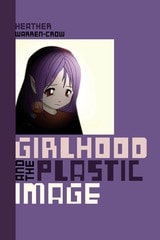
Girlhood and the Plastic Image
Heather Warren-Crow
Dartmouth College Press, 2014
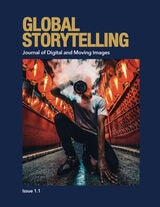
Global Storytelling, vol. 1, no. 1
Journal of Digital and Moving ImagesYing Zhu
Michigan Publishing Services, 2021
In this issue
Letter from the Editor Ying Zhu Hong Kong and Social MovementsHong Kong Unraveled: Social Media and the 2019 Protest Movement
Anonymous
Unleashing the Sounds of Silence: Hong Kong’s Story in Troubled Times
Andrea Riemenschnitter
Tragedy of Errors at Warp Speed
Sam Ho
Imagining a City-Based Democracy: Review of The Appearing Demos: Hong Kong During and After the Umbrella Movement by Laikwan Pang, University of Michigan Press, 2020
Enoch Tam
China and the Film Festival
Richard Peña
Nationalism from Below: State Failures, Nollywood, and Nigerian Pidgin Jonathan Haynes Collective Memory and the Rhetorical Power of the Historical Fiction Film
Carl Plantinga
From Nations to Worlds: Chris Marker’s Si j’avais quatre dromadaires
Michael Walsh
American Factory and the Difficulties of Documenting Neoliberalism
Peter Hitchcock
R.I.P. Soft Power: China’s Story Meets the Reset Button: Review of Soft Power with Chinese Characteristics: China’s Campaign for Hearts and Minds edited by Kingsley Edney, Stanley Rosen, and Ying Zhu, Routledge, 2019
Robert A. Kapp
Review: On Epidemics, Epidemiology, and Global Storytelling
Carlos Rojas
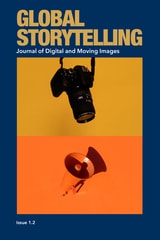
Global Storytelling, vol. 1, no. 2
Journal of Digital and Moving ImagesYing Zhu
Michigan Publishing Services, 2021
Letter from the Editor - YING ZHU
Research Articles
Consuming the Pastoral Desire: Li Ziqi, Food Vlogging, and the Structure of Feeling in the Era of Microcelebrity - LIANG LIMIN
This Is Not Reality (Ceci n’est pas la réalité): Capturing the Imagination of the People Creativity, the Chinese Subaltern, and Documentary Storytelling - PAOLA VOCI
The Networked Storyteller and Her Digital Tale: Film Festivals and Ann Hui’s My Way - GINA MARCHETTI
“Retweet for More”: The Serialization of Porn on the Twitter Alter Community - RUEPERT CAO
Book Reviews
Dazzling Revelations - Review of Negative Exposures: Knowing What Not to Know in Contemporary China by Margaret Hillenbrand, Duke University Press, 2020 - HARRIET EVANS
Speaking Nations, Edge Ways - Reviews of Postcolonial Hangups in Southeast Asian Cinema: Poetics of Space, Sound and Stability by Gerald Sim, Amsterdam University Press, 2020; and Southeast Asia on Screen: From Independence to Financial Crisis (1945–1998) edited by Gaik Cheng Khoo, Thomas Barker, Mary Ainslie, Amsterdam University Press, 2020 - MIN HUI YEO
Film Reviews
Nomadland: An American or Chinese Story? Review of Nomadland, directed by Chloe Zhao, 2020 - YING ZHU
New from Netflix: Mank, Fincher, and A Hollywood Creation Tale - Review of Mank, directed by David Fincher, 2020 - THOMAS SCHATZ
Superheroes: The Endgame - Review of Superhero Movies - PETER BISKIND
Short Essay
Love and Duty: Translating Films and Teaching Online through a Pandemic - CHRISTOPHER REA
Report
Narrating New Normal: Graduate Student Symposium Report - RUEPERT JIEL DIONISIO CAO, MINOS-ATHANASIOS KARYOTAKIS, MISTURA ADEBUSOLA SALAUDEEN, DONGLI CHEN, & YANJING WINNIE WU
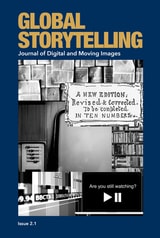
Global Storytelling, vol. 2, no. 1
Journal of Digital and Moving ImagesGuest Editors: Ellen Seiter & Suzanne Scott
Michigan Publishing Services, 2022
Guest Editors
Suzanne Scott and Ellen Seiter
Ellen Seiter. Letter from the Editor.
Research Articles
Paige MacIntosh. Transgressive TV: Euphoria, HBO, and a New Trans Aesthetic
Kelsey J. Cummings. Queer Seriality, Streaming Television, and She-Ra and the Princesses of Power
Jia Tan. Platformized Seriality: Chinese Time-Travel Fantasy from Prime-Time Television to Online Streaming
Jake Pitre. Platform Strategy in a Technopolitical War: The Failure (and Success) of Facebook Watch
Anne Gilbert. Algorithmic Audiences, Serialized Streamers, and the Discontents of Datafication
Oliver Kröener. Then, Now, Forever: Television Wrestling, Seriality, and the Rise of the Cinematic Match during COVID-19
Book Reviews
Briand Gentry. The Serial Will Be Televised: Serial Television’s Revolutionary Potential for Multidisciplinary Analysis of Social Identity. Reviews of Birth of the Binge: Serial TV and the End of Leisure by Dennis Broe, Wayne State University Press, 2019, and Gender and Seriality: Practices and Politics of Contemporary US Television by Maria Sulimma, Edinburgh University Press, 2021
Grace Elizabeth Wilsey. The Patchwork That Makes a Global Streaming Giant. Review of Netflix Nations: The Geography of Digital Distribution by Ramon Lobato, New York University Press, 2019
Asher Guthertz. The History of the American Comic Book, Revised: Review of Comic Books Incorporated: How the Business of Comics Became the Business of Hollywood by Shawna Kidman, University of California Press, 2019
Film Reviews
Anne Metcalf. Review of Zola (Janicza Bravo, 2020)
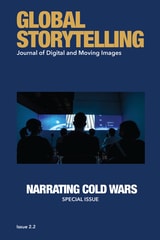
Global Storytelling, vol. 2, no. 2
Journal of Digital and Moving ImagesSpecial Issue Editors: Kenneth Paul Tan & Dorothy Lau
Michigan Publishing Services, 2022
Special Issue Editors: Kenneth Paul Tan & Dorothy Lau
Letter from the Editor - YING ZHU
Cold War and New Cold War Narratives: Special Issue Editor’s Introduction - KENNETH PAUL TAN
Research Articles
Notes on Cold War Historiography - LOUIS MENAND
Tales from the Hot Cold War - MARTHA BAYLES
Bomb Archive: The Marshall Islands as Cold War Film Set - ILONA JURKONYTĖ
Das unsichtbare Visier—A 1970s Cold War Intelligence TV Series as a Fantasy of International and Intranational Empowerment; or, How East Germany Saved the World and West Germans Too - TARIK CYRIL AMAR
To Whom Have We Been Talking? Naeem Mohaiemen’s Fabulation of a People-to-Come - NOIT BANAI
The Man without a Country: British Imperial Nostalgia in Ferry to Hong Kong (1959) - KENNY K. K. NG
Imagining Cooperation: Cold War Aesthetics for a Hot Planet - MARINA KANETI
Book Reviews
Through Space and Time - Review of The Odyssey of Communism: Visual Narratives, Memory and Culture edited by Michaela Praisler and Oana-Celia Gheorghiu, Cambridge Scholars Publishing, 2021 - ISABEL GALWEY
Review of Hollywood in China: Behind the Scenes of the World’s Largest Movie Market by Ying Zhu, New Press, 2022 - YONGLI LI
The Cautionary Tale of Painting War Remembrance in China as a New Nationalism - Review of China’s Good War: How World War II Is Shaping a New Nationalism by Rana Mitter, Belknap Press, 2020 - FUWEI ZUO
Tracking American Political Currents - Review of White Identity Politics by Ashley Jardina, Cambridge University Press, 2019, and Fox Populism: Branding Conservatism as Working Class by Reece Peck, Cambridge University Press, 2019 - DAVID GURNEY

Gurus and Media
Sound, Image, Machine, Text and the DigitalEdited by Jacob Copeman, Arkotong Longkumer, and Koonal Duggal
University College London, 2023
Illuminating the mediatization of guruship and the guruization of media, this book bridges the gap between scholarship on gurus and the disciplines of media and visual culture studies. It investigates guru iconographies in and across various time periods and also the distinctive ways in which diverse gurus engage with and inhabit different forms of media: statuary, games, print publications, photographs, portraiture, films, machines, social media, bodies, words, graffiti, dolls, sound, verse, tombs, and more.
The book’s interdisciplinary chapters advance, both conceptually and ethnographically, our understanding of the function of media in the dramatic production of guruship and reflect on the corporate branding of gurus and on mediated guruship as a series of aesthetic traps for the captivation of devotees and others. They show how different media can further enliven the complex plurality of guruship, for instance in instantiating notions of “absent-present” guruship and demonstrating the mutual mediation of gurus, caste, and Hindutva.
Gurus and Media foregrounds contested visions of the guru in the development of devotional publics and pluriform guruship across time and space. Thinking through the guru’s many media entanglements in a single place, this book contributes new insights to the study of South Asian religions and to the study of mediation more broadly.