Results by title
69 books match the query 'Digital Age' and 3 start with g
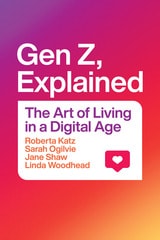
Gen Z, Explained
The Art of Living in a Digital AgeRoberta Katz, Sarah Ogilvie, Jane Shaw, and Linda Woodhead
University of Chicago Press, 2021
Born since the mid-1990s, members of Generation Z comprise the first generation never to know the world without the internet, and the most diverse generation yet. As Gen Z starts to emerge into adulthood and enter the workforce, what do we really know about them? And what can we learn from them? Gen Z, Explained is the authoritative portrait of this significant generation. It draws on extensive interviews that display this generation’s candor, surveys that explore their views and attitudes, and a vast database of their astonishingly inventive lexicon to build a comprehensive picture of their values, daily lives, and outlook. Gen Z emerges here as an extraordinarily thoughtful, promising, and perceptive generation that is sounding a warning to their elders about the world around them—a warning of a complexity and depth the “OK Boomer” phenomenon can only suggest.
Much of the existing literature about Gen Z has been highly judgmental. In contrast, this book provides a deep and nuanced understanding of a generation facing a future of enormous challenges, from climate change to civil unrest. What’s more, they are facing this future head-on, relying on themselves and their peers to work collaboratively to solve these problems. As Gen Z, Explained shows, this group of young people is as compassionate and imaginative as any that has come before, and understanding the way they tackle problems may enable us to envision new kinds of solutions. This portrait of Gen Z is ultimately an optimistic one, suggesting they have something to teach all of us about how to live and thrive in this digital world.

Global Cities
Cinema, Architecture, and Urbanism in a Digital AgePetro, Patrice
Rutgers University Press, 2003
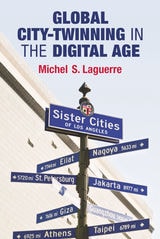
Global City-Twinning in the Digital Age
Michel S. Laguerre
University of Michigan Press, 2019
For many years, cities throughout the globe have developed ties with each other to process and nurture friendship, solidarity, and collaboration. These city relationships constitute a mode of governance distinct from those of cities that are not involved in such cross-border arrangements, with influence that expands far beyond region.
In this light, Global City-Twinning in the Digital Age unveils an analysis of intercity relationships both on a global scale and as a global phenomenon with digital communication technologies that play key roles in upgrading traditional practices, enhancing cross-border cooperation, and facilitating the production of digital sister cities. This book analyzes the deployment of sister-city formations and operations throughout the world with a focus on cities of North America, Latin America, North Africa, Europe, and the Mediterranean region. Using a global approach, it discusses friendship, entrepreneurship, urban development, cooperative management, municipal policy, and digital entanglements. It expands the scope of study of sister cities by unveiling the role of immigrants, diaspora, and post-diaspora in the making and functioning of the digital model of sister cities.