Results by title
577 books match the query 'Earth Sciences' and 32 start with g
Gaian Systems
Lynn Margulis, Neocybernetics, and the End of the AnthropoceneBruce Clarke
University of Minnesota Press, 2020
A groundbreaking look at Gaia theory’s intersections with neocybernetic systems theory
Often seen as an outlier in science, Gaia has run a long and varied course since its formulation in the 1970s by atmospheric chemist James Lovelock and microbiologist Lynn Margulis. Gaian Systems is a pioneering exploration of the dynamic and complex evolution of Gaia’s many variants, with special attention to Margulis’s foundational role in these developments.
Bruce Clarke assesses the different dialects of systems theory brought to bear on Gaia discourse. Focusing in particular on Margulis’s work—including multiple pieces of her unpublished Gaia correspondence—he shows how her research and that of Lovelock was concurrent and conceptually parallel with the new discourse of self-referential systems that emerged within neocybernetic systems theory. The recent Gaia writings of Donna Haraway, Isabelle Stengers, and Bruno Latour contest its cybernetic status. Clarke engages Latour on the issue of Gaia’s systems description and extends his own systems-theoretical synthesis under what he terms “metabiotic Gaia.” This study illuminates current issues in neighboring theoretical conversations—from biopolitics and the immunitary paradigm to NASA astrobiology and the Anthropocene. Along the way, he points to science fiction as a vehicle of Gaian thought.
Delving into many issues not previously treated in accounts of Gaia, Gaian Systems describes the history of a theory that has the potential to help us survive an environmental crisis of our own making.
Gems and Gemstones
Timeless Natural Beauty of the Mineral WorldLance Grande and Allison Augustyn
University of Chicago Press, 2009
Gems are objects of wealth, icons of beauty, and emblems of the very best of everything. They are kept as signs of prestige or power. Given as tokens of love and affection, they also come in a kaleidoscopic array of hues and can be either mineral or organic. Gems can command a person’s gaze in the way they play with light and express rich color. And they can evoke feelings of passion, greed, mystery, and warmth.
For millennia, gems have played an important role in human culture: they have significant value, both financially and within folklore and mythology. But just what are gems, exactly? This lavishly illustrated volume—the most ambitious publication of its kind—provides a general introduction to gems and natural gemstones, conveying their timeless beauty and exploring similarities among different species and varieties. Gems and Gemstones features nearly 300 color images of the cut gems, precious and semiprecious stones, gem-quality mineral specimens, and fine jewelry to be unveiled in a new Grainger Hall of Gems at The Field Museum in Chicago this October. The book and exhibition’s overarching theme will be the relationship between finished gems and their natural origin: while beautiful as faceted and polished pieces of jewelry, gems are often just as lovely—or even more so—as gemstones in their natural state. For example, an aquamarine or emerald as originally found in a mine with its natural crystal faces can be as stunning as any cut and polished gem prepared for a ring, bracelet, or charm.
Thoughtful of both ancient and modern times, Gems and Gemstones also includes fun-filled facts and anecdotes that broaden the historical portrait of each specimen. When Harry Winston, for instance, donated the Hope Diamond to the Smithsonian in 1958, he sent it through the U.S. mail wrapped in plain brown paper. And for anyone who has ever marveled at the innovations of top jewelry designers, Gems and Gemstones features a dazzling array of polished stones, gold objects, and creations from around the world. Diamonds, sapphires, rubies, amethysts, pearls, topaz, amber—every major gem gets its due in what will be an invaluable source on the subject for years to come.
Gems and Gemstones is the basis for the iPad app, available in the Apple iTunes App Store, Gems and Jewels.
Gems and the New Science
Matter and Value in the Scientific RevolutionMichael Bycroft
University of Chicago Press, 2026
In Gems and the New Science, Michael Bycroft argues that gems were connected to major developments in the “new science” between the sixteenth and nineteenth centuries. As he explains, precious and semiprecious stones were at the center of dramatic shifts in natural knowledge in early modern Europe. They were used to investigate luminescence, electricity, combustion, chemical composition, and more. They were collected by naturalists; measured by mathematicians; and rubbed, burned, and dissolved by experimental philosophers. This led to the demise of the traditional way of classifying gems—which grouped them by transparency, color, and locality—and the turn to density, refraction, chemistry, and crystallography as more reliable guides for sorting these substances.
The science of gems shows that material evaluation was as important as material production in the history of science. It also shows the value of seeing science as the product of the interaction between different material worlds. The book begins by bringing these insights to bear on five themes of the Scientific Revolution. Each of the subsequent chapters deals with a major episode in early modern science, from the expansion of natural history in the sixteenth century to the emergence of applied science early in the nineteenth century. This important work is not only the first book-length history of the science of gems but also a fresh interpretation of the Scientific Revolution and an argument for using a new form of materialism to understand the evolution of science.
Geocultural Power
China's Quest to Revive the Silk Roads for the Twenty-First CenturyTim Winter
University of Chicago Press, 2019
Geocultural Power explores this question by considering how China is couching its strategy for building trade, foreign relations, and energy and political security in an evocative topography of history. Until now Belt and Road has been discussed as a geopolitical and geoeconomic project. This book introduces geocultural power to the analysis of international affairs. Tim Winter highlights how many countries—including Iran, Sri Lanka, Kenya, Malaysia, Indonesia, Pakistan, and others—are revisiting their histories to find points of diplomatic and cultural connection. Through the revived Silk Roads, China becomes the new author of Eurasian history and the architect of the bridge between East and West. In a diplomatic dance of forgetting, episodes of violence, invasion, and bloodshed are left behind for a language of history and heritage that crosses borders in ways that further the trade ambitions of an increasingly networked China-driven economy.
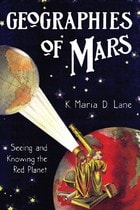
Geographies of Mars
Seeing and Knowing the Red PlanetK. Maria D. Lane
University of Chicago Press, 2011
A highly original exploration of geography’s spatial dimensions at the beginning of the twentieth century, offering a new view of the mapping of far-off worlds.
One of the first maps of Mars, published by an Italian astronomer in 1877, with its pattern of canals, fueled belief in intelligent life forms on the distant red planet—a hope that continued into the 1960s. Although the Martian canals have long since been dismissed as a famous error in the history of science, K. Maria D. Lane argues that there was nothing accidental about these early interpretations. Indeed, she argues, the construction of Mars as an incomprehensibly complex and engineered world both reflected and challenged dominant geopolitical themes during a time of major cultural, intellectual, political, and economic transition in the Western world.
Geographies of Mars telescopes in on a critical period in the development of the geographical imagination, when European imperialism was at its zenith and American expansionism had begun in earnest. Astronomers working in the new observatories of the American Southwest or in the remote heights of the South American Andes were inspired, Lane finds, by their own physical surroundings and used representations of the Earth’s arid landscapes to establish credibility for their observations of Mars. With this simple shift to the geographer’s point of view, Lane deftly explains some of the most perplexing stances on Mars taken by familiar protagonists such as Percival Lowell, Alfred Russel Wallace, and Lester Frank Ward.
Geographies of Nineteenth-Century Science
Edited by David N. Livingstone and Charles W. J. Withers
University of Chicago Press, 2011
In Geographies of Nineteenth-Century Science, David N. Livingstone and Charles W. J. Withers gather essays that deftly navigate the spaces of science in this significant period and reveal how each is embedded in wider systems of meaning, authority, and identity. Chapters from a distinguished range of contributors explore the places of creation, the paths of knowledge transmission and reception, and the import of exchange networks at various scales. Studies range from the inspection of the places of London science, which show how different scientific sites operated different moral and epistemic economies, to the scrutiny of the ways in which the museum space of the Smithsonian Institution and the expansive space of the American West produced science and framed geographical understanding. This volume makes clear that the science of this era varied in its constitution and reputation in relation to place and personnel, in its nature by virtue of its different epistemic practices, in its audiences, and in the ways in which it was put to work.
Geography Unbound
French Geographic Science from Cassini to HumboldtAnne Marie Claire Godlewska
University of Chicago Press, 1999
Anne Godlewska examines this crisis, the often conservative reactions of geographers to it, and the work of researchers at the margins of the field who helped chart its future course. She tells her story partly through the lives and careers of individuals, from the deposed cabinet geographer Cassini IV to Volney, von Humboldt, and Letronne (innovators in human, physical, and historical geography), and partly through the institutions with which they were associated such as the Encyclopédie and the Jesuit and military colleges.
Geography Unbound presents an insightful portrait of a crucial period in the development of modern geography, whose unstable disciplinary status is still very much an issue today.
Geography and Enlightenment
Edited by David N. Livingstone and Charles W. J. Withers
University of Chicago Press, 1999
The first set of chapters charts the intellectual and geographical contexts in which Enlightenment ideas began to form, including both the sites in which knowledge was created and discussed and the different means used to investigate the globe. Detailed explorations of maps created during this period show how these new ways of representing the world and its peoples influenced conceptions of the nature and progress of human societies, while studies of the travels of people and ideas reveal the influence of far-flung places on Enlightenment science and scientific credibility. The final set of chapters emphasizes the role of particular local contexts in Enlightenment thought.
Contributors are Michael T. Bravo, Paul Carter, Denis Cosgrove, Stephen Daniels, Matthew Edney, Anne Marie Claire Godlewska, Peter Gould, Michael Heffernan, David N. Livingstone, Dorinda Outram, Chris Philo, Roy Porter, Nicolaas Rupke, Susanne Seymour, Charles Watkins, and Charles W. J. Withers.
Geography and Revolution
Edited by David N. Livingstone and Charles W. J. Withers
University of Chicago Press, 2005
David N. Livingstone and Charles W. J. Withers assemble a set of essays that are themselves revolutionary in uncovering not only the geography of revolutions but the role of geography in revolutions. Here, scientific revolutions—Copernican, Newtonian, and Darwinian—ordinarily thought of as placeless, are revealed to be rooted in specific sites and spaces. Technical revolutions—the advent of print, time-keeping, and photography—emerge as inventions that transformed the world's order without homogenizing it. Political revolutions—in France, England, Germany, and the United States—are notable for their debates on the nature of political institutions and national identity.
Gathering insight from geographers, historians, and historians of science, Geography and Revolution is an invitation to take the where as seriously as the who and the when in examining the nature, shape, and location of revolutions.
Geography's Inner Worlds
Pervasive Themes in Contemporary American GeographyAbler, Ronald F
Rutgers University Press, 1992
Twenty-six leading American geographers meditate on the themes that unify contemporary geography. They emphasize the concepts and methods that run through all geography's sub-disciplines and give it a distinctive place among both the natural and social sciences.
Prepared under the sponsorship of the American Association of Geographers for the International Geographical Congress 1992, these insightful essays on the character of the discipline and its future will be required reading for every student of the field.
Geography's Quantitative Revolutions
Edward A. Ackerman and the Cold War Origins of Big DataElvin Wyly
West Virginia University Press, 2019
Do you have a smartphone? Billions of people on the planet now navigate their daily lives with the kind of advanced Global Positioning System capabilities once reserved for the most secretive elements of America’s military-industrial complex. But when so many people have access to the most powerful technologies humanity has ever devised for the precise determination of geographical coordinates, do we still need a specialized field of knowledge called geography?
Just as big data and artificial intelligence promise to automate occupations ranging from customer service and truck driving to stock trading and financial analysis, our age of algorithmic efficiency seems to eliminate the need for humans who call themselves geographers—at the precise moment when engaging with information about the peoples, places, and environments of a diverse world is more popular than ever before. How did we get here? This book traces the recent history of geography, information, and technology through the biography of Edward A. Ackerman, an important but forgotten figure in geography’s “quantitative revolution.” It argues that Ackerman’s work helped encode the hidden logics of a distorted philosophical heritage—a dangerous, cybernetic form of thought known as militant neo-Kantianism—into the network architectures of today’s pervasive worlds of surveillance capitalism.
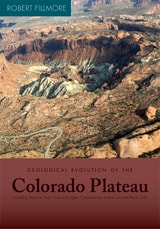
Geological Evolution of the Colorado Plateau of Eastern Utah and Western Colorado
Robert Fillmore
University of Utah Press, 2010
Geological Sciences in the Antebellum South
Edited by James X. Corgan
University of Alabama Press, 1982
Tracing the roots of earth science before the Civil War.
Geological Sciences in the Antebellum South by James Corgan offers a rich and revealing examination of the origins and development of geological inquiry in the American South during the decades (1796-1850s) leading up to the Civil War. At a time when scientific disciplines in the United States were still taking shape, Southern scholars, educators, and naturalists played a critical—if often overlooked—role in advancing geological knowledge. Corgan brings this history to life through a careful exploration of the people, institutions, and ideas that defined early earth science in the region.
From the study of mineral resources and soil composition to the broader effort to understand the region’s unique landscapes, geology intersected with agriculture, industry, and economic development in powerful ways. Corgan demonstrates how these scientific endeavors were shaped by—and in turn helped shape—the cultural and intellectual environment of the South. This book also highlights the contributions of key figures and institutions that fostered scientific inquiry, including early universities, state surveys, and learned societies. These networks connected Southern researchers to national and international scientific communities, positioning the region as an active participant in the broader expansion of 19th-century science. At the same time, the book addresses the challenges and limitations faced by Southern scientists, offering a nuanced perspective on how regional identity, resources, and social structures influenced the trajectory of scientific progress.
By situating geology within the broader context of antebellum history, Corgan provides readers with a deeper understanding of how scientific thought developed alongside—and in dialogue with—the political, economic, and cultural forces of the period. The result is a compelling interdisciplinary study that bridges the history of science and Southern history, shedding new light on a formative era in American intellectual life. Geological Sciences in the Antebellum South will appeal to historians, geologists, and scholars of American studies. It is an essential resource for anyone interested in the foundations of scientific inquiry in the United States and the enduring impact of geology on the development of the American South.
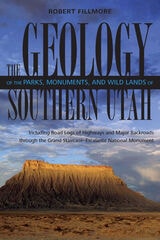
Geology Of Parks, Monuments, and Wildlands of Southern Utah
Robert Fillmore
University of Utah Press, 2000
This detailed interpretive guide explains the forces that created Utah's unforgettable scenery, while providing road logs of highways and major backroads through the Grand Staircase of the Colorado Plateau.
Where in Utah can you find a fossilized ant hill that is at least fifty million years old? Do you know the location of an ancient beach that disappeared along with the dinosaurs that strolled it? Find out in The Geology of the Parks, Monuments, and Wildlands of Southern Utah.
This fascinating and authoritative guide belongs on the dashboard or in the backpack of every visitor to southern Utah or student of its natural history. More than sixty illustrations and nearly three dozen photographs accompany clear explanations of the spectacular geologic features of this landscape, including Capitol Reef, Bryce Canyon, and Zion National Parks, as well as the Grand Staircase-Escalante Monument.
Section I of the volume surveys chronologically the origins of the formations and structural features and the geologic processes that have shaped the Colorado Plateau. Section II provides road logs with mile-by-mile geologic descriptions of key sections of highway traversing this area.
This detailed interpretive guide turns any windshield into a window of opportunity for understanding the forces that created Utah’s unforgettable scenery—whether it be a breathtaking panorama or a dazzling array of fins and fractures, pillars and pedestals, or cliffs and chasms.
Geology of Michigan
John A. Dorr, Jr. and Donald F. Eschman
University of Michigan Press, 1970
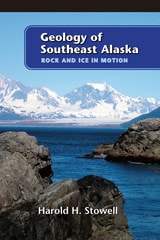
Geology of Southeast Alaska
Rock and Ice in MotionHarold Stowell
University of Alaska Press, 2006
Written by a geologist with over twenty-five years of experience in the north, Geology of Southeast Alaska will entertain and inform with abundant photographs and detailed drawings. Whether you want to understand the forces that shaped the state of Alaska, or you want to learn the basics of glacial movement, this compact, authoritative book is for you.
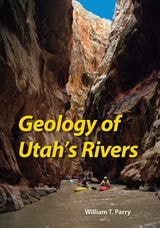
Geology of Utah's Rivers
William T Parry
University of Utah Press, 2008
Transcending the notion of a traditional geology text, Parry provides detailed commentary on historical exploration and the development of the local scenery. His ambitious scholarship offers a fresh look at Utah’s changing landscape throughout geologic time.
Geology of the Great Basin
Bill Fiero
University of Nevada Press, 2009
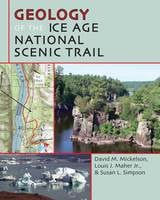
Geology of the Ice Age National Scenic Trail
David M. Mickelson
University of Wisconsin Press, 2011
The Ice Age National Scenic Trail meanders across the state of Wisconsin through scenic glacial terrain dotted with lakes, steep hills, and long, narrow ridges. David M. Mickelson, Louis J. Maher Jr., and Susan L. Simpson bring this landscape to life and help readers understand what Ice Age Wisconsin was like. An overview of Wisconsin’s geology and key geological concepts helps readers understand geological processes, materials, and landforms. The authors detail geological features along each segment of the Ice Age Trail and at each of the nine National Ice Age Scientific Reserve sites.
Readers can experience the Ice Age Trail through more than one hundred full-color photographs, scores of beautiful maps, and helpful diagrams. Science briefs explain glacial features such as eskers, drumlins, and moraines. Geology of the Ice Age National Scenic Trail also includes detailed trail descriptions that are cross referenced with the science briefs to make it easy to find the geological terms used in the trail descriptions. Whatever your level of experience with hiking or knowledge of glaciers, this book will provide lively, informative, and revealing descriptions for a new understanding of the shape of the land beneath our feet.
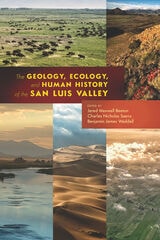
Geology, Ecology, and Human History of the San Luis Valley
Jared Maxwell Beeton
University Press of Colorado, 2020
The first section, “The Geology and Ecology of the San Luis Valley,” surveys the geomorphology, hydrology, animal and plant life, conservation, management, and mining of the valley’s varied terrain. The second section, “Human History of the San Luis Valley,” recounts the valley’s human visitation and settlement, from early indigenous life to Spanish exploration to Hispanic and Japanese settlements. This section introduces readers to the region’s wide range of religious identities—Catholic, Latter-day Saint, Buddhist, Jehovah’s Witness, Amish, and Mennonite—and diverse linguistic traditions, including Spanish, English, Dutch, Danish, Japanese, and Mayan. The final section, “Travel Itineraries,” addresses recreation, specifically fly-fishing and rock climbing.
The book provides a comprehensive overview of the endemic flora and fauna, human history of indigenous lifeways, and diverse settlement patterns that have shaped the region. The Geology, Ecology, and Human History of the San Luis Valley will appeal to students and scholars of geology, ecology, environmental history, and cultural history, as well as residents and tourists seeking to know more about this fascinating and integral part of Colorado and New Mexico.
Contributors:
Benjamin Armstrong, Timothy Armstrong, Deacon Aspinwall, Robert Benson, Lorrie Crawford, Kristy Duran, Jeff Elison, Eric Harmon, Devin Jenkins, Bradley G. Johnson, Robert M. Kirkham, Bessie Konishi, Angie Krall, Richard D. Loosbrock, Richard Madole, A. W. Magee, Victoria Martinez, James McCalpin, Mark Mitchell, R. Nathan Pipitone, Andrew Valdez, Rio de la Vista, Damián Vergara Wilson
Georges Cuvier, Fossil Bones, and Geological Catastrophes
New Translations and Interpretations of the Primary TextsMartin J. S. Rudwick
University of Chicago Press, 1997
Geysers of Yellowstone, Fifth Edition
T. Scott Bryan
University Press of Colorado, 2018
Both a reference work and a fine introduction to the nature of geyser activity, this popular field guide includes a glossary of key terms, a comprehensive appendix that discusses other geyser areas of the world, detailed maps of each geyser basin, and tables for easy reference. The Geysers of Yellowstone will continue to serve geyser gazers as well as newcomers to geothermal phenomena for years to come.
Geysers of Yellowstone, Fourth Edition
T. Scott Bryan
University Press of Colorado, 2008
Geysers of Yellowstone
Sixth EditionT. Scott Bryan
University Press of Colorado, 2024
Both a reference work and a fine introduction to the nature of geyser activity, this popular field guide includes detailed maps of each geyser basin, tables for easy reference, and a glossary of key terms. A comprehensive appendix discusses other geyser areas of the world, several of which are described here for the first time. The Geysers of Yellowstone will continue to serve geyser gazers as well as newcomers to geothermal phenomena for years to come.
Global Environmental History
I. G. Simmons
University of Chicago Press, 2008
A far-reaching approach that considers the truly global picture and recognizes the contributions of many disciplines—including the natural sciences, the social sciences, and increasingly, the humanities—Global Environmental History focuses not only on the material world but also on humans’ ideas about the planet and their place on it. Taking as his starting point the major phases of human technological evolution of the last 12,000 years, Simmons considers how these changes have affected the natural world and goes on to assess the response to conditions such as climate change. By putting today’s environmental preoccupations into a long-term perspective, Simmons reveals the history of some current anxieties.
A timely examination of the interrelation of history and nature, Simmons’s book will be welcomed by any concerned reader interested in the origins of the modern environmental crisis.

Global Fever
How to Treat Climate ChangeWilliam H. Calvin
University of Chicago Press, 2008
With Global Fever, William H. Calvin delivers both a clear-eyed diagnosis and a strongly worded prescription. In striking, straightforward language, he first clearly sets out the current state of the Earth’s warming climate and the disastrous possibilities ahead should we continue on our current path. Increasing temperatures will kill off vegetation and dry up water resources, and their loss will lead, in an increasingly destructive feedback loop, to even more warming. Resource depletion, drought, and disease will follow, leading to socioeconomic upheaval—and accompanying violence—on a scale barely conceivable.
It is still possible, Calvin argues, to avoid such a dire fate. But we must act now, aggressively funneling resources into jump-starting what would amount to a third industrial revolution, this one of clean technologies—while simultaneously expanding our use of existing low-emission technologies, from nuclear power to plug-in hybrid vehicles, until we achieve the necessary scientific breakthroughs.
Passionately written, yet thoroughly grounded in the latest climate science, Global Fever delivers both a stark warning and an ambitious blueprint for saving the future of our planet.
Globalization and New Geographies of Conservation
Edited by Karl S. Zimmerer
University of Chicago Press, 2006
Globalization and New Geographies of Conservation makes four important arguments about the recent coupling of conservation and globalization that is reshaping the place of nature in human-environmental change. First, it has led to an unprecedented number of spatial arrangements whose environmental management goals and prescribed activities vary along a spectrum from strict biodiversity protection to sustainable utilization involving agriculture, food production, and extractive activities. Conservation and globalization are also leading, by necessity, to new scales of management in these activities that rely on environmental science, thus shifting the spatial patterning of humans and the environment. This interaction results, as well, in the unprecedented importance of boundaries and borders; transnational border issues pose both opportunities and threats to global conservation proposed by organizations and institutions that are themselves international. Lastly, Globalization and New Geographies of Conservation argues that the local level has been integral to globalization, while the regional level is often eclipsed at the peril of the successful implementation of conservation and management programs.
Bridging the gap between geography and life science, Globalization and New Geographies of Conservation will appeal to a broad range of students of the environment, conservation planning; biodiversity management, and development and globalization studies.
Globes
400 Years of Exploration, Navigation, and PowerSylvia Sumira
University of Chicago Press, 2014
Showcasing the impressive collection of globes held by the British Library, Sumira traces the inception and progression of globes during the period in which they were most widely used—from the late fifteenth century to the late nineteenth century—shedding light on their purpose, function, influence, and manufacture, as well as the cartographers, printers, and instrument makers who created them. She takes readers on a chronological journey around the world to examine a wide variety of globes, from those of the Renaissance that demonstrated a renewed interest in classical thinkers; to those of James Wilson, the first successful commercial globe maker in America; to those mass-produced in Boston and New York beginning in the 1800s. Along the way, Sumira not only details the historical significance of each globe, but also pays special attention to their materials and methods of manufacture and how these evolved over the centuries.
A stunning and accessible guide to one of the great tools of human exploration, Globes will appeal to historians, collectors, and anyone who has ever examined this classroom accessory and wondered when, why, and how they came to be made.
Great Lakes Chronicle
Essays on Coastal WisconsinWisconsin Coastal Management
Wisconsin Historical Society Press, 2018
Great Lakes Rocks
4 Billion Years of Geologic History in the Great Lakes RegionStephen E. Kesler
University of Michigan Press, 2019
Ground Truth
A Guide to Tracking Climate Change at HomeMark L. Hineline
University of Chicago Press, 2018
We know that the Earth’s climate is changing, and that the magnitude of this change is colossal. At the same time, the world outside is still a natural world, and one we can experience on a granular level every day. Ground Truth is a guide to living in this condition of changing nature, to paying attention instead of turning away, and to gathering facts from which a fuller understanding of the natural world can emerge over time.
Featuring detailed guidance for keeping records of the plants, invertebrates, amphibians, birds, and mammals in your neighborhood, this book also ponders the value of everyday observations, probes the connections between seasons and climate change, and traces the history of phenology—the study and timing of natural events—and the uses to which it can be put. An expansive yet accessible book, Ground Truth invites readers to help lay the groundwork for a better understanding of the nature of change itself.
Grove Karl Gilbert
A Great Engine of ResearchStephen J. Pyne
University of Iowa Press, 1980
Gilbert knew most of geology's grand figures--including John Wesley Powell, Clarence Dutton, and Clarence King--and Pyne's chronicle of the imperturbable, quietly unconventional Gilbert is couterpointed with sketches of these prominent scientists. The man who wrote that "happiness is sitting under a tent with walls uplifted, just after a brief shower,", created answers to the larger questions of the earth in ways that have become classics of his science.