Results by title
300 books match the query 'Economic Development' and 10 start with g
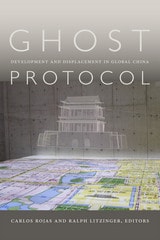
Ghost Protocol
Development and Displacement in Global ChinaCarlos Rojas and Ralph A. Litzinger, editors
Duke University Press, 2016
Contributors. Yomi Braester, Alexander Des Forges, Kabzung, Rachel Leng, Ralph A. Litzinger, Lisa Rofel, Carlos Rojas, Bryan Tilt, Robin Visser, Biao Xiang, Emily T. Yeh
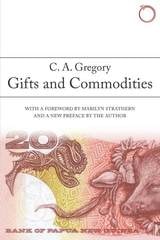
Gifts and Commodities
C. A. Gregory
HAU, 2015
Christopher A. Gregory’s Gifts and Commodities is one of the undisputed classics of economic anthropology. On its publication in 1982, it spurred intense, ongoing debates about gifts and gifting, value, exchange, and the place of political economy in anthropology.
Gifts and Commodities is, at once, a critique of neoclassical economics and development theory, a critical history of colonial Papua New Guinea, and a comparative ethnography of exchange in Melanesian societies. This new edition includes a foreword by anthropologist Marilyn Strathern and a new preface by the author that discusses the ongoing response to the book and the debates it has engendered, debates that have become more salient in our evermore neoliberal and globalized era.
God and Production in a Guatemalan Town
By Sheldon Annis
University of Texas Press, 1988
Since the late 1970s, Protestantism has emerged as a major force in the political and economic life of rural Guatemala. Indeed, as Sheldon Annis argues in this book, Protestantism may have helped tip Guatemala's guerrilla war in behalf of the army during the early 1980s.
But what is it about Protestantism—and about Indians— that has led to massive religious conversion throughout the highlands? And in villages today, what are the dynamics that underlie the competition between Protestants and Catholics?
Sheldon Annis addresses these questions from the perspective of San Antonio Aguas Calieutes, an Indian village in the highlands of midwestern Guatemala. Annis skillfully blends economic and cultural analysis to show why Protestantism has taken root. The key "character" in his drama is the village Indian's tiny plot of corn and beans, the milpa, which Annis analyzes as an "idea" as well as an agronomic productive system. By exploring "milpa logic," Annis shows how the economic, environmental, and social shifts of the twentieth century have acted to undercut "the colonial creation of Indianness" and, in doing so, have laid the basis for new cultural identities.
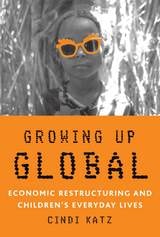
Growing Up Global
Economic Restructuring and Children’s Everyday LivesCindi Katz
University of Minnesota Press, 2004
Growing Up Global examines the processes of development and global change through the perspective of children’s lives in two seemingly disparate places: New York City and a village in northern Sudan. At the book’s core is a longitudinal ethnographic study of children growing up in a Sudanese village that was included in a large state-sponsored agricultural program in the year they were born. It follows a small number of children intermittently from ten years of age to early adulthood, concentrating particularly on their work and play, which together trained the children for an agrarian life centered around the family, a life that was quickly becoming obsolete.
Shifting her focus to largely working-class families in New York City in the 1980s and 1990s, Katz is able to expose unsuspected connections with the Sudanese experience in the effects on children of a constantly changing, capitalist environment—the decline of manufacturing jobs and the increase in knowledge-based jobs—in which young people with few skills and stunted educations face bleak employment prospects. In teasing out how “development” transforms the grounds on which these young people come of age, Cindi Katz provides a textured analysis of the importance of knowledge in the ability of people, families, and communities to reproduce themselves and their material social practices over time.
Growth Machines
On the Hollow Joys of Consumption in the Desert of Economic LifeMark Joseph Stelzner
University of Chicago Press, 2026
A provocative look at America’s compulsion to consume and our obsession’s surprising—and strange—origins.
In a capitalist society, people sell their labor to purchase staples like food, shelter, and anxiety medication. That’s the equation of everyday economic life that we’ve always been told is true. Except, is it really that simple anymore? No matter how unmaterialistic you may think you are, odds are that deep within is a drive to consume because it feels good: books you won’t read, clothes you won’t like and might wear even less, a replacement phone whose novelty runs out as quickly as its upgrade hits the market. But what drives this impulse?
In Growth Machines, Mark Joseph Stelzner shows how today’s consumers are now programmed by a US economy intent on infinite growth to work for goods they’ve been convinced they need and conditioned to want. Stelzner establishes the gaps between economic thinking and economic reality, arguing that consumption is no longer just a reflection of needs, but rather, it reflects a need for transaction—in many cases, a treat we seek out because it feels good. We work not only to be able to consume the essentials for living, but also to consume for consumption's sake. Yet such consumption doesn’t make us happier. Stelzner traces this strange nature of consumption to an environmental source: an economy that demands growth. To keep its economy pumping, the US must keep Americans consuming. This makes Stelzner’s book an uncomfortable reflection on how we internalize our economy. To be an American is to consume; to consume is what makes America.
Growth Recurring
Economic Change in World HistoryE.L. Jones
University of Michigan Press, 2000
Eric Jones has written a substantial new introduction for this edition, which includes discussions of early evidence of growth episodes and the relation of these points to the Industrial Revolution, and the relevance of the East Asian "miracle" to his thesis.
Growth Theories in Light of the East Asian Experience
Edited by Takatoshi Ito and Anne O. Krueger
University of Chicago Press, 1995
The theory explored in this volume attributes the phenomenal economic success of these countries to, among other factors, the role of an outward orientation—a focus on exporting rather than on protecting home markets. In addition, the importance of exchange rate behavior, of the supportive role of government policy, and of the accumulation and promotion of physical and human capital are explored in detail. This collection also examines the extent to which growth in each country became self-sustaining once it began.
Demonstrating the relevance of endogenous growth theory for studying this important region, this fourth volume in the NBER-East Asia Seminar on Economics series will be of interest to observers of East Asian affairs.
Growth Triumphant
The Twenty-first Century in Historical PerspectiveRichard A. Easterlin
University of Michigan Press, 1998
Growth and Productivity in East Asia
Edited by Takatoshi Ito and Andrew K. Rose
University of Chicago Press, 2004
Takatoshi Ito and Andrew K. Rose have organized a group of collaborators from several Asian countries, the United States, and other parts of the globe who ably balance both macroeconomic and microeconomic study with theoretical and empirical approaches. Growth and Productivity in East Asia gives special attention to the causes for the unusual success of Australia, one of the few nations to maintain unprecedented economic growth despite the 1997 Asian financial crisis and the 2001 global downturn. A new database comprising eighty-four Japanese sectors reveals new findings for the last thirty years of sectoral productivity and growth in Japan. Studies focusing on Indonesia, Taiwan, and Korea also consider productivity and its relationship to research and development, foreign ownership, and policy reform in such industries as manufacturing, automobile production, and information technology.
Growth, Trade, and Systemic Leadership
Rafael Reuveny and William R. Thompson
University of Michigan Press, 2004