Results by title
1049 books match the query 'English, Irish, Scottish, Welsh' and 18 start with g
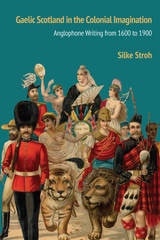
Gaelic Scotland in the Colonial Imagination
Anglophone Writing from 1600 to 1900Silke Stroh
Northwestern University Press, 2017

Garden Theology
Seán Mac Falls
Tupelo Press, 2022
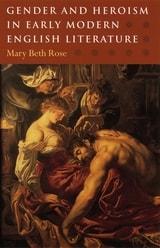
Gender and Heroism in Early Modern English Literature
Mary Beth Rose
University of Chicago Press, 2001
Interweaving discourses of gender, Rose explores ways in which this heroics of endurance became the dominant model. She examines the glamorous, failed destinies of heroes in plays by Shakespeare, Jonson, and Marlowe; Elizabeth I's creation of a heroic identity in her public speeches; the autobiographies of four ordinary women thrust into the public sphere by civil war; and the seduction of heroes into slavery in works by Milton, Aphra Behn, and Mary Astell. Ultimately, her study demonstrates the importance of the female in the creation of modern heroism, while offering a critique of both idealized action and suffering.
Genre of Autobiography in Victorian Literature
Clinton Machann
University of Michigan Press, 1994
Genre of Autobiography in Victorian Literature
Clinton Machann
University of Michigan Press, 1995
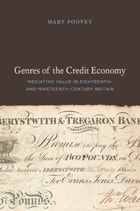
Genres of the Credit Economy
Mediating Value in Eighteenth- and Nineteenth-Century BritainMary Poovey
University of Chicago Press, 2008
Chronicling the process by which some of our most important conceptual categories were naturalized, Mary Poovey explores complex relationships among forms of writing that are not usually viewed together, from bills of exchange and bank checks, to realist novels and Romantic poems, to economic theory and financial journalism. Taking up all early forms of financial and monetarywriting, Poovey argues that these genres mediated for early modern Britons the operations of a market system organized around credit and debt. By arguing that genre is a critical tool for historical and theoretical analysis and an agent in the events that formed the modern world, Poovey offers a new way to appreciate the character of the credit economy and demonstrates the contribution historians and literary scholars can make to understanding its operations.
Much more than an exploration of writing on and around money, Genres of the Credit Economy offers startling insights about the evolution of disciplines and the separation of factual and fictional genres.
Gentle Flame
The Life and Verse of Dudley, Fourth Lord NorthDale B. J. Randall
Duke University Press, 1983
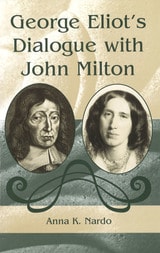
George Eliot's Dialogue with John Milton
Anna K. Nardo
University of Missouri Press, 2003
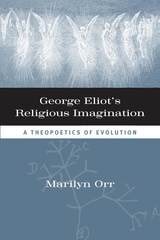
George Eliot's Religious Imagination
A Theopoetics of EvolutionMarilyn Orr
Northwestern University Press, 2018
Orr’s wide-ranging and fascinating analysis situates George Eliot in the fertile intellectual landscape of the nineteenth century, among thinkers as diverse as Ludwig Feuerbach, David Strauss, and Søren Kierkegaard. She also argues for a connection between George Eliot and the twentieth-century evolutionary Christian thinker Pierre Teilhard de Chardin. Her analysis draws on the work of contemporary philosopher Richard Kearney as well as writers on mysticism, particularly Karl Rahner.
The book takes an original look at questions many believe settled, encouraging readers to revisit George Eliot’s work. Orr illuminates the creative tension that still exists between science and religion, a tension made fruitful through the exercise of the imagination. Through close readings of Eliot's writings, Orr demonstrates how deeply the novelist's religious imagination continued to operate in her fiction and poetry.
George Eliot’s Serial Fiction
Carol A. Martin
The Ohio State University Press, 1994
Germaine De Staël, George Sand, and the Victorian Woman Artist
Linda M. Lewis
University of Missouri Press, 2003
Glorious Bodies
Trans Theology and Renaissance LiteratureColby Gordon
University of Chicago Press, 2024
In this striking contribution to trans history, Colby Gordon challenges the prevailing assumption that trans life is a byproduct of recent medical innovation by locating a cultural imaginary of transition in the religious writing of the English Renaissance. Marking a major intervention in early modern gender studies, Glorious Bodies insists that transition happened, both socially and surgically, hundreds of years before the nineteenth-century advent of sexology. Pairing literary texts by Shakespeare, Webster, Donne, and Milton with a broad range of primary sources, Gordon examines the religious tropes available to early modern subjects for imagining how gender could change. From George Herbert’s invaginated Jesus and Milton’s gestational Adam to the ungendered “glorious body” of the resurrection, early modern theology offers a rich conceptual reservoir of trans imagery.
In uncovering early modern trans theology, Glorious Bodies mounts a critique of the broad consensus that secularism is a necessary precondition for trans life, while also combating contemporary transphobia and the right-wing Christian culture war seeking to criminalize transition. Developing a rehabilitative account of theology’s value for positing trans lifeworlds, this book leverages premodern religion to imagine a postsecular transness in the present.
Gondal's Queen
A Novel in VerseBy Emily Jane Brontë
University of Texas Press, 1955
In Gondal’s Queen, Fannie Elizabeth Ratchford presents a cycle of eighty-four poems by Emily Jane Brontë, for the first time arranged in logical sequence, to re-create the “novel in verse” which Emily wrote about their beloved mystical kingdom of Gondal and its ruler, Augusta Geraldine Almeda, who brought tragedy to those who loved her.
Thanks to previous publications by Ratchford, the imaginative world of Gondal is well known not only to Brontë scholars but also to general readers. Only in the present book, however, with Emily’s lovely poems restored to the setting which gave them being, can the full impact of this extraordinary literary creation be realized.
The life story of Gondal’s Queen, from portentous birth to tragic death, is set in a world compounded of dark Gothic romance and Byronic extravagance; yet out of it emerges not only a real country of wild moor sheep and piercingly beautiful nights but also the portrait of a real woman, whose doom was wrought not by the stars but by the clashing complications of her own nature.
In A.G.A. (the appellation most usually applied to the Queen), Emily Brontë created a personality, not a puppet reciting lovely lines. And Ratchford, in reconstructing her story, has re-affirmed the dignity, beauty, and richness of Emily’s poetry.
Gondal’s Queen is the end of a long trail of research and literary detection which has led Ratchford to all known Brontë documentary sources. This quest was originally stimulated by curiosity over a tiny booklet signed, “C. Brontë, June 29th, 1837,” in the Wrenn Library at the University of Texas at Austin. Ratchford’s intense and astonishingly fruitful interest in the Brontës had its origin in her attempt to unravel the fascinating puzzle presented by this little book, which seemed to be merely a series of childish vignettes held together by “a shadow of a common character” and a “tendency toward a unified plot.”
Bit by bit, Ratchford assembled clues from manuscripts and obscure publications until the significance of the play world of the Brontë children began to emerge. In spite of the fact that the Brontës had been the subject of the liveliest literary speculation since their deaths, it remained for Ratchford to establish the importance of their juvenile writings to the later writings of Charlotte. In successive publications she presented the accumulating evidence. For a time her curiosity was centered on Charlotte and the group, but it finally became focused on Emily through a manuscript journal fragment which fortunately came to hand.
Unlike Charlotte, Emily left no prose works from her childhood. But it is apparent from journal entries and birthday notes written by Emily and Anne (whose shared creation Gondal was) not only that the two younger Brontës lived in and sustained daily an imaginary world which had evolved from the earlier play of the four children together, but also that they had written separately voluminous histories and “novels” about it. Of Emily’s vast Gondal literature, only a small body of verse has survived, poems originally intended for no eye but her own and possibly Anne’s. But it is clear that Gondal was not only Emily Brontë’s childhood dream world but also the major preoccupation of her adult creative life.
Good Words
Evangelicalism and the Victorian NovelMark Knight
The Ohio State University Press, 2019
Rather than getting lost in historical and theological rabbit holes, Good Words invites readers to think about why evangelicalism still matters for the stories we tell about fiction in the Victorian period. The result has major implications for our understanding of the Victorian novel, our conception of the relationship between nineteenth-century literature and religion, the way in which we think about evangelical culture in the modern world, and our ideas about the practices and protocols of scholarly reading.
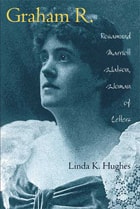
Graham R.
Rosamund Marriot Watson, Woman of LettersLinda K. Hughes
Ohio University Press, 2005
Rosamund Marriott Watson was a gifted poet, an erudite literary and art critic, and a daring beauty whose life illuminates fin-de-siècle London and the way in which literary reputations are made—and lost. A participant in aestheticism and decadence, she wrote six volumes of poems noted for their subtle cadence, diction, and uncanny effects. Linda K. Hughes unfolds a complex life in Graham R.: Rosamund Marriott Watson, Woman of Letters, tracing the poet’s development from accomplished ballads and sonnets, to avant-garde urban impressionism and New Woman poetry, to her anticipation of literary modernism.
Despite an early first divorce, she won fame writing under a pseudonym, Graham R. Tomson. The influential Andrew Lang announced the arrival of a new poet he assumed to be a man. She was soon hosting a salon attended by Lang, Oscar Wilde, and other 1890s notables. Publishing to widespread praise as Graham R., she exemplified the complex cultural politics of her era. A woman with a man’s name and a scandalous past, she was also a graceful beauty who captivated Thomas Hardy and left an impression on his work. At the height of her success she fell in love with writer H. B. Marriott Watson and dared a second divorce.
Graham R. combines the stories of a gifted poet, of London literary networks in the 1890s, and of a bold woman whose achievements and scandals turned on her unusual history of marriage and divorce. Her literary history and her uncommon experience reveal the limits and opportunities faced by an unconventional, ambitious, and talented woman at the turn of the century.
Grammars of Approach
Landscape, Narrative, and the Linguistic PicturesqueCynthia Wall
University of Chicago Press, 2019
Green Victorians
The Simple Life in John Ruskin's Lake DistrictVicky Albritton and Fredrik Albritton Jonsson
University of Chicago Press, 2016
At the center of their social experiment was the charismatic art critic and political economist John Ruskin. Albritton and Albritton Jonsson show how Ruskin’s followers turned his theory into practice in a series of ambitious local projects ranging from hand spinning and woodworking to gardening, archaeology, and pedagogy. This is a lively yet unsettling story, for there was a dark side to Ruskin’s community as well—racist thinking, paternalism, and technophobia. Richly illustrated, Green Victorians breaks new ground, connecting the ideas and practices of Ruskin’s utopian community with the problems of ethical consumption then and now.
Guillermo Cabrera Infante
Two Islands, Many WorldsBy Raymond D. Souza
University of Texas Press, 1996
A native Cuban who has lived in London since 1966, Guillermo Cabrera Infante is, in every sense, a multilingual and multicultural author. Equally at ease in both Spanish and English, he has distinguished himself with daring and innovative novels, essays, short stories, and film scripts written in both languages. His work has won major literary awards in France, Italy, and Spain, as well as a Guggenheim fellowship in the United States.
This biography is the first comprehensive exploration of the life and works of Guillermo Cabrera Infante. Drawing on wide-ranging interviews with the author and his family and friends, as well as extensive study of both published and unpublished works, Raymond D. Souza creates an intimate portrait of Cabrera Infante and the cultural and political milieus that shaped his writing, including Three Trapped Tigers (Tres tristes tigres), View of Dawn in the Tropics (Vista del amanecer en el trópico), Infante's Inferno (La Habana para un Infante difunto), Holy Smoke, A Twentieth Century Job (Un oficio del siglo XX), Writes of Passage (Así en la paz como en la guerra), and Mea Cuba.