Results by title
304 books match the query 'Entertainment & Performing Arts' and 6 start with g
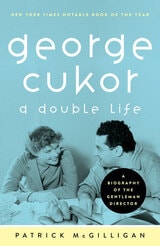
George Cukor
A Double LifePatrick McGilligan
University of Minnesota Press, 2013
One of the highest-paid studio contract directors of his time, George Cukor was nominated five times for an Academy Award as Best Director. In publicity and mystique he was dubbed the “women’s director” for guiding the most sensitive leading ladies to immortal performances, including Greta Garbo, Ingrid Bergman, Judy Garland, and—in ten films, among them The Philadelphia Story and Adam’s Rib—his lifelong friend and collaborator Katharine Hepburn. But behind the “women’s director” label lurked the open secret that set Cukor apart from a generally macho fraternity of directors: he was a homosexual, a rarity among the top echelon. Patrick McGilligan’s biography reveals how Cukor persevered within a system fraught with bigotry while becoming one of Hollywood’s consummate filmmakers.
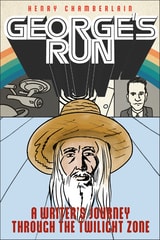
George's Run
A Writer's Journey through the Twilight ZoneHenry Chamberlain
Rutgers University Press, 2023
Later in life, Johnson befriended comics journalist and artist Henry Chamberlain, and the two had long chats about his amazing life and career. Now Chamberlain pays tribute to his late friend in the graphic novel George’s Run, which brings Johnson’s creative milieu to life in vividly illustrated color panels. The result feels less like reading a conventional biography and more like sitting in on an intimate conversation between friends as they recollect key moments in pop culture history, as well as the colorful band of writers known as the “Rat Pack of Science Fiction.”
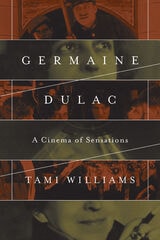
Germaine Dulac
A Cinema of SensationsTami Williams
University of Illinois Press, 2014
Best known for directing the Impressionist classic The Smiling Madame Beudet and the first Surrealist film The Seashell and the Clergyman, Germaine Dulac, feminist and pioneer of 1920s French avant-garde cinema, made close to thirty fiction films as well as numerous documentaries and newsreels. Through her filmmaking, writing, and cine-club activism, Dulac’s passionate defense of the cinema as a lyrical art and social practice had a major influence on twentieth century film history and theory.
In Germaine Dulac: A Cinema of Sensations, Tami Williams makes unprecedented use of the filmmaker's personal papers, production files, and archival film prints to produce the first full-length historical study and critical biography of Dulac. Williams's analysis explores the artistic and sociopolitical currents that shaped Dulac's approach to cinema while interrogating the ground breaking techniques and strategies she used to critique conservative notions of gender and sexuality. Moving beyond the director’s work of the 1920s, Williams examines Dulac's largely ignored 1930s documentaries and newsreels establishing clear links with the more experimental impressionist and abstract works of her early period.
This vivid portrait will be of interest to general readers, as well as to scholars of cinema and visual culture, performance, French history, women’s studies, queer cinema, in addition to studies of narrative avant-garde, experimental, and documentary film history and theory.
Giant
George Stevens, a Life on FilmMarilyn Ann Moss
University of Wisconsin Press, 2015
Moss documents Stevens’s role as a powerful director who often had to battle the heads of major studios to get his films made his way. She traces the four decades Stevens was a major Hollywood player and icon, from his earliest days at the Hal Roach Studios—where he learned to be a cameraman, writer, and director for Laurel and Hardy features—up to when his films made millions at the box office and were graced by actors such as Elizabeth Taylor, James Dean, Alan Ladd, and Montgomery Clift.
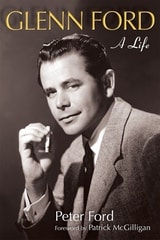
Glenn Ford
A LifePeter Ford
University of Wisconsin Press, 2011
Glenn Ford: A Life chronicles the volatile life, relationships, and career of the renowned actor, beginning with his move from Canada to California and his initial discovery of theater. It follows Ford’s career in diverse media—from film to television to radio—and shows how Ford shifted effortlessly between genres, playing major roles in dramas, noir, westerns, and romances.
This biography by Glenn Ford’s son, Peter Ford, offers an intimate view of a star’s private and public life. Included are exclusive interviews with family, friends, and professional associates, and snippets from the Ford family collection of diaries, letters, audiotapes, unpublished interviews, and rare candid photos. This biography tells a cautionary tale of Glenn Ford’s relentless infidelities and long, slow fade-out, but it also embraces his talent-driven career. The result is an authentic Hollywood story that isn’t afraid to reveal the truth.
Best Books for General Audiences, selected by the American Association of School Librarians
Best Books for General Audiences, selected by the Public Library Reviewers
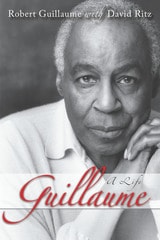
Guillaume
A LifeRobert Guillaume & David Ritz
University of Missouri Press, 2002
Guillaume: A Life is the autobiography of esteemed Broadway, Hollywood, and television star Robert Guillaume. Ten months after suffering a stroke, Guillaume—perhaps best known as television’s Benson—began this autobiography with award-winning author and collaborator David Ritz.
The book goes beyond the recounting of a long and successful career to examine the forces that shaped the man: family, religion, race, and class. Startlingly candid and disarmingly self-aware, Guillaume seeks to know and understand himself, his treatment of the women in his life, and the choices he made along the way. He pursues the truth, however painful it may be, says Ritz, guided by two questions, “Who the hell am I?” and “What made me do what I did?”
Born in St. Louis in 1927 to a young, abused, unstable mother, and reared by a strong, hardworking grandmother, Robert Guillaume managed to move from the poverty and adversity of his youth to a rich, full career as an actor and a singer. Fierce determination and sharp focus enabled this man born to hardship and racial discrimination to study, learn, cultivate his natural talents, and succeed at the performance career he pursued with a vengeance. Guillaume first performed in the strict Catholic schools and churches to which his grandmother, who understood that education would be the key to any success he might achieve, sent him. There his love of classical music was nurtured, and he was encouraged to perform.
From a child longing for his mother’s love to a man unsure of the meaning of love for many of the women in his life, from a young performer struggling to succeed on Broadway and in Hollywood to a grief-stricken father watching his son die of AIDS, Robert Guillaume tells what it was like to realize celebrity and what he sacrificed in the process. Readers will savor the success story of this artist who achieved great recognition and fame, but who never lost sight of his beginnings. Appealing to all audiences, Guillaume is a revealing and poignant autobiography of an extraordinary and distinguished American thespian.