Results by title
733 books match the query 'Environmental Conservation & Protection' and 30 start with g

Garbage
The Saga of a Boss Scavenger in San FranciscoLeonard Dominic Stefanelli
University of Nevada Press, 2017
Stefanelli was trained to be a scavenger by his uncles in the 1940s and 50s at a time when rampant discrimination prevented Italian immigrants and their families from pursuing any other career. From there, he became a ‘boss scavenger’, married a garbage man’s daughter, and climbed the ranks of the Sunset Scavenger Company where he eventually took part in a corporate shakeup that made him the company’s president at only 31 years old. As one of the men at the helm of this booming industry, he became the chief advocate for increasingly innovative recycling and waste management practices in the Bay Area, and a foremost leader of environmentally-conscious business in the world.
Stefanelli’s lively memoir will enlighten readers to the waste management business, an industry that was once considered the lowest rung on the social ladder, but will also show his unparalleled capacity for transformation and vision.
Gardeners of Eden
Rediscovering Our Importance to NatureDan Dagget
University of Nevada Press, 2005
Dagget recommends a new kind of environmentalism based on management, science, evolution, and holism, and served by humans who enrich the environment even as they benefit from it. His new environmentalism offers hopeful solutions to the current ecological crisis and a new purpose for our human energies and ideals. This book is essential reading for anyone concerned with the earth and anyone seeking a viable way for our burgeoning human population to continue to live upon it.
Gardens and Neighbors
Private Water Rights in Roman ItalyCynthia Jordan Bannon
University of Michigan Press, 2010
"Gardens and Neighbors will provide an important building block in the growing body of literature on the ways that Roman law, Roman society, and the economic concerns of the Romans jointly functioned in the real world."
---Michael Peachin, New York University
As is increasingly true today, fresh water in ancient Italy was a limited resource, made all the more precious by the Roman world's reliance on agriculture as its primary source of wealth. From estate to estate, the availability of water varied, in many cases forcing farmers in need of access to resort to the law. In Gardens and Neighbors: Private Water Rights in Roman Italy, Cynthia Bannon explores the uses of the law in controlling local water supplies. She investigates numerous issues critical to rural communities and the Roman economy. Her examination of the relationship between farmers and the land helps draw out an understanding of Roman attitudes toward the exploitation and conservation of natural resources and builds an understanding of law in daily Roman life.
An editor of the series Law and Society in the Ancient World, Cynthia Jordan Bannon is also Associate Professor of Classical Studies at Indiana University, Bloomington. Her previous book was The Brothers of Romulus: Fraternal Pietas in Roman Law, Literature, and Society (1997). Visit the author's website: http://www.iub.edu/~classics/faculty/bannon.shtml.
Geology of the Great Basin
Bill Fiero
University of Nevada Press, 2009
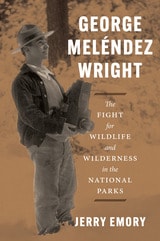
George Meléndez Wright
The Fight for Wildlife and Wilderness in the National ParksJerry Emory
University of Chicago Press, 2023
When twenty-three-year-old George Meléndez Wright arrived in Yosemite National Park in 1927 to work as a ranger naturalist—the first Hispanic person to occupy any professional position in the National Park Service (NPS)—he had already visited every national park in the western United States, including McKinley (now Denali) in Alaska. Two years later, he would organize the first science-based wildlife survey of the western parks, forever changing how the NPS would manage wildlife and natural resources. At a time when national parks routinely fed bears garbage as part of “shows” and killed “bad” predators like wolves, mountain lions, and coyotes, Wright’s new ideas for conservation set the stage for the modern scientific management of parks and other public lands.
Tragically, Wright died in a 1936 car accident while working to establish parks and wildlife refuges on the US-Mexico border. To this day, he remains a celebrated figure among conservationists, wildlife experts, and park managers. In this book, Jerry Emory, a conservationist and writer connected to Wright’s family, draws on hundreds of letters, field notes, archival research, interviews, and more to offer both a biography of Wright and a historical account of a crucial period in the evolution of US parks and the wilderness movement. With a foreword by former NPS director Jonathan B. Jarvis, George Meléndez Wright is a celebration of Wright’s unique upbringing, dynamism, and enduring vision that places him at last in the pantheon of the great American conservationists.
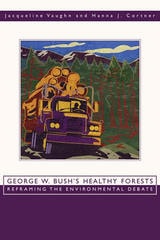
George W. Bush's Healthy Forests
Reframing the Environmental DebateJacqueline Vaughn
University Press of Colorado, 2005
The authors show how the administration used news events such as wildfires to propel legislation through Congress. Focusing blame for wildfires on legal obstacles and environmentalists' use of appeals to challenge fuel-reduction projects, the administration restricted opportunities for environmental analysis, administrative appeals, and litigation. The authors argue that these tools have a history of use by diverse interests and have long protected Americans' right to question government decisions.
This readable study identifies the players, events, and strategies that expedited the policy shift and contextualizes it in the president's career and in legislative and administrative history. Revealing a policy change with major implications for the future of public lands and public process, George W. Bush's Healthy Forests will become required reading in environmental studies and political science.
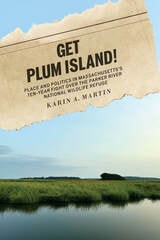
Get Plum Island!
Place and Politics in Massachusetts's Ten-Year Fight Over the Parker River National Wildlife RefugeKarin A. Martin
University of Massachusetts Press, 2026
An environmental history of resistance, negotiation, and conservation on the Massachusetts coast
An hour north of Boston, Parker River National Wildlife Refuge occupies the southern three-quarters of Plum Island, a barrier island off the Massachusetts coast. Parker River is a nationally renowned birding destination and the second most-visited wildlife refuge in the Northeast, drawing over 300,000 visitors annually. Today, environmentally minded Massachusetts barely remembers the decade-long fight that reduced the refuge to half its original size. Get Plum Island! tells the forgotten story of how six small towns in Essex County (Newbury, West Newbury, Rowley, Ipswich, Groveland, and Georgetown) fought the establishment of the refuge in the 1940s. Through political organizing across local, state, and federal levels, the opposition nearly abolished the refuge and ultimately succeeded in making it smaller.
The conflict was deeply shaped by class, geography, and competing visions of land use. On one side were elite conservationists—sportsmen, ornithologists, and preservation advocates from Boston, Cambridge, and Newton—who envisioned a federally protected habitat. On the other side of the conflict, a group of mostly middle- and working-class men, farmers, and local hunters organized a resistance to the establishment of a refuge. Through protests, public hearings, and even aggression toward visiting federal officials, local opposition made the case that their communities had clammed, farmed, and hunted the disputed lands before there even was a United States government. They recounted a version of their history as founders of the nation that made them, in their view, entitled to the land that was given to them by the English Crown. In telling this story, Get Plum Island! reveals how ordinary citizens can challenge—and reshape—federal authority, and offers a timely case study in the politics of land, class, and conservation.
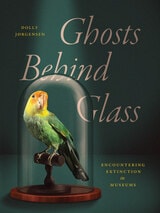
Ghosts Behind Glass
Encountering Extinction in MuseumsDolly Jørgensen
University of Chicago Press, 2025
While it’s no longer possible to encounter a dodo in the wild, we can still come face-to-face with them in museums. The remains of extinct species—whether taxidermied, skeletal, drawn, or sculpted—stare back at us from display cases.
In this moving meditation on what’s lost and what endures, environmental historian Dolly Jørgensen visits natural history collections worldwide—from Shanghai to Philadelphia, from Edinburgh to Hobart, Australia—to understand the many ways that museums tell stories about extinction. She encounters extinct animals that are framed as cultural artifacts and as rare valuables, that are memorialized with lists, and that are brought to life through augmented reality. She draws our attention to creatures with prominent afterlives—passenger pigeons, giant moas, thylacines—as well as those that are less likely to be discussed or displayed. Throughout, Jørgensen examines the relationship between museums and the natural world, so readers can look more closely at exhibits about extinction, studying the displays for what is there, as well as what is missing. During a period of rapid species loss driven by humanity’s environmental impact, Ghosts Behind Glass asks what we can learn about our world from the presence of the extinct.
Going Away to Think
Engagement, Retreat, and Ecocritical ResponsibilityScott Slovic
University of Nevada Press, 2008
Going Wild
Hunting, Animal Rights, and the Contested Meaning of NatureJan E. Dizard
University of Massachusetts Press, 1999
A probing study of the way diverse conceptions of nature shape our responses to specific environmental issues, this book examines the recent clash over a proposed deer hunt on the largest public watershed in Massachusetts, the Quabbin reservoir. In analyzing this public dispute, Jan E. Dizard draws on a wide range of sources, including interviews with resource managers, animal rights advocates, hunters, and environmentalists. He shows how each faction, while sharing some common ground with the others, projects different meanings onto nature.
Golden Wings & Hairy Toes
Encounters with New England’s Most Imperiled WildlifeTodd McLeish
University Press of New England, 2009
Gone Goose
The Remaking of an American Town in the Age of Climate ChangeBraden T. Leap
Temple University Press, 2019
Sumner, MO, pop. 102, near the Swan Lake National Wildlife Refuge, proclaims itself “The Wild Goose Capital of the World.” It even displays Maxie, the World’s largest goose: a 40-foot tall fiberglass statue with a wingspan stretching more than 60 feet. But while the 200,000 Canada geese that spent their falls and winters at Swan Lake helped generate millions of dollars for the local economy—with hunting and the annual Goose Festival—climate change, as well as environmental and land use issues, have caused the birds to disappear. The economic loss of the geese and the activities they inspired served as key building blocks in the rural identities residents had developed and treasured.
In his timely and topical book, Gone Goose, Braden Leap observes how members of this rural town adapted, reorganized, and reinvented themselves in the wake of climate change—and how they continued to cultivate respect and belonging in their community. Leap conducted interviews with residents and participated in various community events to explore how they reimagine their relationships with each other as well as their community’s relationship with the environment, even as they wish the geese would return.
Gordon MacQuarrie
The Story of an Old Duck HunterKeith Crowley
Wisconsin Historical Society Press, 2003
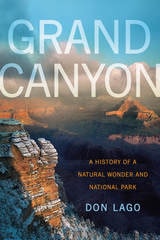
Grand Canyon
A History of a Natural Wonder and National ParkDon Lago
University of Nevada Press, 2015
The Grand Canyon became a microcosm of the history and evolving values of the
National Park Service, long conflicted between encouraging tourism and protecting nature. Many vivid characters shaped the canyon’s past. Its largest story is one of cultural history and changing American visions of the land.
Grand Canyon: A History of a Natural Wonder and National Park is a mixture of great storytelling, unlikely characters, and important ideas. The book will appeal to both general readers and scholars interested in seeking a broader understanding of the canyon.
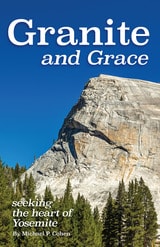
Granite and Grace
Seeking the Heart of YosemiteMichael P. Cohen
University of Nevada Press, 2019
Drawing together the humanistic and scientific significance of the wild landscapes he traverses, Michael uncovers relationships between people and places and meaning and substance, rendering this text part memoir—but also considerably more. On-the-rock encounters by hand and foot open up a dialogue between the heart of a philosopher and the mind of a geologist. Michael adds a literary softness to this hard landscape, blending excursions with exposition and literature with science. It is through his graceful representations that the geological becomes metaphorical, while the science turns mythological.
This high country, where in 1889 John Muir and Robert Underwood Johnson planned what would become Yosemite National Park, is significant for cultural as well as natural reasons. Discoursing on everything from Camus’s “Myths of Sisyphus” to the poems of Gary Snyder, Michael adds depth to an already splendorous landscape. Premier early geologists, such as François Matthes, shaped the language of Yosemite’s landscape. Even though Yosemite has changed over half a century, the rock has not. As Michael explores the beauty and grace of his familiar towering vistas, he demonstrates why, of the many aspects of the world to which one might get attached, the most secure is granite.

Great Lakes Sea Lamprey
The 70 Year War on a Biological InvaderCory Brant
University of Michigan Press, 2019
Threatening the complete collapse of the fishery, the sea lamprey invasion triggered an environmental awakening in the region and prompted an international treaty that secured unprecedented cooperation across political boundaries to protect the Great Lakes. Fueled by a pioneering scientific spirit, the war on Great Lakes sea lampreys led to discoveries that are the backbone of the program that eventually brought the creature under control and still protects the largest freshwater ecosystem in the world to this day.
Great Lakes Sea Lamprey draws on extensive interviews with individuals who experienced the invasion firsthand as well as a trove of unexplored archival materials to tell the incredible story of sea lamprey in the Great Lakes—what started the invasion, how it was halted, and what this history can teach us about the response to biological invaders in the present and future. Richly illustrated with color and black & white photographs, the book will interest readers concerned with the health of the Great Lakes, the history of the conservation movement, and the ongoing threat of invasive species.
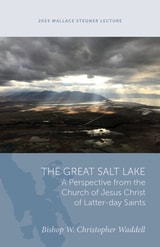
Great Salt Lake
A Perspective from the Church of Jesus Christ of Latter-day SaintsBishop W. Christopher Waddell
University of Utah Press, 2024

Green Afternoons
Oregon Gardens to VisitAmy Houchen
Oregon State University Press, 1998
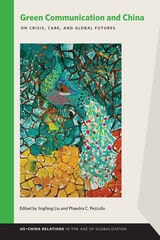
Green Communication and China
On Crisis, Care, and Global FuturesJingfang Liu
Michigan State University Press, 2020
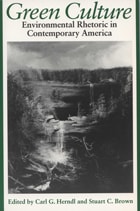
Green Culture
Environmental Rhetoric In Contemporary AmericaCarl Herndl
University of Wisconsin Press, 1996
Listen to politicians, social scientists, naturalists, and economists talk about the environment, and a problem becomes clear: dramatic differences on environmental issues are embedded in dramatically different discourses. This book explores these differences and shows how an understanding of rhetoric might lead to their resolution. The authors examine specific environmental debates—over the Great Lakes and Yellowstone, a toxic waste dump in North Carolina and an episode in Red Lodge, Montana. They look at how genres such as nature writing and specific works such as Rachel Carson’s Silent Spring have influenced environmental discourse. And they investigate the impact of cultural traditions, from the landscape painting of the Hudson River School to the rhetoric of the John Birch Society, on our discussions and positions on the environment.
Most of the scholars gathered here are also hikers, canoeists, climbers, or bird watchers, and their work reflects a deep, personal interest in the natural world in connection with the human community. Concerned throughout to make the methods of rhetorical analysis perfectly clear, they offer readers a rare chance to see what, precisely, we are talking about when we talk about the environment.

Green Documentary
Environmental Documentary in the 21st CenturyHelen Hughes
Intellect Books, 2014
Green Ink
Michael Frome
University of Utah Press, 1998
Michael Frome, who began his distinguished career in environmental journalism in the 1960s, has been called the dean of American conservation. As former Senator Gaylord Nelson once told the members of Congress, "No writer in America has more persistently and effectively argued for the need of a national ethics of environmental stewardship."
In Green Ink: An Introduction to Environmental Journalism, Frome has forged decades of experience in the field he helped pioneer into a valuable primer for environmental advocates and writers. This appealing blend of anecdote, advice, personal testimony, and a nuts and bolts instruction offers a thorough survey of rewards and challenges that environmental studies students might expect to encounter on along their chosen career paths. In addition to the extraordinary contributions made by "marquis" names such as Rachel Carson and Bernard DeVoto, Frome recounts the remarkable stories of a host of other writer-advocates and their largely unsung roles in investigating and publicizing environmental problems and abuses.
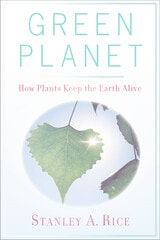
Green Planet
How Plants Keep the Earth AliveRice, Stanley A
Rutgers University Press, 2012
Beginning with an overview of how human civilization has altered the face of the Earth, particularly by the destruction of forests, the book details the startling consequences of these actions. Rice provides compelling reasons for government officials, economic leaders, and the public to support efforts to save threatened and endangered plants. Global campaigns to solve environmental problems with plants, such as the development of green roofs and the Green Belt Movement—a women's organization in Kenya that empowers communities worldwide to protect the environment—show readers that efforts to save wild plants can be successful and beneficial to the economic well-being of nations.
Through current scientific evidence, readers see that plants are vital to the ecological health of our planet and understand what can be done to lead to a better—and greener—future
Benefits of plants:
- Help modulate greenhouse gases
- Produce almost all oxygen in the air
- Create cool shade that reduces energy costs
- Prevent floods, droughts, and soil erosion
- Produce all of the food in the world
- Create and preserve soil
- Create natural habitats
- Heal the landscape after natural and human disasters
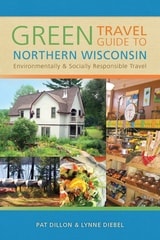
Green Travel Guide to Northern Wisconsin
Environmentally and Socially Responsible TravelPat Dillon
University of Wisconsin Press, 2011
Green Travel Guide to Northern Wisconsin showcases the best green restaurants, lodgings, shops, and activities in Wisconsin’s Northland. Learn about exploring the cliffs and caves of the Niagara Escarpment while biking the Door Peninsula. Carpool to the Midwest Renewable Energy Fair in Custer where you can stay at a nearby solar-powered inn. Take an all day eco-geo-history tour of the north woods near Hayward, explore the Chequamegon-Nicolet Forest, kayak the Mississippi River backwaters, and much more.
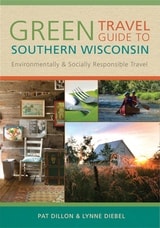
Green Travel Guide to Southern Wisconsin
Environmentally and Socially Responsible TravelPat Dillon
University of Wisconsin Press, 2010
Honorable Mention, Foreword Magazine’s Travel Guidebook of the Year
Greening Africana Studies
Linking Environmental Studies with Transforming Black ExperiencesRubin Patterson
Temple University Press, 2014
In his original work, Patterson demonstrates the ways in which black communities are harmed by local environmental degradation and global climate change. He shows that many local unwanted land use sites (LULUs), such as brownfields and toxic release inventory facilities, are disproportionately located in close proximity to neighborhoods of color, but also to colleges and universities with Africana studies programs. Arguing that such communities are not aggressively engaging in environmental issues, Greening Africana Studies also provides examples of how Africana studies students as well as members of black communities can prepare for green careers.
Greening The Lyre
Environmental Poetics And EthicsDavid W. Gilcrest
University of Nevada Press, 2002
This work covers important and neglected ground—environmental language theory. Gilcrest poses two overarching questions: To what extent does contemporary nature poetry represent a recapitulation of familiar poetics? And, to what extent does contemporary nature poetry engage a poetics that stakes out new territory? He addresses these questions with important thinkers, especially Kenneth Burke, and considers such poets as Frost, Kunitz, Heaney, Ammons, Cardenal, and Rich.
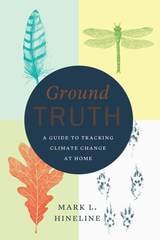
Ground Truth
A Guide to Tracking Climate Change at HomeMark L. Hineline
University of Chicago Press, 2018
We know that the Earth’s climate is changing, and that the magnitude of this change is colossal. At the same time, the world outside is still a natural world, and one we can experience on a granular level every day. Ground Truth is a guide to living in this condition of changing nature, to paying attention instead of turning away, and to gathering facts from which a fuller understanding of the natural world can emerge over time.
Featuring detailed guidance for keeping records of the plants, invertebrates, amphibians, birds, and mammals in your neighborhood, this book also ponders the value of everyday observations, probes the connections between seasons and climate change, and traces the history of phenology—the study and timing of natural events—and the uses to which it can be put. An expansive yet accessible book, Ground Truth invites readers to help lay the groundwork for a better understanding of the nature of change itself.
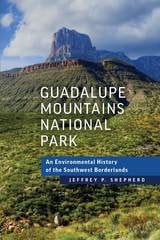
Guadalupe Mountains National Park
An Environmental History of the Southwest BorderlandsJeffrey P. Shepherd
University of Massachusetts Press, 2019
Drawing upon published sources, oral histories, and previously unused archival documents, Jeffrey P. Shepherd situates the Guadalupe Mountains and the national park in the context of epic tales of Spanish exploration, westward expansion, Native survival, immigrant settlement, the conservation movement, early tourism, and regional economic development. As Americans cope with climate change, polarized political rhetoric, and suburban sprawl, public spaces such as Guadalupe Mountains National Park remind us about our ties to nature and our historical relationships with the environment.
Guide to Sustainable Development and Environmental Policy
Natalia Mirovitskaya and William L. Ascher, eds.
Duke University Press, 2001
The guide combines formal, objective entries with critical commentaries that emphasize different opinions and controversies. With succinct explanations of more than a thousand terms, thoughtful interpretations by international experts, and helpful cross-referencing, this resource is designed to serve as a roadmap for understanding the issues and debates in the overlapping fields of environment and development. Intended for use by activists, journalists, policymakers, students, scholars, and interested citizens, the Guide to Sustainable Development and Environmental Policy will be a helpful tool for anyone trying to get a comprehensive look at the many environmental organizations, schools of thought, development programs, international environmental treaties, conventions, and strategies that have proliferated in the past few decades.