Results by title
313 books match the query 'Environmental policy' and 18 start with g

Garbage in the Garden State
Jordan P. Howell
Rutgers University Press, 2023
Howell acknowledges that New Jersey is sometimes imagined, particularly by non-New Jerseyans, as a giant garbage dump for New York and Philadelphia. But every place has had to struggle with the challenges of waste management. New Jersey's trash history is in fact more interesting and more important than most. New Jersey’s waste history includes intensive planning, deep-seated political conflict, organized crime, and literally every level of state and federal judiciary. It is a colorful history, to say the least, and one that includes a number of firsts with regard to recycling, comprehensive planning, and the challenging economics of trash.
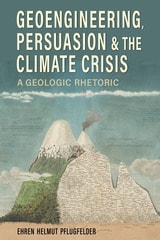
Geoengineering, Persuasion, and the Climate Crisis
A Geologic RhetoricEhren Helmut Pflugfelder
University of Alabama Press, 2023
A rhetorical exploration of an underexamined side of climate change—the ongoing research into and development of geoengineering strategies
Geoengineering, Persuasion, and the Climate Crisis: A Geologic Rhetoric exposes the deeply worrying state of discourse over geoengineering—the intentional manipulation of the earth’s climate as means to halt or reverse global warming. These climate-altering projects, which range from cloud-whitening to carbon dioxide removal and from stratospheric aerosol injection to enhanced weathering, are all technological solutions to more complex geosocial problems.
Geoengineering represents one of the most alarming forms of deliberative discourse in the twenty-first century. Yet geoengineering could easily generate as much harm as the environmental traumas it seeks to cure. Complicating these deliberations is the scarcity of public discussion. Most deliberations transpire within policy groups, behind the closed doors of climate-oriented startups, between subject-matter experts at scientific conferences, or in the disciplinary jargon of research journals. Further, much of this conversation occurs primarily in the West.
Ehren Helmut Pflugfelder makes clear how the deliberative rhetorical strategies coming from geoengineering advocates have been largely deceptive, hegemonic, deterministic, and exploitative. In this volume, he investigates how geoengineering proponents marshal geologic actors into their arguments—and how current discourse could lead to a greater exploitation of the earth in the future.
Pflugfelder’s goal is to understand the structure, content, purpose, and effect of these discourses, raise the alarm about their deliberative directions, and help us rethink our approach to the climate. In highlighting both the inherent problems of the discourses and the ways geologic rhetoric can be made productive, he attempts to give “the geologic” a place at the table to better understand the roles that all earth systems continue to play in our lives, now and for years to come.
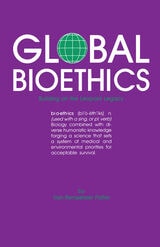
Global Bioethics
Building on the Leopold LegacyVan Rensselaer Potter
Michigan State University Press, 1988
Van Rensselaer Potter created and defined the term "bioethics" in 1970, to describe a new philosophy that sought to integrate biology, ecology, medicine, and human values. Bioethics is often linked to environmental ethics and stands in sharp contrast to biomedical ethics. Because of this confusion (and appropriation of the term in medicine), Potter chose to use the term "Global Bioethics" in 1988. Potter's definition of bioethics from Global Bioethics is, "Biology combined with diverse humanistic knowledge forging a science that sets a system of medical and environmental priorities for acceptable survival."
Global Common Good
Intercultural Perspectives on a Just and Ecological TransformationEdited by Michael Reder, Verena Risse, Katharina Hirschbrunn, and Georg Stoll
Campus Verlag, 2015
Global Energy Shifts
Fostering Sustainability in a Turbulent AgeBruce Podobnik
Temple University Press, 2005
In Global Energy Shifts, Bruce Podobnik draws intriguing parallels between the "coal panics" that once swept through Britain and the "oil panics" that grip the world today. His concise history of global energy use contextualizes the coal and oil scares, demonstrating how the convergence of specific geopolitical, commercial, and social conditions can generate rapid and far-reaching transformations in the energy foundations of our world.
Ultimately, Podobnik informs readers on how a "crisis" of one fuel system is quickly averted with the introduction of another, and describes opportunities for shifting our problematic, oil-based system toward a renewable energy system.
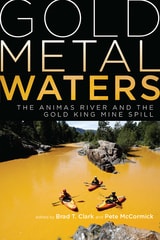
Gold Metal Waters
The Animas River and the Gold King Mine SpillBrad T. Clark
University Press of Colorado, 2022
This singular event is surveyed and interpreted from multiple diverse perspectives—college professors, students, and scientists and activists from a range of academic and epistemological backgrounds—with each chapter reflecting unique professional and personal experiences. Contributors examine both the context for this event and responses to it, embedding this discussion within the broader context of the tens of thousands of mines leaking pollutants into waterways and soils throughout Colorado and the failure to adequately mitigate the larger ongoing crisis.
The Gold King Mine spill was the catalyst that finally brought Superfund listing to the Silverton area; it was a truly sensational event in many respects. Gold Metal Waters will be of interest to students and scholars in all disciplines, but especially in environmental history, western history, mining history, politics, and communication, as well as general readers concerned with human relationships with the environment.
Contributors: Alane Brown, Brian L. Burke, Karletta Chief, Steven Chischilly, Becky Clausen, Michael A. Dichio, Betty Carter Dorr, Cynthia Dott, Gary Gianniny, David Gonzales, Andrew Gulliford, Lisa Marie Jacobs, Ashley Merchant, Teresa Montoya, Scott W. Roberts, Lorraine L. Taylor, Jack Turner, Keith D. Winchester, Megan C. Wrona, Janene Yazzie
Good-Natured Feminist
Ecofeminism And The Quest For DemocracyCatriona Sandilands
University of Minnesota Press, 1999
A foundational statement of the democratic promise of ecofeminism.
Heroic mothers defending home and hearth against a nature deformed by multinationalist corporate practice: this may be a compelling story, but it is not necessarily the source of valid feminist or ecological critique. What’s missing is the democratic element, an insistence on bringing to public debate all the relations of gender and nature that such a view takes for granted. This book aims to situate a commitment to theory and politics—that is, to democratic practice—at the center of ecofeminism and, thus, to move toward an ecofeminism that is truly both feminist and ecological.
The Good-Natured Feminist inaugurates a sustained conversation between ecofeminism and recent writings in feminist postmodernism and radical democracy. Starting with the assumption that ecofeminism is a body of democratic theory, the book tells how the movement originated in debates about “nature” in North American radical feminisms, how it then became entangled with identity politics, and how it now seeks to include nature in democratic conversation and, especially, to politicize relations between gender and nature in both theoretical and activist milieus.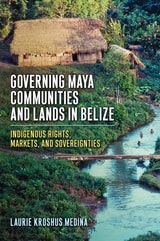
Governing Maya Communities and Lands in Belize
Indigenous Rights, Markets, and SovereigntiesLaurie Kroshus Medina
Rutgers University Press, 2024
Governing the End
The Making of Climate Change Loss and DamageLisa Vanhala
University of Chicago Press, 2025
A searing account of how the international community is trying—and failing—to address the worst effects of climate change and the differential burdens borne by rich and poor countries.
Climate change is increasingly accepted as a global emergency creating irrevocable losses for the planet. Yet, each country experiences these losses differently, and reaching even inadequate political agreements is fraught with contestation. Governing the End untangles the complex relationship between deteriorating environmental conditions, high politics, and everyday diplomatic practices, focusing on the United Nations’ agreement to address “loss and damage” and subsequent battles over implementation.
Lisa Vanhala looks at the differing assumptions and strategic framings that poor and rich countries bring to bear and asks why some norms emerge and diffuse while others fail to do so. Governing the End is based on ethnographic observation of eight years of UN meetings and negotiations and more than one hundred and fifty interviews with diplomats, policymakers, UN secretariat staff, experts, and activists. It explores explicit political contestation, as well as the more clandestine politics that have stymied implementation and substantially reduced the scope of compensation to poor countries. In doing so, Governing the End elucidates the successes and failures of international climate governance, revealing the importance of how ideas are constructed and then institutionally embodied.
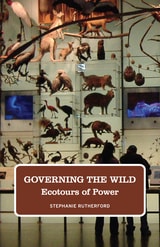
Governing the Wild
Ecotours of PowerStephanie Rutherford
University of Minnesota Press, 2011
Take four emblematic American scenes: the Hall of Biodiversity at the American Museum of Natural History in New York; Disney’s Animal Kingdom theme park in Orlando; an ecotour of Yellowstone and Grand Teton National Parks; the film An Inconvenient Truth. Other than expressing a common interest in the environment, they seem quite dissimilar.
And yet, as Governing the Wild makes clear, these sites are all manifestations of green governmentality, each seeking to define and regulate our understanding, experience, and treatment of nature. Stephanie Rutherford shows how the museum presents a scientized assessment of global nature under threat; the Animal Kingdom demonstrates that a corporation can successfully organize a biopolitical project; the ecotour, operating as a school for a natural aesthetic sensibility, provides a visual grammar of pristine national nature; and the film offers a toehold on a moral way of encountering nature. But one very powerful force unites the disparate “truths” of nature produced through these sites, and that, Rutherford tells us, is their debt to nature’s commodification.
Rutherford’s analysis reveals how each site integrates nature, power, and profit to make the buying and selling of nature critical to our understanding and rescuing of it. The combination, she argues, renders other ways of encountering nature—particularly more radically environmental ways—unthinkable.
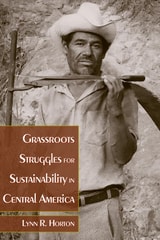
Grassroots Struggles for Sustainability in Central America
Lynn R. Horton
University Press of Colorado, 2007
With a comparative, empirical approach, Horton also analyzes dominant practices linked to sustainable development - neoliberal reforms, project interventions, and environmental protection. She reveals how these practices support or undermine economic, cultural, and political opportunities for the rural and indigenous poor and impact these communities' advancement of their own visions of sustainability. Finally, the author explores processes of empowerment that enable communities to articulate and put into practice local visions of sustainability, which contribute toward broader social and structural transformations.
Grassroots Struggles for Sustainability in Central America will interest sociologists, anthropologists, and others who study the theory and practice of sustainable development.
Great Lakes Fisheries Policy and Management
A Binational PerspectiveWilliam W. Taylor
Michigan State University Press, 2012
To maintain thriving, sustainable fisheries in the Laurentian Great Lakes, an understanding of the numerous and complex ecological, societal, economic, management, and policy issues surrounding them is critical. This incisive study provides a collaborative, interjurisdictional, and multi-use perspective that is shaped by the United states and Canada together as part of their shared governance of these waters. This book offers an informed look at the Great Lakes fisheries and their ecosystems, as the contributors examine both the threats they have faced and the valuable opportunities they provide for basin citizens and industries. Divided into four sections—the Great Lakes region, Great Lakes Fisheries, Fisheries case studies, and outlook for the Future—this is a valuable and up-to-date tool for students, researchers, policymakers, and managers alike.

Green Delusions
An Environmentalist Critique of Radical EnvironmentalismMartin W. Lewis
Duke University Press, 1994

Green Politics in China
Environmental Governance and State-Society RelationsJoy Y Zhang and Michael Barr
Pluto Press, 2013
Joy Y. Zhang and Michael Barr explain how environmental problems are transforming Chinese society through new developments such as the struggle for clean air, low-carbon conspiracy theories, new forms of public fund raising and the international tactics of grassroots NGOs. In doing so, they challenge static understandings of state-society relations in China.
Green Politics in China is an illuminating and detailed investigation which provides crucial insights into how China is both changing internally and emerging as a powerful player in global environmental politics.
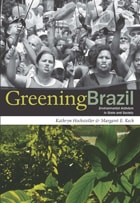
Greening Brazil
Environmental Activism in State and SocietyKathryn Hochstetler and Margaret E. Keck
Duke University Press, 2007
The authors present a multilevel analysis encompassing institutions and individuals within the government—at national, state, and local levels—as well as the activists, interest groups, and nongovernmental organizations that operate outside formal political channels. They emphasize the importance of networks linking committed actors in the government bureaucracy with activists in civil society. Portraying a gradual process marked by periods of rapid advance, Hochstetler and Keck show how political opportunities have arisen from major political transformations such as the transition to democracy and from critical events, including the well-publicized murders of environmental activists in 1988 and 2004. Rather than view foreign governments and organizations as the instigators of environmental policy change in Brazil, the authors point to their importance at key moments as sources of leverage and support.
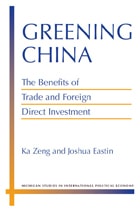
Greening China
The Benefits of Trade and Foreign Direct InvestmentKa Zeng and Joshua Eastin
University of Michigan Press, 2011
“The authors make some very critical interventions in this debate and scholars engaged in the environmental ‘pollution haven’ and ‘race to the bottom’ debates will need to take the arguments made here seriously, re-evaluating their own preferred theories to respond to the insightful theorizing and empirically rigorous testing that Zeng and Eastin present in the book.”
—Ronald Mitchell, University of Oregon
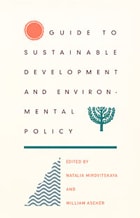
Guide to Sustainable Development and Environmental Policy
Natalia Mirovitskaya and William L. Ascher, eds.
Duke University Press, 2001
The guide combines formal, objective entries with critical commentaries that emphasize different opinions and controversies. With succinct explanations of more than a thousand terms, thoughtful interpretations by international experts, and helpful cross-referencing, this resource is designed to serve as a roadmap for understanding the issues and debates in the overlapping fields of environment and development. Intended for use by activists, journalists, policymakers, students, scholars, and interested citizens, the Guide to Sustainable Development and Environmental Policy will be a helpful tool for anyone trying to get a comprehensive look at the many environmental organizations, schools of thought, development programs, international environmental treaties, conventions, and strategies that have proliferated in the past few decades.
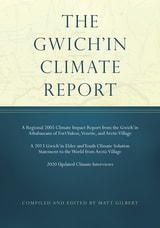
Gwich’in Climate Report
compiled and edited by Matt Gilbert
University of Alaska Press, 2022
These interview subjects are at a “ground zero” of climate change, and their voices are largely absent from popular research on and discussion of the topic. Their traditional knowledge of Arctic flora and fauna, forestation, landforms, meteorology, airstream behavior, and river hydrology makes a significant contribution to the documentation of climate change. In addition, Gilbert bridges the Gwich’in worldview and that of Western science by including factual substantiation and citations that corroborate key observations in the Gwich’in transcripts.
A text that matters for its cultural and historical significance—as well as its potential impact on the way science and policy are conducted in rural Alaska and on public lands—TheGwich’in Climate Report will be of interest to residents of and stakeholders in the communities it represents as well as researchers concerned with on-the-ground conditions of ecosystems and Indigenous peoples most directly affected by climate change.