Results by title
496 books match the query 'Ethnic identity' and 10 start with g
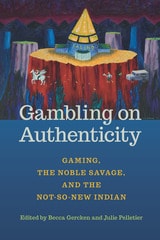
Gambling on Authenticity
Gaming, the Noble Savage, and the Not-So-New IndianBecca Gercken
Michigan State University Press, 2017
Gang Nation
Delinquent Citizens In Puerto Rican, Chicano, And Chicana NarrativesMonica Brown
University of Minnesota Press, 2002
Explores how Latino gang culture mirrors the most destructive aspects of the American Dream through a look at novels and memoirs
"There’s a place for us / Somewhere a place for us." With the emergence of a rich body of literature chronicling the experiences of Latino and Latina gang members, popular understanding of this outlaw culture has advanced far beyond West Side Story. However, the diverse works discussed in this important book—ranging from the breakthrough 1967 memoir Down These Mean Streets and the crime novel Carlito’s Way to the play Zoot Suit and the World War II-era historical novel Don’t Spit on My Corner, to more recent works such as Always Running/La Vida Loca: Gang Days in L.A. and Chicana gang narratives like Locas and Two Badges—all share with the award-winning musical a crucial discourse on nationality, citizenship, and belonging.
In Gang Nation, Monica Brown offers a sophisticated analysis of these narratives produced by former gang members and by "outside" observers writing within the Latino community. She examines the ubiquity of language and behavior within this literature that reveal the frustrated longings within gangs for greater participation in America’s national culture and the desire of members to craft an alternative environment in which they are welcome. Through literature and memoirs written from within the culture, Brown illustrates how these youth mimic the rhetoric and rituals of American nationalism’s most destructive aspects—intense territoriality, justification of violence, and cultural chauvinism—to assert their citizenship in an alternative nation. Before now, studies of gang culture have centered on either the choices of individual members or the social forces that inspire their unfocused rage. But through Latino and Chicano gang literature, Brown provides a more nuanced portrait of that culture, one that raises broader concerns about dominant nationalism, civil rights, the criminalization of urban youth of color, and the often unfulfilled sense of communal identity and acceptance among American youth.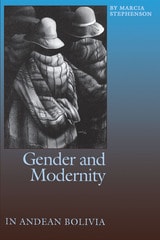
Gender and Modernity in Andean Bolivia
By Marcia Stephenson
University of Texas Press, 1999
In Andean Bolivia, racial and cultural differences are most visibly marked on women, who often still wear native dress and speak an indigenous language rather than Spanish. In this study of modernity in Bolivia, Marcia Stephenson explores how the state's desire for a racially and culturally homogenous society has been deployed through images of womanhood that promote the notion of an idealized, acculturated female body.
Stephenson engages a variety of texts—critical essays, novels, indigenous testimonials, education manuals, self-help pamphlets, and position papers of diverse women's organizations—to analyze how the interlocking tropes of fashion, motherhood, domestication, hygiene, and hunger are used as tools for the production of dominant, racialized ideologies of womanhood. At the same time, she also uncovers long-standing patterns of resistance to the modernizing impulse, especially in the large-scale mobilization of indigenous peoples who have made it clear that they will negotiate the terms of modernity, but always "as Indians."
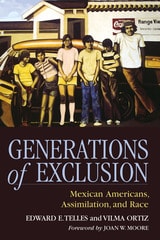
Generations of Exclusion
Mexican-Americans, Assimilation, and RaceEdward E. Telles
Russell Sage Foundation, 2008

Georges Woke Up Laughing
Long-Distance Nationalism and the Search for HomeNina Glick Schiller and Georges Eugene Fouron
Duke University Press, 2001
According to a long-standing myth, once emigrants leave their homelands—particularly if they emigrate to the United States—they sever old nationalistic ties, assimilate, and happily live the American dream. In fact, many migrants remain intimately and integrally tied to their ancestral homeland, sometimes even after they become legal citizens of another country. In Georges Woke Up Laughing the authors reveal the realities and dilemmas that underlie the efforts of long-distance nationalists to redefine citizenship, race, nationality, and political loyalty. Through discussions of the history and economics that link the United States with countries around the world, Glick Schiller and Fouron highlight the forces that shape emigrants’ experiences of government and citizenship and create a transborder citizenry. Arguing that governments of many countries today have almost no power to implement policies that will assist their citizens, the authors provide insights into the ongoing sociological, anthropological, and political effects of globalization.
Georges Woke up Laughing will entertain and inform those who are concerned about the rights of people and the power of their governments within the globalizing economy.
“In my dream I was young and in Haiti with my friends, laughing, joking, and having a wonderful time. I was walking down the main street of my hometown of Aux Cayes. The sun was shining, the streets were clean, and the port was bustling with ships. At first I was laughing because of the feeling of happiness that stayed with me, even after I woke up. I tried to explain my wonderful dream to my wife, Rolande. Then I laughed again but this time not from joy. I had been dreaming of a Haiti that never was.”—from Georges Woke Up Laughing
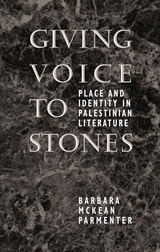
Giving Voice to Stones
Place and Identity in Palestinian LiteratureBy Barbara McKean Parmenter
University of Texas Press, 1994
"A struggle between two memories" is how Palestinian poet Mahmud Darwish describes the conflict between Palestinians and Israelis. Within this struggle, the meanings of land and home have been challenged and questioned, so that even heaps of stones become points of contention. Are they proof of ancient Hebrew settlement, or rubble from a bulldozed Palestinian village? The memory of these stones, and of the land itself, is nurtured and maintained in Palestinian writing and other modes of expression, which are used to confront and counter Israeli images and rhetoric. This struggle provides a rich vein of thought about the nature of human experience of place and the political uses to which these experiences are put.
In this book, Barbara McKean Parmenter explores the roots of Western and Zionist images of Palestine, then draws upon the work of Darwish, Ghassan Kanafani, and other writers to trace how Palestinians have represented their experience of home and exile since the First World War. This unique blending of cultural geography and literary analysis opens an unusual window on the struggle between these two peoples over a land that both divides them and brings them together.
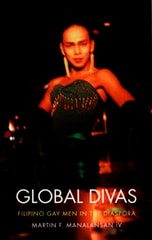
Global Divas
Filipino Gay Men in the DiasporaMartin F. Manalansan IV
Duke University Press, 2003
Manalansan locates diasporic, transnational, and global dimensions of gay and other queer identities within a framework of quotidian struggles ranging from everyday domesticity to public engagements with racialized and gendered images to life-threatening situations involving AIDS. He reveals the gritty, mundane, and often contradictory deeds and utterances of Filipino gay men as key elements of queer globalization and transnationalism. Through careful and sensitive analysis of these men’s lives and rituals, he demonstrates that transnational gay identity is not merely a consumable product or lifestyle, but rather a pivotal element in the multiple, shifting relationships that queer immigrants of color mobilize as they confront the tribulations of a changing world.
Global Russian Cultures
Edited by Kevin M. F. Platt
University of Wisconsin Press, 2020
The volume's internationally renowned contributors treat the many different global Russian cultures not as "displaced" elements of Russian cultural life but rather as independent entities in their own right. They describe diverse forms of literature, music, film, and everyday life that transcend and defy political, geographic, and even linguistic borders. Arguing that Russian cultures today are many, this volume contends that no state or society can lay claim to be the single or authentic representative of Russianness. In so doing, it contests the conceptions of culture and identity at the root of nation-building projects in and around Russia.
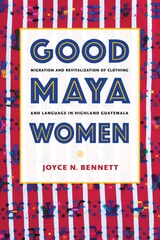
Good Maya Women
Migration and Revitalization of Clothing and Language in Highland Guatemalaby Joyce N. Bennett
University of Alabama Press, 2022
Good Maya Women: Migration and Revitalization of Clothing and Language in Highland Guatemala analyzes how Indigenous women’s migration contributes to women’s empowerment in their home communities in Guatemala. This decolonial ethnographic analysis of Kaqchikel Maya women’s linguistic and cultural activism demonstrates that marginalized people can and do experience empowerment and hope for the future of their communities, even while living under oppressive neoliberal regimes. Joyce N. Bennett contests dominant frameworks of affect theory holding that marginalized peoples never truly experience unrestricted hope or empowerment, and she contributes new understandings of the intimate connections between Indigenous women, migration, and language and clothing revitalization.
Based on more than twenty months of fieldwork, the study begins with an ethnographic investigation of how economic policies force Indigenous women into migration for wage work. To survive, many, like the three young women profiled in this ethnography, are forced to leave their schooling, families, and highland homes to work in cities or other countries. They might work, for example, as vendors, selling crafts to tourists, or as housekeepers or waitresses. Their work exposes them to structural violence, including anti-Indigenous slurs, sexual harassment and violence, and robbery.
Furthermore, the women are pressured to wear Western clothing and to speak Spanish, which endangers Indigenous culture and language in Guatemala. Yet the Indigenous migrant women profiled do not abandon their Indigenous clothing and language, in this case Kaqchikel Maya. Instead, they find inspiration and pride in revitalizing Kaqchikel traditions in their hometowns post-migration. As women attempt to revitalize Kaqchikel Maya language and clothing, they seek to earn the title of “good” women in their home communities.
Unpacking women’s daily activisms reveals that women attempt to retain their language and clothing and also collectively seek to make space for Indigenous people in the modern world. Bennett reveals that women find their attempts at revitalization to be personally empowering, even when their communities do not support them.

Goodbye, Brazil
Émigrés from the Land of Soccer and SambaMaxine L. Margolis
University of Wisconsin Press, 2013
Goodbye, Brazil is the first book to provide a global perspective on Brazilian emigration. Drawing and synthesizing data from a host of sociological and anthropological studies, preeminent Brazilian immigration scholar Maxine L. Margolis surveys and analyzes this greatly expanded Brazilian diaspora, asking who these immigrants are, why they left home, how they traveled abroad, how the Brazilian government responded to their exodus, and how their host countries received them. Margolis shows how Brazilian immigrants, largely from the middle rungs of Brazilian society, have negotiated their ethnic identity abroad. She argues that Brazilian society abroad is characterized by the absence of well-developed, community-based institutions—with the exception of thriving, largely evangelical Brazilian churches.
Margolis looks to the future as well, asking what prospects at home and abroad await the new generation, children of Brazilian immigrants with little or no familiarity with their parents' country of origin. Do Brazilian immigrants develop such deep roots in their host societies that they hesitate to return home despite Brazil's recent economic boom—or have they become true transnationals, traveling between Brazil and their adopted lands but feeling not quite at home in either one?