Results by title
715 books match the query 'Ethnic relations' and 16 start with g

Gabriel's Fire
A MemoirLuis Gabriel Aguilera
University of Chicago Press, 2000
Aguilera's memoir is not just an account of race relations and street life in the inner city, nor of the plight of the immigrant and the dilemma of class identity for a "minority" family. Gabriel's Fire also movingly recounts the peculiarly daunting and inspiring moments of a particular age, riddled with confusion, desires, and duties and recorded by an exceptionally observant and articulate young man. Aguilera writes that he "grew into" the English language when he was eleven or twelve, and his recollections reflect his newfound delight with words—the conversations, arguments, taunts, song lyrics, and casual interchanges of his youth are rendered here with an immediacy and directness rare in contemporary memoirs.
Both a picture of American culture of the 1980s and 1990s and a coming-of-age story, Gabriel's Fire counters mainstream and mass-mediated images of the inner city, Hispanic culture, and troubled youth. In its honesty and energy, it is a poignant and compelling story of one man's formative years.
Gang Nation
Delinquent Citizens In Puerto Rican, Chicano, And Chicana NarrativesMonica Brown
University of Minnesota Press, 2002
Explores how Latino gang culture mirrors the most destructive aspects of the American Dream through a look at novels and memoirs
"There’s a place for us / Somewhere a place for us." With the emergence of a rich body of literature chronicling the experiences of Latino and Latina gang members, popular understanding of this outlaw culture has advanced far beyond West Side Story. However, the diverse works discussed in this important book—ranging from the breakthrough 1967 memoir Down These Mean Streets and the crime novel Carlito’s Way to the play Zoot Suit and the World War II-era historical novel Don’t Spit on My Corner, to more recent works such as Always Running/La Vida Loca: Gang Days in L.A. and Chicana gang narratives like Locas and Two Badges—all share with the award-winning musical a crucial discourse on nationality, citizenship, and belonging.
In Gang Nation, Monica Brown offers a sophisticated analysis of these narratives produced by former gang members and by "outside" observers writing within the Latino community. She examines the ubiquity of language and behavior within this literature that reveal the frustrated longings within gangs for greater participation in America’s national culture and the desire of members to craft an alternative environment in which they are welcome. Through literature and memoirs written from within the culture, Brown illustrates how these youth mimic the rhetoric and rituals of American nationalism’s most destructive aspects—intense territoriality, justification of violence, and cultural chauvinism—to assert their citizenship in an alternative nation. Before now, studies of gang culture have centered on either the choices of individual members or the social forces that inspire their unfocused rage. But through Latino and Chicano gang literature, Brown provides a more nuanced portrait of that culture, one that raises broader concerns about dominant nationalism, civil rights, the criminalization of urban youth of color, and the often unfulfilled sense of communal identity and acceptance among American youth.
Gender, Indian, Nation
The Contradictions of Making Ecuador, 1830–1925Erin O'Connor
University of Arizona Press, 2007
O’Connor begins her investigations by examining the multilayered links between gender and Indian-state relations in nineteenth-century Ecuador. Disentangling issues of class and culture from issues of gender, she uncovers overlapping, conflicting, and ever-evolving patriarchies within both indigenous communities and the nation’s governing bodies. She finds that gender influenced sociopolitical behavior in a variety of ways, mediating interethnic struggles and negotiations that ultimately created the modern nation. Her deep research into primary sources—including congressional debates, ministerial reports, court cases, and hacienda records—allows a richer, more complex, and better informed national history to emerge.
Examining gender during Ecuadorian state building from “above” and “below,” O’Connor uncovers significant processes of interaction and agency during a critical period in the nation’s history. On a larger scale, her work suggests the importance of gender as a shaping force in the formation of nation-states in general while it questions recountings of historical events that fail to demonstrate an awareness of the centrality of gender in the unfolding of those events.
Generations of Exclusion
Mexican-Americans, Assimilation, and RaceEdward E. Telles
Russell Sage Foundation, 2008

Generous Betrayal
Politics of Culture in the New EuropeUnni Wikan
University of Chicago Press, 2002
Comparing her native Norway to Western Europe and the United States, Wikan focuses on people caught in turmoil, how institutions function, and the ways in which public opinion is shaped and state policies determined. Contradictions arise between policies of respect for minority cultures, welfare, and freedom, but the goal is the same: to create a society committed to both social justice and respect for human rights.
Writing with power and grace, Wikan makes a plea for a renewed moral vitality and human empathy that can pave the way for more effective social policies and create change.
Gentile New York
The Images of Non-Jews among Jewish ImmigrantsRibak, Gil
Rutgers University Press, 2012
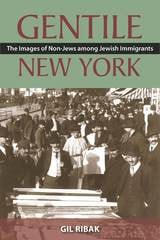
The very question of “what do Jews think about the goyim” has fascinated Jews and Gentiles, anti-Semites and philo-Semites alike. Much has been written about immigrant Jews in nineteenth- and twentieth-century New York City, but Gil Ribak’s critical look at the origins of Jewish liberalism in America provides a more complicated and nuanced picture of the Americanization process.
Gentile New York examines these newcomers’ evolving feelings toward non-Jews through four critical decades in the American Jewish experience. Ribak considers how they perceived Gentiles in general as well as such different groups as “Yankees” (a common term for WASPs in many Yiddish sources), Germans, Irish, Italians, Poles, and African Americans. As they discovered the complexity of America’s racial relations, the immigrants found themselves at odds with “white” American values or behavior and were drawn instead into cooperative relationships with other minorities. Sparked with many previously unknown anecdotes, quotations, and events, Ribak’s research relies on an impressive number of memoirs, autobiographies, novels, newspapers, and journals culled from both sides of the Atlantic.
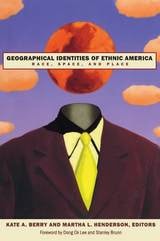
Geographical Identities Of Ethnic America
Race, Space, And PlaceKate A. Berry
University of Nevada Press, 2001
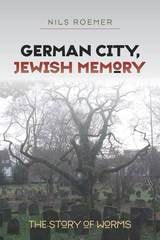
German City, Jewish Memory
The Story of WormsNils Roemer
Brandeis University Press, 2010
German Jews Beyond Judaism
George L. Mosse, With a critical introduction by David J. Sorkin
University of Wisconsin Press, 2025
German Jews Beyond Judaism was, in Mosse’s own estimation, his “most personal book, almost a confession of faith.” David J. Sorkin’s new critical introduction illustrates how Mosse’s life and values both shaped and exemplified his historical analysis and offers potential meanings of his intellectual legacy for the present day.
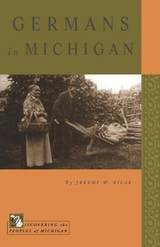
Germans in Michigan
Jeremy W. Kilar
Michigan State University Press, 2002
Germans are the largest ancestral group in Michigan, representing over 2.6 million descendants or 22% of the state’s population. Yet, unlike other immigrant groups, Germans have not retained their linguistic and cultural traditions as part of a distinct ethnic identity. The Bavarian villages of Frankenmuth and Gaylord stand as testaments to the once proud and vigorous German communities that dotted both rural and urban Michigan landscapes. Jeremy W. Kilar explores the social forces that transformed Germans from inward-looking immigrants to citizens in the cultural mainstream. Germans in Michigan is a story of assimilation and renewal and as such reveals the complexities of Americanization and immigration as social forces.
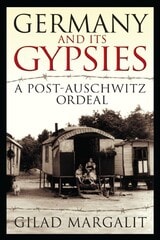
Germany and Its Gypsies
A Post-Auschwitz OrdealGilad Margalit
University of Wisconsin Press, 2002
Historian Gilad Margalit eloquently fills a tragic gap in the historical record with this sweeping examination of the plight of Gypsies in Germany before, during, and since the era of the Third Reich.
Germany and Its Gypsies reveals the painful record of the official treatment of the German Gypsies, a people whose future, in the shadow of Auschwitz, remains uncertain. Margalit follows the story from the heightened racism of the nineteenth century to the National Socialist genocidal policies that resulted in the murder of most German Gypsies, from the shifting attitudes in the two Germanys in 1945 through reunification and up to the present day.
Drawing upon a rich variety of sources, Margalit considers the pivotal historic events, legal arguments, debates, and changing attitudes toward the status of the German Gypsies and shines a vitally important light upon the issue of ethnic groups and their victimization in society. The result is a powerful and unforgettable testament.
Global Philadelphia
Immigrant Communities Old and NewEdited by Ayumi Takenaka and Mary Johnson Osirim
Temple University Press, 2010
The racial and ethnic composition of Philadelphia continues to diversify as a new wave of immigrants—largely from Asia and Latin America—reshape the city’s demographic landscape. Moreover, in a globalized economy, immigration is the key to a city’s survival and competitiveness. The contributors to Global Philadelphia examine how Philadelphia has affected its immigrants’ lives, and how these immigrants, in turn, have shaped Philadelphia.
Providing a detailed historical, ethnographic, and sociological look at Philadelphia’s immigrant communities, this volume examines the social and economic dynamics of various ethnic populations. Significantly, the contributors make comparisons to and connections between the traditional immigrant groups—Germans, Italians, the Irish, Jews, Puerto Ricans, and Chinese—and newer arrivals, such as Cambodians, Haitians, Indians, Mexicans, and African immigrants of various nationalities.
While their experiences vary, Global Philadelphia focuses on some of the critical features that face all immigrant groups—intra-group diversity, the role of institutions, and ties to the homeland. Taken together, these essays provide a richer understanding of the processes and implications of contemporary immigration to the area.
Globalizing Race
Antisemitism and Empire in French and European CultureDorian Bell
Northwestern University Press, 2018
Globalizing Race explores how intersections between French antisemitism and imperialism shaped the development of European racial thought. Ranging from the African misadventures of the antisemitic Marquis de Morès to the Parisian novels and newspapers of late nineteenth-century professional antisemites, Dorian Bell argues that France’s colonial expansion helped antisemitism take its modern, racializing form—and that, conversely, antisemitism influenced the elaboration of the imperial project itself.
Globalizing Race radiates from France to place authors like Guy de Maupassant and Émile Zola into sustained relation with thinkers from across the ideological spectrum, including Hannah Arendt, Friedrich Nietzsche, Frantz Fanon, Karl Marx, Max Horkheimer, and Theodor Adorno. Engaging with what has been called the “spatial turn” in social theory, the book offers new tools for thinking about how racisms interact across space and time. Among these is what Bell calls racial scalarity. Race, Bell argues, did not just become globalized when European racism and antisemitism accompanied imperial penetration into the farthest reaches of the world. Rather, race became most thoroughly global as a method for constructing and negotiating the different scales (national, global, etc.) necessary for the development of imperial capitalism.
As France, Europe, and the world confront a rising tide of Islamophobia, Globalizing Race also brings into fascinating focus how present-day French responses to Muslim antisemitism hark back to older, problematic modes of representing the European colonial periphery.
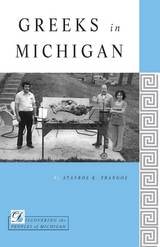
Greeks in Michigan
Stavros K. Frangos
Michigan State University Press, 2004
The influence of Greek culture on Michigan began long before the first Greeks arrived. The American settlers of the Old Northwest Territory had definite notions of Greeks and Greek culture. America and its developing society and culture were to be the "New Athens," a locale where the resurgence in the values and ideals of classical Greece were to be reborn. Stavros K. Frangos describes how such preconceptions and the competing desires to retain heritage and to assimilate have shaped the Greek experience in Michigan. From the padrone system to the church communities, Greek institutions have both exploited and served Greek immigrants, and from scattered communities across the state to enclaves in Detroit, Greek immigrants have retained and celebrated Greek culture.
Growing in the Shadow of Antifascism
Remembering the Holocaust in State-Socialist Eastern EuropeKata Bohus
Central European University Press, 2022
Reined into the service of the Cold War confrontation, antifascist ideology overshadowed the narrative about the Holocaust in the communist states of Eastern Europe. This led to the Western notion that in the Soviet Bloc there was a systematic suppression of the memory of the mass murder of European Jews. Going beyond disputing the mistaken opposition between “communist falsification” of history and the “repressed authentic” interpretation of the Jewish catastrophe, this work presents and analyzes the ways as the Holocaust was conceptualized in the Soviet-ruled parts of Europe.
The authors provide various interpretations of the relationship between antifascism and Holocaust memory in the communist countries, arguing that the predominance of an antifascist agenda and the acknowledgment of the Jewish catastrophe were far from mutually exclusive. The interactions included acts of negotiation, cross-referencing, and borrowing. Detailed case studies describe how both individuals and institutions were able to use anti-fascism as a framework to test and widen the boundaries for discussion of the Nazi genocide. The studies build on the new historiography of communism, focusing on everyday life and individual agency, revealing the formation of a great variety of concrete, local memory practices.

Gypsy World
The Silence of the Living and the Voices of the DeadPatrick Williams
University of Chicago Press, 2003
In Gypsy World, Patrick Williams argues that these customs are at the center of how Manuš see the world and their place in it. The Manuš inhabit a world created by the "Gadzos" (non-Gypsies), who frequently limit or even prohibit Manuš movements within it. To claim this world for themselves, the Manuš employ a principle of cosmological subtraction: just as the dead seem to be absent from Manuš society, argues Williams, so too do the Manuš absent themselves from Gadzo society—and in so doing they assert and preserve their own separate culture and identity.
Anyone interested in Gypsies, death rituals, or the formation of culture will enjoy this fascinating and sensitive ethnography.