Results by title
366 books match the query 'Family & Relationships' and 8 start with g
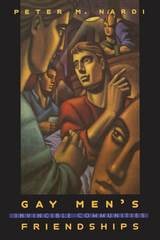
Gay Men's Friendships
Invincible CommunitiesPeter M. Nardi
University of Chicago Press, 1999
Nardi explores the meaning of friends to some gay men, how friends often become a surrogate family, how sexual behavior and attraction affects these friendships, and how, for many, friends mean more and last longer than romantic relationships. While looking at the psychological joys and sorrows of friendship, he also considers the cultural constraints limiting gay men in contemporary urban America—especially those that deal with dominant images of masculinity and heterosexuality—and how they relate to friendship.
By listening to gay men talk about their interactions, Nardi offers a rare glimpse into the mechanisms of gay life. We learn how gay men meet their friends, what they typically do and talk about, and how these strong relationships contain the roots of larger cultural forces such as social movements and gay identities and neighborhoods. Nardi also points out the political and social consequences when friendships fail to provide support against oppression.
An intimate and informative look at gay life in urban America, Gay Men's Friendships ultimately shows how these relationships challenge the gender order of our society by questioning how masculinity is constructed and by offering a model for a more creative blending of gay and heterosexual masculinity.
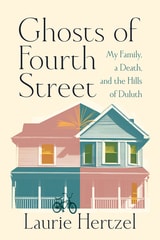
Ghosts of Fourth Street
My Family, a Death, and the Hills of DuluthLaurie Hertzel
University of Minnesota Press, 2026
An open, frank rumination on a brother’s death and its reverberations throughout a family
Every family has its stories and secrets. Laurie Hertzel’s family had more than its share. At an early age, Laurie, the seventh of the ten Hertzel children, took on the challenge of sorting them out. Not old enough to be one of the Big Kids, yet too old to be with the Three Little Kids, she spent most of her time alone, reading, wandering, and observing her family as they moved around her in their house in Duluth. Though her parents were not warm, there were moments of closeness in those years—gifts of Laura Ingalls Wilder’s Little House books and special trips to the dairy for a sundae—but everything shattered after the sudden death of Laurie’s oldest sibling, eighteen-year-old Bobby, when she was just nine years old.
Moving back and forth in time, Laurie reflects on Bobby’s death and what happens to a family’s story when no one can talk about a tragedy and its toll. In Ghosts of Fourth Street, readers witness how the apparition of memories, the shadow of needs unmet, and the spirit of a family once whole all linger long after the death of a child and brother. As Laurie shares her experiences, we see the emergence of her fascination with story and truth as she teaches herself to read and finds solace and inspiration in books amid the tensions and competing agendas within her big, complicated family.
With keen attention, candor, and grace, Laurie paints a vivid portrait of 1960s Duluth as she poignantly examines a family contending with grief and the fact that life steadily goes on—snow and school buses, Christmases and Thanksgivings, ice skating and tobogganing and climbing trees, with ghosts always lingering at the edges.
Retail e-book files for this title are screen-reader friendly.
Grandmotherhood
The Evolutionary Significance of the Second Half of Female LifeVoland, Eckart
Rutgers University Press, 2014
By the year 2030, the average life expectancy of women in industrialized countries could reach ninety—exceeding that of men by about ten years. At the present time, postmenopausal women represent more than fifteen percent of the world’s population and this figure is likely to grow.
From an evolutionary perspective, these demographic numbers pose some intriguing questions. Darwinian theory holds that a successful life is measured in terms of reproduction. How is it, then, that a woman’s lifespan can greatly exceed her childbearing and childrearing years? Is this phenomenon simply a byproduct of improved standards of living, or do older women—grandmothers in particular—play a measurable role in increasing their family members’ biological success?
Until now, these questions have not been examined in a thorough and comprehensive manner. Bringing togethertheoretical and empirical work byinternationally recognized scholars in anthropology, psychology, ethnography, and the social sciences, Grandmotherhood explores the evolutionary purpose and possibilities of female post-generative life. Students and scholars of human evolution, anthropology, and even gerontology will look to this volume as a major contribution to the current literature in evolutionary studies.
Gray Love
Stories About Dating and New Relationships After 60Rutgers University Press, 2023
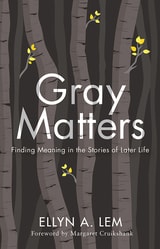
Gray Matters
Finding Meaning in the Stories of Later LifeEllyn Lem
Rutgers University Press, 2020
Finalist for the 2021 American Book Fest Best Book Awards
Aging is one of the most compelling issues today, with record numbers of seniors over sixty-five worldwide. Gray Matters: Finding Meaning in the Stories of Later Life examines a diverse array of cultural works including films, literature, and even art that represent this time of life, often made by people who are seniors themselves. These works, focusing on important topics such as housing, memory loss, and intimacy, are analyzed in dialogue with recent research to explore how “stories” illuminate the dynamics of growing old by blending fact with imagination. Gray Matters also incorporates the life experiences of seniors gathered from over two hundred in-depth surveys with a range of questions on growing old, not often included in other age studies works. Combining cultural texts, gerontology research, and observations from older adults will give all readers a fuller picture of the struggles and pleasures of aging and avoids over-simplified representations of the process as all negative or positive.
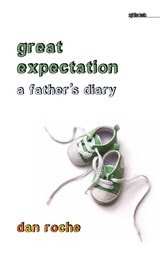
Great Expectation
A Father's DiaryDan Roche
University of Iowa Press, 2008
With five years of parenting his irrepressible daughter Maeve under his belt, Roche, already forty-five years old, and his wife, Maura, face the prospect of another arrival and the myriad of emotions that come with a second child. From revelling in the joys of pregnancy such as Maura's delight at "having cleavage" and being able to eat whatever she desires; to assuaging the parental anxieties of choosing the right obstetrician, correcting the mistakes one made with the first child, and sending children to college in the future; to navigating the unforeseen, experiencing the unexpected death of a parent, and feeling trepidation toward the thought of having a son, Roche records his emotions with unusual candidness and intimacy.
Reflecting on day-to-day events and their significance in his family’s life together, Roche wonders what he is getting himself into and how much deeper he can immerse himself into parenting. Together, he and his wife face the bittersweet intersections of death and new life, menace and hopefulness. With sincerity and a mature wit, Great Expectation stands as a wise recounting of nine months’ time, with all of its chaos and charms, and offers a fresh perspective for first-time and veteran parents alike.
Great Expectations
Marriage and Divorce in Post-Victorian AmericaElaine Tyler May
University of Chicago Press, 1983
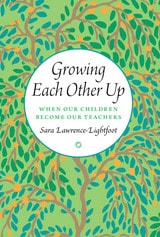
Growing Each Other Up
When Our Children Become Our TeachersSara Lawrence-Lightfoot
University of Chicago Press, 2016
With Growing Each Other Up, Macarthur Prize–winning sociologist and educator Sara Lawrence-Lightfoot offers an intimately detailed, emotionally powerful account of that experience. Building her book on a series of in-depth interviews with parents around the country, she offers a counterpoint to the usual parental development literature that mostly concerns the adjustment of parents to their babies’ rhythms and the ways parents weather the storms of their teenage progeny. The focus here is on the lessons emerging adult children, ages 15 to 35, teach their parents. How are our perspectives as parents shaped by our children? What lessons do we take from them and incorporate into our worldviews? Just how much do we learn—often despite our own emotionally fraught resistance—from what they have seen of life that we, perhaps, never experienced? From these parent portraits emerges the shape of an education composed by young adult children—an education built on witness, growing, intimacy, and acceptance.
Growing Each Other Up is rich in the voices of actual parents telling their own stories of raising children and their children raising them; watching that fundamental connection shift over time. Parents and children of all ages will recognize themselves in these evocative and moving accounts and look at their own growing up in a revelatory new light.