Results by title
50 books match the query 'Feminist Criticism' and 5 start with g
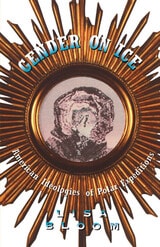
Gender On Ice
American Ideologies of Polar ExpeditionsLisa Bloom
University of Minnesota Press, 1993
Bloom focuses on the conquest of the North Pole as she reveals how popular print and visual media defined and shaped American national ideologies from the early twentieth century to the present.

Gender Studies
New Directions in Feminist CriticismJudith A. Spector
University of Wisconsin Press, 1986
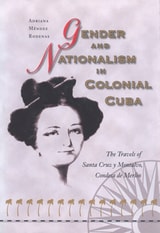
Gender and Nationalism in Colonial Cuba
The Travels of Santa Cruz y Montalvo, Condesa de MerlinAdriana Mendez Rodenas
Vanderbilt University Press, 1998
Born in colonial Havana to an aristocratic Creole family, the future countess of Merlin left Cuba for Spain at an early age. Later, her marriage to the French count Antoine Christophe Merlin and the invasion of French Napoleonic troops precipitated another move to France, where she became one of the belle dames of Paris and began her literary career. She returned only once to Cuba after the death of her husband in 1840, a journey that produced Viaje a la Habana. Upon her return to Paris, Merlin expanded this into La Havane, an ambitious three-volume account of the political, social, and economic organization of the island.
From the viewpoint of feminist and psychoanalytical theory, Gender and Nationalism in Colonial Cuba brilliantly explores the many ways in which issues of gender have contributed to Merlin's virtual absence from the canons of literature and from the discourses on Cuban national identity. Merlin's double identity as both Cuban and French is symbolic of the Cuban exiled condition, a fact taken up by contemporary exiled Cuban writers who see the countess as an alter-ego.
Mendez Rodenas seeks to restore Merlin as the first woman writer in Cuban literary history to articulate a sense of national identity, as well as being Cuba's first female historian. She focuses on Merlin's travel writings because they examine such issues as slavery, independence, nationhood, the role of women, education, and local literature. Together her writings construct an alternative, gendered history of nineteenth-century Cuba that must be acknowledged as both functional and authentic.
By situating Merlin at the intersection of the discourses of gender and nationalism, Mendez Rodenas reveals not only her pioneering role but also the need to expand current critical categories to account for the specificity of the Latin American literary tradition. In the process of restoring Merlin to her appropriate place in the canon of Latin American literature, she broadens our understanding of colonial Cuban history and expands our knowledge of the ways in which travel writing can influence a country's national literature .
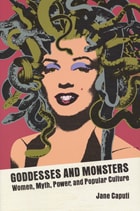
Goddesses and Monsters
Women, Myth, Power, and Popular CultureJane Caputi
University of Wisconsin Press, 2004
The essays in Goddesses and Monsters recognize popular culture as a primary repository of ancient mythic energies, images, narratives, personalities, icons, and archetypes. Together, they take on the patriarchal myth, where serial killers are heroes, where goddesses—in the form of great white sharks, femmes fatales, and aliens—are ritually slaughtered, and where pornography is the core story underlying militarism, environmental devastation, and racism. They also point to an alternative imagination of female power that still can be found behind the cult devotion given to Princess Diana and animating all the goddesses disguised as popular monsters, queen bitches, mammies, vamps, cyborgs, and sex bombs.
Gospels
Narrative and HistoryMercedes Navarro Puerto
SBL Press, 2015
An international collection of ecumenical, gender-sensitive interpretations
In this volume of the Bible and Women Series, contributors examine how biblical studies intersects with feminist interpretive methods with regard to the Gospels. Authors examine the lives of women in Roman Palestine, named and unnamed women in the Gospels, and the role of gender in the reception of the Hebrew scriptures in the New Testament.
Features:
- Essays by scholars from scholars from around the world
- An introduction and twenty essays focused on women and gender relations
- Coverage of power relations and ideologies within the texts and in current interpretations