Results by title
96 books match the query 'Games & Activities' and 11 start with g
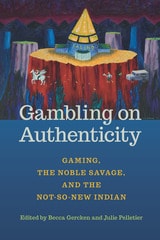
Gambling on Authenticity
Gaming, the Noble Savage, and the Not-So-New IndianBecca Gercken
Michigan State University Press, 2017
Gambling, Space, and Time
Shifting Boundaries and CulturesPauliina Raento
University of Nevada Press, 2011
The eight essays in Gambling, Space, and Time use a global and interdisciplinary approach to examine two significant areas of gambling studies that have not been widely explored--the ever-changing boundaries that divide and organize gambling spaces, and the cultures, perceptions, and emotions related to gambling. The contributors represent a variety of disciplines: history, geography, sociology, anthropology, political science, and law.
The essays consider such topics as the impact of technological advances on gambling activities, the role of the nation-state in the gambling industry, and the ways that cultural and moral values influence the availability of gambling and the behavior of gamblers. The case studies offer rich new insights into a gambling industry that is both a global phenomenon and a powerful engine of local change.
Gambling
Public Policies And The Social SciencesWilliam R. Eadington
University of Nevada Press, 2002
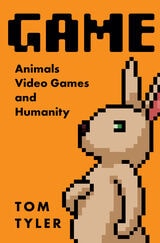
Game
Animals, Video Games, and HumanityTom Tyler
University of Minnesota Press, 2022
A playful reflection on animals and video games, and what each can teach us about the other
Video games conjure new worlds for those who play them, human or otherwise: they’ve been played by cats, orangutans, pigs, and penguins, and they let gamers experience life from the perspective of a pet dog, a predator or a prey animal, or even a pathogen. In Game, author Tom Tyler provides the first sustained consideration of video games and animals and demonstrates how thinking about animals and games together can prompt fresh thinking about both.
Game comprises thirteen short essays, each of which examines a particular video game, franchise, aspect of gameplay, or production in which animals are featured, allowing us to reflect on conventional understandings of humans, animals, and the relationships between them. Tyler contemplates the significance of animals who insert themselves into video games, as protagonists, opponents, and brute resources, but also as ciphers, subjects, and subversive guides to new ways of thinking. These animals encourage us to reconsider how we understand games, contesting established ideas about winning and losing, difficulty settings, accessibility, playing badly, virtuality, vitality and vulnerability, and much more.
Written in a playful style, Game draws from a dizzying array of sources, from children’s television, sitcoms, and regional newspapers to medieval fables, Shakespearean tragedy, and Edwardian comedy; from primatology, entomology, and hunting and fishing manuals to theological tracts and philosophical treatises. By examining video games through the lens of animals and animality, Tyler leads us to a greater humility regarding the nature and status of the human creature, and a greater sensitivity in dealings with other animals.

Gameplay Mode
War, Simulation, and TechnoculturePatrick Crogan
University of Minnesota Press, 2011
From flight simulators and first-person shooters to MMPOG and innovative strategy games like 2008’s Spore, computer games owe their development to computer simulation and imaging produced by and for the military during the Cold War. To understand their place in contemporary culture, Patrick Crogan argues, we must first understand the military logics that created and continue to inform them. Gameplay Mode situates computer games and gaming within the contemporary technocultural moment, connecting them to developments in the conceptualization of pure war since the Second World War and the evolution of simulation as both a technological achievement and a sociopolitical tool.
Crogan begins by locating the origins of computer games in the development of cybernetic weapons systems in the 1940s, the U.S. Air Force’s attempt to use computer simulation to protect the country against nuclear attack, and the U.S. military’s development of the SIMNET simulated battlefield network in the late 1980s. He then examines specific game modes and genres in detail, from the creation of virtual space in fight simulation games and the co-option of narrative forms in gameplay to the continuities between online gaming sociality and real-world communities and the potential of experimental or artgame projects like September 12th: A Toy World and Painstation, to critique conventional computer games.
Drawing on critical theoretical perspectives on computer-based technoculture, Crogan reveals the profound extent to which today’s computer games—and the wider culture they increasingly influence—are informed by the technoscientific program they inherited from the military-industrial complex. But, Crogan concludes, games can play with, as well as play out, their underlying logic, offering the potential for computer gaming to anticipate a different, more peaceful and hopeful future.

Gaming Exhaustion
Reclaiming Play from Late CapitalismRainforest Scully-Blaker
Duke University Press, 2027
Gaming Matters
Art, Science, Magic, and the Computer Game MediumJudd Ethan Ruggill and Ken S. McAllister
University of Alabama Press, 2011
Gaming at the Edge
Sexuality and Gender at the Margins of Gamer CultureAdrienne Shaw
University of Minnesota Press, 2015
Video games have long been seen as the exclusive territory of young, heterosexual white males. In a media landscape dominated by such gamers, players who do not fit this mold, including women, people of color, and LGBT people, are often brutalized in forums and in public channels in online play. Discussion of representation of such groups in games has frequently been limited and cursory. In contrast, Gaming at the Edge builds on feminist, queer, and postcolonial theories of identity and draws on qualitative audience research methods to make sense of how representation comes to matter.
In Gaming at the Edge, Adrienne Shaw argues that video game players experience race, gender, and sexuality concurrently. She asks: How do players identify with characters? How do they separate identification and interactivity? What is the role of fantasy in representation? What is the importance of understanding market logic? In addressing these questions Shaw reveals how representation comes to matter to participants and offers a perceptive consideration of the high stakes in politics of representation debates.
Putting forth a framework for talking about representation, difference, and diversity in an era in which user-generated content, individualized media consumption, and the blurring of producer/consumer roles has lessened the utility of traditional models of media representation analysis, Shaw finds new insight on the edge of media consumption with the invisible, marginalized gamers who are surprising in both their numbers and their influence in mainstream gamer culture.

Gaming
Essays On Algorithmic CultureAlexander R. Galloway
University of Minnesota Press, 2006
In Gaming, Alexander Galloway instead considers the video game as a distinct cultural form that demands a new and unique interpretive framework. Drawing on a wide range of disciplines, particularly critical theory and media studies, he analyzes video games as something to be played rather than as texts to be read, and traces in five concise chapters how the “algorithmic culture” created by video games intersects with theories of visuality, realism, allegory, and the avant-garde. If photographs are images and films are moving images, then, Galloway asserts, video games are best defined as actions.
Using examples from more than fifty video games, Galloway constructs a classification system of action in video games, incorporating standard elements of gameplay as well as software crashes, network lags, and the use of cheats and game hacks. In subsequent chapters, he explores the overlap between the conventions of film and video games, the political and cultural implications of gaming practices, the visual environment of video games, and the status of games as an emerging cultural form.
Together, these essays offer a new conception of gaming and, more broadly, of electronic culture as a whole, one that celebrates and does not lament the qualities of the digital age.
Alexander R. Galloway is assistant professor of culture and communication at New York University and author of Protocol: How Control Exists after Decentralization.

Gender, Race and Religion in Video Game Music
Thomas B. Yee
Intellect Books, 2024
This book provides semiotically focused analyses and interpretations of video game music, focusing specifically on the musical representation of three demographic diversity traits. Adopting a narratologist orientation to supplement existing ludological scholarship, these analyses apply music semiotics to crucial modern-day issues such as the representation of gender, race, and religion in video games.
An original and welcome contribution to the field, it considers musical meaning in relation to the aspects of gender, race, and religion. This book will help readers develop language and context in which to consider video game music in terms of society and representation and will encourage future research in these critical areas. Containing twenty-five detailed analytical case studies of musical representation in video game music, the book sets out theoretical and conceptual frameworks beneficial for interpreting musical meaning from video game soundtracks. Though players and commentators may be tempted to view a game’s soundtrack as mere background music, this research demonstrates video game music’s social relevance as a major factor impacting players’ cultural attitudes, values, and beliefs.
Part I explores immersion, interactivity, and interpretation in video game music, proposing a theory of interpretative interactivity to account for players’ semiotic agency in dialogue with their ludic agency. Part II explores musical gender representation in a trajectory from conventional gender construction, alternative femininities and masculinities, and the potential for nonbinary representational possibilities. Part III explores the musical representation of nationality, culture, and race, proposing the concept of racialized fantasy and applying frameworks from race scholarship to connect media representations of race to real-world racial justice movements. Part IV examines religion, introducing the concept of sonic iconography to connect theological meanings to the use of sacred music in video game music.
God in the Machine
Video Games as Spiritual PursuitLiel Leibovitz
Templeton Press, 2014
Yet video games remain relatively unexplored by both scholars and pundits alike. Few have advanced beyond outmoded and futile attempts to tie gameplay to violent behavior. With this rumor now thoroughly and repeatedly disproven, it is time to delve deeper. Just as the Museum of Modern Art in Manhattan recently acquired fourteen games as part of its permanent collection, so too must we seek to add a serious consideration of virtual worlds to the pantheon of philosophical inquiry.
In God in the Machine, author Liel Leibovitz leads a fascinating tour of the emerging virtual landscape and its many dazzling vistas from which we are offered new vantage points on age-old theological and philosophical questions. Free will vs. determinism, the importance of ritual, transcendence through mastery, notions of the self, justice and sin, life, death, and resurrection all come into play in the video games that some critics so quickly write off as mind-numbing wastes of time. When one looks closely at how these games are designed, their inherent logic, and their cognitive effects on players, it becomes clear that playing these games creates a state of awareness vastly different from when we watch television or read a book. Indeed, the gameplay is a far more dynamic process that draws on various faculties of mind and body to evoke sensations that might more commonly be associated with religious experience. Getting swept away in an engaging game can be a profoundly spiritual activity. It is not to think, but rather to be, a logic that sustained our ancestors for millennia as they looked heavenward for answers.
As more and more of us look “screenward,” it is crucial to investigate these games for their vast potential as fine instruments of moral training. Anyone seeking a concise and well-reasoned introduction to the subject would do well to start with God in the Machine. By illuminating both where video game storytelling is now and where it currently butts up against certain inherent limitations, Liebovitz intriguingly implies how the field and, in turn, our experiences might continue to evolve and advance in the coming years.