Results by title
59 books match the query 'Gay' and 6 start with g
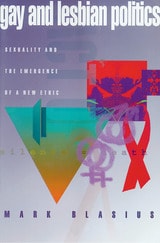
Gay & Lesbian Politics
Sexuality and the Emergence of a New EthicMark Blasius
Temple University Press, 1994
Gay and Lesbian Themes in Latin American Writing
By David William Foster
University of Texas Press, 1991
A taboo subject in many cultures, homosexuality has been traditionally repressed in Latin America, both as a way of life and as a subject for literature. Yet numerous writers have attempted to break the cultural silence surrounding homosexuality, using various strategies to overtly or covertly discuss lesbian and gay themes. In this study, David William Foster examines more than two dozen texts that deal with gay and lesbian topics, drawing from them significant insights into the relationship between homosexuality and society in different Latin American countries and time periods.
Foster's study includes works both sympathetic and antagonistic to homosexuality, showing the range of opinion on this topic. The preponderance of his examples come from Argentina, Brazil, and Mexico, countries with historically active gay communities, although he also includes material on other countries. Noteworthy among the authors covered are Reinaldo Arenas, Adolfo Caminha, Isaac Chocrón, José Donoso, Sylvia Molloy, Alejandra Pizarnik, and Luis Zapata.
Gay as a Grig
Memories of a North Texas GirlhoodBy Ellen Bowie Holland
University of Texas Press, 1963
Ellen Bowie Holland grew up in a house at Weatherford, Texas, that had the "motherly look of a large and gallant hen hovering over too many chicks" and that was inhabited by a "lively, warm-hearted family." This book is her record of the "whole world of little things which enriched young lives" in her small town.
Blessed with a discerning and sympathetic eye, she had much happiness to remember and record, and she employs a charming combination of nostalgia and comedy as she brings to life again these bygone days. Her childhood experiences are illuminated by the wisdom of maturity, and the whole is infused with a deft humor, developed through her skilled use of fantasy and through her ability to laugh at the pretensions of the Victorian life she saw.
Holland's book also is memorable as a record of her unforgettable parents:
"Mother was born on Columbus Day, and she and Columbus had a lot in common. She liked to discover things for herself and nothing pleased her more than to nicely finish off a job that she had been told could not be done" . . . "She wasn't geared for solitary musing. Like a salmon at spawning time she liked to swim upstream against rushing waters and bash into boulders" . . . "Mother's pattern of neatness reached out in all directions" . . . "Mother, sheathed like an armadillo" . . .
"Father, silk-hatted, or swallow-tailed, distinguished almost beyond belief" . . . "I never heard him raise his voice or laugh aloud" . . . "Father was not witty but he had an absolutely delightful sense of nonsense. His humor came smoothly upon the scene" . . .
Throughout the book the reader shares the author's consciousness of the vast distance between her own childhood and that of the grandchildren to whom the book is dedicated—a distance created by rapid technological change.
"From my window I look over an air-conditioned city and I see jets streaking across the sky and occasionally I hear one of them breaking the sound barrier" . . . "When I really want to awe myself I think about the fact that only one generation ago Mother saw friendly or marauding Indians roaming these same acres" . . . "Those of my age have come into a span of years where living conditions of all kinds have changed so abruptly, where obsolescence sets in so rapidly, that there is little in common between our infancy and our present."
Gay, Inc.
The Nonprofitization of Queer PoliticsMyrl Beam
University of Minnesota Press, 2018
A bold and provocative look at how the nonprofit sphere’s expansion has helped—and hindered—the LGBT cause
What if the very structure on which social movements rely, the nonprofit system, is reinforcing the inequalities activists seek to eliminate? That is the question at the heart of this bold reassessment of the system’s massive expansion since the mid-1960s. Focusing on the LGBT movement, Myrl Beam argues that the conservative turn in queer movement politics, as exemplified by the shift toward marriage and legal equality, is due mostly to the movement’s embrace of the nonprofit structure.
Based on oral histories as well as archival research, and drawing on the author’s own extensive activist work, Gay, Inc. presents four compelling case studies. Beam looks at how people at LGBT nonprofits in Minneapolis and Chicago grapple with the contradictions between radical queer social movements and their institutionalized iterations. Through interview subjects’ incisive, funny, and heartbreaking commentaries, Beam exposes a complex world of committed people doing the best they can to effect change, and the flawed structures in which they participate, rail against, ignore, and make do.
Providing a critical look at a social formation whose sanctified place in the national imagination has for too long gone unquestioned, Gay, Inc. marks a significant contribution to scholarship on sexuality, neoliberalism, and social movements.
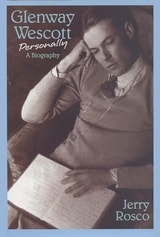
Glenway Wescott Personally
A BiographyJerry Rosco
University of Wisconsin Press, 2002
As a writer, Glenway Wescott (1901–1987) left behind several novels, including The Grandmothers and The Pilgrim Hawk, noted for their remarkable lyricism. As a literary figure, Wescott also became a symbol of his times. Born on a Wisconsin farm in 1901, he associated as a young writer with Hemingway, Stein, and Fitzgerald in 1920s Paris and subsequently was a central figure in New York’s artistic and gay communities. Though he couldn’t finish a novel after the age of forty-five, he was just as famous as an arts impresario, as a diarist, and for the company he kept: W. H. Auden, Christopher Isherwood, Marianne Moore, Somerset Maugham, E. M. Forster, Joseph Campbell, and scores of other luminaries.
In Glenway Wescott Personally, Jerry Rosco chronicles Wescott’s long and colorful life, his early fame and later struggles to write, the uniquely privileged and sometimes tortured world of artistic creation. Rosco sensitively and insightfully reveals Wescott’s private life, his long relationship with Museum of Modern Art curator Monroe Wheeler, his work with sex researcher Alfred Kinsey that led to breakthrough findings on homosexuality, and his kinship with such influential artists as Jean Cocteau, George Platt-Lynes, and Paul Cadmus.
Global Emergence Of Gay & Lesbian Pol
edited by Barry D Adam, Jan Willem Duyvendak and André Krouwel
Temple University Press, 1998
Lesbian and gay groups have existed for more than a century, often struggling against enormous odds. In the middle of the twentieth century, movement organizations were suppressed or swept away by fascism, Stalinism, and McCarthyism. Refounded by a few pioneers in the postwar period, movements have risen again as more and more people have stood up for their right to love and live with persons of their choice.
This book addresses both the mature movements of the European Union, North America, and Australia and the newer movements emerging in Latin America, Eastern Europe, and parts of Asia and Africa, examining the social and political conditions that shape movement opportunities and trajectories. It is rich in the details of gay and lesbian cultural and political life in different countries.