Results by title
130 books match the query 'Gender identity' and 8 start with g

Gaming at the Edge
Sexuality and Gender at the Margins of Gamer CultureAdrienne Shaw
University of Minnesota Press, 2015
Video games have long been seen as the exclusive territory of young, heterosexual white males. In a media landscape dominated by such gamers, players who do not fit this mold, including women, people of color, and LGBT people, are often brutalized in forums and in public channels in online play. Discussion of representation of such groups in games has frequently been limited and cursory. In contrast, Gaming at the Edge builds on feminist, queer, and postcolonial theories of identity and draws on qualitative audience research methods to make sense of how representation comes to matter.
In Gaming at the Edge, Adrienne Shaw argues that video game players experience race, gender, and sexuality concurrently. She asks: How do players identify with characters? How do they separate identification and interactivity? What is the role of fantasy in representation? What is the importance of understanding market logic? In addressing these questions Shaw reveals how representation comes to matter to participants and offers a perceptive consideration of the high stakes in politics of representation debates.
Putting forth a framework for talking about representation, difference, and diversity in an era in which user-generated content, individualized media consumption, and the blurring of producer/consumer roles has lessened the utility of traditional models of media representation analysis, Shaw finds new insight on the edge of media consumption with the invisible, marginalized gamers who are surprising in both their numbers and their influence in mainstream gamer culture.

Gender Complementarity and Christian Personalism
The Philosophy of Sister Prudence Allen, RSMSister Mary Veronica Sabelli, RSM
Catholic University of America Press, 2025
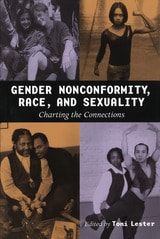
Gender Nonconformity, Race, and Sexuality
Charting the ConnectionsToni Lester
University of Wisconsin Press, 2002
How are culturally constructed stereotypes about appropriate sex-based behavior formed? If a person who is biologically female behaves in a stereotypically masculine manner, what are the social, political, and cultural forces that may police her behavior? And how will she manage her gendered image in response to that policing? Finally, how do race, ethnicity, or sexuality inform the way that sex-based roles are constructed, policed, or managed?
The chapters in this book address such questions from social science perspectives and then examine personal stories of reinvention and transformation, including discussions of the lives of dancers Isadora Duncan and Bill T. Jones, playwright Lorraine Hansberry, and surrealist artist Claude Cahun.Writers from fields as diverse as history, art, psychology, law, literature, sociology, and the activist community look at gender nonconformity from conceptual, theoretical, and empirical perspectives. They emphasize that gender nonconformists can be gay, lesbian, bisexual, transgender, or anyone else who does not fit a model of Caucasian heterosexual behavior characterized by binary masculine and feminine roles.

Gender Politics
Citizenship, Activism and Sexual DiversitySurya Monro
Pluto Press, 2005
Gender, Identity, and Place
Understanding Feminist GeographiesLinda Mcdowell
University of Minnesota Press, 1999

Gendering Historiography
Beyond National CanonsEdited by Angelika Epple and Angelika Schaser
Campus Verlag, 2009
Comparing various European and American historiographies from the past two hundred years, Gendering Historiography provides insights into the establishment and cultivation of gendered power relations in different societies and outlines the devastating effects that exclusionary practices can have on each national canon. This detailed and revealing book will change the face of history writing, bringing overlooked and previously excluded histories back into modern historiography.

Going Stealth
Transgender Politics and U.S. Surveillance PracticesToby Beauchamp
Duke University Press, 2018
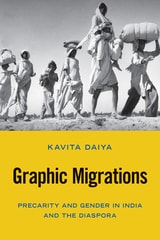
Graphic Migrations
Precarity and Gender in India and the DiasporaKavita Daiya
Temple University Press, 2020
In Graphic Migrations, Kavita Daiya provides a literary and cultural archive of refugee stories and experiences to respond to the question “What is created?” after decolonization and the 1947 Partition of India. She explores how stories of Partition migrations shape and influence the political and cultural imagination of secularism and contribute to gendered citizenship for South Asians in India and its diasporas.
Daiya analyzes modern literature, Bollywood films, Margaret Bourke-White’s photography, advertising, and print culture to show how they memorialize or erase refugee experiences. She also uses oral testimonies of Partition refugees from Hong Kong, South Asia, and North America to draw out the tensions of the nation-state, ethnic discrimination, and religious difference. Employing both Critical Refugee Studies and Feminist Postcolonial Studies frameworks, Daiya traces the cultural, affective, and political legacies of Partition migrations.
The precarity generated by modern migration and expressed through public culture prompts a rethinking of how dominant media represents gendered migrants and refugees. Graphic Migrations demands that we redraw the boundaries of how we tell the story of modern world history and the intricately interwoven, intimate production of statelessness and citizenship across the world’s communities.